Alors, mes amis! Arriver. Just the sound of that verb conjures up images of… well, arriving! And in the oh-so-glamorous passé composé? Mon Dieu! Get ready for a comedic opera of auxiliary verbs and agreement, because we're about to unravel this grammatical gem.
Imagine this: you're finally, finally, arriving at that Parisian café after getting hopelessly lost following Google Maps, which, let's be honest, seems to have a personal vendetta against tourists. You want to dramatically announce your entrance: "Je suis arrivé(e)!" But wait! Did you say suis? And what’s that little ‘e’ doing hanging around if you’re a girl? Let's break it down.
The Arrival: A Passé Composé Pilgrimage
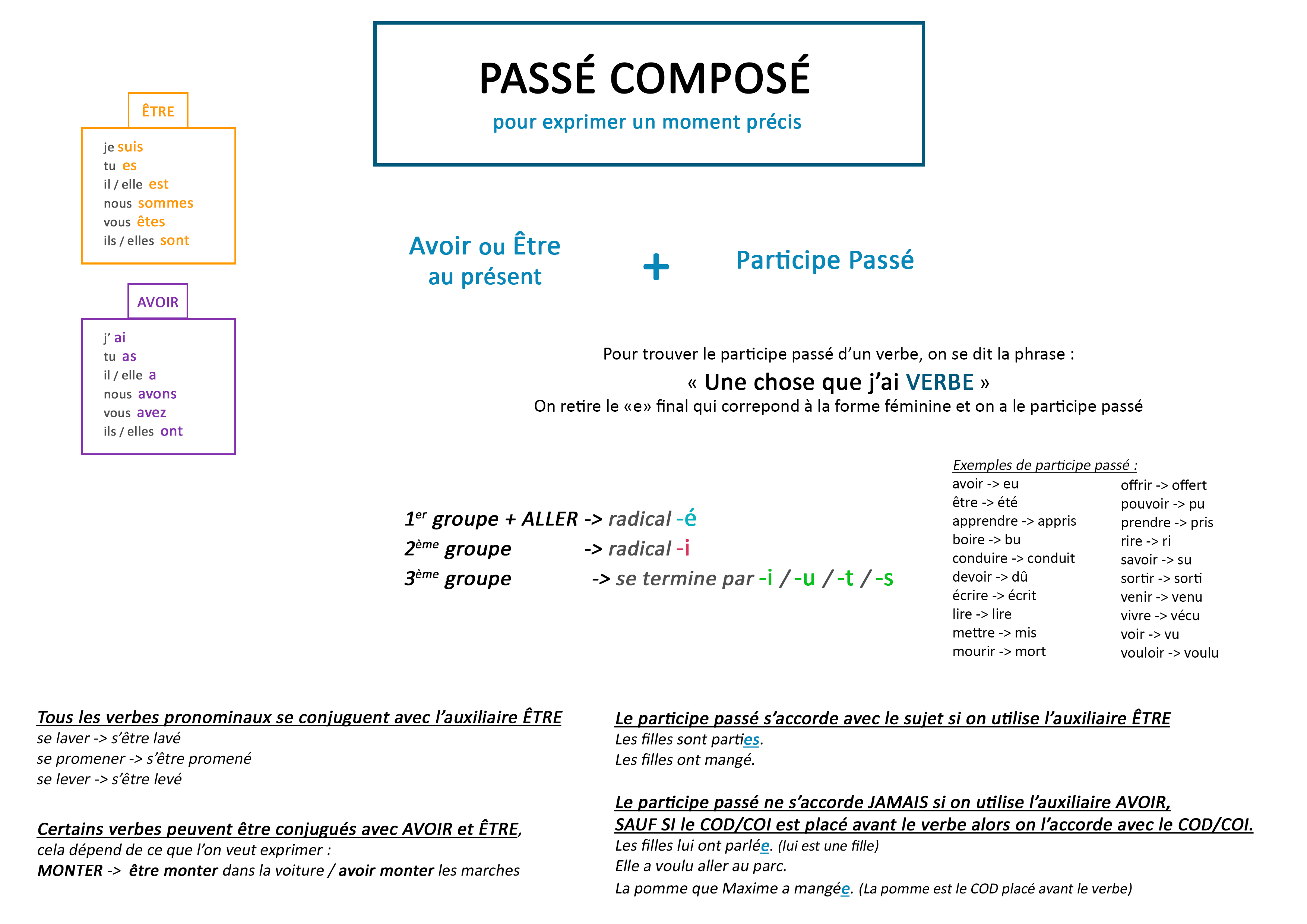
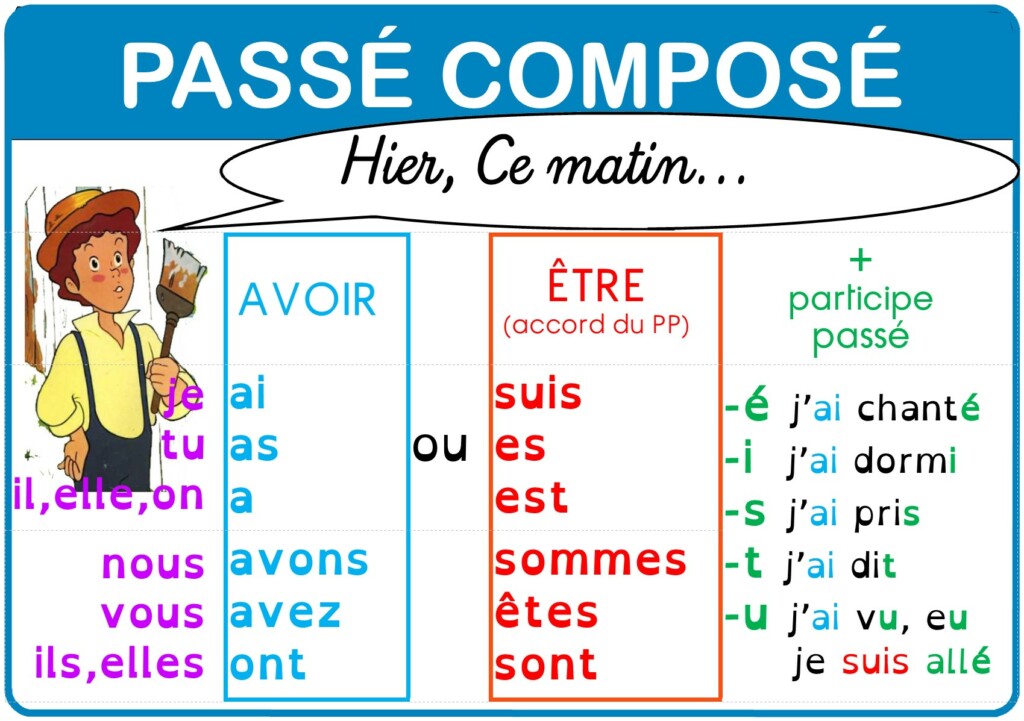
The passé composé is basically the French equivalent of the English simple past tense. "I arrived," "He arrived," "The pigeons arrived and stole my croissant (zut alors!)." But in French, it's a two-step dance. You need:
- An auxiliary verb (either avoir or être).
- The past participle of your main verb (in this case, arrivé).
Now, most verbs take avoir. They're the easy-going, "I don't need much attention" kind of verbs. Think manger (to eat): "J'ai mangé" (I ate). Done and dusted. But arriver? Oh no, it's a special snowflake. It demands être!
Why Être? Because it's a Movement, Darling!
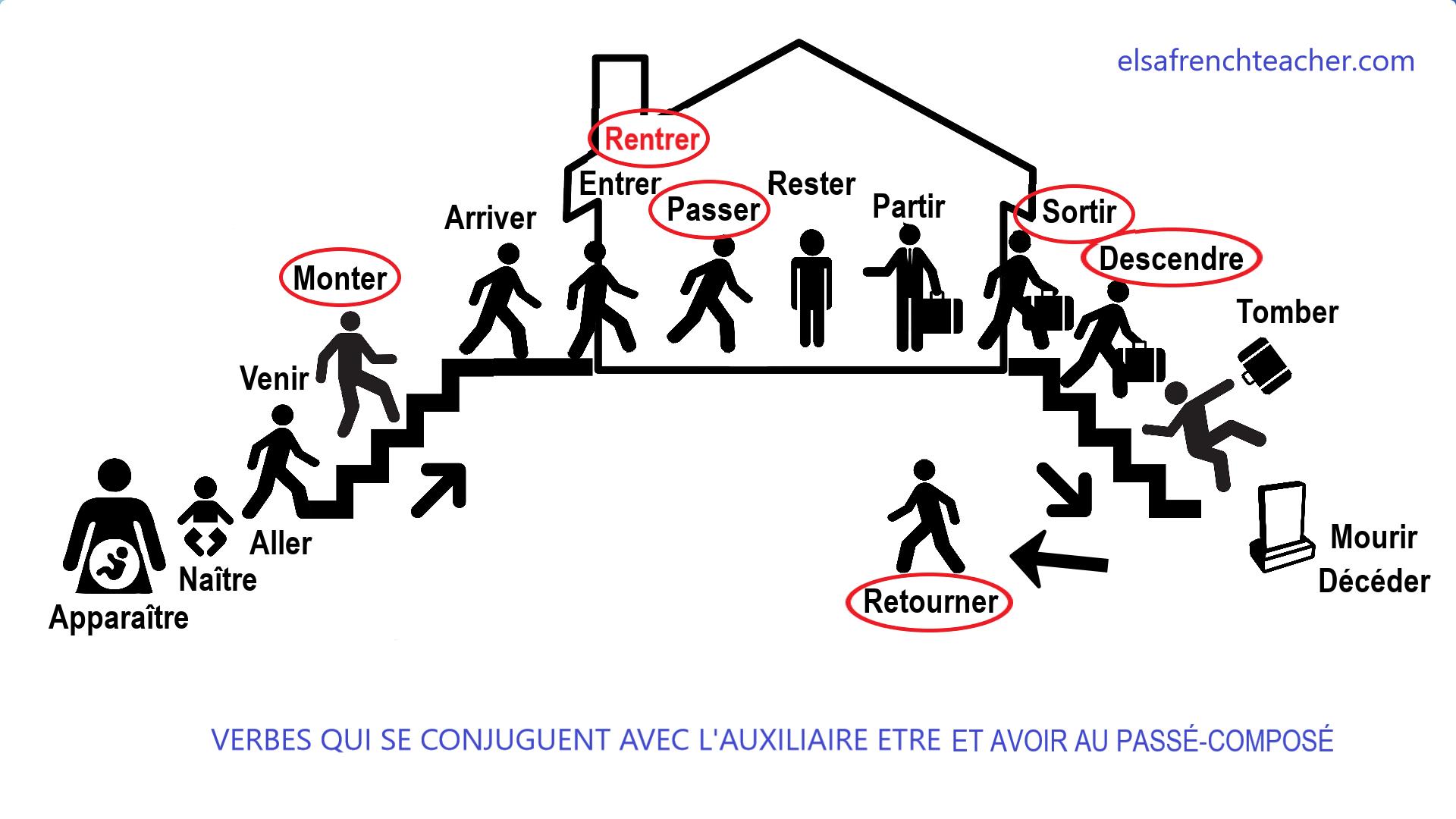
Here's where the drama kicks in. Verbs of motion and certain reflexive verbs (we'll get to those another time, c'est une autre histoire!) are the divas of the French language and demand the auxiliary verb être. Why? Because they involve movement or a change of state, supposedly. Arriver clearly involves moving from one place (lost in Google Maps hell) to another (the promise of caffeine and questionable pastries). Other verbs that join this exclusive club include:

- Aller (to go)
- Venir (to come)
- Partir (to leave)
- Monter (to go up)
- Descendre (to go down)
- Tomber (to fall) – especially useful if you trip on the cobblestones of Paris
- And a few others – it’s like a secret society!
Think of it this way: these verbs are so important, so dramatic, that they need être to hold their hand through the passé composé experience. Avoir just isn't good enough for them! It’s like hiring a celebrity bodyguard; you wouldn’t send a chihuahua when a grizzly bear is required.
Conjugating Arriver with Être: The Grand Finale
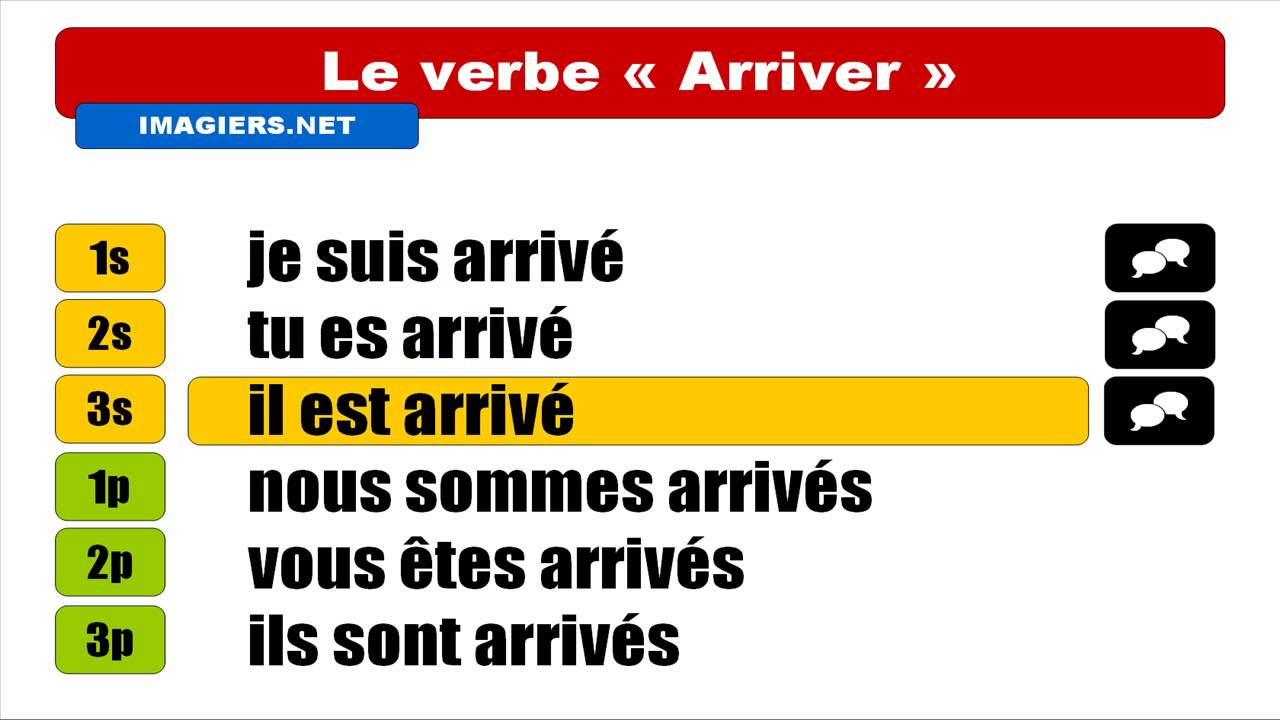
Now for the main performance! Here's how arriver looks in the passé composé using être:
- Je suis arrivé(e) (I arrived) – And remember that extra "e" in parentheses? We'll get to that spicy detail in a moment!
- Tu es arrivé(e) (You arrived - singular, informal)
- Il est arrivé (He arrived)
- Elle est arrivée (She arrived)
- On est arrivé(e)(s) (We arrived - informal, general "one") – Yes, even on gets in on the agreement action!
- Nous sommes arrivé(e)s (We arrived - formal)
- Vous êtes arrivé(e)(s) (You arrived - formal, or plural)
- Ils sont arrivés (They arrived - masculine/mixed group)
- Elles sont arrivées (They arrived - feminine group)
Notice something? Être changes to match the subject pronoun (je, tu, il, elle, etc.). That’s standard. But what about those extra letters hanging around the past participle, arrivé?
![Arriver Conjugation In The Passé Composé [+6 Examples] | Language Atlas](https://languageatlas.com/wp-content/uploads/2020/09/arriver-conjugation-in-the-passe-compose.jpg)
Agreement: The "E" and "S" Shenanigans!
This, my friends, is where the passé composé gets really fun… or frustrating, depending on your perspective. When a verb uses être as its auxiliary, the past participle must agree in gender and number with the subject. In other words, it needs to reflect whether the person (or people) doing the arriving is male, female, singular, or plural.
Think of it as adding a little grammatical flair, a shout-out to the subject. It's like saying, "Hey, I see you, I know you're a woman, and I'm going to mark that on the verb!"

Here’s the agreement breakdown:
- Feminine singular: Add an "e" to the end. Example: Elle est arrivée (She arrived).
- Masculine plural: Add an "s" to the end. Example: Ils sont arrivés (They (masculine) arrived).
- Feminine plural: Add "es" to the end. Example: Elles sont arrivées (They (feminine) arrived).
So, if you’re a group of girls excitedly arriving at that Parisian café, you’d shout, "Nous sommes arrivées!" That "es" at the end tells everyone, "Hey, we're a group of women who have successfully navigated the treacherous Parisian streets (and that darn Google Maps)!"
Common Mistakes: Avoiding the Grammatical Guillotine!
Here are a few pitfalls to avoid when using arriver in the passé composé:
- Using avoir instead of être: This is a cardinal sin! Saying "J'ai arrivé" will make native speakers cringe. It's grammatically incorrect and just… sounds wrong. Like putting ketchup on a croissant. Don't do it.
- Forgetting agreement: Leaving off that "e" or "s" when necessary is a minor offense, but still worth avoiding. It’s like wearing socks with sandals. You can do it, but should you?
- Overthinking it: Sometimes, we get so bogged down in the rules that we freeze. Relax! Even native speakers make mistakes. The key is to practice and don't be afraid to make a fool of yourself (because everyone does at some point!).
Arriver: More Than Just Showing Up
While arriver primarily means "to arrive," it can also mean "to happen" or "to occur" in certain contexts. This is where things get even more interesting (or confusing, depending on your tolerance for French grammar's delightful complexities). But we won't delve into that today. Let's just stick with the "arriving" part for now. Baby steps, mes amis, baby steps!
So, the next time you arrivez somewhere fabulous, remember this little lesson. Remember the auxiliary verb être, the agreement rules, and the sheer joy of mastering a seemingly complicated grammatical concept. And maybe, just maybe, you'll feel a little bit more French.
Now, if you'll excuse me, je suis arrivé at lunchtime, and I need to find a croissant that hasn't been attacked by pigeons. À bientôt!