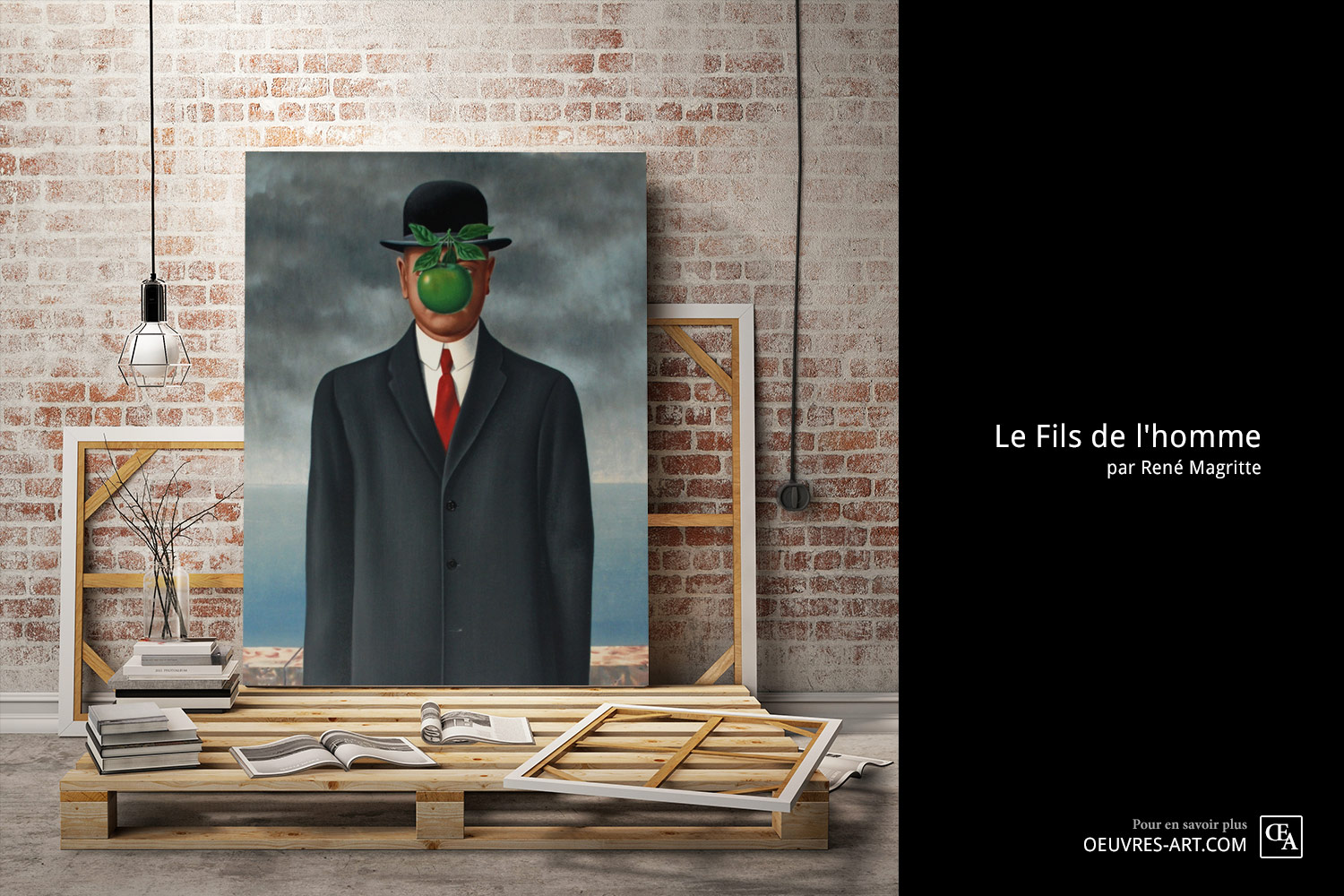
Ah, Le Fils de l'homme (The Son of Man). That bowler-hatted enigma peering out from behind a strategically placed green apple. Even if you're not an art history buff, you've probably seen it somewhere. On a mug, a t-shirt, or maybe even as a meme. But what's the real story behind this iconic Surrealist painting by René Magritte? And why does it continue to capture our imaginations decades later? Let's dive in, shall we?
Magritte 101: Surrealism with a Side of Mystery
First things first, let's put Magritte in context. He was a key figure in the Surrealist movement, a group of artists and writers who sought to unlock the power of the unconscious mind. Think dreamscapes, illogical juxtapositions, and a healthy dose of rebellion against conventional reality. While fellow Surrealists like Dalí embraced the bizarre and the fantastical, Magritte's style was more subtle. He painted everyday objects—apples, hats, pipes—in unexpected ways, creating a sense of unease and questioning the very nature of perception.
Le Fils de l'homme, painted in 1964, is a perfect example of this. It’s not a chaotic explosion of imagery; it's deceptively simple. A man in a suit and bowler hat stands before the sea, his face obscured by an apple. A low wall separates him from the beach. Simple, right? Wrong. This painting messes with your head in a way that’s both unsettling and strangely captivating.
Decoding the Apple: Beyond the Obvious
So, what's with the apple? That's the million-dollar question. There are numerous interpretations, and Magritte himself remained deliberately ambiguous. Here are a few possibilities:
- The Hidden Face: Perhaps the most obvious interpretation is that the apple represents the hidden aspects of our identity. We all wear masks, concealing our true selves from the world, and sometimes even from ourselves. It's the secrets we keep, the vulnerabilities we hide.
- The Temptation: Drawing a parallel with the biblical story of Adam and Eve, the apple could symbolize temptation, sin, and the loss of innocence. This interpretation is particularly poignant given the painting's title, which evokes religious imagery ("The Son of Man").
- The Unknowable: Magritte often explored themes of the unknowable and the mysterious. The apple might simply represent the limitations of human perception. We can never truly know someone, or even ourselves, completely. There will always be something hidden, something just out of reach.
- A Touch of Humour: Don't underestimate Magritte's sense of humour! He often played with visual puns and unexpected juxtapositions. The apple could be a tongue-in-cheek commentary on the seriousness of the art world.
Ultimately, the meaning of the apple is up to you, the viewer. That’s the beauty of Surrealism – it’s about creating your own interpretation.
Did you know?
Magritte painted a similar work in the same year titled Le Grand Guerre. The painting presents a similar figure to Le Fils De L'homme but this time the figure is obscured by a bird. This is one of many paintings that Magritte created that depicted a man in a bowler hat.
Why Le Fils de l'homme Resonates Today
Even decades after its creation, Le Fils de l'homme continues to strike a chord with contemporary audiences. Why? Here are a few reasons:
- Universal Themes: The painting touches on universal themes of identity, perception, and the search for meaning. These are issues that resonate with people of all ages and backgrounds.
- Simplicity and Mystery: The painting's simple composition and enigmatic imagery create a sense of intrigue. It invites viewers to ask questions and ponder the deeper meanings behind the image.
- The Power of the Unconscious: In a world that often prioritizes logic and reason, Le Fils de l'homme reminds us of the power of the unconscious mind and the importance of embracing ambiguity.
- Its Meme-ability: Let's be honest, the image is perfectly suited to be a meme. Its simplicity and inherent strangeness lend themselves to all sorts of humorous and thought-provoking applications online.
Bringing Magritte into Your Life: Practical Tips for Embracing Surrealism
Okay, so you're inspired by Magritte. How can you incorporate a little Surrealist magic into your daily life? Here are a few ideas:

- Challenge Your Perceptions: Pay attention to the everyday objects around you and try to see them in a new light. Ask yourself, "What if...?" What if my coffee cup could fly? What if my shoes could talk?
- Keep a Dream Journal: Dreams are a direct line to the unconscious mind. Keep a notebook by your bed and write down your dreams as soon as you wake up. Look for recurring themes and symbols.
- Embrace the Unexpected: Step outside of your comfort zone and try something new. Visit a museum, attend a poetry reading, or take a class in a subject that interests you.
- Create Your Own Surrealist Art: Don't be afraid to experiment with different mediums and techniques. Try collage, automatic drawing, or simply painting from your imagination. Let go of your inhibitions and allow your creativity to flow.
- Watch Surrealist Films: Films like Luis Buñuel's Un Chien Andalou or David Lynch's Mulholland Drive are great examples of Surrealist storytelling. Be prepared for the illogical, the bizarre, and the downright unsettling!
Cultural Connections: From Apples to the Matrix
Le Fils de l'homme has influenced countless artists, filmmakers, and writers. You can see echoes of it in everything from René's L'homme au chapeau melon to the films of Terry Gilliam to graphic novels. The image of a figure in a suit and bowler hat, often obscured or distorted in some way, has become a visual shorthand for mystery, alienation, and the questioning of reality. Think about films like The Matrix, where characters are constantly questioning what is real and what is not. It's all connected!
Another great example would be in the world of literature. The image conjures similar themes and feelings found in Albert Camus' L'Étranger (The Stranger), a novel exploring absurdity, alienation, and existential angst.
A French Touch
Naturally, being French myself, I cannot finish this piece without making a reference to cinema! Le Fils de l'homme seems to be an inspiration to many directors. For example, the film Mr. Hulot's Holiday by Jacques Tati, contains a few similar scenes and themes of the famous art piece.
Final Thoughts: The Apple of Our Eye
Le Fils de l'homme is more than just a painting; it's a mirror reflecting our own anxieties, desires, and uncertainties. It reminds us that the world is not always as it seems, and that there are always hidden depths beneath the surface. Perhaps we are all a little like the man in the bowler hat, concealing our true selves behind a carefully constructed facade.
So, the next time you see that green apple, take a moment to reflect on the mysteries of life and the importance of embracing the unknown. And remember, sometimes the most profound truths are hidden in plain sight.





/media.prod.hawc.canal.aws.io-cplus.net/WBD_157734_000_FR_TITLELOGO_fr-FR.png)