Ah, the eternal question that has plagued French learners since… well, since verbs existed! "Je l'ai envoyée ou envoyé?" It's the grammatical equivalent of navigating a Parisian roundabout during rush hour. Chaotic, confusing, and you’re pretty sure you're going to break something (hopefully not your French ego!). Fear not, mes amis, because we’re about to unravel this linguistic conundrum with the grace of a tipsy mime and the accuracy of a… well, a grammarian who's had a very strong espresso.
The Dreaded Agreement: What's All the Fuss About?
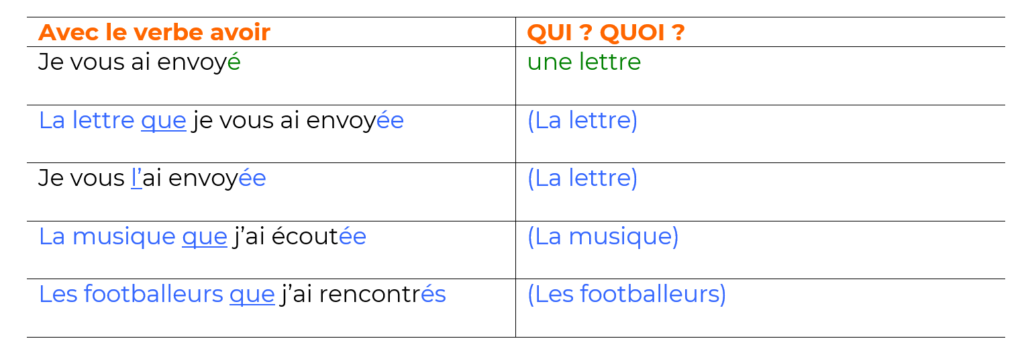
Let’s get this straight right off the bat: The past participle, in certain cases (and French loves its exceptions), agrees in gender and number with the direct object that comes before the verb. Think of it as a grammatical dance, a tango if you will, where the verb has to follow the lead of the object. Sometimes it's smooth, sometimes you trip over your own feet, but hey, that's part of the fun, non?
So, when you say "Je l'ai envoyé(e)," the "l'" is your direct object. The question is, what does it refer to? Is it a masculine 'le' hiding behind a contracted facade, or is it a feminine 'la' playing coy? The answer, my friends, determines whether we add that oh-so-important "e" at the end of "envoyé."
Decoding the "L'": Is it a Dude or a Dudette?
This is the million-dollar question, isn't it? The "l'" is the master of disguise, the chameleon of pronouns. It could be:
- Le (masculine singular): Refers to a masculine noun.
- La (feminine singular): Refers to a feminine noun.
How do we tell the difference? Context, mon ami, context! This is where your inner Sherlock Holmes comes into play. Examine the clues! Interrogate the surrounding sentences! Demand answers! (Okay, maybe just calmly re-read the previous sentence. No need to scare the neighbors).
Let’s look at some examples to illustrate this point, shall we? Consider these two scenarios:
Scenario 1:
"Où est le paquet?" "Je l'ai envoyé hier."
Translation: "Where is the package?" "I sent it yesterday."
In this case, "l'" refers to "le paquet" (the package), which is masculine. Therefore, we say:
"Je l'ai envoyé hier." (No "e" at the end of "envoyé")
The package, being a good masculine noun, allows "envoyé" to remain in its original, unadorned form. He's happy. The verb is happy. Everyone's happy.
Scenario 2:

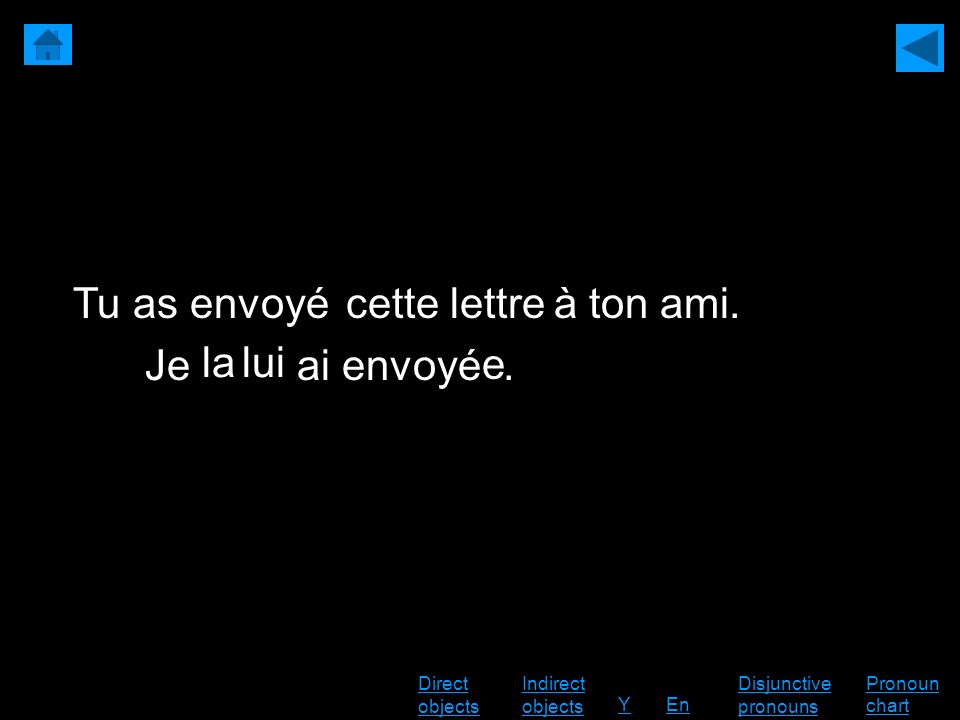
"Où est la lettre?" "Je l'ai envoyée hier."
Translation: "Where is the letter?" "I sent it yesterday."
Here, "l'" refers to "la lettre" (the letter), which is feminine. Therefore, we must add the "e" to "envoyé":
"Je l'ai envoyée hier."
The letter, being a sophisticated feminine noun, demands that "envoyé" acknowledge her presence with the addition of the "e." It’s a sign of respect, you see. A grammatical curtsy, if you will.
The Auxiliary Verb "Avoir": The Culprit Behind the Agreement
Why are we even bothering with this agreement business? Blame it on the auxiliary verb "avoir"! When the passé composé (the past tense formed with "avoir") has a direct object pronoun (like "l'") preceding the verb, the past participle must agree with that direct object in gender and number. It’s a rule! A grammatical decree! Thou shalt agree, or face the wrath of the French Academy! (Okay, maybe not wrath, but definitely a stern talking-to).
If the auxiliary verb is "être," the agreement is always required, regardless of the object's position. But that's a whole other can of grammatical worms that we won't open today. We’re focusing on "avoir" and its demanding direct object pronouns. One linguistic battle at a time, mes amis. One linguistic battle at a time.
Practical Examples: Let's Put This Into Action!
Alright, enough theory! Let's get our hands dirty with some practical examples. Imagine you're chatting with a friend about your weekend activities (as one does in France, preferably over a café au lait and a croissant).
Example 1: The Movie
"Tu as vu le nouveau film?" "Oui, je l'ai vu hier soir."
Translation: "Did you see the new movie?" "Yes, I saw it last night."

"L'" refers to "le nouveau film" (the new movie), which is masculine. Therefore:
"Je l'ai vu hier soir." (No "e" needed. The movie is a dude.)
Example 2: The Book
"Tu as lu la nouvelle livre?" "Oui, je l'ai lue avec plaisir."
Translation: "Did you read the new book?" "Yes, I read it with pleasure."
"L'" refers to "la nouvelle livre" (the new book), which is feminine. Thus:
"Je l'ai lue avec plaisir." (The "e" is essential! The book is a lady.)
Example 3: The Email
"As-tu envoyé le courriel?" "Oui, je l'ai envoyé ce matin."
Translation: "Did you send the email?" "Yes, I sent it this morning."

"L'" refers to "le courriel" (the email), which is masculine (even though "email" in English is often considered neuter, French doesn't play those games). Therefore:
"Je l'ai envoyé ce matin." (Keep that "e" away! The email is a gentleman.)
Example 4: The Song
"Tu as écouté la chanson?" "Oui, je l'ai écoutée en boucle!"
Translation: "Did you listen to the song?" "Yes, I listened to it on repeat!"
"L'" refers to "la chanson" (the song), which is feminine. Hence:
"Je l'ai écoutée en boucle!" (The "e" is non-negotiable! The song is a diva.)
Tips and Tricks for Mastering the Agreement
Okay, so you get the basic idea, but you're still terrified of making mistakes? Don't worry, even native French speakers occasionally stumble over this rule. Here are a few tips and tricks to help you navigate the agreement jungle:
- Identify the Direct Object: This is the crucial first step. Find the noun that the "l'" is replacing. What is it? What gender is it? What number is it? (Singular or plural, though we’re just focusing on singular for now).
- Determine the Gender: Use your knowledge of French nouns to figure out if the direct object is masculine or feminine. If you're unsure, consult a dictionary. (Larousse and Le Robert are your best friends!)
- Remember the Rule: If the direct object pronoun ("l'", "le", "la", "les") comes before the verb conjugated with "avoir," the past participle must agree in gender and number with the direct object.
- Practice, Practice, Practice: The more you practice, the more natural this agreement will become. Do exercises, write sentences, and expose yourself to authentic French content.
- Don't Be Afraid to Make Mistakes: Everyone makes mistakes! It's part of the learning process. The important thing is to learn from your mistakes and keep practicing.
- Use Mnemonics: Create silly sentences or rhymes to help you remember the rule. For example, "Avoir before, agreement galore!" (Okay, it's not Shakespeare, but it works!).
- Visualize: Imagine the masculine nouns as wearing tiny mustaches and the feminine nouns as wearing tiny berets. This might sound ridiculous, but visual aids can be surprisingly helpful.
- Embrace the Chaos: French grammar can be illogical and frustrating at times. Just accept it and try to have fun with it. After all, it's just a language. (Said through gritted teeth).
Common Mistakes to Avoid
To further help you on your quest for grammatical accuracy, let's highlight some common pitfalls that French learners often encounter:
- Forgetting to agree at all: This is the most common mistake. Always remember to check if the direct object pronoun precedes the verb conjugated with "avoir."
- Incorrectly identifying the gender: Make sure you know the correct gender of the noun that the "l'" is replacing. Don't assume!
- Ignoring the plural: While we're focusing on the singular in this article, remember that the agreement also applies to plural direct objects. If the "l'" refers to a plural noun, you'll need to add an "s" (and possibly an "e" if it's feminine plural).
- Confusing "le" and "lui": "Le" is a direct object pronoun, while "lui" is an indirect object pronoun. They have different functions and require different grammatical treatment. Don't mix them up!
Advanced Scenarios: Just When You Thought You Had It Figured Out…
Of course, French grammar wouldn't be French grammar if there weren't a few advanced scenarios to keep you on your toes. Let's explore some of these complexities, shall we? (Prepare for your brain to hurt a little bit).
The Case of "En": The Sneaky Partitive Pronoun
The pronoun "en" can often muddy the waters when it comes to agreement. "En" replaces a noun preceded by a partitive article (du, de la, des) or an expression of quantity (beaucoup de, peu de, etc.). When "en" is present, the agreement rules can get a bit tricky. Sometimes there is agreement, sometimes there isn't, depending on the verb and the context. It's best to tackle this topic separately to avoid further confusion.
The Infinitive Construction: A Grammatical Tightrope Walk
When the direct object pronoun refers to an infinitive verb, the agreement becomes even more complicated. The rule is that if the direct object performs the action expressed by the infinitive, then there is agreement. If not, there is no agreement. For example:
"Je l'ai vue manger la pomme." (I saw her eat the apple.)
Here, "l'" refers to "elle" (she), and she is the one eating the apple. Therefore, we add the "e" to "vu."
"Je l'ai vu tomber." (I saw it fall.)
In this case, "l'" refers to an inanimate object (let's say, a vase), and it's not performing an action; it's simply falling. Therefore, we don't add the "e" to "vu."
Confused yet? Don't worry, this is advanced stuff! Even native speakers sometimes hesitate in these situations. The key is to carefully analyze the sentence and determine who or what is performing the action expressed by the infinitive.
A Word of Encouragement (and a Gentle Nudge)
Learning French grammar can be a challenging but ultimately rewarding experience. The agreement rules, while seemingly arbitrary and complex, are an integral part of the language. By mastering these rules, you'll not only improve your accuracy but also gain a deeper understanding of the nuances and subtleties of French.
So, don't give up! Keep practicing, keep asking questions, and keep embracing the beauty (and the occasional absurdity) of the French language. You've got this! We believe in you! (Even if you occasionally forget to add the "e").
Remember, even the most fluent French speakers make mistakes from time to time. The important thing is to learn from your errors and to continue striving for improvement. And who knows, maybe one day you'll be able to explain the agreement rules to others with the same level of clarity and wit (or at least, attempted wit) that we've demonstrated in this article.
Conclusion: The Final "Mot" (Word)
So, "Je l'ai envoyée ou envoyé?" The answer, as we've discovered, depends entirely on the gender of the thing you sent. Just remember to channel your inner detective, interrogate the "l'," and sprinkle in a healthy dose of grammatical common sense. If all else fails, just shrug, say "C'est compliqué!" and blame it on the French. They're used to it. After all, who can truly understand why a table is feminine ("la table") but a chair is masculine ("le chaise")? It's just one of life's great mysteries, like why socks disappear in the dryer or why cats are obsessed with cardboard boxes.
Now, go forth and conquer the French language! And if you accidentally add an extra "e" or forget one entirely, don't sweat it. Just smile, say "Pardon," and order another croissant. After all, a well-fed linguist is a happy linguist! And a happy linguist is less likely to obsess over the intricacies of past participle agreement. À bientôt!