Salut tout le monde ! Ever felt like you jumped to a conclusion a bit too quickly? Comme si… one thing happened, and boom, you just knew it caused something else? Well, mes amis, today we're diving into a fascinating (and super common!) logical fallacy called "Ergo Propter Hoc". Sounds fancy, right? Don't worry, it's way less intimidating than it seems. Think of it as a detective story gone wrong, a case of mistaken causality. On y va?
What's the Deal with "Ergo Propter Hoc"?
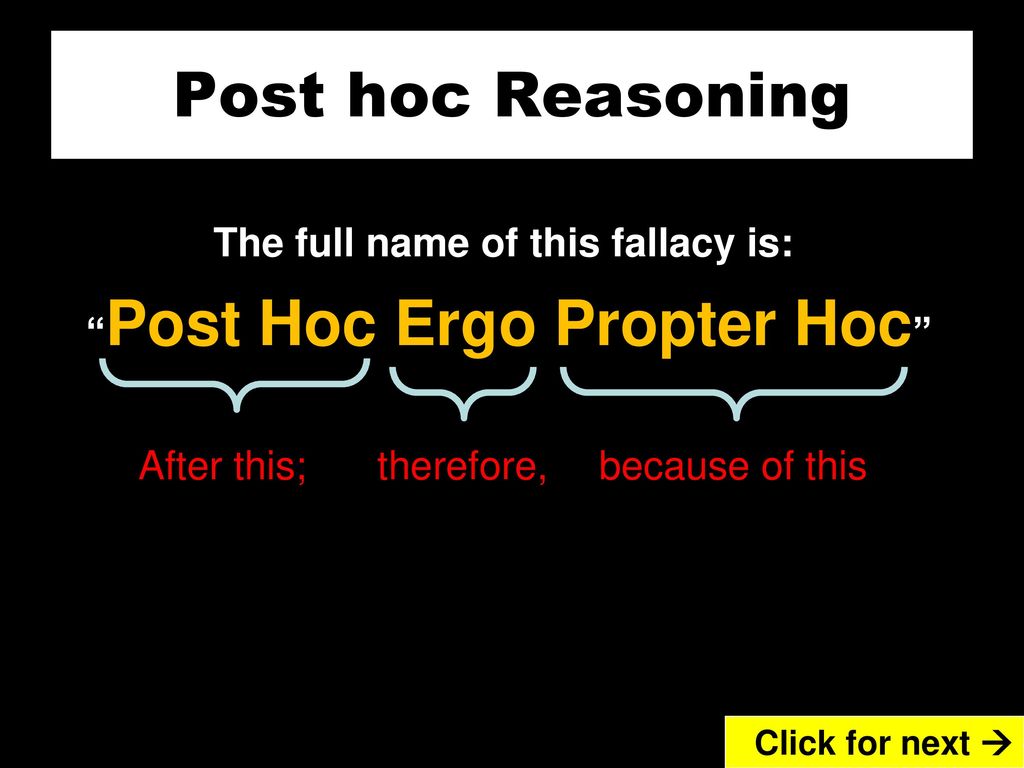
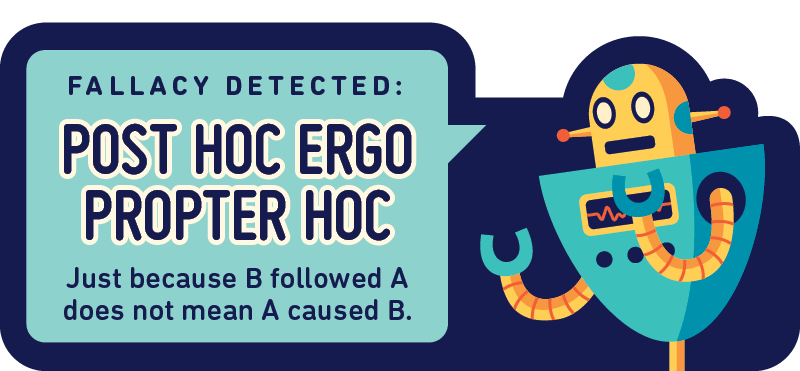
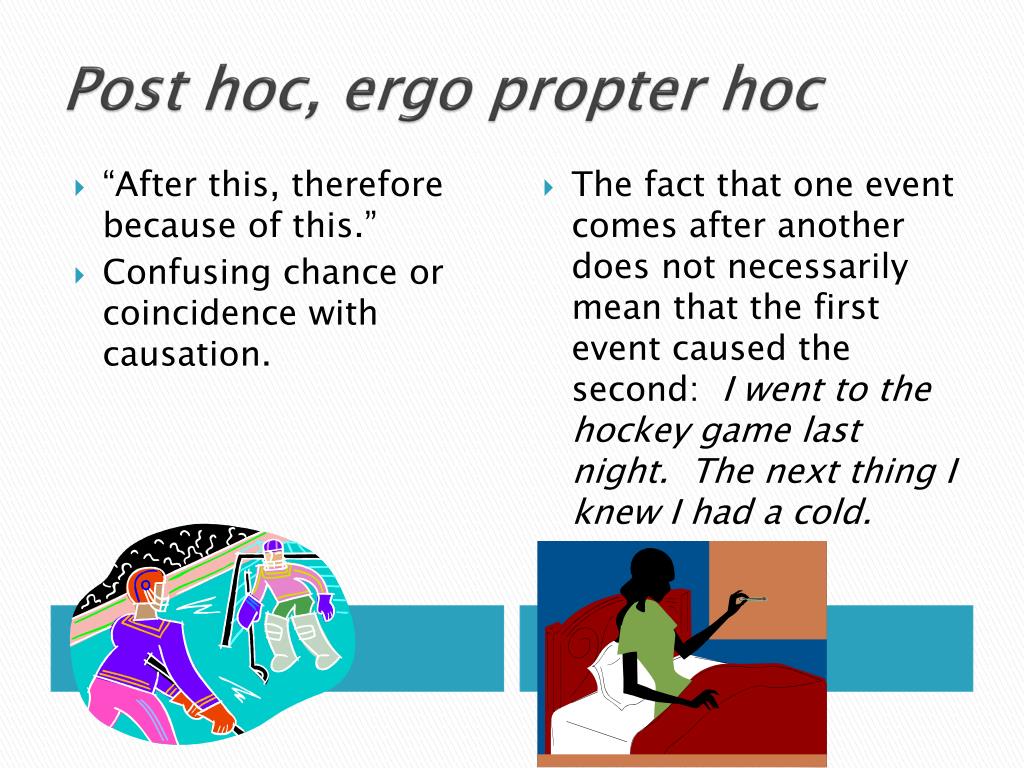
Okay, so the name itself is Latin. And Latin often sounds like something a wizard would chant, n'est-ce pas? "Ergo propter hoc" basically translates to "therefore because of this". The fallacy happens when you assume that because event B happened after event A, event A must have caused event B. Got it? It's a correlation/causation confusion extravaganza!
Think of it like this: Imagine you wore your lucky socks to a job interview, and you got the job! Great news! But...did your socks really get you the job? Or was it, perhaps, your dazzling resume, your killer interview skills, and maybe, just maybe, a little bit of luck independent of your footwear? That's "ergo propter hoc" in action. You're attributing a causal link based solely on sequence.
Why Is This So Easy to Fall For?
Well, our brains are wired to look for patterns. We want to understand the world, and finding cause-and-effect relationships helps us do that. It makes us feel safe and in control. Plus, sometimes there is a genuine connection! The problem is, our brains can jump the gun.
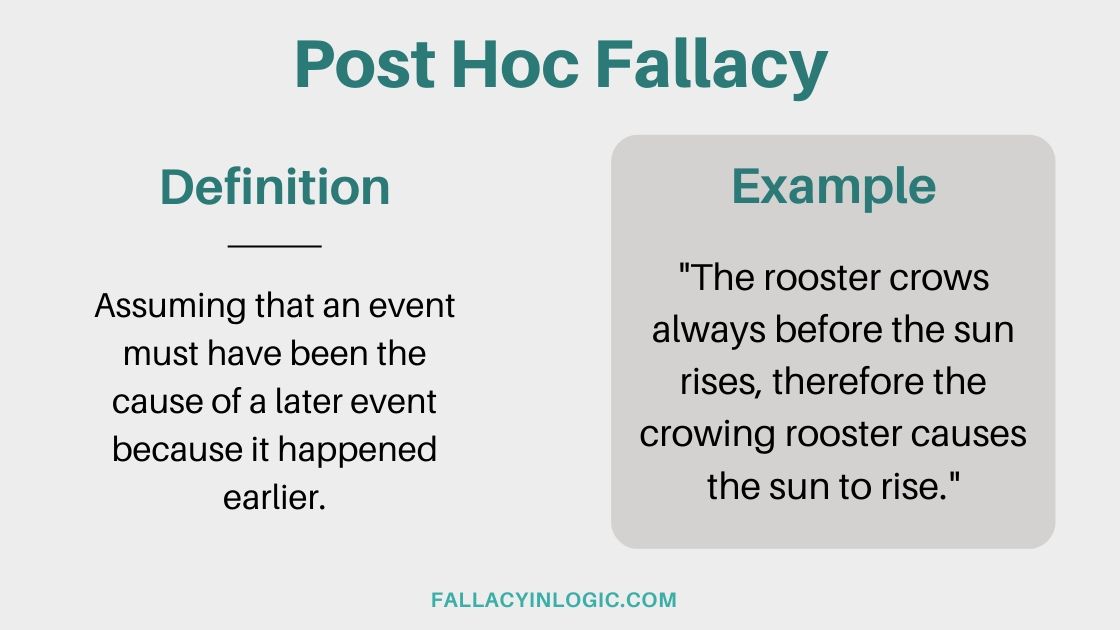
It's like assuming that because the rooster crows before sunrise, the rooster's crowing causes the sun to rise. Absurde, n'est-ce pas? But our brains are surprisingly good at making similar leaps. We're constantly bombarded with information, and sometimes we take shortcuts. Ergo propter hoc is one of those shortcuts that leads us down the wrong path.

Real-Life Examples (Because We've All Been There!)
Let's look at some common scenarios where "ergo propter hoc" rears its ugly head:
- The Political Arena: "Since the new president took office, the economy has improved. Therefore, the president's policies are responsible for the economic growth!" Maybe, but maybe not! There could be tons of other factors at play: global market trends, technological advancements, or even just the continuation of previous policies.
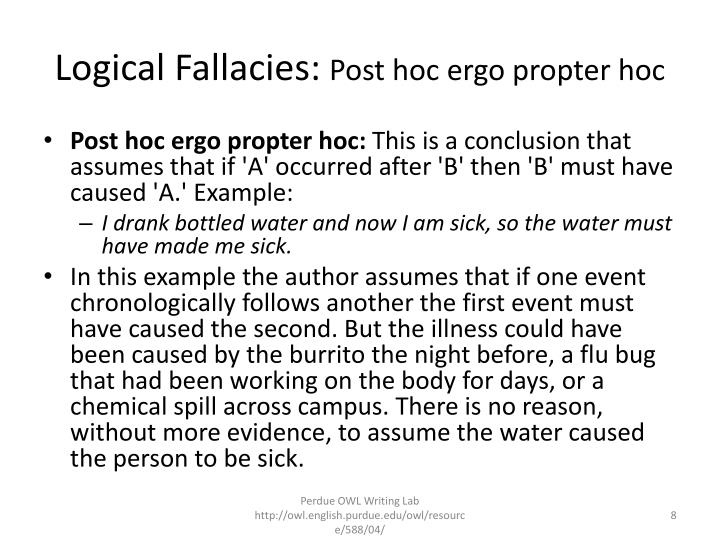
- Health and Wellness: "I started taking this new supplement, and my headaches disappeared! This supplement cured my headaches!" Again, maybe! But headaches can disappear on their own, or maybe you also started drinking more water or getting more sleep. Correlation does not equal causation, mon ami!
- Sports Superstitions: "I always wear my lucky jersey when my team plays, and they always win! My jersey is making them win!" This one's fun! It's harmless, but definitely a classic "ergo propter hoc" example. While a lucky jersey might boost morale (which could indirectly contribute to a win), it's highly unlikely it's the cause of the victory.
- Marketing Claims: "Our toothpaste whitens teeth! Our customers report whiter teeth after using our toothpaste!" Okay, but did they control for other factors? Did people also brush more often? Change their diet? The before-and-after doesn't automatically prove the toothpaste is the sole reason for the whiter teeth.
See? It's everywhere! And it's not always malicious. Sometimes, people genuinely believe they've discovered a causal relationship. The danger, of course, is making decisions based on false assumptions.

Why Should You Care? (It's Cooler Than You Think!)
Okay, so why is understanding this fallacy so cool? Well, for starters:
- It Makes You a Better Thinker: Recognizing "ergo propter hoc" helps you become more critical and analytical. You'll be less likely to accept claims at face value and more likely to ask probing questions. Think of yourself as a logic superhero!
- It Protects You From Manipulation: From advertising to politics, people often use causal claims to persuade you. Being aware of "ergo propter hoc" helps you spot these attempts and make more informed decisions. Knowledge is power, after all!
- It Enhances Your Arguments: When you understand logical fallacies, you can construct stronger and more persuasive arguments. You'll be able to avoid these pitfalls in your own reasoning and point them out in the arguments of others. Boom!
- It's Just Plain Interesting: Seriously! Diving into the world of logical fallacies is like unlocking a secret code to how our brains work (and sometimes miswork). It's fascinating to see how easily we can be tricked by our own assumptions.
Essentially, understanding "ergo propter hoc" is like getting a free upgrade for your brain. It helps you think more clearly, make better decisions, and navigate the world with a more critical eye.

How to Avoid Falling into the "Ergo Propter Hoc" Trap
So, what can you do to avoid falling victim to this tricky fallacy?
- Consider Other Explanations: Always ask yourself, "What else could have caused this?" Don't jump to the first conclusion that comes to mind. Brainstorm other possibilities.
- Look for Evidence of Causation: Don't just rely on sequence. Is there actual evidence to support a causal link? Is there a plausible mechanism by which event A could have caused event B? Can the result be repeated?
- Be Wary of Anecdotal Evidence: Personal stories can be compelling, but they're not always reliable. Just because something happened to one person doesn't mean it's a universal truth.
- Think About Confounding Variables: Are there other factors that could be influencing the outcome? Identifying these confounding variables can help you avoid making false assumptions about causality.
- Embrace Skepticism (But Not Cynicism!): It's healthy to be skeptical of claims, especially those that seem too good to be true. But skepticism is different from cynicism. Skepticism means questioning claims and demanding evidence; cynicism means assuming the worst motives.
Conclusion: Be a Logic Ninja!
Alors, voilà! You now know all about "ergo propter hoc." It's a common, but avoidable, logical fallacy that can lead to flawed reasoning and poor decision-making. By understanding this fallacy and practicing critical thinking, you can become a more informed, more persuasive, and, frankly, more awesome individual. So, go forth and conquer, mes amis! Arm yourself with logic, question assumptions, and never underestimate the power of a healthy dose of skepticism. Now, if you'll excuse me, I'm going to go buy some lucky socks...just kidding! (Mostly.)
À bientôt!









.jpg)