Alright, mes amis, let's talk pouvoir. Not the political kind (though knowing your French verbs is a power move), but the verb pouvoir, as in "to be able to," "can," or "may." We're diving into its present indicative conjugation, the most common and arguably the most useful form. Think of it as your daily dose of French verbal vitamins.
Pouvoir: The Breakdown
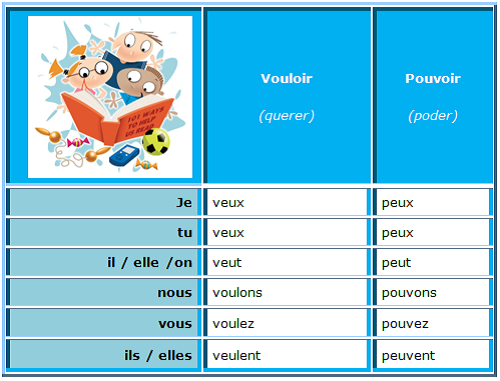
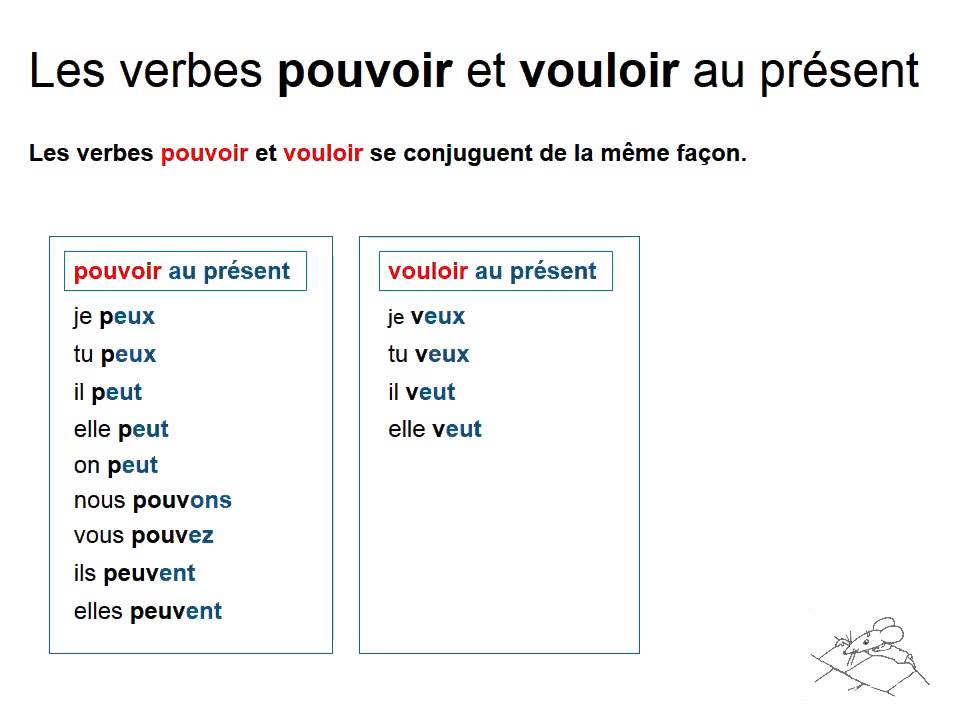
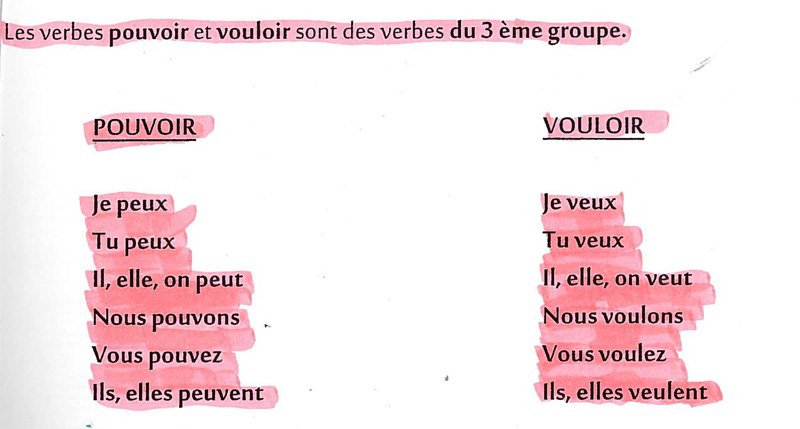
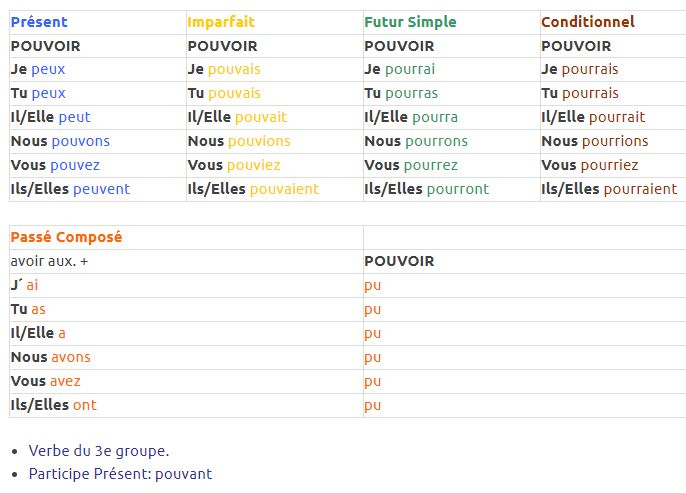
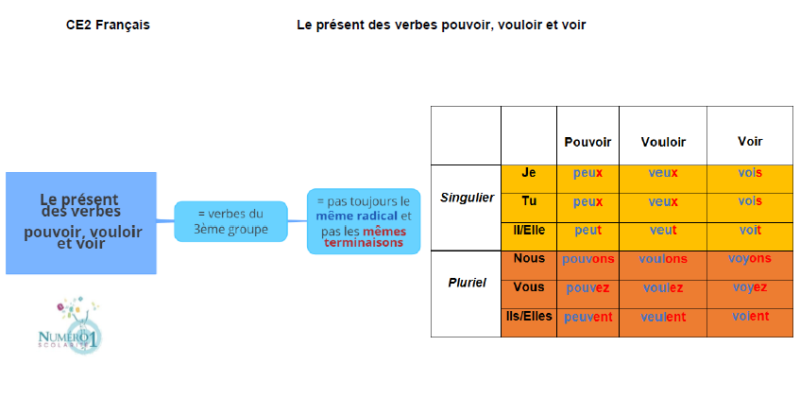
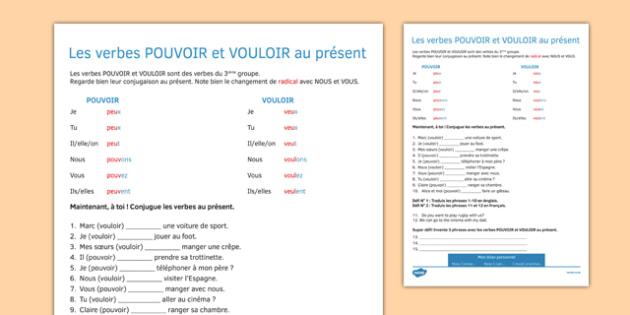
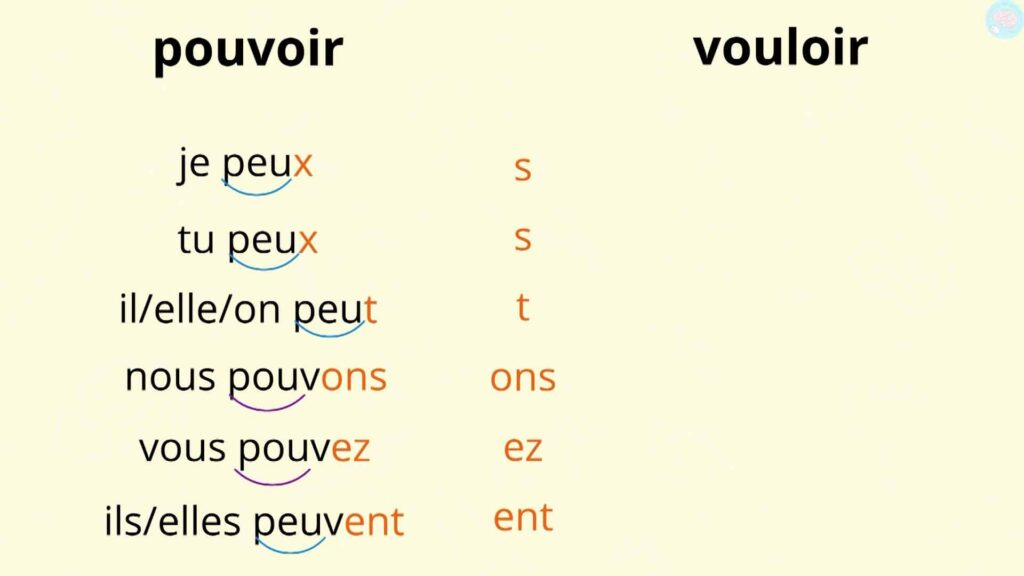
First, the conjugation. Let's face it, some French verbs are… dramatic. Pouvoir, thankfully, is relatively manageable. Here's the rundown:
- Je peux – I can, I am able to
- Tu peux – You can, You are able (informal)
- Il/Elle/On peut – He/She/One can, He/She/One is able
- Nous pouvons – We can, We are able
- Vous pouvez – You can, You are able (formal/plural)
- Ils/Elles peuvent – They can, They are able
Notice anything interesting? The "peux" and "peut" forms sound the same! Context is key, mon cher. Also, take a moment to appreciate how nous pouvons actually makes perfect sense. Sometimes, French throws you a bone.
Pouvoir in Action: Everyday Scenarios
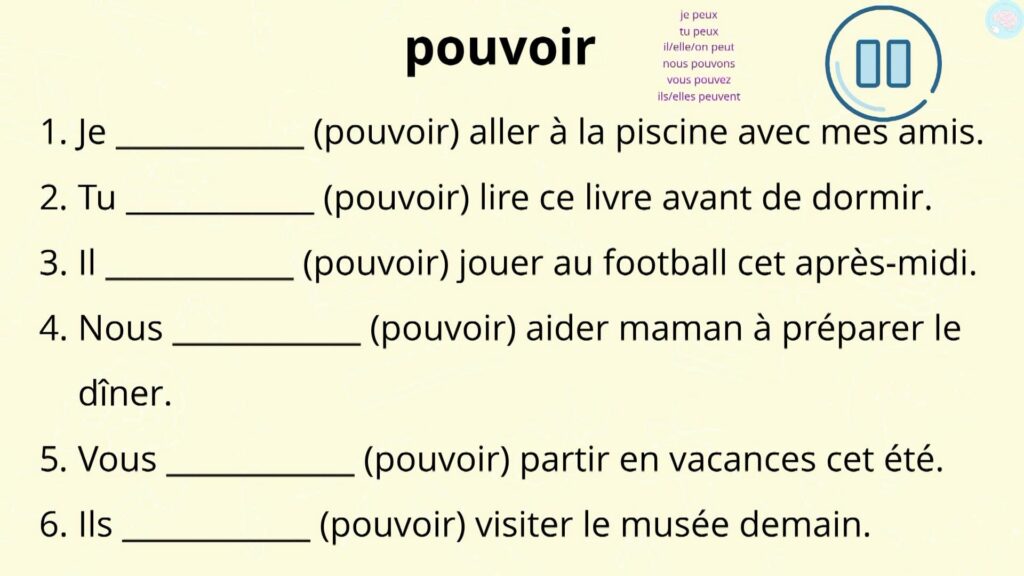
Okay, so you've memorized the conjugation. Now what? Let's see pouvoir in action in some real-life situations. This isn't just about grammar; it's about unlocking possibilities (pun intended!).
- At a café: Je peux avoir un café au lait, s'il vous plaît? (Can I have a latte, please?)
- Making plans: Tu peux venir à ma fête ce soir? (Can you come to my party tonight?)
- Offering help: Je peux vous aider? (Can I help you?)
- Expressing ability: Elle peut parler trois langues. (She can speak three languages.)
- Asking for permission: On peut fumer ici? (Can one smoke here? – Though probably not anymore!)
See? Pouvoir is your go-to verb for expressing abilities, asking for permission, and making polite requests. It's like a Swiss Army knife of French verbs!

Little Cultural Tidbits & Practical Tips
Let's spice things up with some fun facts and practical tips:
- Did you know? The expression "Qui peut le plus peut le moins" means "He who can do the greater can do the less." It's a fancy way of saying if you're capable of something big, you can certainly handle the small stuff.
- Pronunciation Tip: Don't overemphasize the "x" in "peux." It's a subtle sound. Think of it more as a breath at the end.
- Avoid the Trap: While "can" often translates to "pouvoir," be mindful of situations where "savoir" (to know how to) is more appropriate. For example, "I can swim" is "Je sais nager," not "Je peux nager." Tricky, I know!
- Boost Your Vocabulary: Pouvoir frequently pairs with other verbs. For example: Je peux aller (I can go), Tu peux manger (You can eat), Il peut comprendre (He can understand).
Beyond the Basics: Subtle Nuances
While we're focusing on the present indicative, it's worth noting that pouvoir, like any good verb, has its complexities. The conditional form (je pourrais) is often used for even more polite requests or expressing possibilities. For example, Pourrais-je avoir un verre d'eau? (Could I have a glass of water?) sounds a bit more refined than Puis-je avoir un verre d'eau? (Can I have a glass of water?). It's all about adding a touch of finesse!

Another thing to consider is that "pouvoir" isn't always about physical ability. It can express permission, opportunity, or even a likelihood. For example, "Il peut pleuvoir demain" means "It might rain tomorrow."
A Little Reflection: The Power Within
So, what's the takeaway? Pouvoir is more than just a verb; it's a reflection of our capabilities and potential. Every day, we face choices – things we can do, opportunities we can seize. Whether it's ordering a coffee in Paris or tackling a challenging project at work, understanding the verb pouvoir reminds us of the agency we possess. Alors, go forth and conquer, mes amis! You can do it! You pouvez le faire!