Salut toi! Ever feel like French verbs are throwing a wild party in your head, and you're not quite sure which invitation to accept? Don't worry, on est tous passés par là! (We've all been there!). Today, we're tackling a seemingly tricky, but actually super cool part of French grammar: verbs that use "être" in the "passé composé".
Okay, "passé composé" sounds intimidating, right? But think of it as French for "the past, but in a fancy way!" It's a common way to say what happened. Usually, we use "avoir" (to have) as our helper verb, but a select group of verbs prefer "être" (to be). Why? Well, because French. (Just kidding... sort of!).
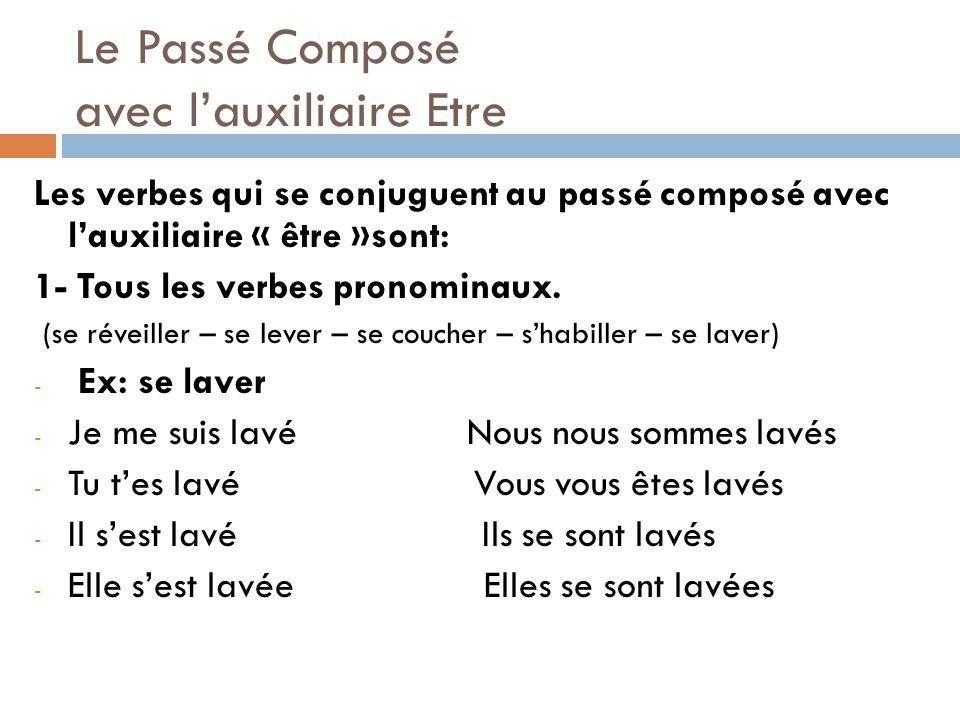
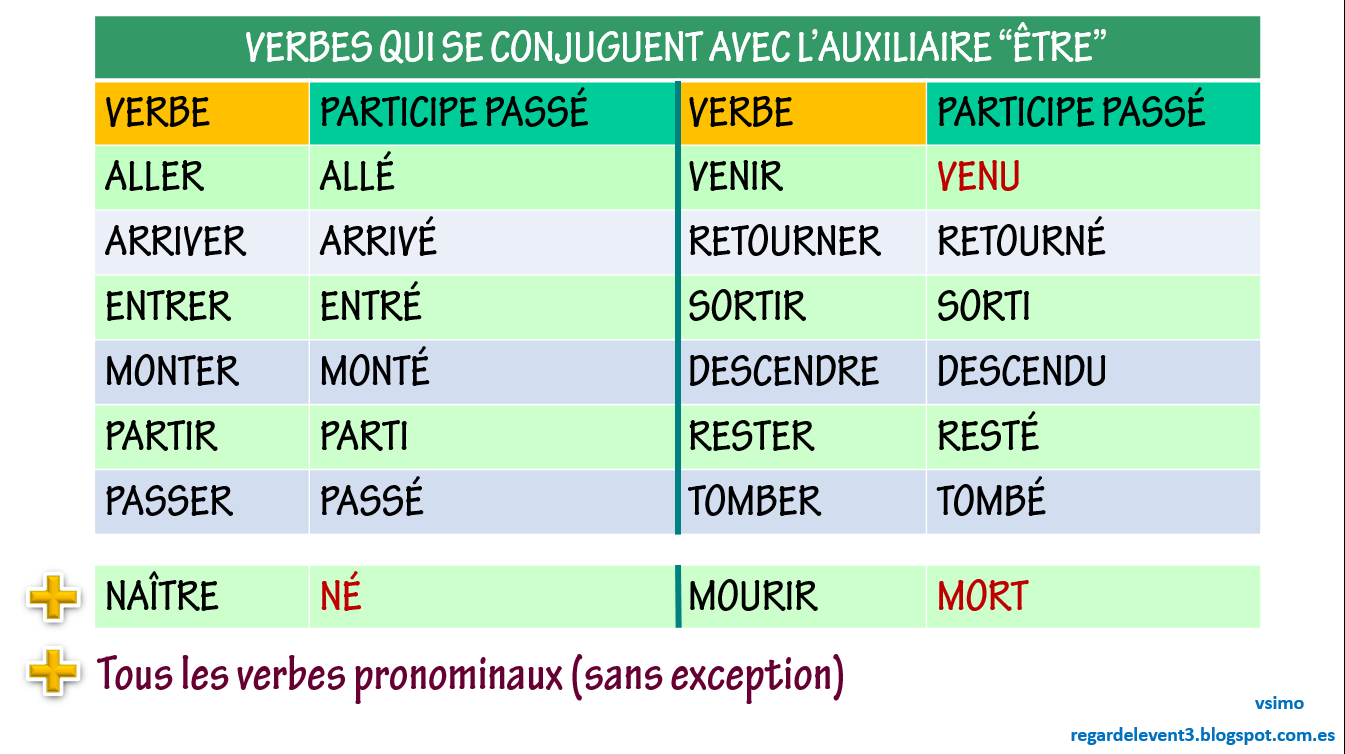
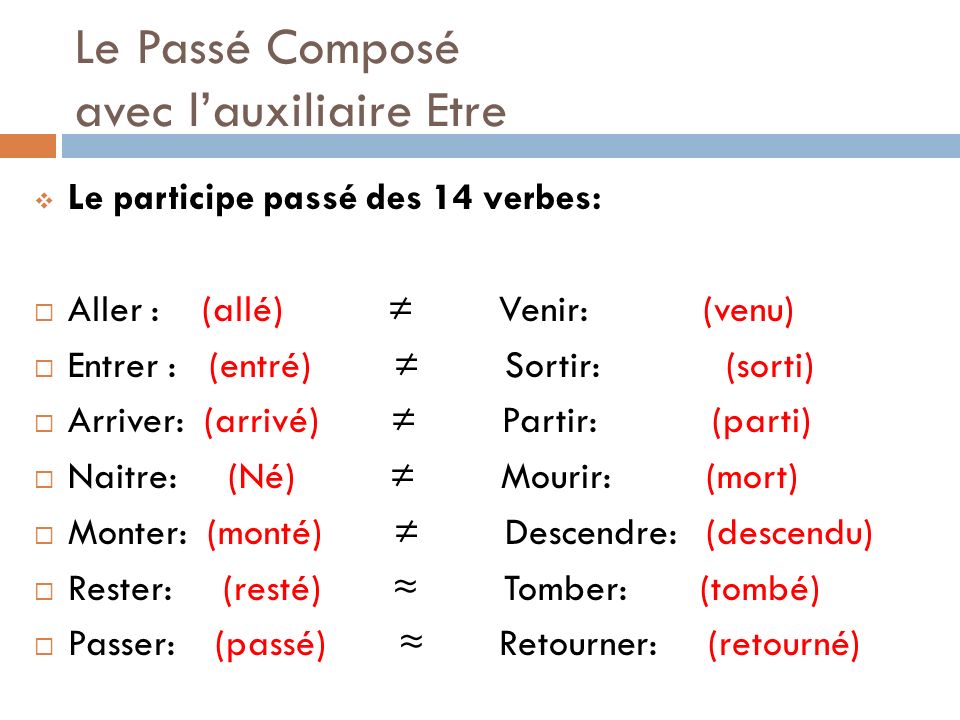
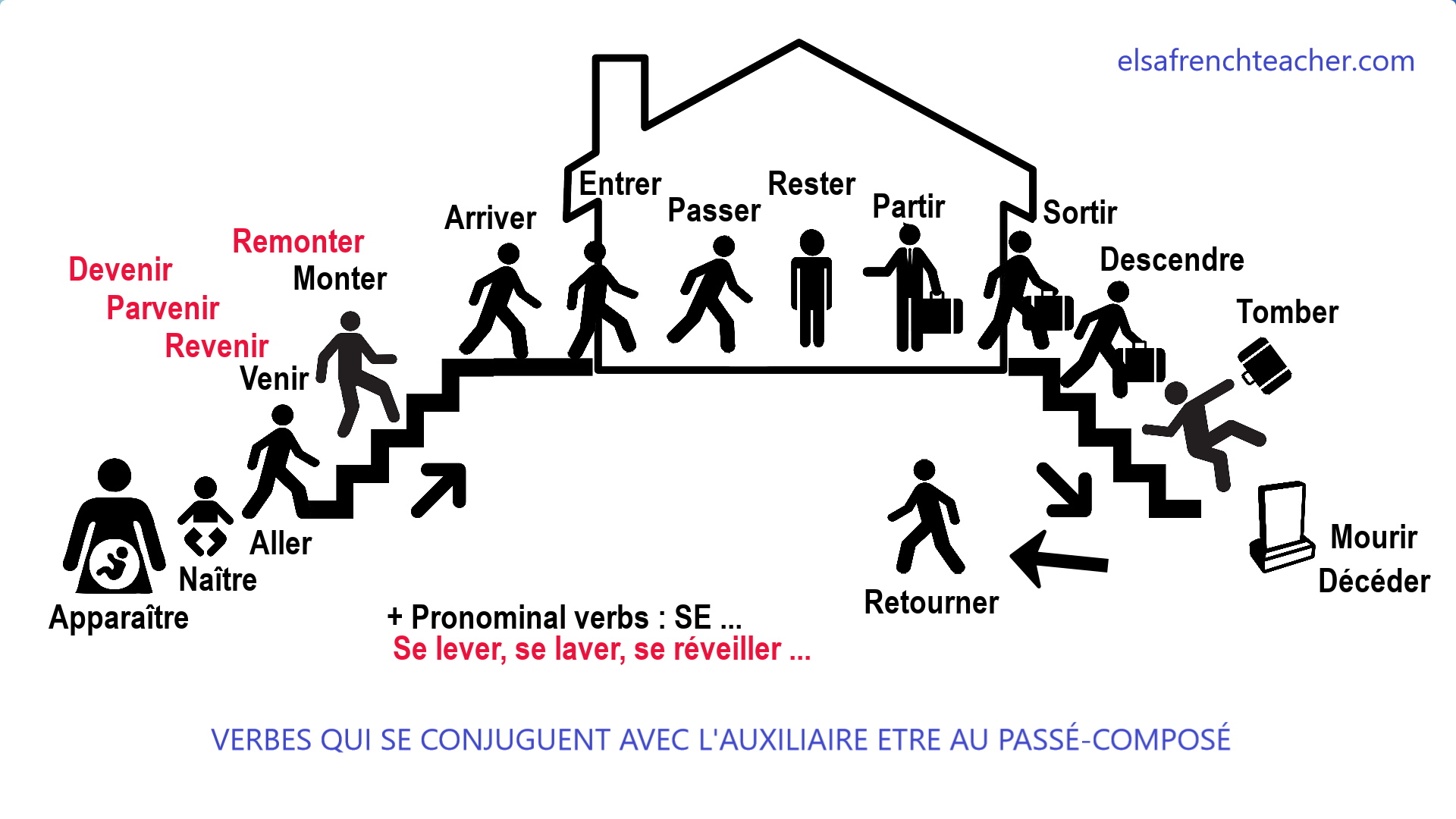
So, who are these picky verbs? Generally, they're verbs of motion and state. Think about it: aller (to go), venir (to come), arriver (to arrive), partir (to leave), mourir (to die), naître (to be born), monter (to go up), descendre (to go down), entrer (to enter), sortir (to exit), rester (to stay), tomber (to fall), retourner (to return) and all the verbs pronominaux (reflexive verbs - like se laver, se lever, etc.). Whew!
See a pattern? They're all about moving or becoming! You get it!
How does it work?
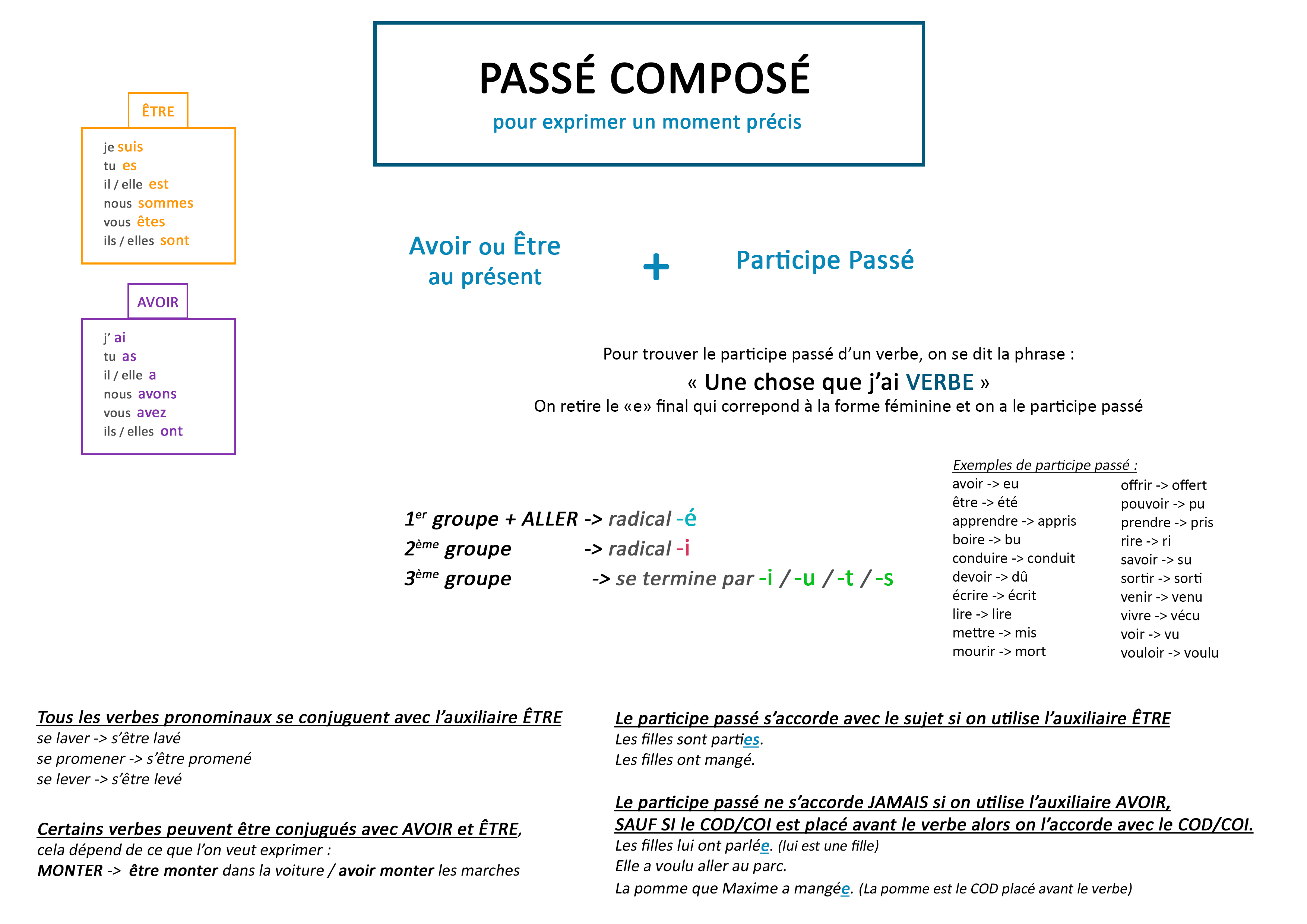
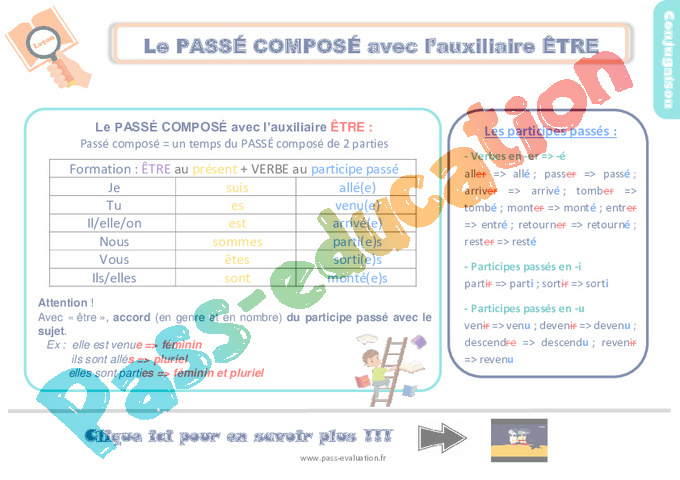
Here's the magic formula: Être (conjugated) + Past Participle.

For example: "Je suis allé(e) au cinéma." (I went to the movies). Notice the "(e)"? That's because with "être", the past participle agrees in gender and number with the subject. If you're a girl, add an "e"! If it’s plural, add an "s"! If it's a group of girls, add "es"! (Isn't French fun?!). "Nous sommes allés à la plage." (We went to the beach.) - assuming "nous" is a group of boys, or mixed gender. If it was all girls, it'd be "allées"!
Another example: "Elle est partie hier." (She left yesterday). Because it's "elle" (she - feminine), we add the "e" to "parti" (left).
Pro Tip: For reflexive verbs, the pronoun comes before the "être". "Je me suis levé(e) tôt." (I got up early).
Why bother learning all this? Because it unlocks a whole new level of expression! Suddenly, you can tell amazing stories about your adventures, your day, and everything in between! Plus, mastering this little grammar point will seriously impress your French-speaking friends. Crois-moi! (Believe me!).
Don't be intimidated by the list of verbs. Start with the most common ones, like aller, venir, partir. Practice using them in sentences. Try writing a short paragraph about your weekend using only verbs that take "être". It’s like a mini grammar game! The more you practice, the more natural it will become.
French is a beautiful language, and every little piece you master makes you that much more fluent and confident. So go forth, conquer the "passé composé" with "être," and unlock your inner French storyteller! Allez, on y va! (Let's go!).