Salut! Let's talk French. Let's talk… le passé simple. Yeah, I know, it sounds kinda intimidating. Like some ancient, dusty rule you gotta memorize. But trust me, it's way more fun than it looks.
Think of it as the dramatic past. The one your French ancestors used to use when telling epic tales around the campfire. Okay, maybe not campfire. Probably a fancy fireplace in a chateau. Details, details!
So, what is this passé simple anyway? It's a past tense. That's the basic idea. But it's not just any past tense. It's the past tense of novels. Of historical accounts. Of things that feel… finished. Like, really, truly over.
It’s kind of like the English “he spoke,” “she went,” “they saw.” Simple, right? But way more Frenchy. And, sadly, not used nearly as much in modern spoken French. Which kinda makes it cool, in a secret language sort of way.
Why Should You Even Bother?
Okay, valid question. Why learn something that practically no one uses in everyday conversation? Well, for starters, it’s everywhere in literature. You wanna read Victor Hugo? Proust? Zola? You need the passé simple, mon ami(e).
Plus, knowing it makes you sound super smart. Even if you stumble over the pronunciation (and let's be real, you probably will), you’ll impress people. They'll think you're some kind of French history professor or a time traveler. Both good options, in my book.
And honestly? It's a linguistic puzzle. Figuring out the patterns, the irregularities, the little quirks? It’s like cracking a code. A very French code. With cheese and croissants involved, hopefully.
How Does It Work? The Basics (Sort Of)
Alright, let's get down to brass tacks. How do you actually conjugate in the passé simple? Buckle up, it's gonna be a wild ride.

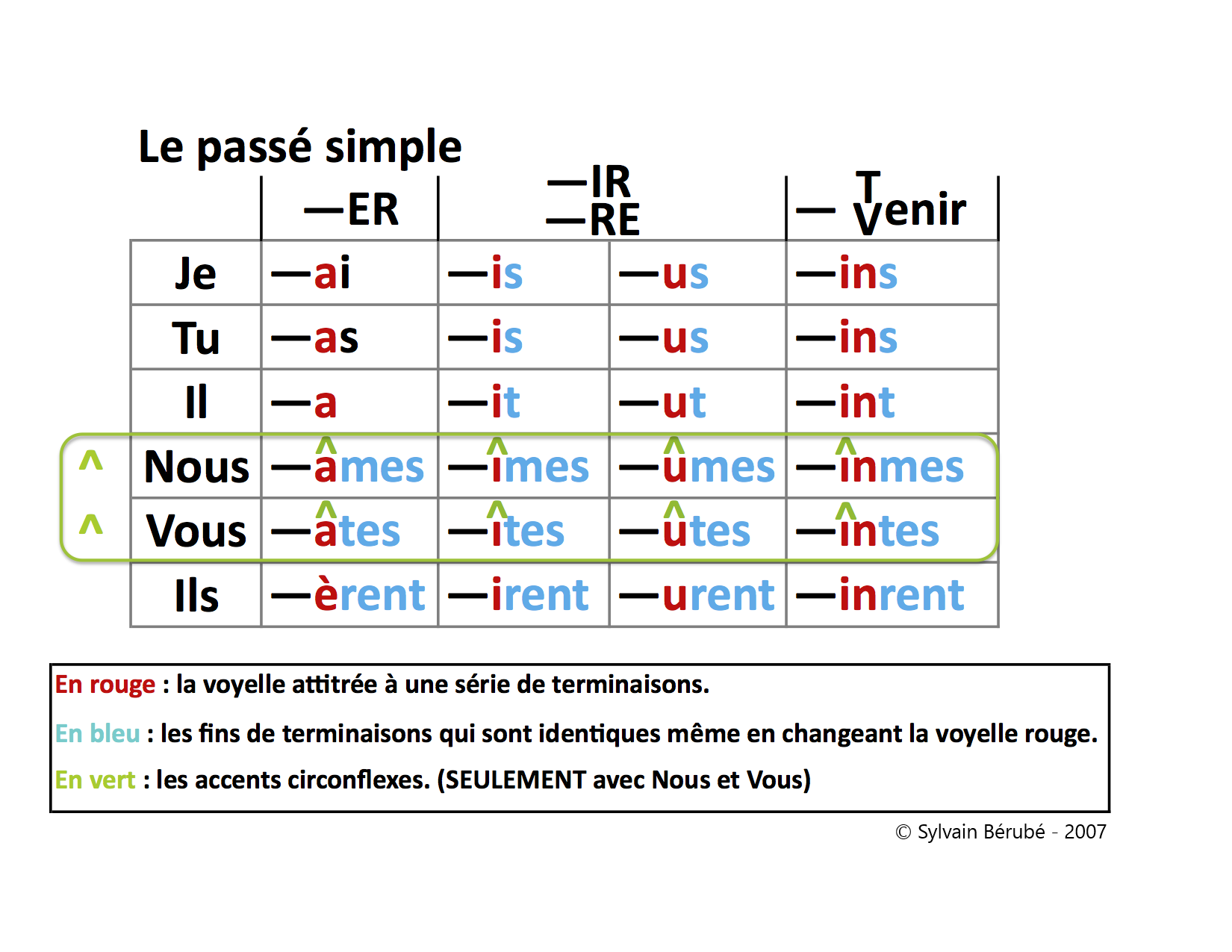
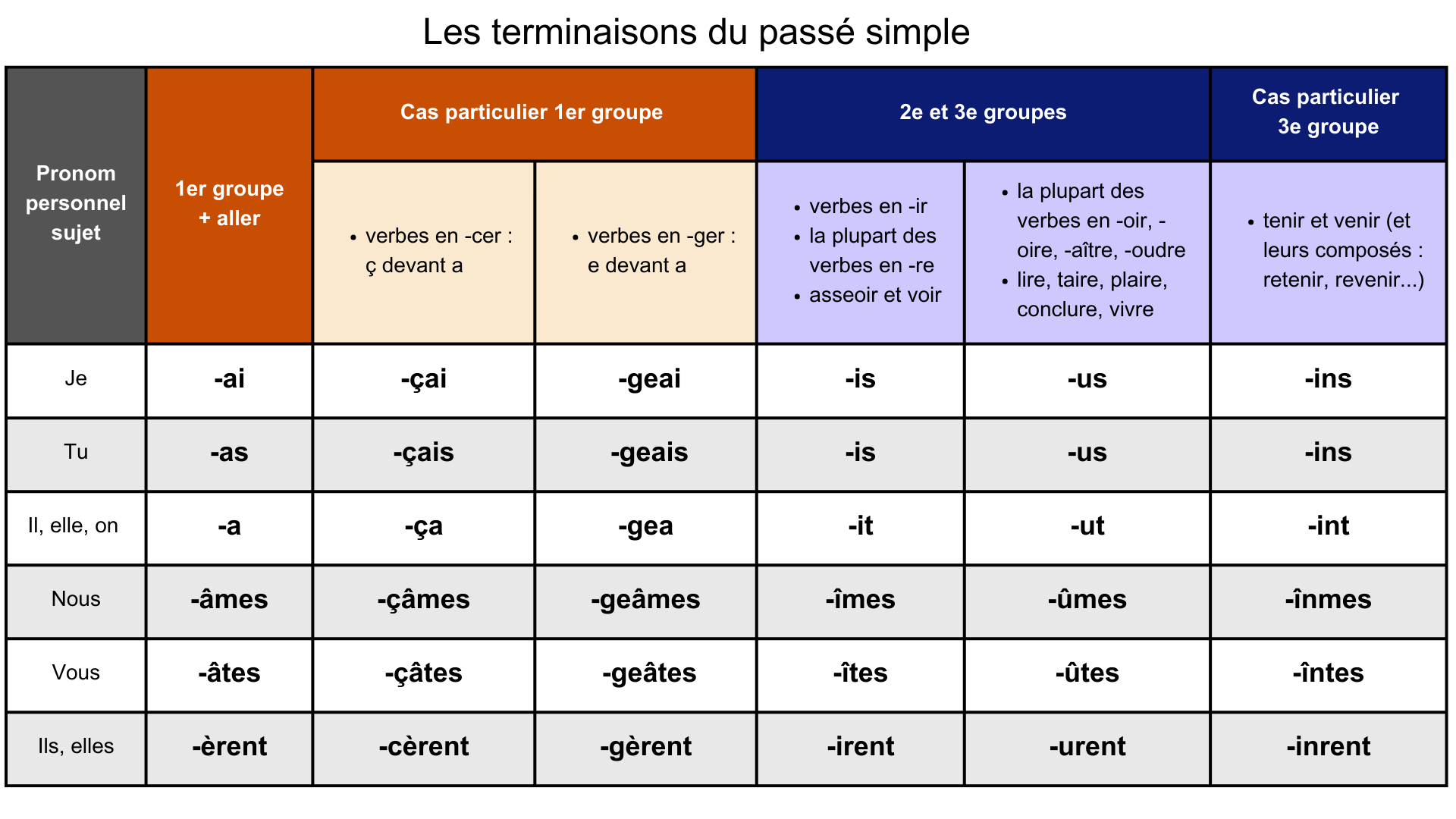
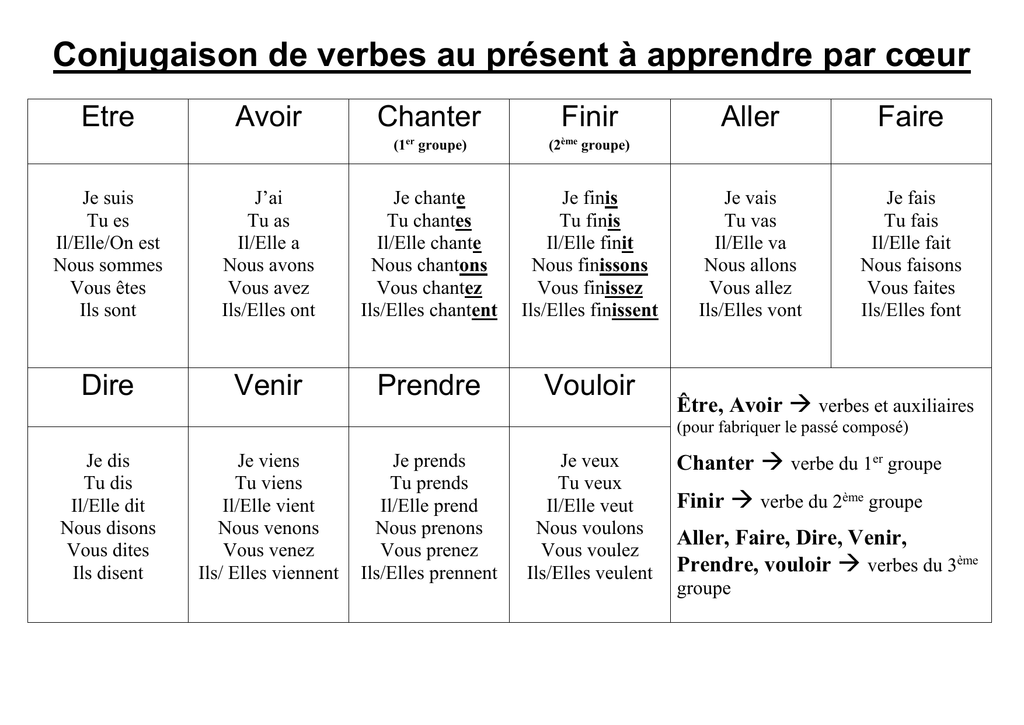
First, you gotta know your verb groups. Just like in the present tense, verbs ending in –er (like parler – to speak), –ir (like finir – to finish), and –re (like vendre – to sell) have different endings.
Let's start with the –er verbs. They're the most… normal. Relatively speaking.
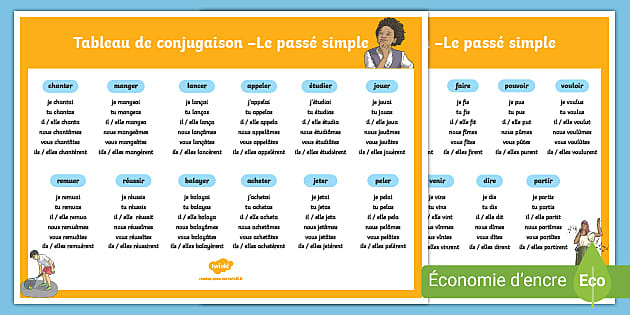
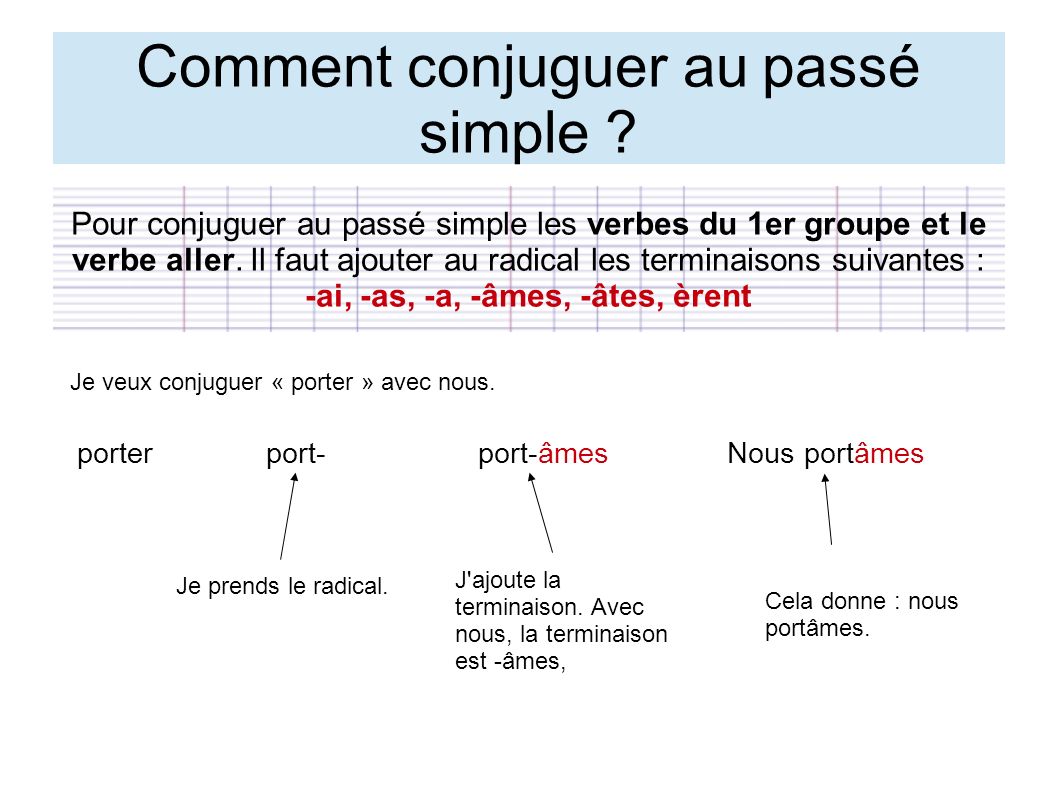
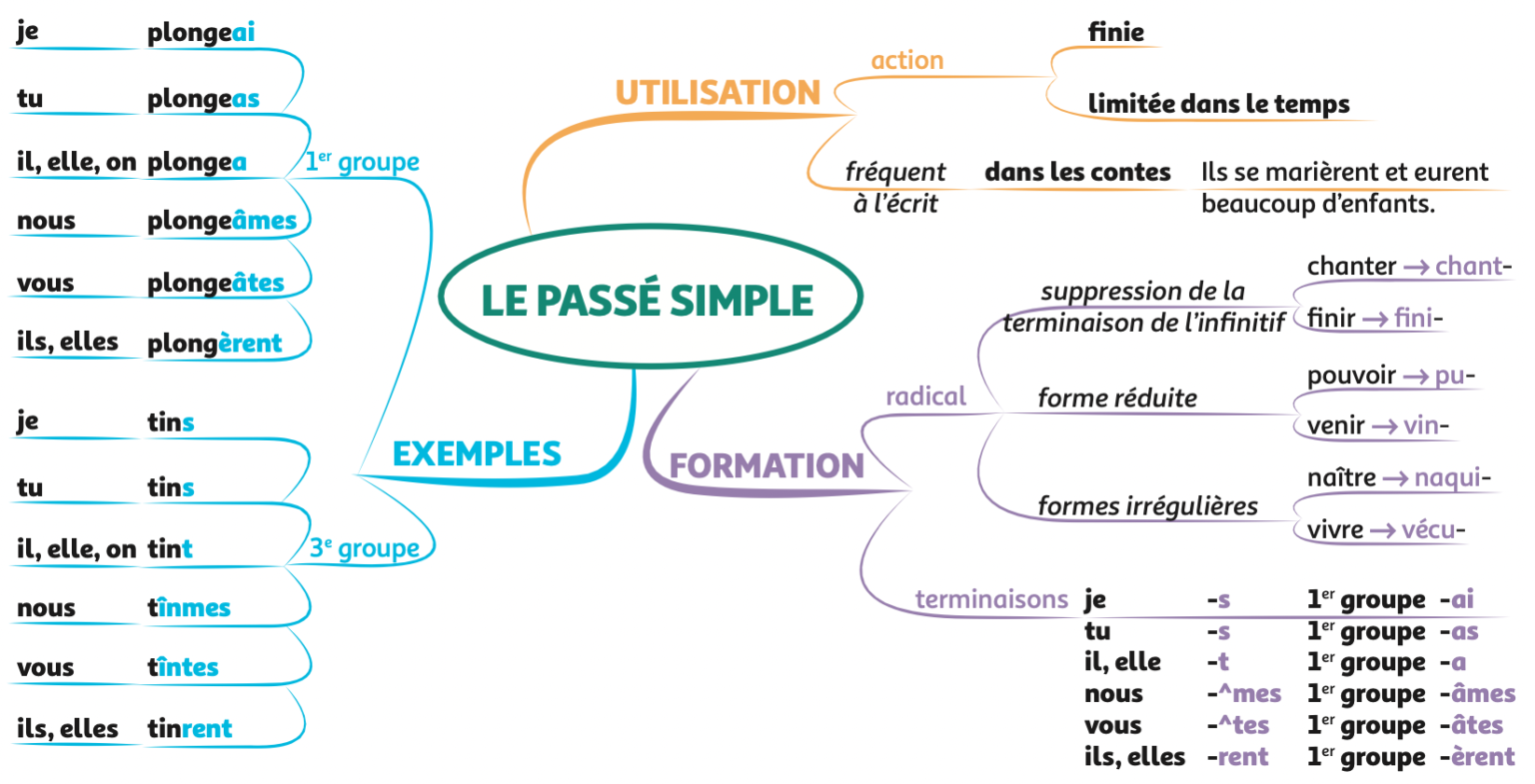
For parler (to speak), it goes like this:
- Je parlai (I spoke)
- Tu parlas (You spoke)
- Il/Elle/On parla (He/She/One spoke)
- Nous parlâmes (We spoke)
- Vous parlâtes (You spoke - formal/plural)
- Ils/Elles parlèrent (They spoke)
See those funky little accents? Those are important! They change the pronunciation. Don't skip them!
Now, for –ir verbs, like finir (to finish):
- Je finis (I finished)
- Tu finis (You finished)
- Il/Elle/On finit (He/She/One finished)
- Nous finîmes (We finished)
- Vous finîtes (You finished - formal/plural)
- Ils/Elles finirent (They finished)
Notice anything familiar? Yeah, the je and tu forms are the same as the present tense! Tricky, right?

And finally, –re verbs, like vendre (to sell):
- Je vendis (I sold)
- Tu vendis (You sold)
- Il/Elle/On vendit (He/She/One sold)
- Nous vendîmes (We sold)
- Vous vendîtes (You sold - formal/plural)
- Ils/Elles vendirent (They sold)
Again, je and tu are identical! The passé simple loves to keep you on your toes.
The Irregular Beasts
Okay, deep breath. Because now we get to the irregular verbs. And oh boy, are there a lot of them. These guys don't play by the rules. They laugh in the face of regularity. They're the rebels of the French verb world.
For example, être (to be). You'd think it would follow some kind of pattern, right? Wrong! It becomes:
- Je fus (I was)
- Tu fus (You were)
- Il/Elle/On fut (He/She/One was)
- Nous fûmes (We were)
- Vous fûtes (You were - formal/plural)
- Ils/Elles furent (They were)
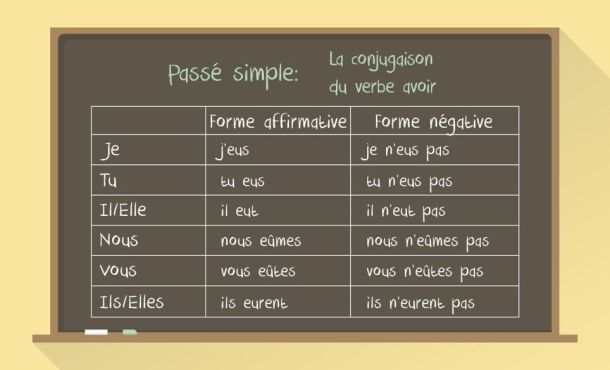
Totally different, huh? And avoir (to have) isn’t any better:

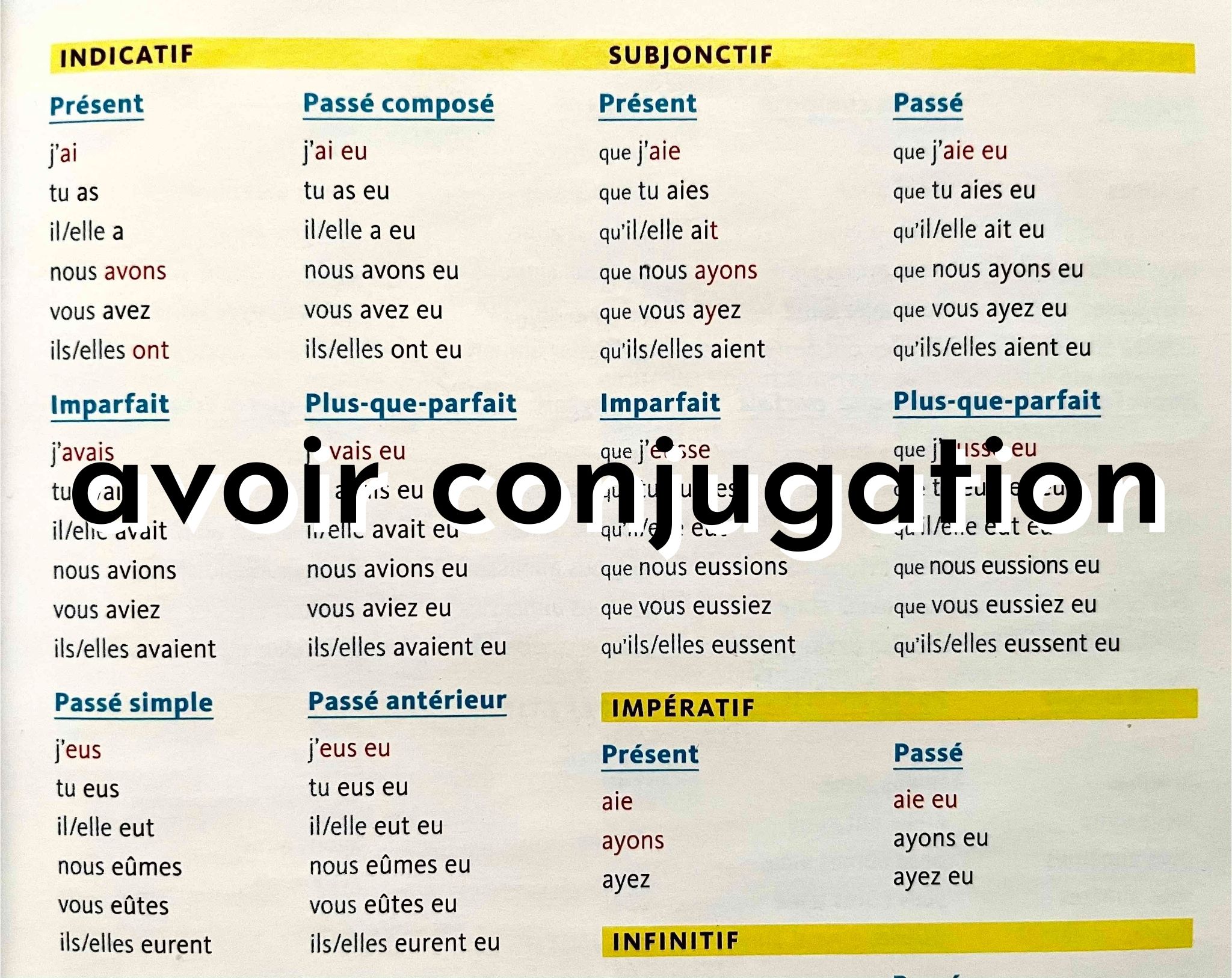
- J'eus (I had)
- Tu eus (You had)
- Il/Elle/On eut (He/She/One had)
- Nous eûmes (We had)
- Vous eûtes (You had - formal/plural)
- Ils/Elles eurent (They had)
The key here is memorization. Flashcards are your friend. Repetition is your mantra. And maybe a large glass of wine to ease the pain.
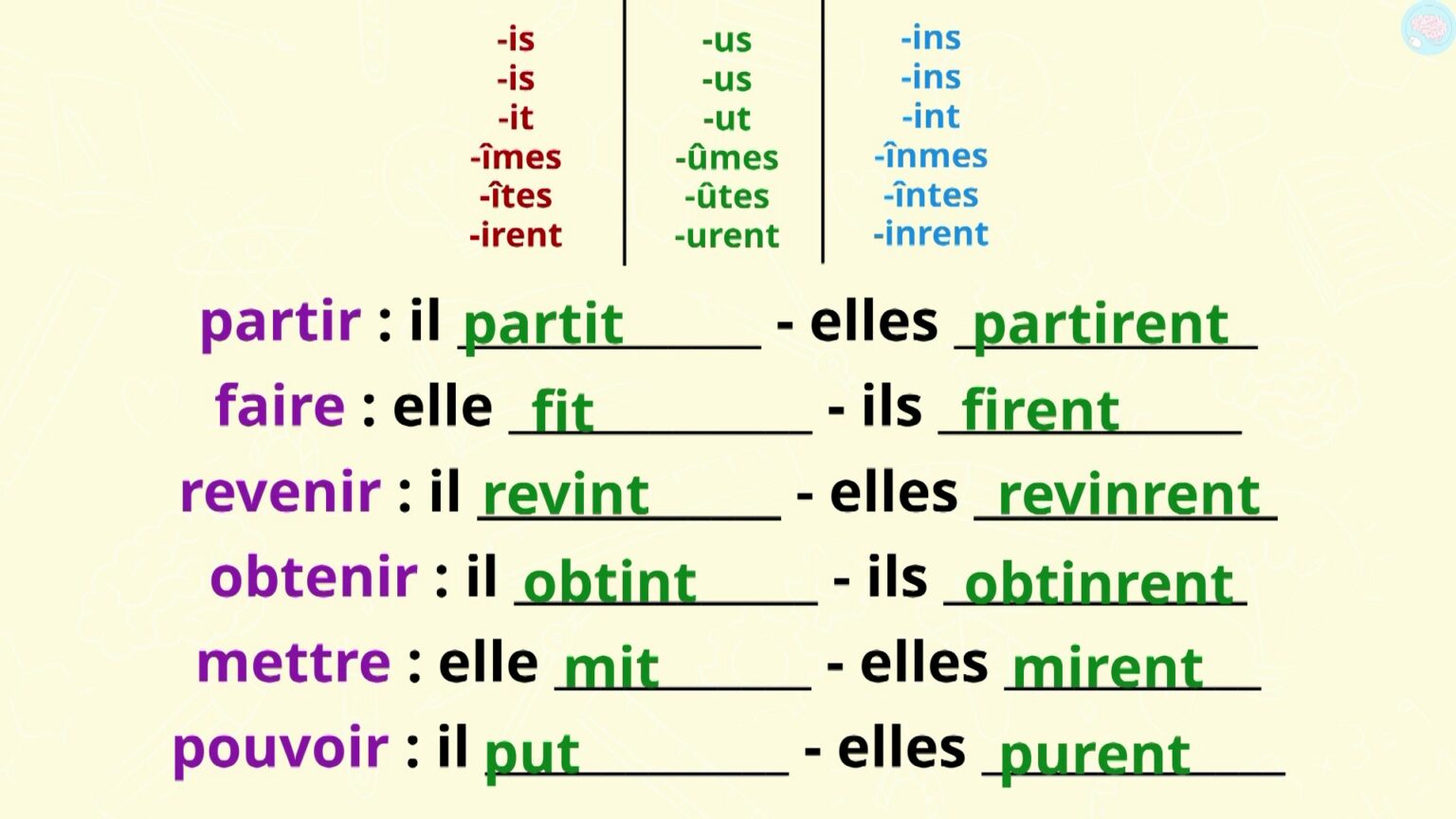
Some other common irregular verbs that take on completely new stems include faire (to do/make) becoming fis, venir (to come) becoming vins, and prendre (to take) becoming pris.
The good news? There are patterns within the irregularity! Once you start to learn a few of the irregular stems, you'll start to see how they work. For example, many verbs ending in "-re" often follow a stem ending in "-u-" like connaître (to know) becoming connus, croître (to grow) becoming crûs, and boire (to drink) becoming bus.
When Do You Actually Use It?
So, you've mastered the conjugations (or at least, you've memorized enough to fake it 'til you make it). Now, when do you actually use this thing?
As I mentioned before, the passé simple is primarily a literary tense. You'll find it in novels, historical texts, and formal writing. It's used to describe completed actions in the past, often in a sequence of events.
Think of it like this: if you're telling a story, and you want to sound like you're narrating a grand saga, the passé simple is your go-to tense. If you want to sound like you're chatting with a friend over coffee, stick to the passé composé (the "normal" past tense).

For example:
- "Il entra dans la pièce, ferma la porte, et s'assit à la table." (He entered the room, closed the door, and sat at the table.) – Passé simple (Sounds dramatic and literary)
- "Il est entré dans la pièce, il a fermé la porte, et il s'est assis à la table." (He entered the room, he closed the door, and he sat at the table.) – Passé composé (Sounds more natural and conversational)
The passé composé is also used for the past actions, but it's the workhorse for spoken French. The passé simple is your Sunday best. You wouldn’t wear a tuxedo to the grocery store, would you?
Fun Facts and Quirky Details
Here's some trivia to impress your friends (or at least, to make them wonder about your sanity):
- In some parts of Belgium and Switzerland, the passé simple is occasionally used in spoken language. Just a little bit. Mostly by older folks. But it happens!
- The passé simple used to be more common in everyday speech in France. But it gradually fell out of favor. Blame it on the rise of the passé composé! Or maybe on changing social norms. Who knows?
- Some French speakers still use the passé simple ironically. Like, if you want to be super dramatic about something mundane, you might throw in a passé simple verb to emphasize the absurdity. “Je mangeai une tartine au beurre ce matin!” (I ate a slice of bread with butter this morning! – said with extreme exaggeration).
So, Are You Ready to Conquer the Passé Simple?
Okay, I know it seems daunting. All those conjugations, all those irregular verbs, all those weird accents. But trust me, it's worth it. Once you get the hang of it, you'll unlock a whole new level of French fluency.
Plus, you'll be able to read all those classic novels without constantly reaching for a dictionary. You’ll be able to understand the nuances of French history. You'll be able to impress people at parties (or at least, confuse them). And isn't that what language learning is all about?
So go forth, my friend! Embrace the passé simple! And may your French adventures be filled with delicious food, beautiful scenery, and perfectly conjugated verbs. Bonne chance!