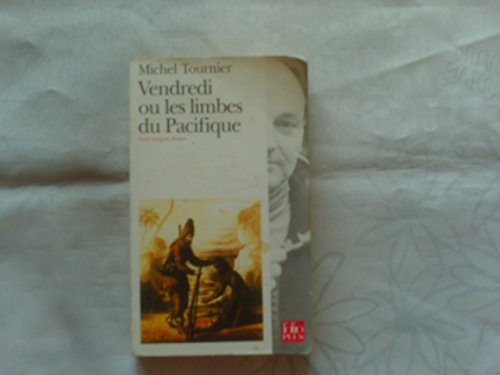
Okay, imagine this: you're stranded on a desert island. Not the fun, cocktail-sipping, Instagram-worthy kind. Nope. This is the real deal. You're alone. Your only friend is a volleyball you've painted a face on (we've all been there, right?). Now, multiply that by, oh, let's say ten, and you might get a glimpse of what Robinson Crusoe experienced. But even then, you'd be missing a crucial element: Friday. And it's not just any Friday, it's Vendredi in Michel Tournier's brilliant reimagining of the classic tale.
Tournier takes Daniel Defoe's "Robinson Crusoe" and flips it on its head. It's not just a survival story; it's a philosophical exploration of identity, civilization, and the relationship between man and nature. It's deep, but trust me, it's also incredibly engaging. Think of it as your next "beach read" – with a serious intellectual twist. You'll impress everyone. ;)
A Different Kind of Island Life
We all know the basic Crusoe story: shipwreck, survival, building a life from scratch. But Tournier's Robinson, named Robinson Kreutznaer (because, you know, originality is overrated), isn't just trying to survive. He's trying to impose his European order on the island, Speranza. He creates a miniature version of society, complete with rules, routines, and even a meticulously kept time schedule. He’s basically colonizing the island… with himself as the only inhabitant! Sounds a bit lonely, doesn't it?
He's obsessed with control, with turning Speranza into a reflection of his former life. He cultivates a garden, builds a shelter (which he names "Parliament," because, why not?), and keeps detailed journals. It's all about taming the wilderness and establishing dominance. You can practically hear him muttering about the importance of a good cup of tea at 4 pm. Priorities, people! But deep down, he’s really struggling. He's desperately clinging to his identity, afraid of losing himself to the wild.
Here are some key elements of Robinson's early island existence:

- Obsessive order: Everything has its place, its purpose, and its pre-determined time slot.
- Self-imposed labor: He works tirelessly to "improve" the island, often with little practical benefit.
- Social hierarchy (of one): He considers himself the master and everything else, including the island itself, his subject.
This rigid structure works… for a while. But nature, as it always does, eventually has its way. It starts with subtle challenges, and quickly accelerates into something more profound.
Enter Vendredi: A Catalyst for Change
Then, Vendredi arrives. Friday, rescued from a sacrificial ritual (a decidedly more complex origin story than Defoe's version!), is not just a servant or a disciple. He's a force of nature, a embodiment of the island's untamed spirit. He doesn't understand Robinson's rules, and frankly, he doesn't care. He lives in the present, embracing the spontaneity and beauty of Speranza. He's basically the anti-Robinson.
This clash of cultures – the rigid, controlling European versus the free-spirited, nature-loving native – is where the story truly takes off. Vendredi's presence gradually undermines Robinson's carefully constructed world. He breaks routines, questions assumptions, and introduces a completely different way of being. Imagine your super-organized friend suddenly deciding to embrace chaos... that’s basically the gist.

Vendredi doesn't just challenge Robinson; he transforms him. Through their interactions, Robinson begins to question the validity of his own beliefs and values. He starts to see the beauty and wisdom in Vendredi's way of life. He even starts to... gasp... enjoy himself!
Consider these changes in Robinson:
- Abandonment of rigid schedules: He starts to live in accordance with the natural rhythms of the island.
- Acceptance of imperfection: He lets go of the need to control every aspect of his environment.
- Embrace of spontaneity: He allows himself to be guided by intuition and impulse.
In short, Robinson starts to de-civilize himself. He sheds the layers of societal conditioning and rediscovers a more primal, authentic self. He becomes, in a sense, a new man.

Beyond the Island: A Broader Commentary
Tournier's novel is more than just a survival story or a tale of friendship. It's a commentary on colonialism, cultural relativism, and the destructive potential of imposing one's values on others. Robinson's initial attempt to "civilize" Speranza is a metaphor for the European colonization of the Americas and other parts of the world. It highlights the arrogance and shortsightedness of assuming that one's own culture is superior to others.
The relationship between Robinson and Vendredi also raises questions about the nature of power and the possibility of genuine equality. Initially, Robinson sees himself as Vendredi's master, but as he sheds his own prejudices and embraces Vendredi's way of life, their relationship becomes more balanced. They eventually achieve a kind of symbiotic partnership, where each complements the other's strengths and weaknesses.
But the story doesn’t end there. There is a twist! The arrival of a ship on the island that should take Robinson back to civilization throws a new wrench into things. You might think that Robinson would be overjoyed to return to his old life, but… well, I won’t spoil it for you. Let's just say that his transformation is complete and that he takes a choice that reveals the philosophical core of the book.

The Importance of Letting Go
Ultimately, "Vendredi ou les Limbes du Pacifique" is a story about the importance of letting go. Letting go of control, letting go of prejudices, and letting go of the need to define oneself through societal norms. It's about embracing the unknown, accepting the unexpected, and finding freedom in simplicity. It's about discovering that true civilization may not lie in imposing order on the world, but in finding harmony with it. Which, you know, is a pretty good message for today’s world, don’t you think?
So, the next time you feel overwhelmed by the pressures of modern life, remember Robinson Kreutznaer and his unexpected journey of self-discovery. Maybe, just maybe, you'll find your own Vendredi, or at least a slightly less stressful way to approach your inbox.
Final Thoughts: If you're looking for a thought-provoking and beautifully written novel that will challenge your assumptions and leave you with plenty to ponder, "Vendredi ou les Limbes du Pacifique" is definitely worth a read. And hey, it's a great conversation starter at parties! Just imagine dropping that little bomb during your next social event. You'll be the most interesting person there. Trust me. ;-)

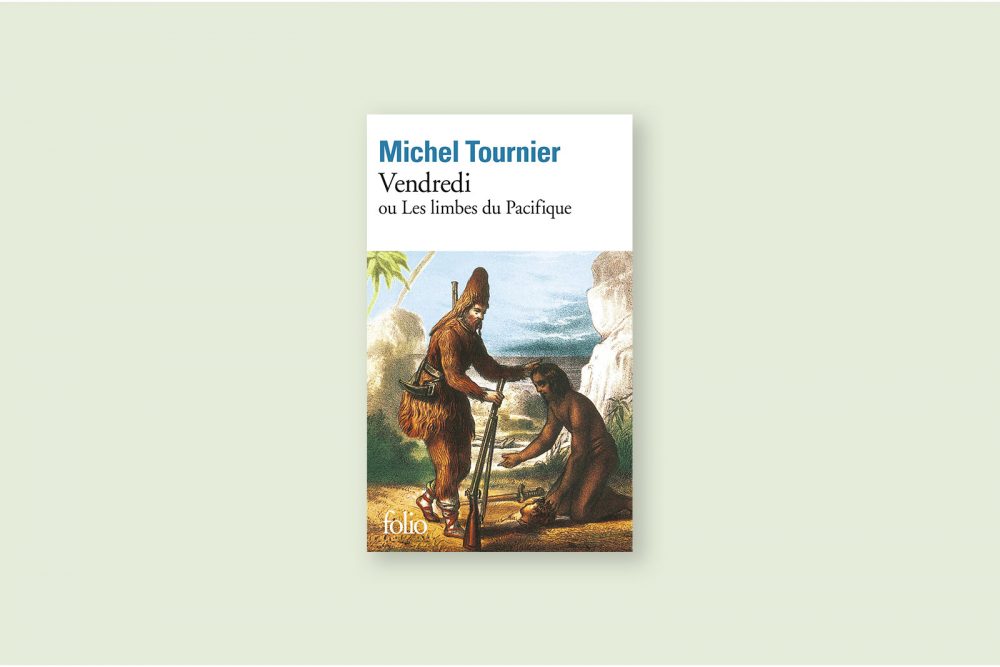
![[49] Citation Vendredi Ou Les Limbes Du Pacifique](https://i0.wp.com/is2-ssl.mzstatic.com/image/thumb/Publication118/v4/50/c3/99/50c3992e-f4f1-45b9-c2c6-7aa1102c942e/9782808000154.jpg/1200x600wz.png)






![[49] Citation Vendredi Ou Les Limbes Du Pacifique](https://i0.wp.com/i.f1g.fr/media/figarofr/orig/2013/11/12/PHOd465168e-452e-11e3-9eef-4c1eb5692281-640x230.jpg)


