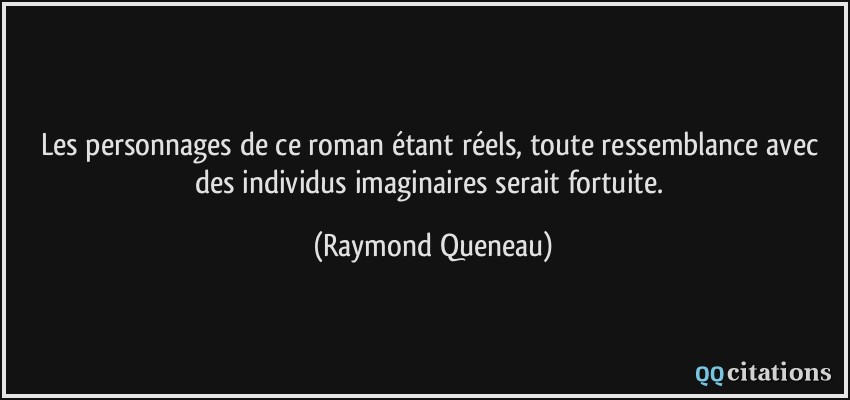
“Toute ressemblance avec des personnes réelles serait fortuite.” Sound familiar? It should! You've probably seen it flashing on screen at the end of a movie or tucked away in the opening credits of a TV show. But what really does it mean?
Let’s dive in! Because honestly, it’s a surprisingly fun rabbit hole.
The Disclaimer: A Legal Shield?
Okay, so first things first. This phrase, originating from French, translates to “Any resemblance to actual persons, living or dead, is purely coincidental.” It’s a disclaimer. Simple, right? Not so fast!
It’s basically the creator's way of saying, “Hey, if you think this character is based on your wacky Uncle Gerard, well… that’s just a coincidence!”
But is it really foolproof? Does slapping this phrase on a film magically protect you from angry exes, offended politicians, or litigious neighbors? The answer, my friend, is a resounding… maybe.
It's Complicated (Like Everything Legal)
The thing is, disclaimers aren't get-out-of-jail-free cards. Courts look at the entirety of the situation. Did the writer intentionally base a character on someone identifiable? Is the resemblance so striking and specific that it's clearly not accidental? These are the kinds of questions that get lawyers excited (and paid).
Think about it: you can't just write a character who looks, acts, and talks exactly like a famous person and then claim "coincidence." That’s just asking for trouble!
It's more about protecting creators from unintentional or minor similarities. Like, if you accidentally give your character the same annoying habit as your boss, this disclaimer might just save your bacon.

The Art of Plausible Deniability
So, why do they even bother including it? If it's not a guaranteed shield, what's the point? Well, it's all about plausible deniability.
It adds a layer of doubt. It suggests that any similarities are accidental. It makes it a little harder for someone to prove intentional defamation or invasion of privacy.
Think of it as a friendly suggestion: "Please don't sue us! We didn't mean to."
It also allows writers to draw inspiration from real life without being slavishly beholden to the truth. They can cherry-pick details, exaggerate traits, and create compelling characters without being constantly worried about legal repercussions.
The Intrigue: Spotting the "Real" People
Here's where it gets fun! The disclaimer, ironically, often fuels speculation. It’s like saying, “Don’t think about pink elephants!” You immediately start thinking about pink elephants.

Suddenly, everyone's a detective. We start scrutinizing characters, looking for clues, comparing them to real-life figures. "Aha! That politician's comb-over? That has to be a reference to Senator Snugglesworth!"
This leads to endless debates, online forums buzzing with theories, and accusations flying faster than you can say "libel."
Real-Life Examples (Maybe?)
Think about shows like "Veep" or "Succession." They’re filled with characters who seem to be loosely based on real-world politicians and wealthy families. Did the writers have specific people in mind? Probably. Will they admit it? Absolutely not!
And that’s where the disclaimer comes in handy. It allows them to create these satirical masterpieces without constantly looking over their shoulders.
Even in fiction that's not explicitly satirical, the question lingers. Was that character inspired by someone the author knew? Is that plot twist based on a real-life scandal? The "Toute ressemblance..." disclaimer adds a layer of mystery and intrigue.
Beyond the Legal: A Creative Tool
But let's not just see it as a legal safeguard. The disclaimer also serves a creative purpose. It gives writers permission to play. To exaggerate. To explore the darker, funnier, and more absurd aspects of human nature.
It allows them to hold a mirror up to society, but a slightly distorted one. The reflection is recognizable, but not exact. And that's where the magic happens.
The disclaimer encourages us, the audience, to engage with the story on a deeper level. We're not just passive viewers. We're active participants, trying to decipher the clues, connect the dots, and figure out who (or what) the writer is really talking about.
It turns watching a movie or TV show into a game of "Spot the Real Person." And who doesn't love a good game?
The Irony: Drawing Inspiration from Reality
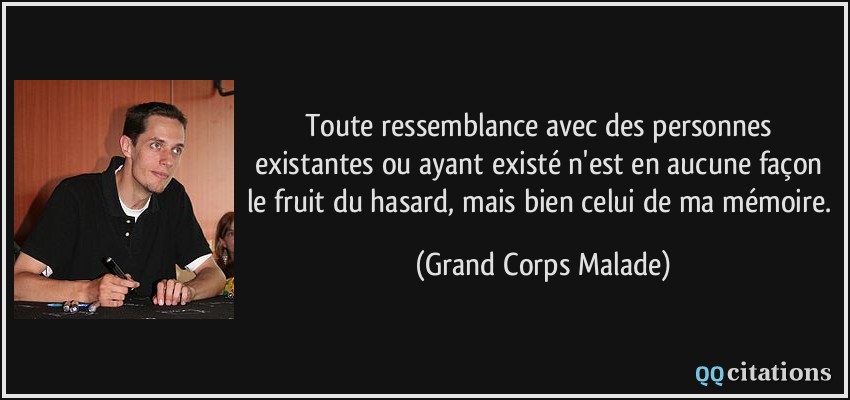
Here's the ultimate irony: the disclaimer, meant to distance fiction from reality, actually highlights the connection. It reminds us that even the most outlandish stories are often rooted in real-life experiences, observations, and anxieties.
Great art often imitates life, or at least, a caricature of life. And the "Toute ressemblance..." disclaimer is a knowing wink, acknowledging that connection while simultaneously denying it.
It's a paradox, a contradiction, and a whole lot of fun to think about.
So, Next Time You See It...
Next time you see "Toute ressemblance avec des personnes réelles serait fortuite" flash across the screen, don't just dismiss it as legal jargon.
Recognize it for what it is: a combination of legal protection, creative license, and an invitation to play a game. A game of spotting the "real" people, of deciphering the hidden messages, and of appreciating the blurry line between fiction and reality.
And remember, even if the writers swear it's all coincidental… maybe they’re just saying that.
After all, isn't it more fun to believe there's a little bit of truth hidden in every story?
Now, go forth and speculate! But maybe don't accuse anyone of being a thinly veiled fictional character... just in case.