Alright, mes amis! Let's talk about something that might sound a bit fancy-pants at first: "Telle quelle" ou "Tel quel." Sounds like a dish from a Michelin-star restaurant, right? But trust me, it's much simpler, and way more useful, than you think.
Essentially, these little phrases (and they're incredibly common in French!) boil down to saying "as is" or "just like that." Yep, that's it! Think of it like ordering your coffee black, sans the fancy syrups and foamed milk – tel quel!
Decoding "Telle Quelle" and "Tel Quel"
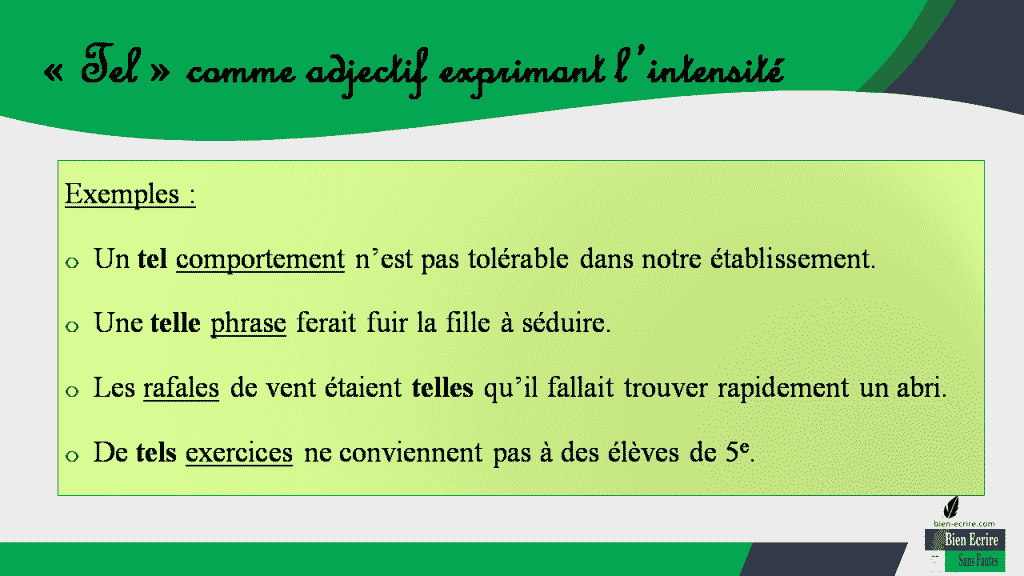
So, what's the difference between "telle quelle" and "tel quel?" Well, it's all about gender. "Tel quel" is masculine, and "telle quelle" is feminine. Think of it like this: a livre (book) is masculine, so you'd say "Je prends le livre tel quel" (I'll take the book as is). But a pomme (apple) is feminine, so you'd say "Je mange la pomme telle quelle" (I'm eating the apple as is).
Don't stress too much about getting the gender perfect every single time – most people will understand you anyway. But hey, a little effort goes a long way, n'est-ce pas?
Why Should You Care? (The Fun Part!)
Okay, so knowing a couple of fancy French phrases is cool, but why should you actually bother learning these? Because they're incredibly versatile and used all the time! Let me give you some relatable examples:
Imagine you're buying a vintage dress at a brocante (flea market). You spot a gorgeous one, but it has a tiny stain. You ask the seller, "Est-ce que je peux l'avoir moins cher à cause de la tache?" (Can I have it cheaper because of the stain?). The seller might say, "Non, madame, il est tel quel." (No, madam, it's as is!). That means the price is non-negotiable – you're buying it with the stain, whether you like it or not!

Or, picture this: You're making a cake using a recipe from your grand-mère (grandmother). The recipe says, "Ajouter les oeufs tels quels." (Add the eggs as is). This means you don't need to whisk them beforehand or separate the yolks and whites – just crack them in! It's a reminder of simpler times, right?
Think of ordering food. Let's say you're at a creperie and you want a simple crepe with just butter and sugar. You could say "Je voudrais une crêpe au beurre et au sucre, telle quelle." (I would like a crepe with butter and sugar, as is). It signals that you don't want any extra toppings or fancy additions. You want it pure, simple.
Another scenario: You're sending a package to a friend. You wrap it in some brown paper, slap on an address label, and pop it in the mail. You could say to yourself, "Voilà, c'est envoyé tel quel!" (There, it's sent as is!). No fancy ribbons, no elaborate decorations – just the bare minimum.

See? It’s everywhere! And it saves you from having to explain things in long, roundabout ways.
Beyond the Basics: Getting a Little More Sophisticated
While "as is" is the most common translation, "tel quel" and "telle quelle" can also imply a sense of acceptance or authenticity. It can mean leaving something untouched, unaltered, in its original state.
For example, you might hear someone say, "J'aime la nature telle quelle." (I love nature as it is). This means they appreciate nature in its raw, unedited form, without needing to "improve" it.
Or, consider a portrait painter who strives to capture their subject "tel quel." They're not trying to flatter them or make them look younger or more attractive; they're aiming to depict them honestly, with all their quirks and imperfections.
It can also be used to indicate that something remains exactly the same, despite circumstances. Imagine someone asking if you still love your old car, even though it's a bit rusty and unreliable. You might reply "Oui, je l'aime tel quel!" (Yes, I love it as it is!). You accept its flaws and appreciate it for what it is.
Think about a piece of art that you find moving, even though it's flawed. Maybe the brushstrokes are a little clumsy, or the colors are a bit muddy. But you still love it "tel quel" because it evokes a powerful emotion or tells a compelling story. It's not about perfection; it's about authenticity.
Embrace the "Tel Quel" Mindset
Beyond the literal meaning, I think there's a deeper lesson to be learned from "tel quel." It's about embracing imperfection, accepting things as they are, and finding beauty in the ordinary. It's about not always striving for perfection, but appreciating the present moment.

Think about your own life. Are you constantly trying to fix things, to make them "better?" Maybe you're always dieting, or trying to rearrange your furniture, or endlessly tweaking your work projects. While it's good to strive for improvement, sometimes it's important to take a step back and appreciate things "tels quels."
Love yourself "tel quel," with all your flaws and imperfections. Accept your friends and family "tels quels," without trying to change them. Appreciate the world around you "tel quel," with all its beauty and imperfections. This is the essence of acceptation, and a very French way to approach life.
So, the next time you're faced with a situation where you need to express "as is" or "just like that," remember "tel quel" or "telle quelle." Not only will you impress your French-speaking friends, but you'll also be embracing a little piece of French philosophy.
And who knows? Maybe you'll even start seeing the world a little differently, appreciating the beauty of things just as they are. À bientôt!