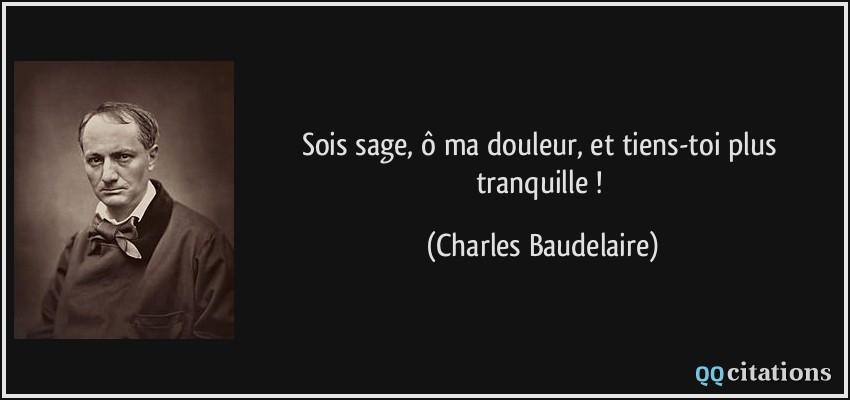
Ah, la langue française! It's not just about croissants and berets, you know. Sometimes, it's about diving deep into the human condition, all while sounding incredibly chic. And that's where our little phrase, "Sois sage, ô ma Douleur, et tiens-toi plus tranquille," comes in. Doesn't it just roll off the tongue? But what does it really mean, and why has it resonated for so long?
From Poetry to Pop Culture: A Whisper Through Time
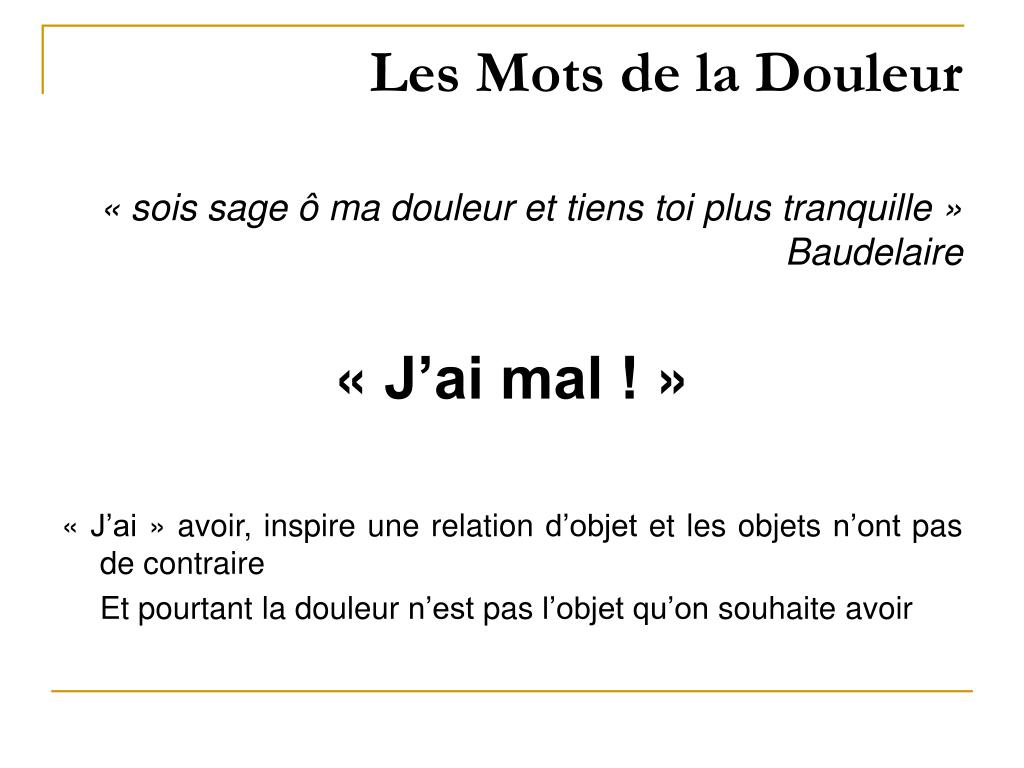
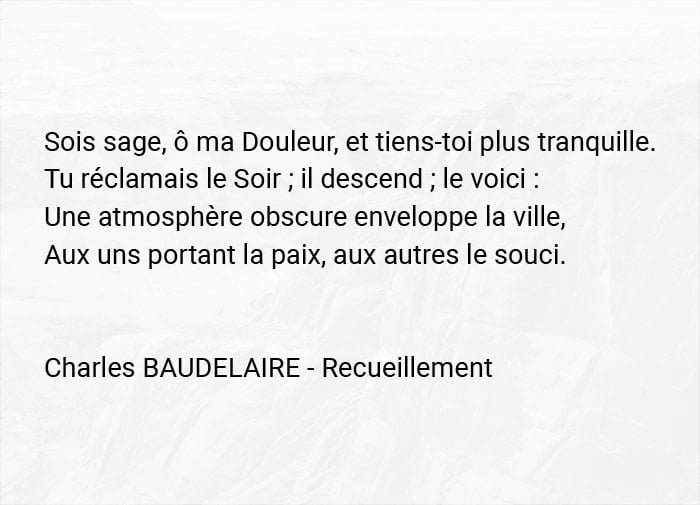
This iconic verse, penned by none other than Charles Baudelaire in his poem "Recueillement" (from his collection Les Fleurs du Mal), translates roughly to "Be wise, O my Sorrow, and hold yourself more quietly." It's an invitation – a rather elegant one, I might add – to accept and manage suffering instead of letting it consume you.
Baudelaire, a master of melancholy and a bit of a rebel, was obsessed with the darker side of life. He explored themes of sin, death, and the complexities of human experience. This particular phrase encapsulates his philosophy of embracing sorrow, not necessarily celebrating it, but acknowledging its presence and finding a way to coexist. Think of it as a sophisticated acceptance – a far cry from simply "staying positive" at all costs.
Breaking it Down: Each Word Holds Weight
Let's dissect this phrase to truly appreciate its nuance:
- Sois sage: "Be wise." It’s not just about being good; it's about having the wisdom to understand the nature of your sorrow. Think of it as acknowledging that pain is a part of life, and resisting it only amplifies it.
- Ô ma Douleur: "O my Sorrow." The "ô" is an invocation, a direct address. It personalizes the suffering, bringing it into a direct conversation. He's not talking about sorrow in general; he's talking to his sorrow.
- Et tiens-toi plus tranquille: "And hold yourself more quietly." This is the action. It's not about eliminating sorrow, but about containing it, finding a way to live with it without letting it completely overwhelm you. Tranquille speaks of a certain calm, a peaceful acceptance.
It's not a call to ignore or suppress your feelings. It’s an invitation to treat your pain with respect, understanding that it’s a part of you and needs to be managed with patience and self-awareness.

Why Does it Resonate? (Even Now!)
In our fast-paced, always-on world, where happiness is often marketed as the ultimate goal, Baudelaire's words offer a refreshing perspective. They acknowledge the reality of suffering, which is something we all experience in various forms. They offer a different strategy other than the toxic positivity of “good vibes only.”
Think about it: we're constantly bombarded with messages telling us to be happy, successful, and perfect. But what happens when we're not? What happens when grief, disappointment, or anxiety come knocking? This phrase provides a framework for navigating those moments. It's a reminder that it's okay not to be okay, and that there's a way to find peace even in the midst of pain.
Modern Interpretations: From Therapy to Tea Time
Here are a few ways you can apply this wisdom to your everyday life:

- Mindfulness and Meditation: Cultivating a quiet space for yourself, acknowledging your emotions without judgment, and practicing gentle acceptance. Imagine yourself sitting with your "Douleur," offering it a metaphorical cup of tea and listening to its story without trying to fix it.
- Journaling: Writing down your thoughts and feelings can be a powerful way to process them. Treat your journal as a safe space to express your "Douleur" without fear of criticism.
- Creative Expression: Channel your sorrow into art, music, writing, or any other creative outlet. Baudelaire himself used poetry to explore his inner turmoil.
- Therapy: Seeking professional help is always a good idea if you're struggling to manage your emotions. A therapist can provide guidance and support in navigating your "Douleur."
- Setting Boundaries: Protecting your energy by setting healthy boundaries with people and situations that trigger your sorrow. Sometimes, "tenir-toi plus tranquille" means distancing yourself from negativity.
Beyond the Quote: Finding Your Own Recueillement
Baudelaire's poem, and this particular verse, is more than just a pretty phrase. It's a philosophy, a way of approaching life with a certain grace and resilience. It suggests that true strength lies not in avoiding pain, but in learning to coexist with it, to find a sense of peace even in the midst of turmoil. The idea of "Recueillement" suggests a certain turning inwards, a quiet contemplation. Think of it as a mindful pause that allows you to be present with yourself, including the darker parts.
The beauty of this lies in its personal application. How do you define wisdom in the face of sorrow? What does "holding yourself more quietly" look like for you? It's an ongoing process of self-discovery and adaptation.

Consider embracing the idea of wabi-sabi, the Japanese philosophy of finding beauty in imperfection. Just as a cracked teacup can be more beautiful than a pristine one, so too can our experiences of sorrow add depth and richness to our lives. The cracks are part of the story.
And finally, perhaps, the truest translation is less literal and more about emotional regulation. It's about acknowledging your emotions, understanding their source, and taking actions that are aligned with your values instead of letting your feelings dictate your decisions.
So, the next time you find yourself struggling with sorrow, remember Baudelaire's words. "Sois sage, ô ma Douleur, et tiens-toi plus tranquille." Acknowledge your pain, treat it with compassion, and find a way to hold yourself with quiet strength. Because even in the darkest moments, there is always the possibility of finding peace within.






+Pas+de+traitement+morphinique+dans+les+douleurs+chroniques+non+cancéreuses.+Traitement+médicamenteux..jpg)
+Seul+le+patient+est+expert+de+sa+douleur+:+ne+pas+faire+planer+l’ombre+du+doute…+Douleur+aigue+:+symptôme+protecteur..jpg)