Salut l'ami(e) ! Ever wondered what the tiny building blocks of, well, everything, actually are? I mean, we hear about atoms and ions all the time, right? But, seriously, what's the deal? Don't worry, on va décortiquer ça ensemble! Get ready for a fun little journey into the microscopic world – no lab coat required (unless you want to, of course!).
Think of it this way: Imagine you're building a super cool LEGO castle. Atoms are like the basic LEGO bricks. They're the fundamental units. Ions, on the other hand, are like those same LEGO bricks, but with something… missing, or maybe something extra added. Hmmm, that's a good analogy!
Atomes : Les Briques Fondamentales
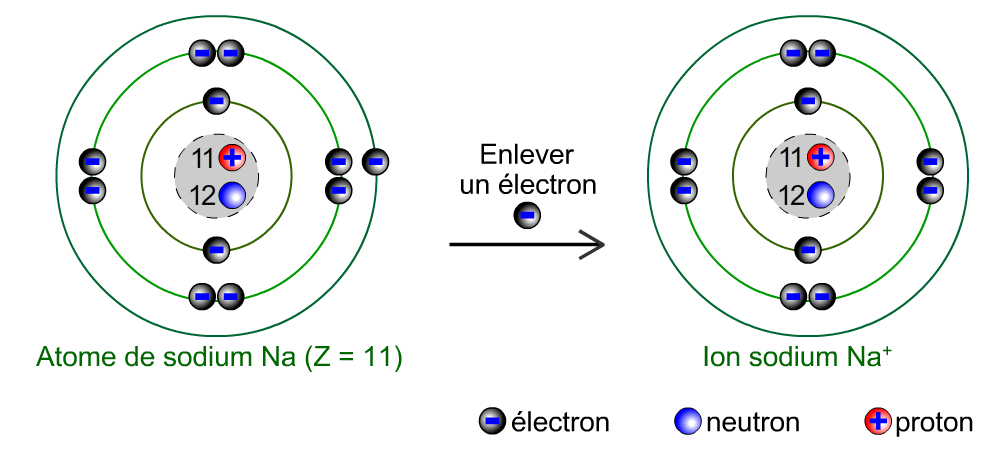
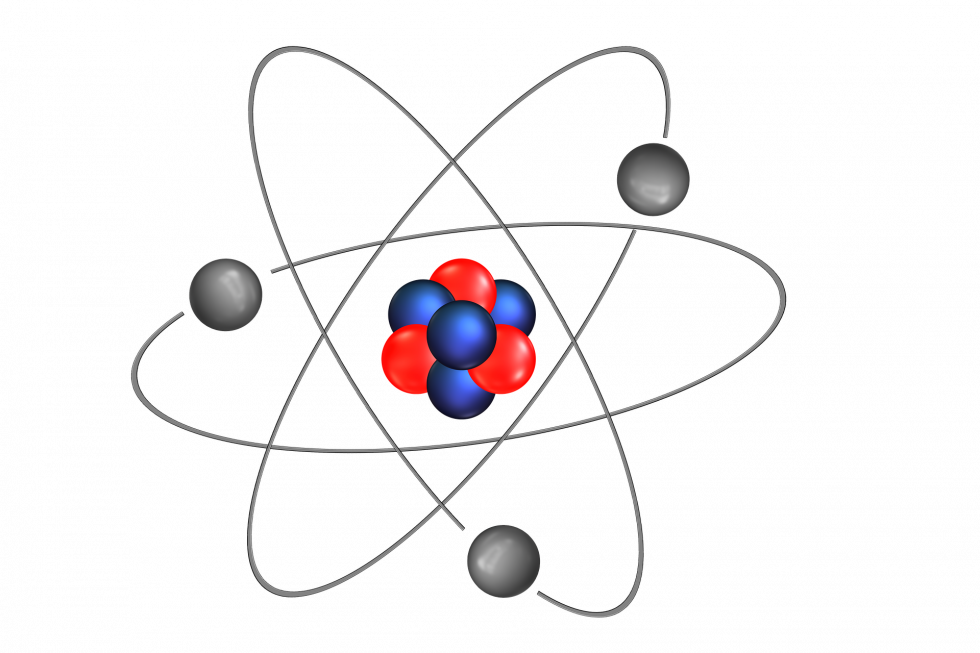
Okay, let's zoom in on atoms. Atoms are made of three main particles: protons, neutrons, and electrons. Protons and neutrons hang out together in the center of the atom, in the nucleus. Electrons whiz around the nucleus in what we call "shells" or "orbitals." Think of it like planets orbiting the sun… but way, way smaller! (And hopefully, no asteroid impacts.)
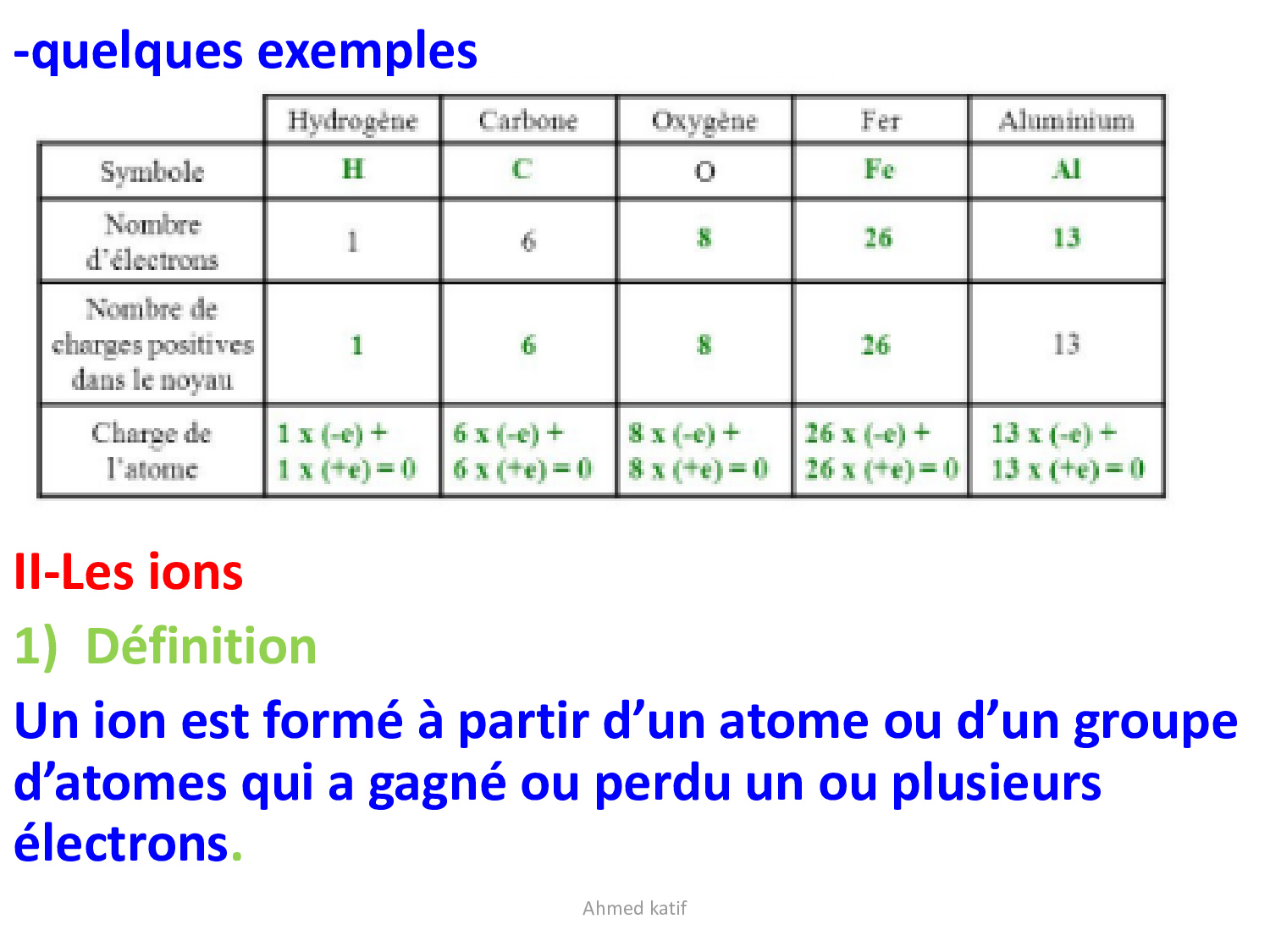
Protons have a positive charge (+), electrons have a negative charge (-), and neutrons have… well, no charge at all (they're neutral, hence the name!). The magic of an atom is that it's usually electrically neutral. That means it has the same number of protons and electrons. Positive and negative charges cancel each other out, and voila! We have a balanced, happy atom.
For example, a carbon atom has 6 protons and 6 electrons. Perfectly balanced! As all things should be... (snap fingers).
Why is this important? Because this electrical balance is what makes atoms stable and allows them to form molecules – which are just groups of atoms bonded together. And molecules, my friend, are what make up… well, everything! From the air you breathe to the coffee you're (hopefully!) sipping right now.
Ions : Des Atomes avec une Étincelle !
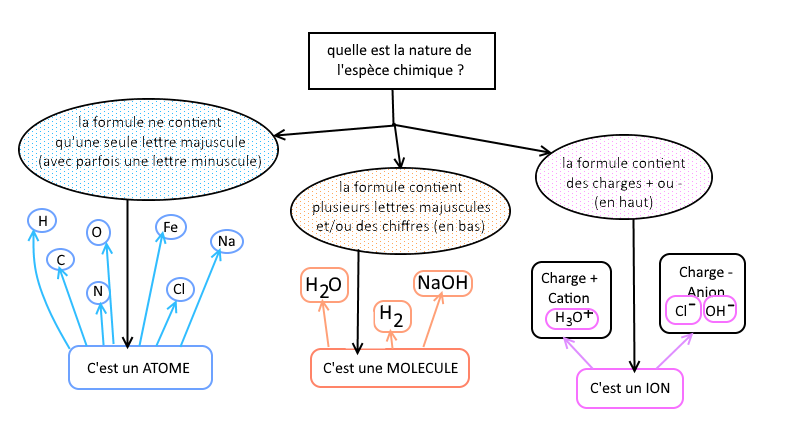
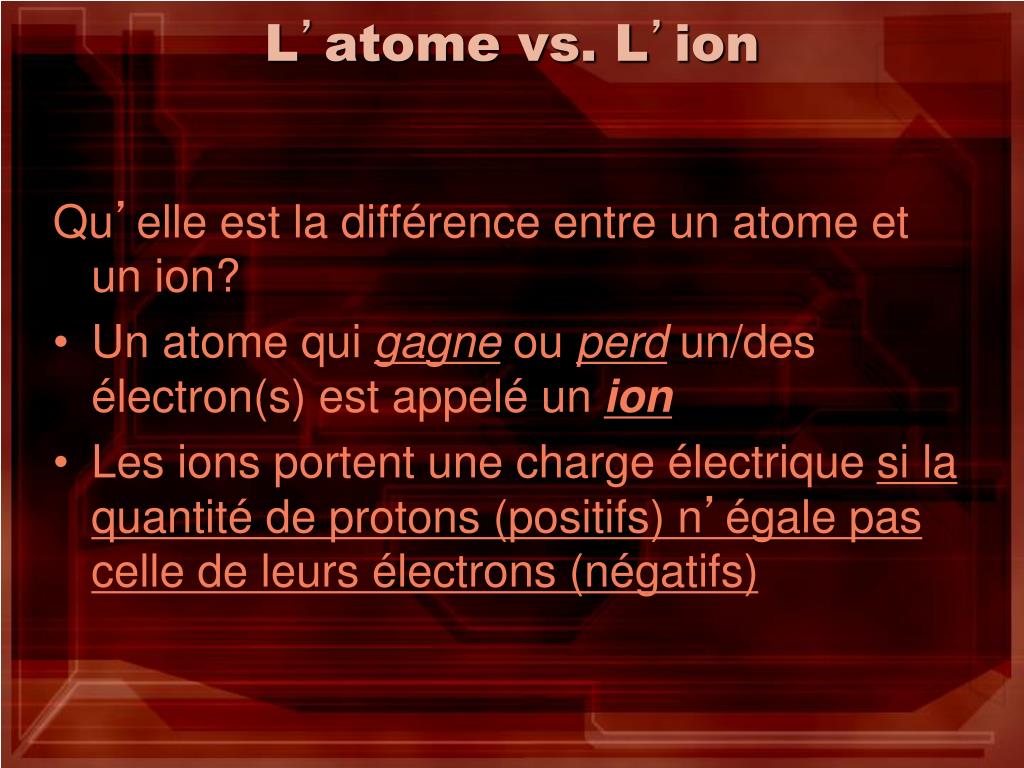
Now, let's talk about ions. Ions are atoms that have lost or gained electrons. And that is what makes all the difference! Remember our LEGO analogy? Imagine stealing a LEGO brick, or finding one lying around that wasn't yours. That's kind of what's happening with ions.
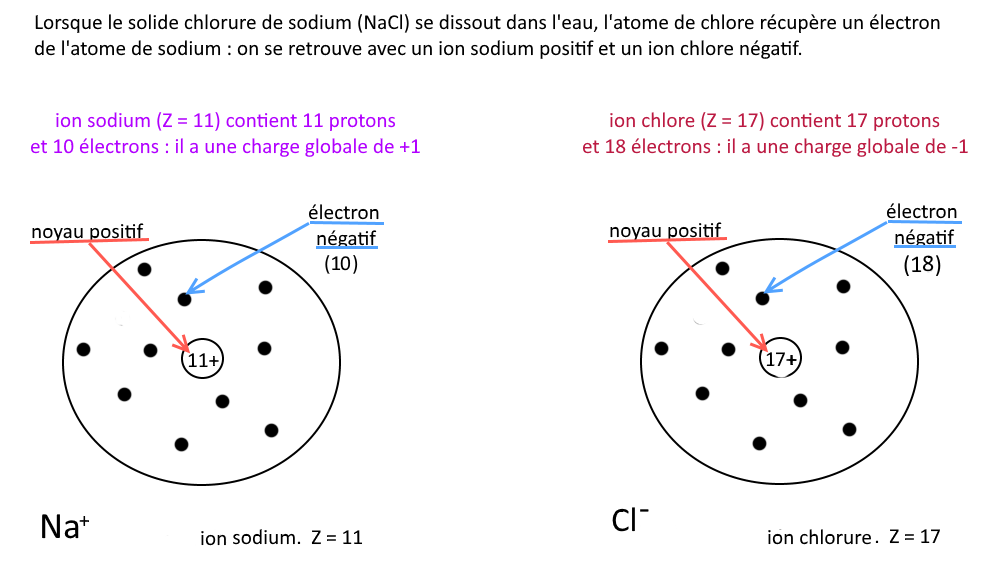
If an atom loses one or more electrons, it becomes a positive ion, called a cation. Why positive? Because it now has more protons (positive charges) than electrons (negative charges). Imagine an atom of sodium (Na) losing an electron. It becomes Na+, a sodium ion. It's like it's saying "Hey, I'm positive now!" (Okay, maybe not literally saying it...).
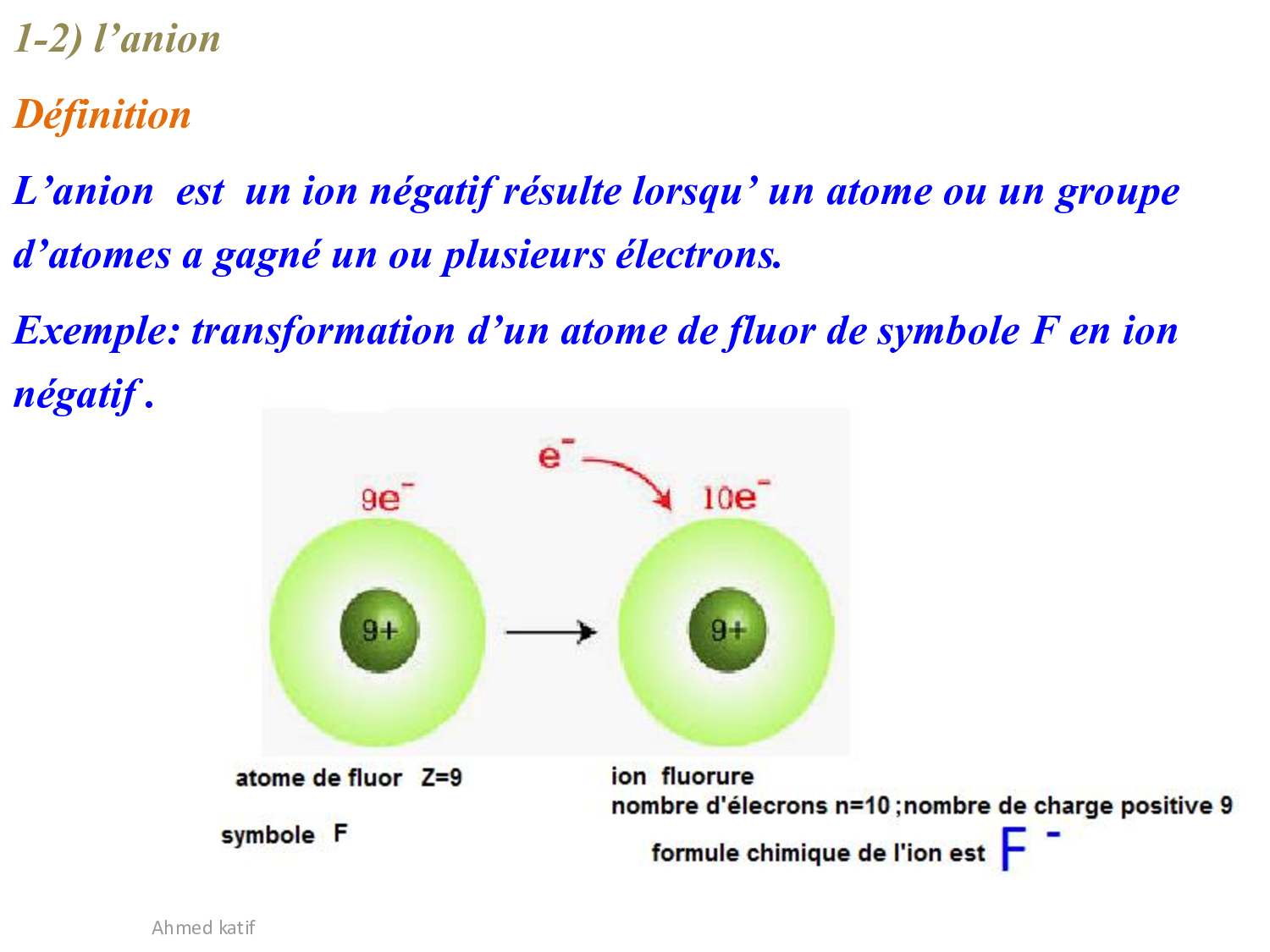
Conversely, if an atom gains one or more electrons, it becomes a negative ion, called an anion. Now it has more electrons (negative charges) than protons (positive charges). Think of chlorine (Cl) gaining an electron. It becomes Cl-, a chloride ion. Pretty straightforward, right?
So, to recap: Atoms are neutral. Ions are charged. End of story… almost!

Pourquoi Devrait-on S'en Soucier ? (L'Importance des Ions)
Okay, so ions are just atoms that have gained or lost electrons. Big deal, right? Wrong! Ions are absolutely crucial for life and for countless processes around us. You'd be surprised! I mean, seriously surprised!
Think about your body. Electrolytes, like sodium (Na+), potassium (K+), and chloride (Cl-) ions, are essential for nerve function, muscle contraction, and maintaining fluid balance. Ever hear athletes talk about electrolytes? Yep, those are ions at work, keeping your body running smoothly (or, you know, trying to!).
Then there's table salt, sodium chloride (NaCl). It's not just sodium and chlorine atoms hanging out next to each other. It's sodium ions (Na+) and chloride ions (Cl-) that are strongly attracted to each other because of their opposite charges. This attraction forms a crystalline structure that we know and love (or maybe love to sprinkle on our fries!).

Ions are also vital in countless industrial processes, from water purification to the production of plastics. They're even involved in the formation of clouds! (Seriously, I'm not making this up!).
Basically, ions are everywhere, doing all sorts of amazing things, often without us even realizing it. They're the unsung heroes of the microscopic world!
En Résumé : La Différence Clé
Atomes
- Electrically neutral (same number of protons and electrons).
- The fundamental building blocks of matter.
- Stable in their neutral state.
Ions
- Electrically charged (either positive or negative).
- Formed when an atom gains or loses electrons.
- Essential for many biological and industrial processes.
So, the next time you hear the word "atom" or "ion," you'll know the difference. You’ll be like, "Oh yeah, I know all about that! Atoms are neutral, ions are charged. No problem!" And you'll impress all your friends with your newfound scientific knowledge. (Or at least, mildly entertain them...)
Think about it! The simple act of losing or gaining an electron transforms a neutral atom into a charged ion, with drastically different properties and functions. It’s mind-blowing how such a tiny change can have such a huge impact on the world around us.
It’s like a tiny adjustment making a BIG difference. And isn’t that a nice reminder about life itself?
And that, my friends, is the amazing world of atoms and ions in a nutshell! Hopefully, you've found this little exploration both informative and fun. Science doesn’t have to be intimidating or boring. It can be exciting, inspiring, and even… dare I say… fun!
So, keep asking questions, keep exploring, and never stop being curious about the world around you. There's so much more to discover, and who knows what amazing things you'll learn next? Allez, lance-toi! The universe is waiting!
Inspired? Great! Why not delve deeper into the periodic table? Or perhaps explore the world of chemical reactions? The possibilities are endless! À bientôt et bonne découverte !