Bonjour, mes amis! Ever stumble over a word in French and think, "Wait, did I just say THAT?" Welcome to the wonderfully confusing, occasionally hilarious world of homophones! Prepare yourself; things are about to get… punny. (Wink, wink)
Homophones: The Ultimate French Pranksters
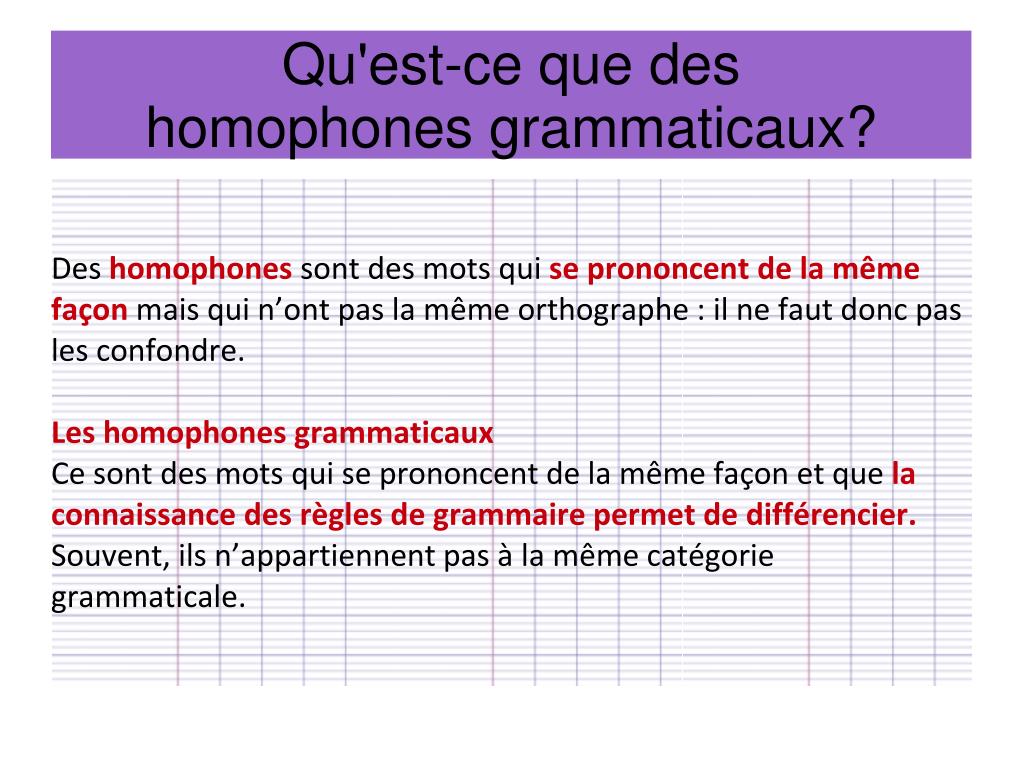
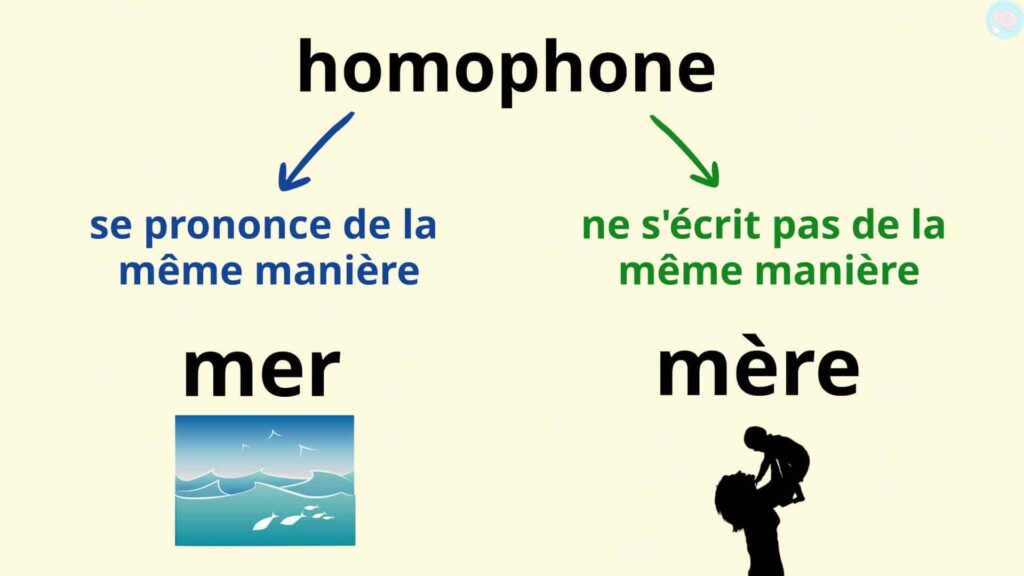
So, qu'est-ce qu'un homophone, exactly? Well, imagine words that are like identical twins, but with entirely different personalities… and bank accounts. They sound the same, but they mean completely different things. Think of them as linguistic tricksters, always ready to trip you up with their deceptive similarities.
Let’s break it down, shall we? We’re going to dissect this linguistic frog… metaphorically speaking, of course. No actual frogs were harmed in the making of this article. (Except, perhaps, in the writing of a particularly bad pun later on…)
The Anatomy of a Homophone
Here’s the nitty-gritty, the brass tacks, the… you get the idea. We’re getting technical-ish.
- The Same Sound: This is the key ingredient! Homophones share the exact same pronunciation. Your ears won't know the difference! They're fooled! Muhahaha! (Sorry, got a little carried away there.)
- Different Spelling: This is where the mischief begins. The written form of each word is unique. It's like twins who have drastically different fashion senses. One might rock a beret and striped shirt, the other a leather jacket and ripped jeans.
- Different Meaning: And finally, the coup de grâce! Each word has a distinct meaning, completely unrelated to the other. This is what makes them so potentially embarrassing. Picture ordering a "dessert" and accidentally asking for a "desert." Oops!
Examples, s'il vous plaît! (Because we all love examples)
Okay, enough with the definitions. Let’s get to the good stuff – the examples that will make you giggle, groan, and maybe even accidentally insult someone. Don't worry; we've all been there.
Classic French Homophone Combinations: Prepare to Be Amused
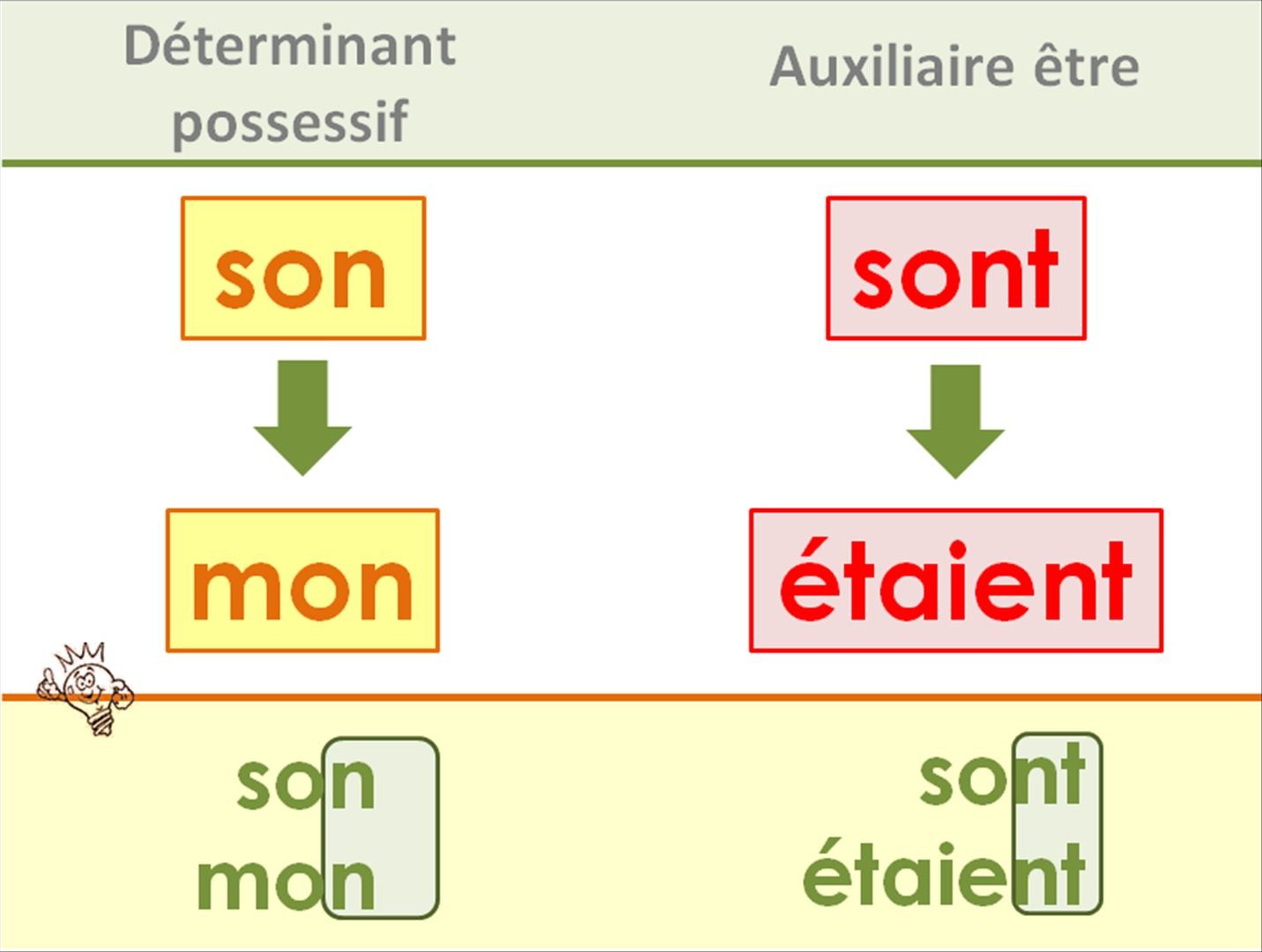
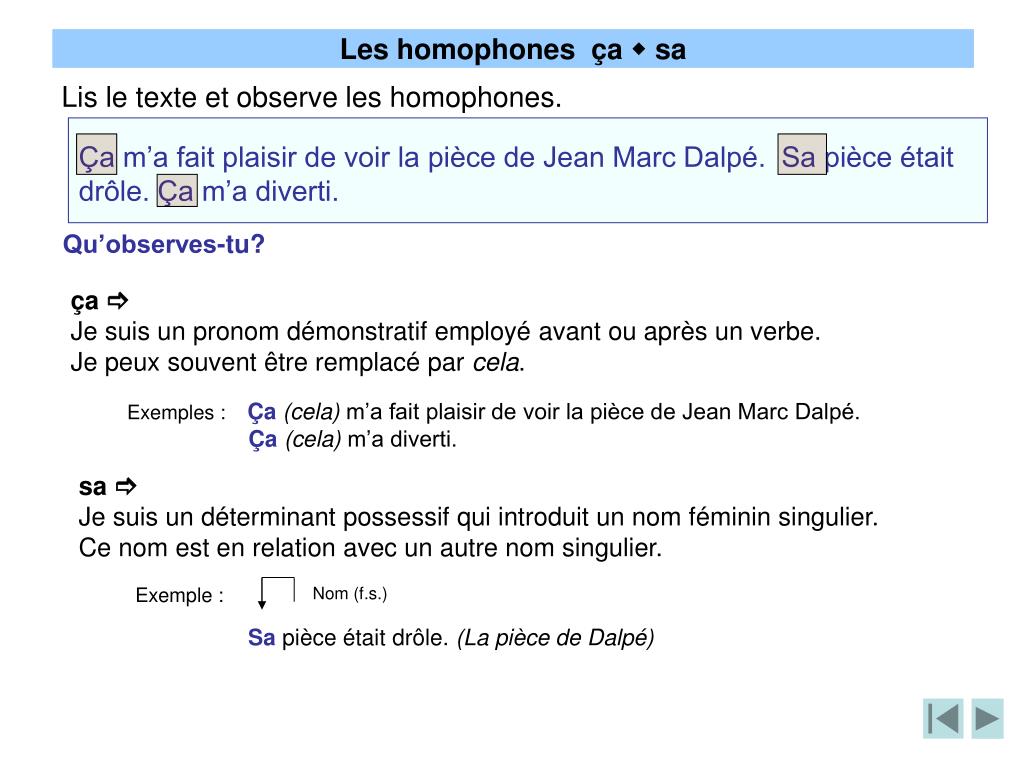
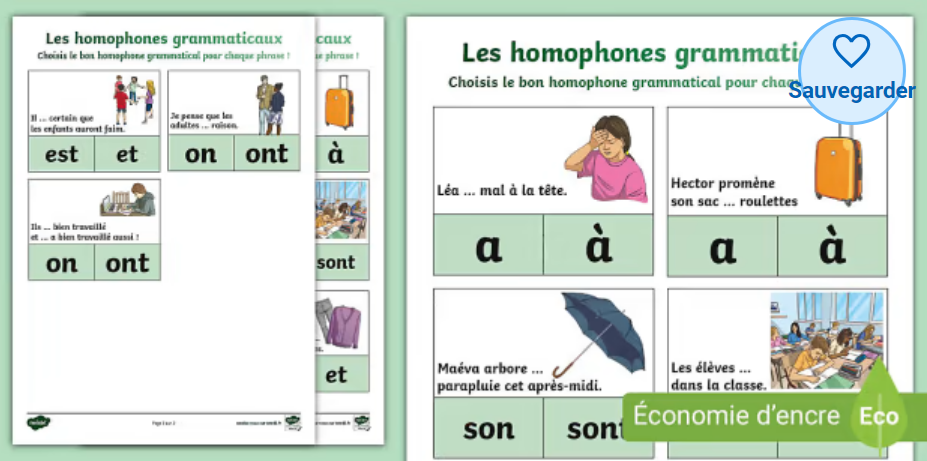
- "Son" vs. "Sont": Ah, the quintessential example! "Son" (his/her) and "sont" (are – third person plural). Imagine saying, "Son chat sont bleu." (His cat are blue.) Yikes! That poor cat needs a serious makeover and a grammar lesson.
- "La" vs. "Là" vs. "L'a": This is where things get delightfully complicated. "La" (the – feminine), "là" (there), and "l'a" (has it). Try saying, "La fille l'a vu là." (The girl saw it there.) Fun, right? Now try saying it five times fast. I dare you!
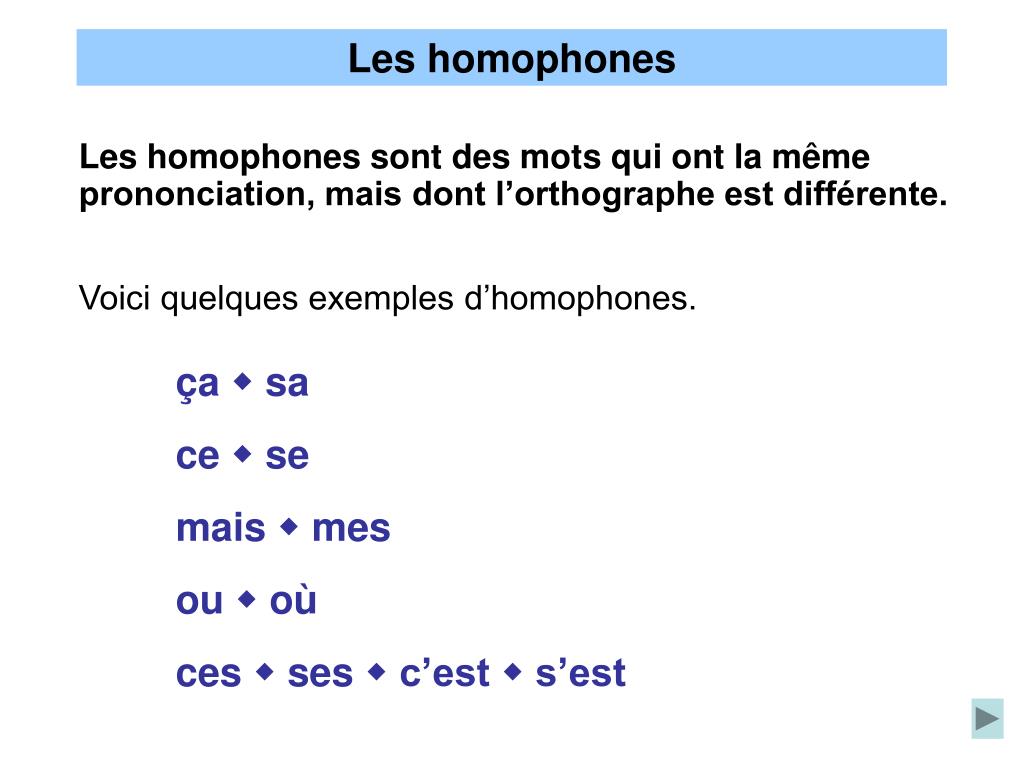
- "Mais" vs. "Mes": "Mais" (but) and "mes" (my). "Mais mes amis, c'est compliqué!" (But my friends, it's complicated!) See how easily you can mix them up? It's a linguistic minefield, I tell you!
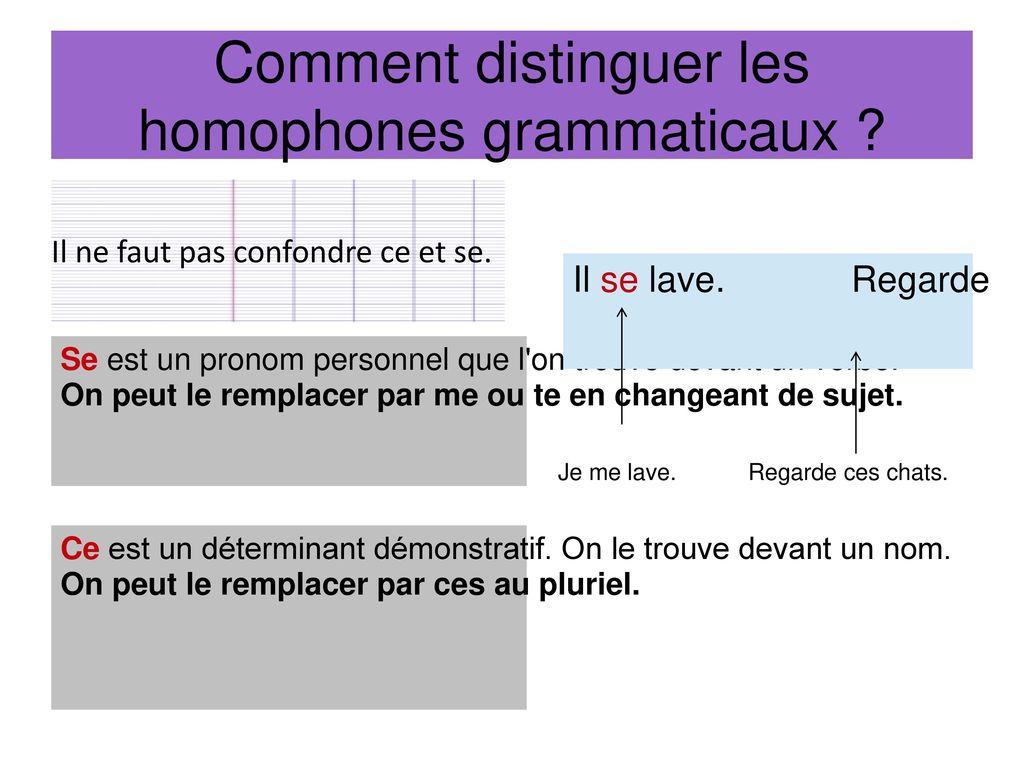
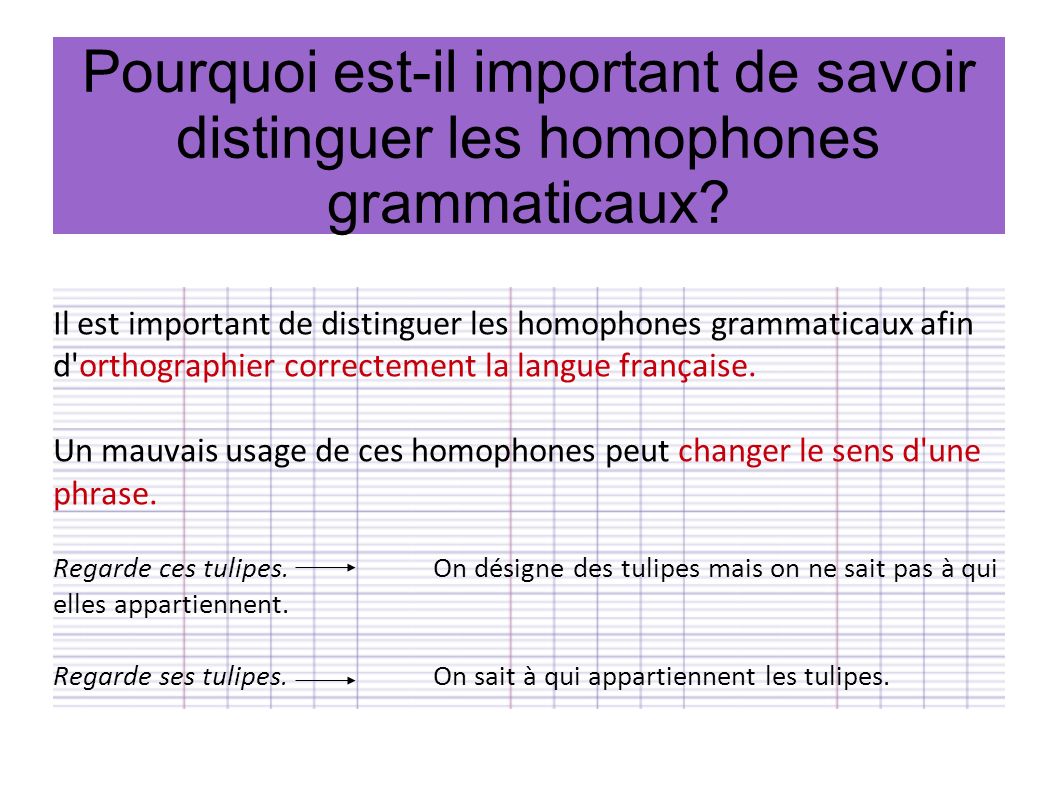
- "C'est" vs. "Ses" vs. "Ces": Oh, the "c'est/ses/ces" trifecta! "C'est" (it is), "ses" (his/her/its – plural), and "ces" (these). The possibilities for confusion are endless. "C'est ses cesoirs." (It is his/her/its evenings.) Wait, what?
- "Au" vs. "Haut": "Au" (to the/at the) and "haut" (high). "Il est allé au haut de la montagne." (He went to the high of the mountain.) Not grammatically incorrect, but slightly awkward. You'd probably say "en haut de la montagne."
- "Et" vs. "Est": "Et" (and) and "est" (is). This is like the French equivalent of "there/their/they're" in English. Simple, yet oh-so-easy to mess up in a hurry. "Le chat et le chien est amis." (The cat and the dog is friends.) Nope. "Le chat et le chien sont amis."
- "Vert" vs. "Ver" vs. "Vers" vs. "Verre": Buckle up, this is a multi-homophone party! "Vert" (green), "ver" (worm), "vers" (towards), and "verre" (glass). Imagine saying, "J'ai trouvé un ver vert vers le verre." (I found a green worm towards the glass.) Delightful imagery, isn't it?
- "Sans" vs. "Sang" vs. "Cent": Another tricky trio! "Sans" (without), "sang" (blood), and "cent" (one hundred). "Il est sans sang froid, même avec cent piqûres de moustiques!" (He is without cold blood, even with one hundred mosquito bites!) A little melodramatic, perhaps, but grammatically sound (almost).
- "Voix" vs. "Voie" vs. "Vois": Time for some vocal variety! "Voix" (voice), "voie" (way/road/track), and "vois" (I see). "Je vois qu'elle a une belle voix sur cette voie." (I see that she has a beautiful voice on this track.) Getting tongue-tied yet?
- "Chair" vs. "Chaire" vs. "Cher" vs. "Chère": "Chair" (flesh), "chaire" (pulpit/professorship), "cher" (dear - masculine), and "chère" (dear - feminine). "Ma chère, la chaire de l'université est plus intéressante que la chair." (My dear, the professorship of the university is more interesting than the flesh.) Well, that's... a statement.
- "Eau" vs. "Haut" vs. "Oh!": A liquid, a height, and an exclamation! "Eau" (water), "haut" (high), "Oh!" (oh!). "Oh! L'eau est très haut!" (Oh! The water is very high!) Simple and effective!
- "Amande" vs. "Amende": A nut and a fine! "Amande" (almond) and "amende" (fine). "J'ai mangé une amande et j'ai reçu une amende." (I ate an almond and I received a fine.) Perhaps you were fined for eating almonds in a "no almond" zone? These things happen.
- "Seau" vs. "Sot" vs. "Saut": A bucket, a fool, and a jump! "Seau" (bucket), "sot" (fool), and "saut" (jump). "Le sot a fait un saut dans le seau." (The fool made a jump in the bucket.) Sounds like a rather unproductive afternoon.
- "Ta" vs. "Tas" vs. "T'as": Your, pile, and you have! "Ta" (your - feminine), "tas" (pile), and "t'as" (you have). "T'as vu ta tas de papiers?" (Have you seen your pile of papers?) The eternal question for anyone with a desk.
- "Sain" vs. "Sein" vs. "Saint": Healthy, breast, and holy! "Sain" (healthy), "sein" (breast), and "saint" (holy/saint). "Il est sain d'aller à la messe, sinon vos seins deviendront fous" (It is healthy to go to mass, otherwise your breasts will go crazy)..... Okay, maybe not the best thing to say at church!
Beyond the Basics: Homophones with a Twist
But wait, there's more! The world of homophones is vast and varied. It's like a never-ending linguistic buffet of potential awkwardness. Let's explore some slightly less common (but equally amusing) examples:
- "Foie" vs. "Fois" vs. "Foi": Liver, time(s), and faith! "Foie" (liver), "fois" (time(s)), and "foi" (faith). "J'ai foi que je ne vais plus jamais manger du foie, même pas une fois!" (I have faith that I will never eat liver again, not even once!) A strong conviction, indeed!
- "Cours" vs. "Court" vs. "Cour" vs. "Courent": Classes, short, courtyard, and they run! "Cours" (classes/course), "court" (short), "cour" (courtyard), and "courent" (they run). "Les enfants courent dans la cour pendant les cours, mais la récréation est trop court!" (The children run in the courtyard during classes, but recess is too short!) Sounds about right.
- "Père" vs. "Paire" vs. "Perd" vs. "Pers": Father, pair, loses, and blue-grey color! "Père" (father), "paire" (pair), "perd" (loses), and "pers" (blue-grey color - mostly in the expression "yeux pers"). "Mon père perd souvent sa paire de lunettes pers." (My father often loses his pair of blue-grey glasses.) A common problem for fathers everywhere.
- "Maire" vs. "Mer" vs. "Mère": Mayor, sea, and mother! "Maire" (mayor), "mer" (sea), and "mère" (mother). "Ma mère est le maire de la ville au bord de la mer." (My mother is the mayor of the city by the sea.) Quite a powerful woman!
- "Thé" vs. "T" vs. "Tais" vs. "Tes" vs. "Taies": Tea, the letter T, be quiet, your (plural), pillowcases! "Thé" (tea), "T" (the letter T), "tais" (be quiet - imperative), "tes" (your - plural), and "taies" (pillowcases). "Tais-toi! J'aime boire mon thé en regardant tes taies d'oreiller!" (Be quiet! I like drinking my tea while looking at your pillowcases!) ...That's... specific.
Why Do Homophones Exist? (A Brief, Slightly Exaggerated Explanation)
So, why does French inflict these linguistic landmines upon us? Well, there are a few reasons. Mostly, it's because history is messy and languages evolve in unpredictable ways. Think of it like this: over centuries, sounds changed, spellings got standardized (or didn't, depending on who you ask), and suddenly, poof, you have words that sound the same but mean completely different things. It's all a big accident, really. A beautiful, hilarious accident.
Some linguists (the nerdy heroes of language study) might also tell you about things like vowel shifts and consonant elisions and the Great Vowel Shift of 14-whatchamacallit. But let's be honest, that's all just fancy talk for "stuff happened."

A Conspiracy Theory (Just Kidding… Mostly)
Alternatively, you could believe the conspiracy theory that the French Academy deliberately created homophones to confuse foreigners and protect the purity of the French language. It’s a tempting thought, isn’t it? Imagine a secret society of linguists, twirling their mustaches and plotting new ways to trip up unsuspecting tourists. “Ha! Let them try to order ‘sanglier’ and accidentally ask for ‘sang’! The fools!” (Again, just kidding… probably.)
How to Survive the Homophone Apocalypse (Tips and Tricks)
Okay, so you're armed with the knowledge of what homophones are and how they work (or, more accurately, how they don't work). How do you avoid becoming a victim of their linguistic treachery?
- Context is King (or Queen): This is the most important rule! Pay attention to the surrounding words and the overall situation. What makes sense in the context? Are you talking about family, or are you talking about the state of being?
- Read Carefully: This seems obvious, but it's crucial. Don't just skim over the text. Pay attention to those pesky little accents and extra letters. They're there for a reason! (Usually to torment you, but still.)
- Don't Be Afraid to Ask: If you're unsure, don't hesitate to ask for clarification. It's better to look slightly uncertain than to accidentally say something completely inappropriate. "Excusez-moi, vous voulez dire 'mais' ou 'mes'?" (Excuse me, do you mean 'but' or 'my'?)
- Embrace the Humor: Let's face it, you will make mistakes. It's inevitable. So, learn to laugh at yourself. Homophone mishaps can be surprisingly funny. The important thing is to learn from your errors and not take yourself too seriously.
- Practice, Practice, Practice: The more you read and listen to French, the better you'll become at recognizing homophones in context. Think of it as training for a linguistic marathon. You'll build up your homophone-detecting muscles in no time!
- Use Mnemonics: Create silly associations to remember the difference. For example, imagine a "vert" (green) worm, "ver", wearing a "verre" (glass) as a hat and moving "vers" (towards) something. Absurd, yes, but memorable!
- Write it out: Writing a sentence can help you visualize the correct spelling and therefore, the correct word.
The Ultimate Homophone Challenge (Are You Brave Enough?)
Feeling confident? Ready to put your newfound knowledge to the test? Here's a mini-challenge: Try to create a sentence that uses as many different homophones as possible. The more absurd, the better! Bonus points for incorporating obscure vocabulary and questionable grammar. (Just kidding… mostly.)
For example: "Ma mère, le maire, est allée à la mer pour faire des mais mais mais mais!" (My mother, the mayor, went to the sea to make some buts buts buts buts!) (Okay, that's not very good, but you get the idea.)
In Conclusion: Homophones – A Love-Hate Relationship
So, there you have it. Homophones: the bane of every French learner's existence… and also a source of endless amusement. They're frustrating, confusing, and occasionally embarrassing. But they're also what make the French language so unique and quirky.
Embrace the challenge, learn from your mistakes, and remember to laugh along the way. After all, life is too short to stress about a few misplaced "s"s and "t"s. And who knows, maybe you'll even develop a secret appreciation for these linguistic tricksters. (Just don't blame us if you accidentally order a plate of worms instead of a green salad.)
Now go forth and conquer the world of French homophones! Or, at the very least, try not to confuse your "son" with your "sont." Good luck, and may the odds be ever in your… voix? voie? Oh, never mind. Just be careful out there!
À bientôt! (And try not to mix that up with anything else…)