Ah, the elegance of the French language! It's a language that rolls off the tongue, conjuring images of Parisian cafes, romantic strolls along the Seine, and, well, grammatical conundrums. Today, we're diving into one such conundrum: Pourrais-je ou Pourrai-je? Both sound similar, both translate roughly to "May I?" or "Could I?" but the difference, as they say, est dans le détail (is in the detail).
The Conditional: Pourrais-je - A Touch of Politeness
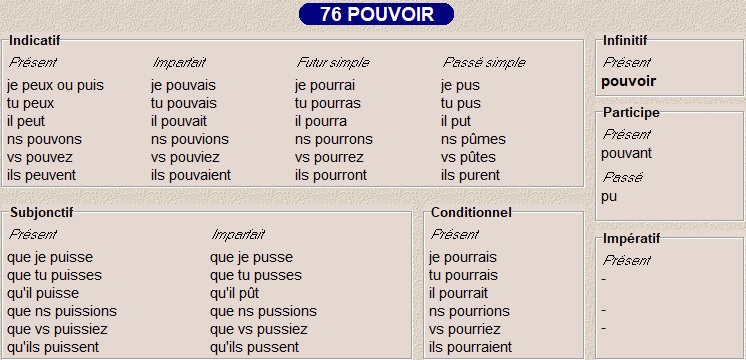
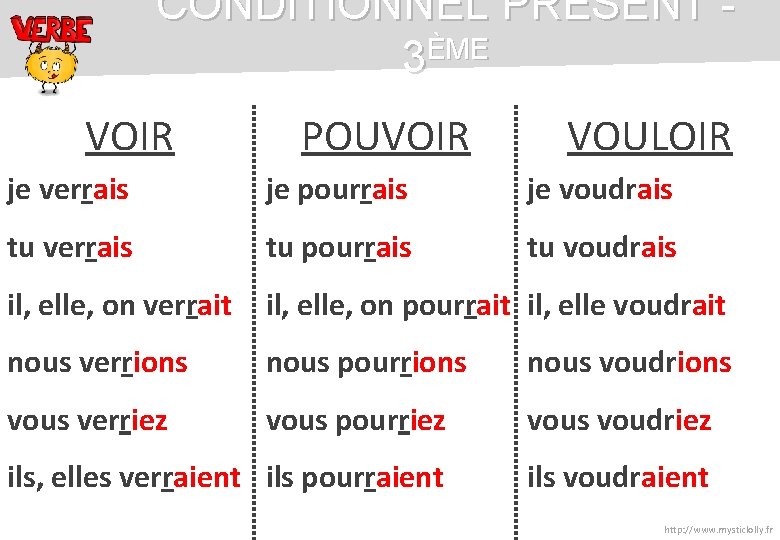
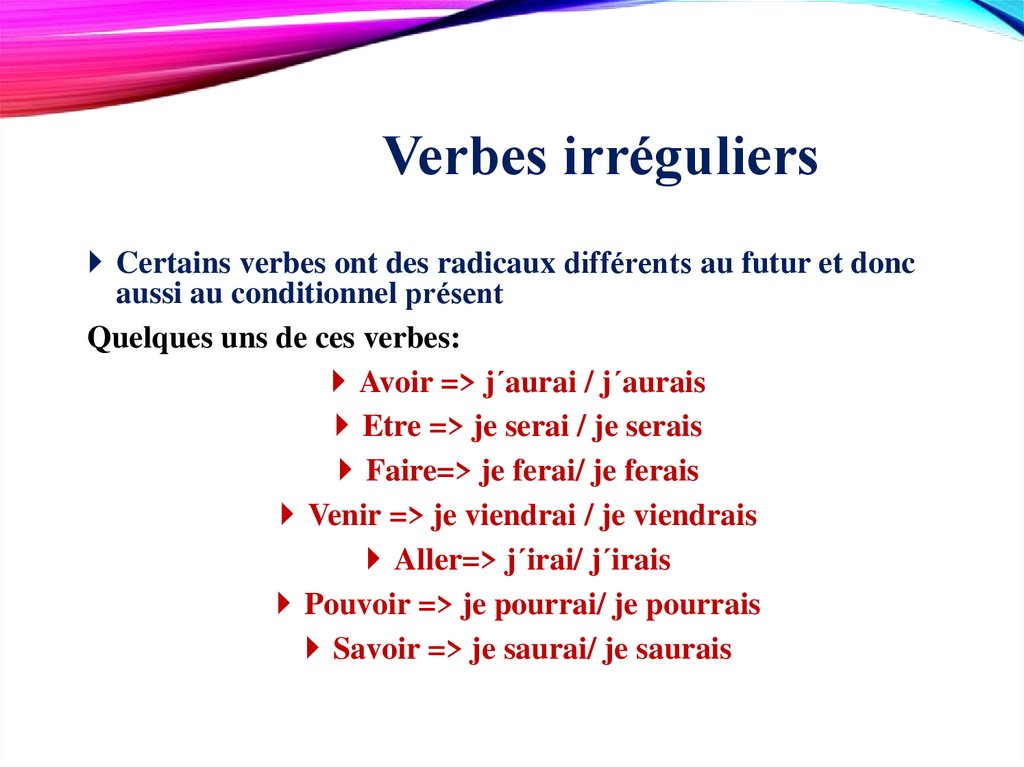
Let's start with pourrais-je. This is the conditional form of the verb pouvoir (to be able to, can, may) in the first-person singular. Think of the conditional as adding a layer of politeness, a dash of hypothetical to your request. It's like saying, "Would it be possible for me to...?" It softens the blow, making your question less demanding and more courteous. It's the verbal equivalent of a charming smile and a subtle nod.
When to Use Pourrais-je
Pourrais-je shines in scenarios where politeness is paramount. Consider these situations:
- Asking for permission: "Pourrais-je utiliser votre téléphone?" (Could I use your phone?). You're acknowledging that using their phone is a privilege, not a right.
- Making a polite request: "Pourrais-je avoir un verre d'eau, s'il vous plaît?" (Could I have a glass of water, please?). The "s'il vous plaît" adds another layer of courtesy, but pourrais-je already sets the tone.
- In formal settings: At a fancy restaurant, a business meeting, or when speaking to someone you don't know well, pourrais-je is your go-to.
- Making a suggestion delicately: "Pourrais-je suggérer une autre approche?" (Could I suggest another approach?). Softening your opinion with the conditional shows respect for the other person's viewpoint.
Think of it this way: pourrais-je is the language of diplomacy. It's the verbal equivalent of wearing your best suit and bringing a small gift. It shows you're making an effort to be considerate.
Fun Fact: The conditional tense is often used to express hypothetical situations, like "Si j'avais de l'argent, je voyagerais en France" (If I had money, I would travel to France).

The Future Simple: Pourrai-je - A More Direct Approach
Now, let's move on to pourrai-je. This is the future simple tense of pouvoir in the first-person singular. It expresses a possibility or ability in the future. It’s more direct and less nuanced than the conditional. It's akin to saying, "Will I be able to?" or "Shall I be able to?"
When to Use Pourrai-je
Pourrai-je finds its place in situations where you're focusing on the possibility of something happening in the future, rather than making a polite request in the present.

- Expressing future ability or possibility: "Pourrai-je terminer ce projet à temps?" (Will I be able to finish this project on time?). The emphasis is on whether you'll have the ability to complete the task.
- Asking about future opportunities: "Pourrai-je postuler pour cet emploi l'année prochaine?" (Will I be able to apply for this job next year?). You're inquiring about future eligibility.
- In situations that are less formal: While not impolite, pourrai-je is less formal than pourrais-je. You might use it with close friends or family.
- When focusing on factual possibility: If you're genuinely unsure about whether something will be possible in the future, pourrai-je is appropriate. "Pourrai-je venir te voir demain si la circulation est mauvaise?" (Will I be able to come see you tomorrow if the traffic is bad?).
Imagine you're a scientist conducting an experiment. You might ask, "Pourrai-je observer ce phénomène sous un microscope plus puissant?" (Will I be able to observe this phenomenon under a more powerful microscope?). You're not being impolite; you're simply asking about the logistical possibilities.
Cultural Note: The French are often perceived as being very formal, but they also value directness and honesty. Choosing between pourrais-je and pourrai-je is a subtle way of navigating these cultural nuances.

The Key Difference: Subtlety and Time
The core difference boils down to subtlety and time. Pourrais-je is about politeness and asking permission now, while pourrai-je is about future possibility and ability. Think of pourrais-je as offering a bouquet of flowers with your request, and pourrai-je as simply stating the facts. One softens the request, while the other states a question about the future.
Quick Recap Table
| Form | Tense | Meaning | Use |
|---|---|---|---|
| Pourrais-je | Conditional | Could I? May I? Would it be possible for me to? | Polite requests, asking permission, formal settings. |
| Pourrai-je | Future Simple | Will I be able to? Shall I be able to? | Expressing future ability, less formal situations, factual possibilities. |
Pronunciation Tip: The "s" in pourrais-je is often pronounced more softly than in pourrai-je. Listen to native speakers to get a feel for the subtle difference.
Putting It Into Practice: Real-World Examples
Let's see how these two forms play out in everyday conversations:
- Scenario 1: You're at a friend's house and need to use the bathroom.
- Pourrais-je utiliser vos toilettes, s'il vous plaît? (More polite, shows consideration)
- Pourrai-je utiliser vos toilettes? (Slightly less formal, but still acceptable)
- Scenario 2: You're wondering if you'll be able to attend a concert next week.
- Pourrai-je aller au concert la semaine prochaine si j'ai fini mon travail? (Focus on the possibility, depending on work completion)
- Pourrais-je aller au concert la semaine prochaine? (Could imply you're asking permission, though less appropriate in this context)
- Scenario 3: You're a student asking your professor about an assignment.
- Pourrais-je vous poser une question sur le devoir? (Polite and respectful)
- Pourrai-je vous poser une question sur le devoir plus tard? (Focusing on a possible future time)
French Cinema Reference: Imagine a scene in a classic French film. The suave protagonist, addressing a beautiful woman, would undoubtedly use pourrais-je to convey charm and sophistication.
A Little Reflection: The Art of Nuance
Ultimately, choosing between pourrais-je and pourrai-je is about understanding the nuances of the French language and adapting your communication to the situation. It's a reminder that language is more than just words; it's about tone, context, and the art of conveying meaning effectively. In daily life, paying attention to these subtleties can enhance your relationships, improve your communication skills, and make you a more empathetic and understanding person. Just like choosing the right wine to complement a meal, selecting the appropriate verb tense adds flavor and sophistication to your interactions. So, embrace the challenge, practice your French, and remember: a little bit of politeness can go a long way!