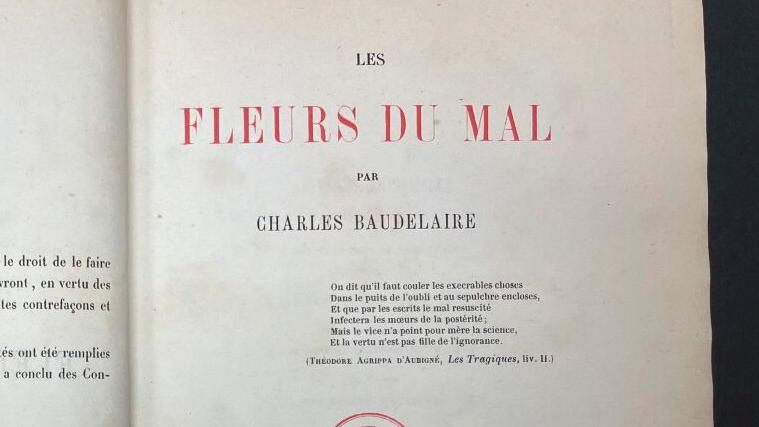
Ok, imagine this: you're at a swanky Parisian salon in 1857. Think velvet drapes, dubious lighting, and enough perfume to knock out a small horse. You're sipping absinthe (obviously), and someone dramatically declaims, "Je t'adore à l'égal de la voûte nocturne..." Very Baudelaire, very romantic... until they get to the bit about the "maudits" and the creeping sensation of sin. People are shocked. SHOCKED, I tell you! (Though, let's be honest, probably secretly thrilled.) Because, mes amis, that's the air that surrounded the release of Les Fleurs du Mal, and especially those infamous six poems that got hauled off to court.
So, what's the deal? Why were these six poems so offensive that they landed Baudelaire in hot water? Why were they deemed so outrageously... well, scandalous? Let's dive in, shall we?
The Crime: "Outrage à la morale publique et aux bonnes moeurs"
That's the charge – "outrage to public morality and good manners." Basically, these poems were accused of being too risque, too suggestive, too… French. (I'm kidding… mostly.) But seriously, Victorian prudishness was a powerful force, and Baudelaire dared to poke it with a very sharp, very poetically crafted stick.
You see, in the mid-19th century, France was caught between Romantic ideals and the rigid social expectations of the bourgeoisie. Baudelaire, bless his tortured soul, reveled in the conflict. He explored themes of sin, death, decay, and forbidden love with a frankness that was simply unacceptable to the guardians of public morality. It wasn’t just about explicit content; it was about questioning the very foundations of societal norms.
The Accused: Which Poems Made the Cut (and Then Got Cut)
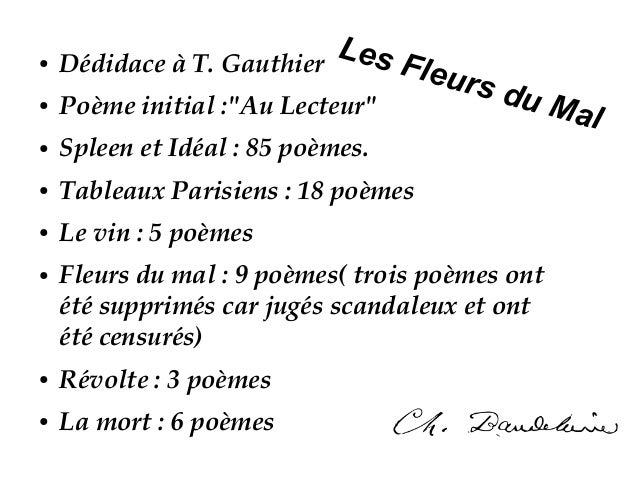
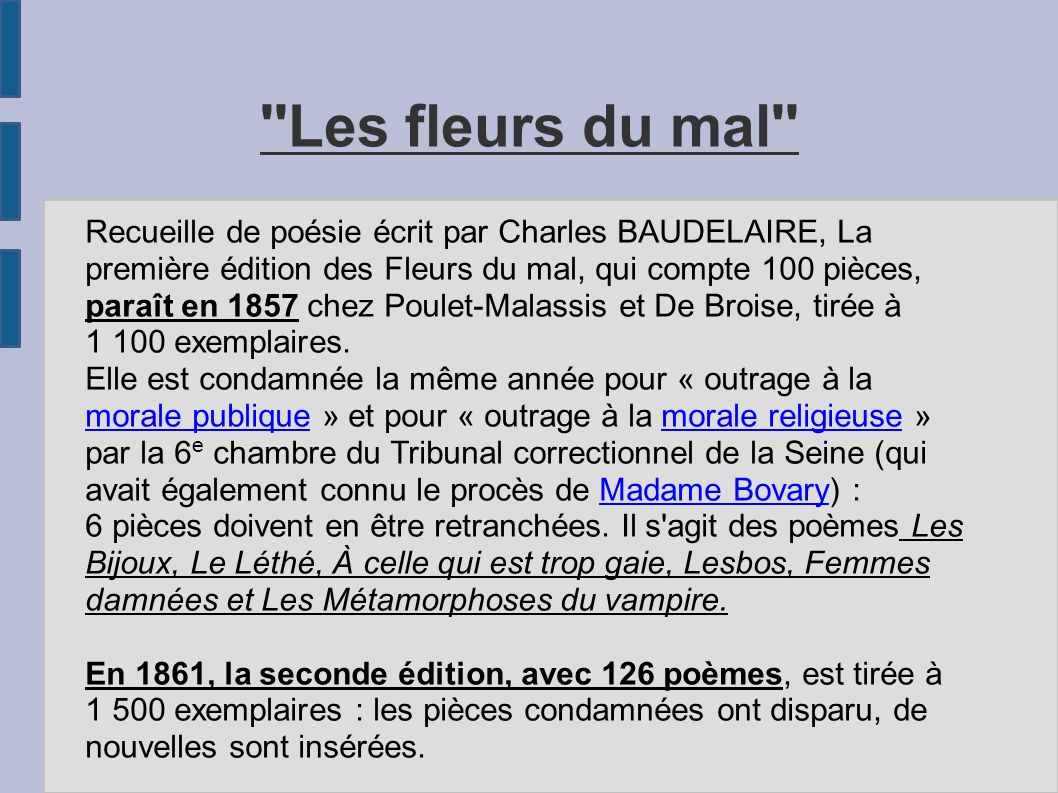
The six poems condemned were:

- "Les Bijoux" ("The Jewels"): This one focuses on a woman adorned in jewels, but the imagery is undeniably sensual and suggestive. Think opulent descriptions mingled with an underlying darkness. It’s not just about pretty things, you know?
- "Le Léthé" ("Lethe"): Ah, the river of forgetfulness from Greek mythology! This poem explores the intoxicating power of oblivion and the allure of a woman’s embrace as a means to escape the pain of existence. Pretty intense stuff, right?
- "À celle qui est trop gaie" ("To Her Who is Too Merry"): This poem delves into a complex mix of desire and disgust, questioning the nature of beauty and fleeting pleasure. It's got a bit of a bite to it, let me tell you.
- "Lesbos": A celebration of Sapphic love, which, you can imagine, was a major taboo back then. The poem portrays the island of Lesbos as a haven for female desire, free from the constraints of patriarchal society. Groundbreaking stuff!
- "Femmes damnées" ("Damned Women"): Another poem exploring lesbian relationships, focusing on the societal condemnation and internal struggles faced by women who love other women. It's a powerful and poignant piece.
- "Metamorphoses du Vampire" ("Metamorphoses of the Vampire"): This one is just plain creepy. It depicts a seductive vampire transforming into a repulsive corpse, symbolizing the fleeting nature of beauty and the deceptive power of appearances. Basically, a really messed-up metaphor.
So, there you have it – the rogues' gallery of Baudelaire's most scandalous verses. But why these poems specifically? What made them so much worse than the others in Les Fleurs du Mal? Good question! (I knew you were smart.)
Deciphering the Scandal: What Made These Poems So Bad?
Several factors contributed to the outrage surrounding these poems:
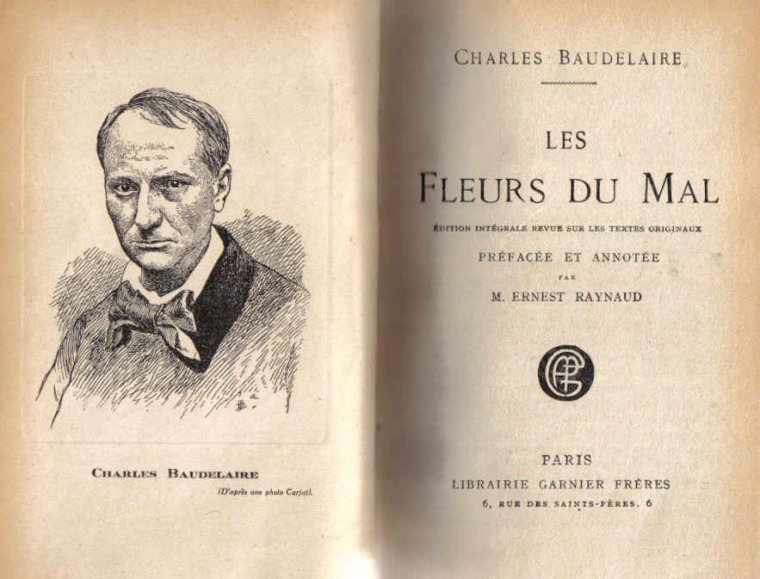
- Explicit Sexuality: Let's face it, Baudelaire didn't shy away from describing physical desire. He explored the sensual aspects of love and beauty in a way that was considered shocking and vulgar at the time. It wasn't just "nice poetry," it was sexy poetry. And that was a problem.
- Themes of Lesbianism: The poems "Lesbos" and "Femmes damnées" directly addressed lesbian relationships, a topic that was virtually unmentionable in polite society. By portraying these relationships with both passion and empathy, Baudelaire challenged the prevailing homophobia of his era. Talk about rocking the boat!
- Moral Ambiguity: Baudelaire didn't offer easy answers or moral judgments. He presented complex characters and situations, leaving the reader to grapple with their own feelings and beliefs. This ambiguity was seen as a threat to established moral codes. He made people think, which, frankly, some folks found terrifying.
- Challenge to Bourgeois Values: Perhaps most importantly, these poems represented a fundamental challenge to the values of the rising bourgeoisie. They celebrated the unconventional, the transgressive, and the aesthetically decadent – all of which ran counter to the bourgeois emphasis on respectability, conformity, and material success.
In essence, these six poems were a perfect storm of transgression. They offended the sensibilities of the time on multiple levels, challenging sexual norms, gender roles, and social conventions.
The Trial and Its Aftermath: A Literary Landmark
Baudelaire and his publisher faced a trial for "outrage à la morale publique et aux bonnes moeurs." They were ultimately fined, and the six poems were banned from publication. Can you imagine the drama? The lawyers, the outraged citizens, the poor, beleaguered Baudelaire (who, let’s be real, probably enjoyed the attention on some level). The entire affair was a media sensation, solidifying Les Fleurs du Mal's reputation as a controversial and groundbreaking work.

But here's the kicker: the condemnation only amplified the poems' appeal. Forbidden fruit is always the sweetest, right? Despite the ban, Les Fleurs du Mal continued to circulate, becoming a cult classic among artists and intellectuals who admired Baudelaire's daring and originality. In 1949, the ban was finally lifted, and the six poems were officially reinstated into the collection.
The Legacy: Beyond Scandal
So, what's the big takeaway? Why should we care about a bunch of poems that got censored over 150 years ago?
- Artistic Freedom: The story of Les Fleurs du Mal is a powerful reminder of the importance of artistic freedom. It highlights the dangers of censorship and the need to protect artists' right to express themselves, even when their work is controversial or challenging.
- Challenging Norms: Baudelaire's poems dared to challenge the social and moral norms of his time, paving the way for future generations of artists to explore taboo subjects and push the boundaries of creative expression.
- Understanding the Human Condition: Beneath the scandal and the controversy, Baudelaire's poems offer a profound exploration of the human condition. They delve into the complexities of love, desire, guilt, and mortality, revealing the dark underbelly of beauty and the hidden depths of the human soul.
- The Enduring Power of Poetry: Ultimately, the enduring appeal of Les Fleurs du Mal lies in its sheer poetic brilliance. Baudelaire's mastery of language, his evocative imagery, and his unflinching honesty continue to resonate with readers today.
So, next time you're feeling a little rebellious, or you just want to read something truly captivating, pick up a copy of Les Fleurs du Mal. And remember those six forbidden poems – they're a testament to the power of art to challenge, to provoke, and to ultimately, transcend the limitations of its time. They remind us that sometimes, the most beautiful things are born from the darkness, and that the most scandalous art is often the most enduring. (Psst... you can easily find translations online, so no excuses for not giving it a try! You might just be surprised at how much you connect with these "shocking" poems.)



.jpg)
-0bcdb1f7-5133-46b4-a272-61d9410c39db.jpg)