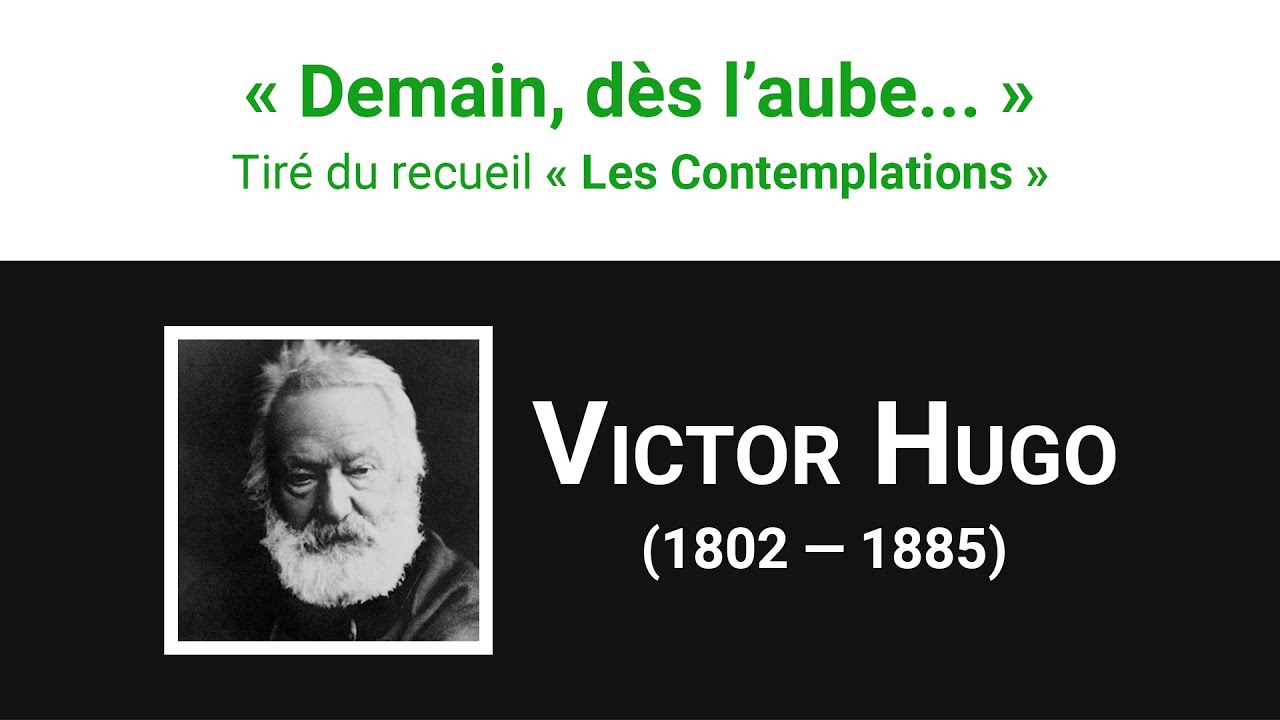
Ah, Poésie! This isn't your dusty high school French class anthology. We're diving headfirst into the vibrant, surprisingly relatable world of "Demain, dès l'aube..." by Victor Hugo. Think of it as your next literary mini-adventure, a quick trip to the countryside without leaving your couch (or, let's be honest, your phone). Get ready to unlock a classic!
The Core of "Demain, dès l'aube..."
At its heart, this poem is about loss, grief, and remembrance. Hugo wrote it after the tragic death of his daughter Léopoldine. So, yeah, it's heavy. But it's also profoundly beautiful and universal in its expression of sorrow. Let's unpack it a little.
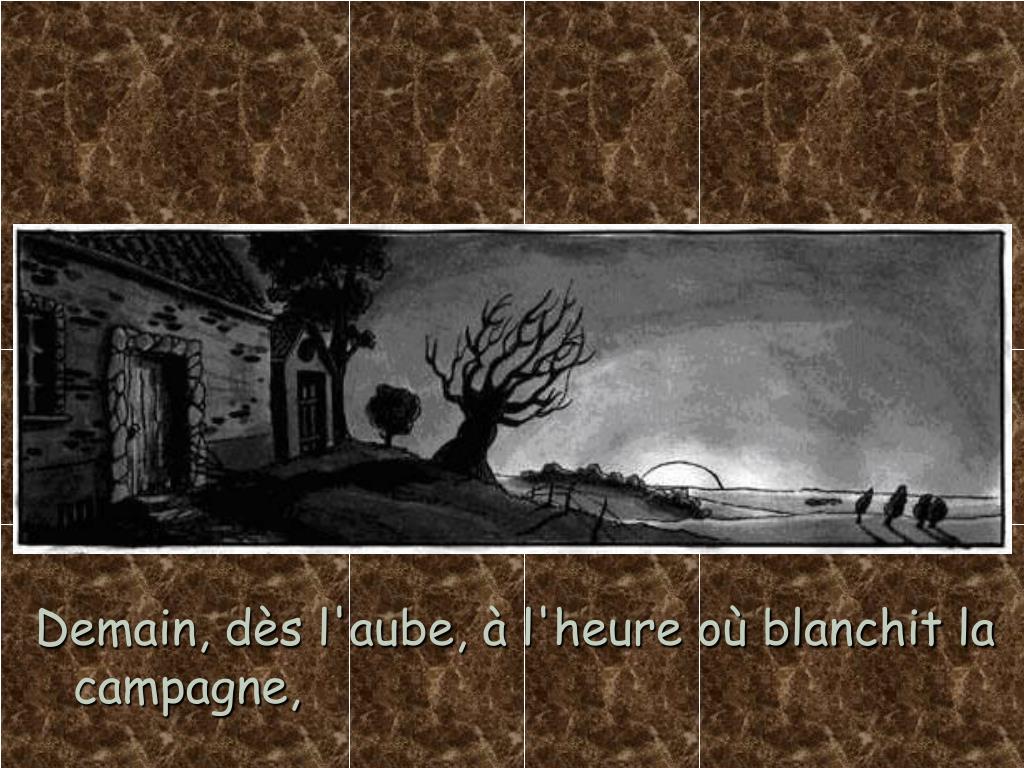
The poem depicts a journey, a pilgrimage. The speaker is setting out at dawn to visit a specific place. We, as readers, quickly realize this place is a grave, and the journey is one of love and mourning. It's a simple premise, powerfully executed.
Key Themes You'll Spot:
- Nature as solace: Hugo uses vivid imagery of the French countryside – the forests, the mountains, the dawn – to create a sense of peace and escape, contrasting with the inner turmoil of the speaker. Think of it as nature therapy, 19th-century style.
- The power of memory: The journey is a testament to the enduring power of love and the importance of remembering those we've lost. It highlights how memories, even painful ones, can be a source of comfort.
- Acceptance and resignation: There's a sense of quiet acceptance woven throughout the poem. The speaker isn't railing against fate, but rather finding a way to navigate the pain of loss with grace.
Decoding Hugo's Style
Hugo, master wordsmith that he was, employed a few key techniques that make this poem particularly resonant. Knowing these will help you appreciate the artistry:
- Simple language: Don't be intimidated by the French! The vocabulary is relatively straightforward. Hugo consciously chose simplicity to convey the raw emotion of the poem.
- Powerful imagery: He uses sensory details – sights, sounds, even smells – to paint a vivid picture of the journey. You can practically feel the cool morning air and hear the birds singing.
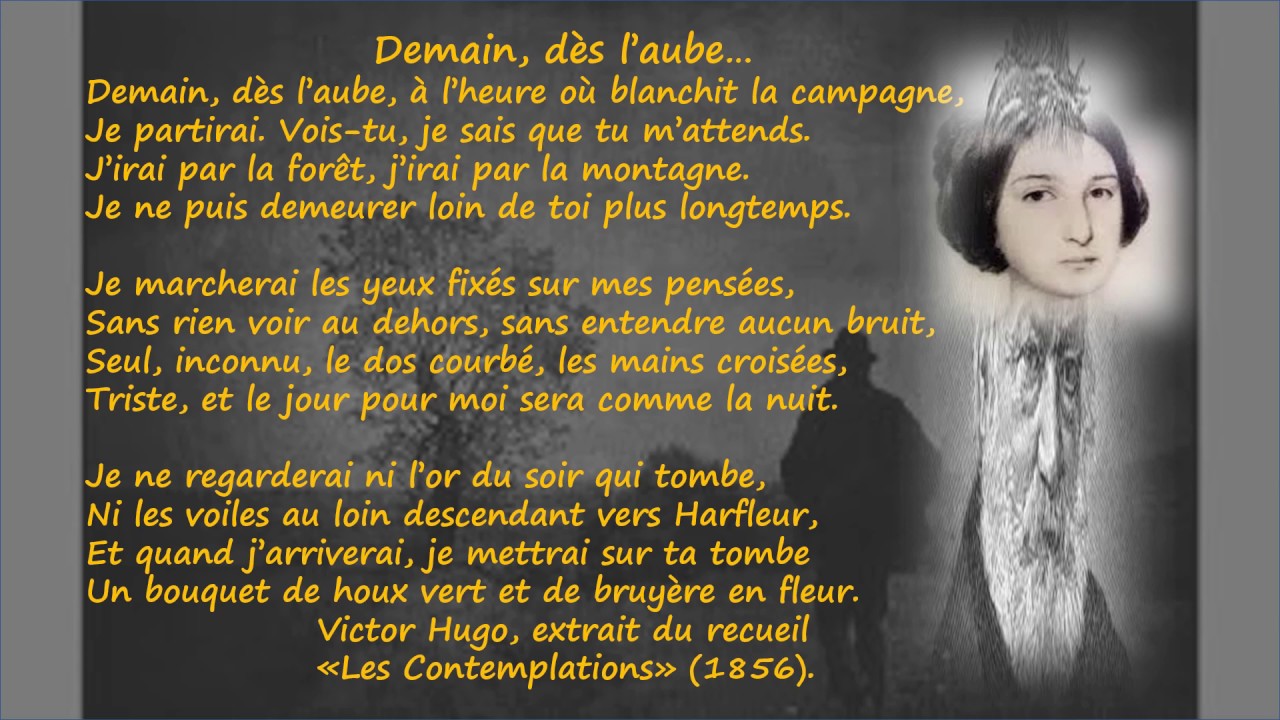
- Repetition: Certain phrases and images are repeated throughout the poem, creating a sense of rhythm and emphasizing key themes. Listen for the echoes!
Think of it like a really good song. The melody is simple, but the lyrics are packed with meaning, and the rhythm pulls you in. Hugo’s use of alexandrin—a specific 12-syllable poetic meter—gives the poem a stately, almost hymn-like quality. It’s very…French!

Bringing it to Life: Practical Tips for Appreciation
Okay, so you've read the poem (or are about to). Now what? Here's how to truly engage with it:
- Read it aloud: Poetry is meant to be heard! Even if your French pronunciation isn't perfect, the act of reading the poem aloud will deepen your understanding and appreciation. There are tons of recordings online, too!
- Visualize the scene: Close your eyes and imagine the speaker's journey. What do you see? What do you feel? Let your imagination fill in the gaps.
- Connect it to your own experiences: Have you ever experienced loss? How did you cope? What helped you through it? Connecting the poem to your own life will make it even more meaningful.
- Explore the historical context: Understanding Hugo's life and the circumstances surrounding the poem (the death of Léopoldine) can provide valuable insights. Think of it as unlocking a hidden layer of meaning.
Fun fact: Léopoldine drowned in a boating accident on the Seine with her husband just months after their wedding. Hugo was on vacation in southern France and didn't learn of her death for several days. The devastating news inspired some of his most poignant works, including "Demain, dès l'aube..."

"Demain, dès l'aube..." in Pop Culture
Believe it or not, Hugo's influence extends far beyond the realm of stuffy literature classes. References to his works (and themes) pop up in unexpected places:
- Movies: Think of films that explore themes of grief and remembrance, like "Manchester by the Sea" or "Coco." The emotional core of these stories often resonates with the themes found in Hugo's poem.
- Music: Many artists have set Hugo's poems to music. Look up versions by Georges Brassens or Francis Cabrel for a modern twist.
- Literature: Writers continue to be inspired by Hugo's masterful use of language and his exploration of the human condition. You'll see echoes of his style in contemporary poetry and novels.
It's like that classic little black dress. Timeless and adaptable. Hugo's work remains relevant because it speaks to fundamental human experiences.

A Modern Take: Why This Poem Still Matters
In our hyper-connected, constantly-moving world, it's easy to lose sight of what truly matters. "Demain, dès l'aube..." offers a powerful reminder of the importance of remembrance, the solace found in nature, and the enduring strength of love. It’s a gentle nudge to slow down, reflect, and connect with the things that ground us.
We all experience loss in different ways. Whether it's the death of a loved one, the end of a relationship, or simply the passage of time, grief is an inevitable part of life. This poem provides a framework for understanding and processing those feelings, offering a sense of hope and resilience in the face of adversity.

Consider this: take a walk in nature. Turn off your phone (gasp!). Really look at the trees, listen to the birds, feel the sun on your skin. Maybe even bring a copy of "Demain, dès l'aube..." to read under a shady tree. It's a simple act, but it can be incredibly powerful.
So, next time you're feeling overwhelmed or disconnected, remember Hugo's journey. Remember the power of memory, the solace of nature, and the enduring strength of the human spirit. And maybe, just maybe, you'll find a little bit of peace in the simple beauty of "Demain, dès l'aube..."
It’s a poem that reminds us that even in the darkest of times, there is always the promise of a new dawn.



![[Lecture poésie] Demain, dès l'aube... Victor Hugo, Les Contemplations](https://i.ytimg.com/vi/Jwhu2ObFoAo/maxresdefault.jpg)