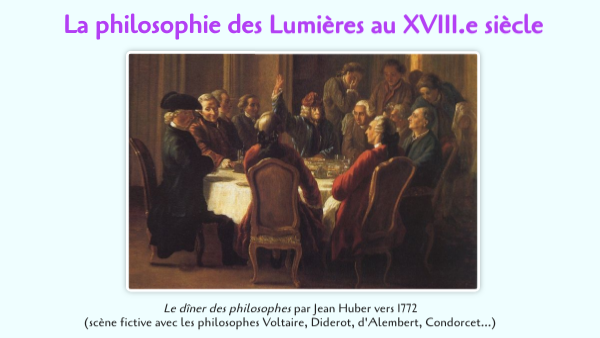
Bonjour, mes amis! Ever felt like your life needed a little je ne sais quoi? Something... brighter? Well, buckle up, because we're diving headfirst into the Philosophie de la Lumière, also known as the Enlightenment. Don’t worry, there will be no actual philosophy exams. Just a healthy dose of wit, a sprinkle of historical context, and maybe a croissant if you're lucky. I mean, why not? The Enlightenment thinkers would have definitely approved of a good croissant.
What Exactly is this "Philosophie de la Lumière" Thing?
Okay, so, imagine you're living in a time when superstition is more popular than reality TV (and that’s saying something!), and kings rule with an iron fist (and questionable hygiene). Basically, things are a bit... dim. Then, BAM! Along come these clever clogs, these intellectual rockstars, these... philosophes! They decide enough is enough. It's time to turn on the light bulb of reason and illuminate the world with knowledge.
Think of it as a collective "Aha!" moment for Europe, only lasting about a century or so. These thinkers started questioning everything – religion, government, tradition – all with the goal of improving humanity. Sounds ambitious, right? Well, they were French. Ambition is practically a national sport.
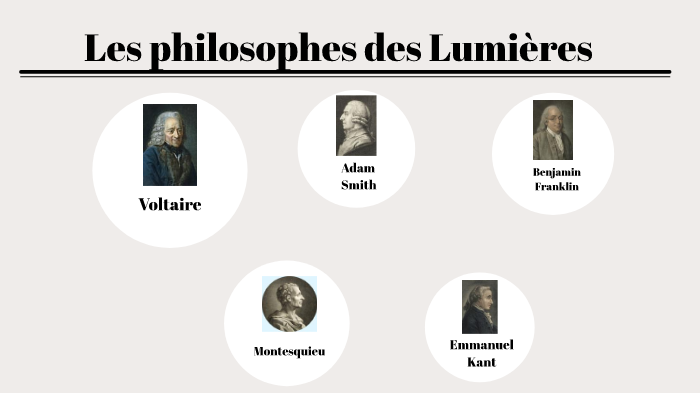
Key Players: The Enlightenment's Avengers (Minus the Capes)
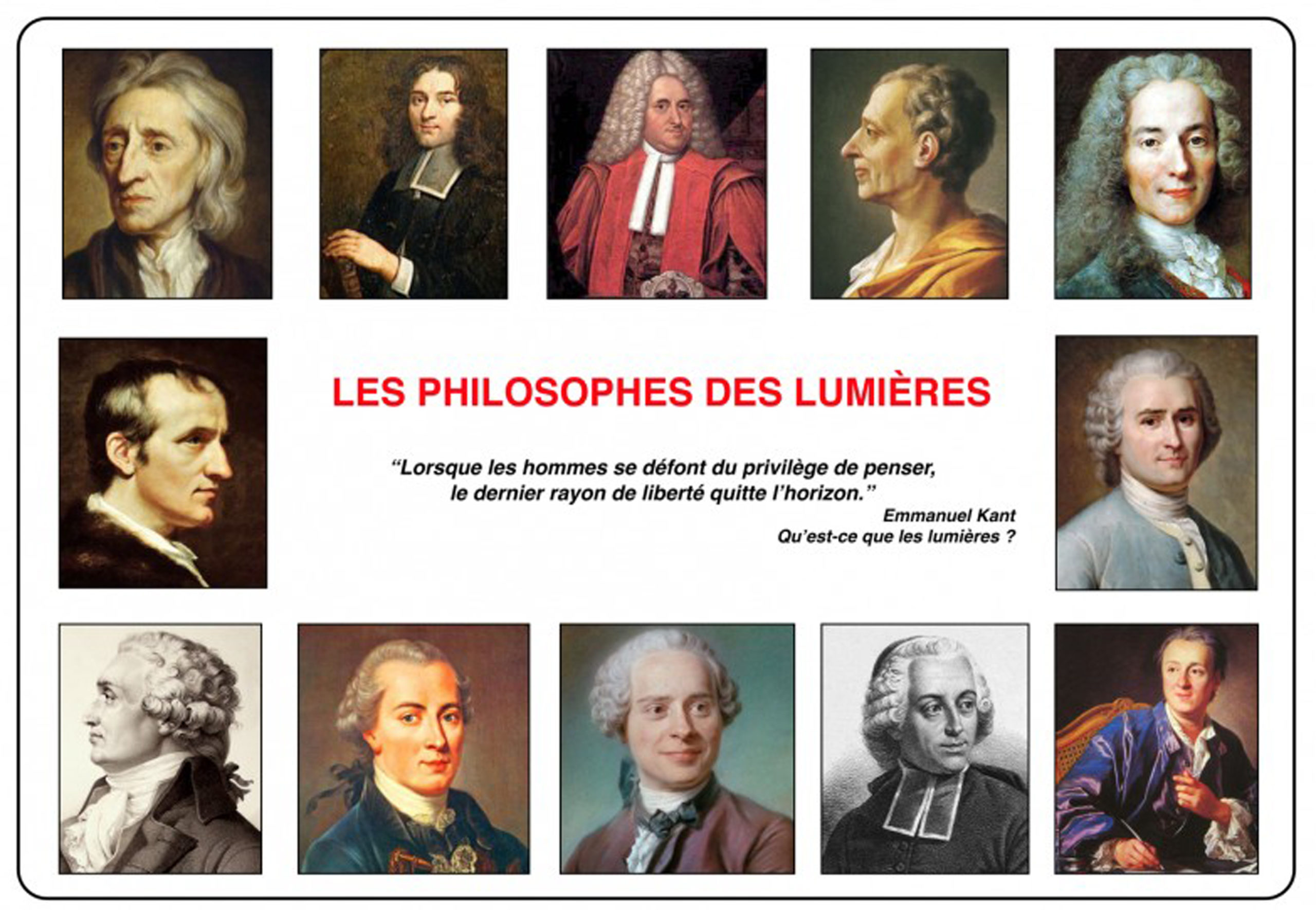
No superhero team is complete without its members, and the Enlightenment was no exception. Here are a few of the all-stars:
Voltaire: The Sarcastic One
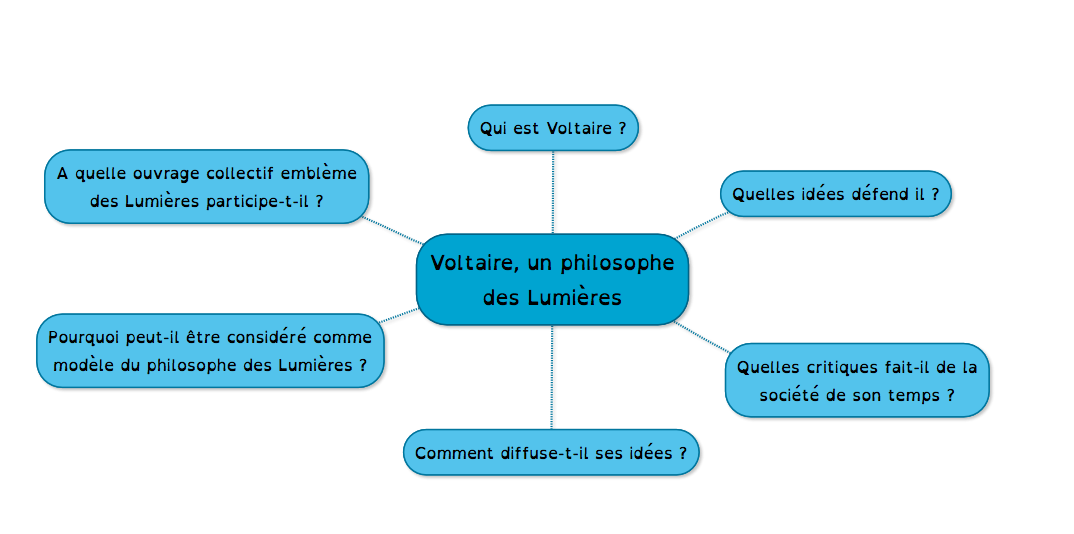
François-Marie Arouet, better known as Voltaire, was the master of witty takedowns. Think of him as the Twitter troll of the 18th century, but with better grammar and way more influence. He was a champion of free speech, religious tolerance, and generally poking fun at anyone who took themselves too seriously. He famously (maybe apocryphally) said, "I disapprove of what you say, but I will defend to the death your right to say it." Deep stuff, even if he did say it with a smirk.
Jean-Jacques Rousseau: The Brooding Romantic (and Possible Hypocrite)
Rousseau, ah, Rousseau. A complex character if ever there was one. He was all about the "noble savage" and the idea that society corrupts us. He wrote about education, politics, and how to raise children (which is hilarious considering he abandoned his own children to an orphanage). Despite his personal inconsistencies, Rousseau's ideas about popular sovereignty and the social contract were incredibly influential, laying the groundwork for future revolutions. He was basically the emo poet of the Enlightenment.
Montesquieu: The Separation of Powers Guy
Montesquieu, bless his heart, was obsessed with government. And not in a fun, "let's overthrow the monarchy" kind of way. He was more interested in how to make government work better. His big idea? Separation of powers. You know, the legislative, executive, and judicial branches we all learned about in school (and promptly forgot)? That was Montesquieu's brainchild. He figured if you split power between different branches, no one person or group could become a tyrannical overlord. Smart guy, that Montesquieu.
Denis Diderot: The Encyclopedia Enthusiast
Diderot had a dream, a dream of compiling all the world's knowledge into one massive book (well, several massive books). And thus, the Encyclopédie was born! This wasn't just a collection of dry facts; it was a platform for Enlightenment ideas, challenging traditional authority and promoting reason and science. Think of it as the Wikipedia of the 18th century, but with more illustrations of questionable medical procedures. He basically crowdsourced enlightenment.
Key Ideas: The Enlightenment's Greatest Hits
So, what were these "enlightened" ideas that everyone was so excited about? Here's a quick rundown:
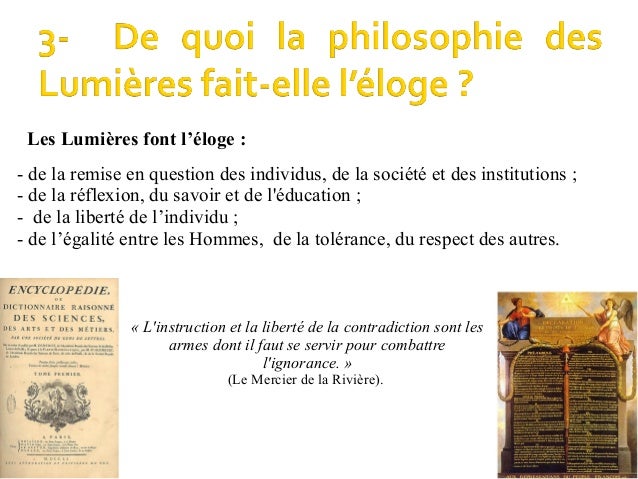
- Reason: The power of the human mind to understand the world. Basically, ditch the superstition and start thinking for yourself.
- Individualism: The importance of the individual and their rights. You're not just a cog in the machine; you're a unique and valuable human being.
- Skepticism: Question everything! Don't just blindly accept what you're told. Challenge authority, ask questions, and demand evidence.
- Tolerance: Acceptance of different beliefs and cultures. Live and let live, folks. Unless, of course, they're being intolerably intolerant. Then, maybe a strongly worded letter?
- Natural Rights: The idea that all humans are born with certain inherent rights, like the right to life, liberty, and property. (Thanks, John Locke!)
- Progress: The belief that humanity can improve over time through reason, science, and education. Optimism was in! (For a change.)
Impact: Did the Enlightenment Actually Change Anything?
You bet your bottom dollar it did! The Enlightenment was like a philosophical earthquake that shook the foundations of European society. Its ideas fueled revolutions, inspired reforms, and ultimately led to the modern world we live in today.

The American Revolution: No Taxation Without Representation!
Those pesky colonists in America, inspired by Enlightenment ideals of liberty and self-government, decided they'd had enough of British rule. They declared independence, fought a war, and established a new nation based on principles of reason, natural rights, and popular sovereignty. Take that, King George!
The French Revolution: Liberty, Equality, Fraternity! (And a Whole Lot of Guillotining)
The French, not to be outdone by the Americans, decided to have their own revolution. Fueled by Enlightenment ideals of equality and popular sovereignty, they overthrew the monarchy, stormed the Bastille, and... well, things got a little messy. Let's just say the Reign of Terror wasn't exactly the Enlightenment's finest moment. But hey, at least they got a cool new flag out of it.
Reforms Across Europe: Slow and Steady Wins the Race
Even in countries that didn't have full-blown revolutions, the Enlightenment inspired reforms. Monarchs like Frederick the Great of Prussia and Catherine the Great of Russia, known as "enlightened despots," implemented policies aimed at improving education, promoting religious tolerance, and reforming the legal system. Of course, they still held on to their power, but hey, baby steps, right?
Criticisms: Not Everyone Was a Fan
Okay, so the Enlightenment wasn't all sunshine and roses. Critics argued that it was too rational, too optimistic, and too focused on the individual. Some feared that it would lead to the erosion of traditional values and the breakdown of social order. And, let's be honest, sometimes those critics had a point.
The Romantic Reaction: Feeling > Thinking?
The Romantics, who came along in the late 18th and early 19th centuries, rejected the Enlightenment's emphasis on reason and embraced emotion, intuition, and the power of nature. They argued that the Enlightenment had gone too far in its pursuit of rationality and had neglected the importance of human feelings. Basically, they thought the Enlightenment was a bit too... robotic.
The Problem of Inequality: Enlightenment for Whom?
While the Enlightenment championed equality and individual rights, it often failed to address the inequalities that existed in society. Women, enslaved people, and the poor were often excluded from the benefits of Enlightenment thought. It's important to remember that the Enlightenment was a product of its time, and it wasn't always as inclusive as it could have been.
The Legacy: Why Should We Care Today?
So, why should we care about a bunch of dead philosophers from the 18th century? Because the Enlightenment's ideas are still relevant today! The principles of reason, individual rights, and democracy that we take for granted are all rooted in the Enlightenment. The fight for free speech, religious tolerance, and social justice continues to this day, and the Enlightenment provides a valuable framework for understanding these issues.
- Democracy: The idea that government should be based on the consent of the governed is a direct result of Enlightenment thought.
- Human Rights: The Universal Declaration of Human Rights, adopted by the United Nations in 1948, is a testament to the enduring influence of Enlightenment ideals.
- Scientific Progress: The Enlightenment's emphasis on reason and empiricism paved the way for modern science and technology.
- Critical Thinking: The ability to think critically and question authority is more important than ever in today's world.
The Encyclopédie: A Deeper Dive into Enlightenment Knowledge
We can't talk about the Philosophie de la Lumière without giving the Encyclopédie a bit more love. Imagine trying to compile all human knowledge in the 18th century! No Google, no Wikipedia, just a bunch of dedicated (and probably caffeine-addicted) writers and editors. The project, spearheaded by Denis Diderot and Jean le Rond d'Alembert, was a monumental undertaking that took decades to complete.

More Than Just Facts: A Platform for Enlightenment Ideas
The Encyclopédie wasn't just a collection of dry facts; it was a vehicle for spreading Enlightenment ideas. Articles on science, philosophy, and politics challenged traditional authority and promoted reason, skepticism, and tolerance. The Encyclopédie also included articles on practical subjects like agriculture, manufacturing, and medicine, reflecting the Enlightenment's interest in improving human life.
Controversy and Censorship: The Struggle for Freedom of Thought
Unsurprisingly, the Encyclopédie faced opposition from religious and political authorities who saw it as a threat to their power. The project was repeatedly censored, and Diderot himself was threatened with imprisonment. Despite these challenges, Diderot and his collaborators persevered, publishing the Encyclopédie in secret and smuggling copies to subscribers across Europe. The Encyclopédie's struggle for freedom of thought became a symbol of the Enlightenment's commitment to intellectual liberty.
Impact: Spreading Enlightenment Ideas Far and Wide
The Encyclopédie had a profound impact on European society. It helped to spread Enlightenment ideas to a wider audience, fostering a culture of critical thinking and intellectual inquiry. The Encyclopédie also served as a model for other encyclopedias and reference works, contributing to the development of modern scholarship. It was, in many ways, the ultimate "knowledge bomb" of its time.
The Role of Salons: Where Ideas Sparked and Spread
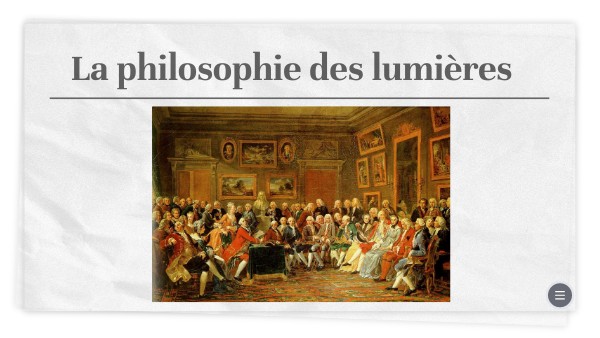
The Enlightenment wasn't just about dusty books and ivory towers. It was also a social movement, and the salons played a crucial role in fostering intellectual exchange. Salons were gatherings of intellectuals, artists, and writers, usually hosted by wealthy and influential women.
Madame Geoffrin: The Queen of the Salon
One of the most famous salon hosts was Madame Geoffrin. Her salon was a hub of Enlightenment activity, attracting some of the most prominent thinkers of the day, including Voltaire, Diderot, and Montesquieu. Madame Geoffrin was known for her wit, her intelligence, and her ability to create a stimulating and welcoming environment for intellectual discussion.
The Importance of Women: More Than Just Hostesses
While women were often excluded from formal education and political life, they played a vital role in the Enlightenment through the salons. They provided a space for intellectual exchange, supported writers and artists, and helped to shape public opinion. Women like Madame Geoffrin, Madame de Staël, and Émilie du Châtelet were not just hostesses; they were active participants in the Enlightenment, contributing their own ideas and perspectives.
Beyond the Elite: The Spread of Enlightenment Ideas to the Public
While salons were primarily frequented by the elite, Enlightenment ideas eventually spread to a wider audience through books, pamphlets, and newspapers. Coffeehouses also became popular gathering places for intellectuals and ordinary citizens alike, providing a space for discussion and debate. The Enlightenment was a multifaceted movement that reached different segments of society in different ways.
Enlightened Despotism: A Paradoxical Approach to Reform
We touched on this earlier, but it's worth exploring in more detail: the phenomenon of "enlightened despots." These were absolute rulers who embraced some Enlightenment ideals while maintaining their grip on power. Think of them as benevolent dictators with a penchant for philosophy.
Frederick the Great: The Philosopher King (Sort Of)
Frederick the Great of Prussia was a prime example of an enlightened despot. He was a patron of the arts and sciences, promoted religious tolerance, and reformed the Prussian legal system. He even corresponded with Voltaire! However, he also maintained a strong military and continued to rule Prussia with an iron fist. Was he a true believer in Enlightenment ideals, or was he simply using them to strengthen his own rule? The debate continues to this day.
Catherine the Great: A Russian Empress with Enlightenment Ambitions
Catherine the Great of Russia was another prominent enlightened despot. She corresponded with Diderot, flirted with the idea of abolishing serfdom (but ultimately didn't), and promoted education and the arts. However, she also expanded the Russian Empire through military conquest and suppressed internal dissent. Like Frederick the Great, Catherine the Great's commitment to Enlightenment ideals was often tempered by her own political ambitions.
The Limits of Reform: Power Trumps Principle
Enlightened despots were often constrained by the realities of power. They had to balance their desire for reform with the need to maintain the support of the aristocracy and the military. They also had to be careful not to alienate the Church, which still wielded considerable influence. As a result, their reforms were often limited and superficial. Enlightened despotism was a paradoxical approach to reform, a compromise between Enlightenment ideals and the realities of absolute rule.
The Enlightenment and Religion: A Complex Relationship
The Enlightenment's relationship with religion was complex and multifaceted. While some Enlightenment thinkers were atheists or agnostics, others sought to reconcile reason and faith. The Enlightenment challenged traditional religious authority but also promoted religious tolerance.
Deism: A Rational Alternative to Traditional Religion
Deism was a popular religious philosophy during the Enlightenment. Deists believed in a God who created the universe but did not intervene in human affairs. They rejected miracles, revelation, and other aspects of traditional religion, arguing that God could be understood through reason and observation of the natural world. Deism was a rational alternative to traditional religion that appealed to many Enlightenment thinkers.
Voltaire's Critique of Religious Intolerance: A Call for Freedom of Conscience
Voltaire was a fierce critic of religious intolerance. He argued that religious persecution was a source of conflict and suffering and that individuals should be free to worship as they pleased. Voltaire's writings helped to promote religious tolerance and freedom of conscience, contributing to the decline of religious persecution in Europe.
The Limits of Tolerance: Religious Minorities Still Faced Discrimination
While the Enlightenment promoted religious tolerance, religious minorities still faced discrimination in many parts of Europe. Jews, in particular, were often subject to legal restrictions and social prejudice. The Enlightenment's commitment to religious tolerance was not always fully realized in practice.
The Enlightenment and Slavery: A Moral Blind Spot?
The Enlightenment's relationship with slavery is a particularly troubling aspect of its history. While some Enlightenment thinkers condemned slavery as a violation of natural rights, others defended it or remained silent on the issue. The Enlightenment's failure to fully confront the issue of slavery is a reminder that even the most progressive movements can have blind spots.

Condemnation of Slavery: A Minority Voice
Some Enlightenment thinkers, such as Condorcet and Thomas Paine, condemned slavery as a violation of natural rights and called for its abolition. They argued that all humans are born free and equal and that slavery was inherently unjust. These voices, however, were in the minority.
Defense of Slavery: Economic and Social Justifications
Other Enlightenment thinkers, such as John Locke, defended slavery or remained silent on the issue. They argued that slavery was necessary for economic prosperity and that it was justified by the social and cultural differences between Europeans and Africans. These arguments reflected the prevailing attitudes of the time, which often prioritized economic interests over moral principles.
The Legacy of Slavery: A Stain on the Enlightenment
The Enlightenment's failure to fully confront the issue of slavery is a stain on its legacy. It highlights the hypocrisy of a movement that championed liberty and equality while simultaneously tolerating the enslavement of millions of people. The struggle to abolish slavery and its lasting consequences continues to this day.
The Enlightenment's Enduring Relevance: Lessons for Today
Despite its flaws and limitations, the Enlightenment remains a powerful source of inspiration and guidance for today. Its emphasis on reason, individual rights, and democracy is as relevant as ever in a world facing complex challenges.
The Importance of Critical Thinking: Questioning Authority and Seeking Truth
The Enlightenment's emphasis on critical thinking is particularly important in today's world, where we are bombarded with information from a variety of sources. We need to be able to question authority, evaluate evidence, and form our own judgments based on reason and evidence.
The Value of Individual Rights: Protecting Freedom and Equality
The Enlightenment's emphasis on individual rights is also essential for protecting freedom and equality. We need to defend the rights of all individuals, regardless of their race, religion, gender, or sexual orientation. We also need to be vigilant against attempts to suppress freedom of speech, freedom of the press, and other fundamental rights.
The Promise of Democracy: Empowering Citizens and Promoting Self-Government
The Enlightenment's emphasis on democracy is a reminder that government should be based on the consent of the governed. We need to empower citizens to participate in the political process and to hold their leaders accountable. We also need to promote self-government and to resist attempts to undermine democratic institutions.
Conclusion: So, Were They Really That Enlightened?
Well, that's the million-dollar question, isn't it? The Philosophie de la Lumière wasn't perfect. It had its blind spots, its contradictions, and its occasional bouts of philosophical navel-gazing. But it did spark a revolution – a revolution of the mind. It dared to question the status quo, to challenge authority, and to imagine a better world. And that, my friends, is something worth celebrating. So next time you raise a glass (of wine, naturally), remember the Enlightenment thinkers who dared to turn on the light. Just try not to spill any on your Encyclopédie. And don't abandon your kids in an orphanage. That’s just bad form. Now, if you’ll excuse me, I’m off to write a strongly worded letter to someone… probably about the price of croissants. Au revoir!