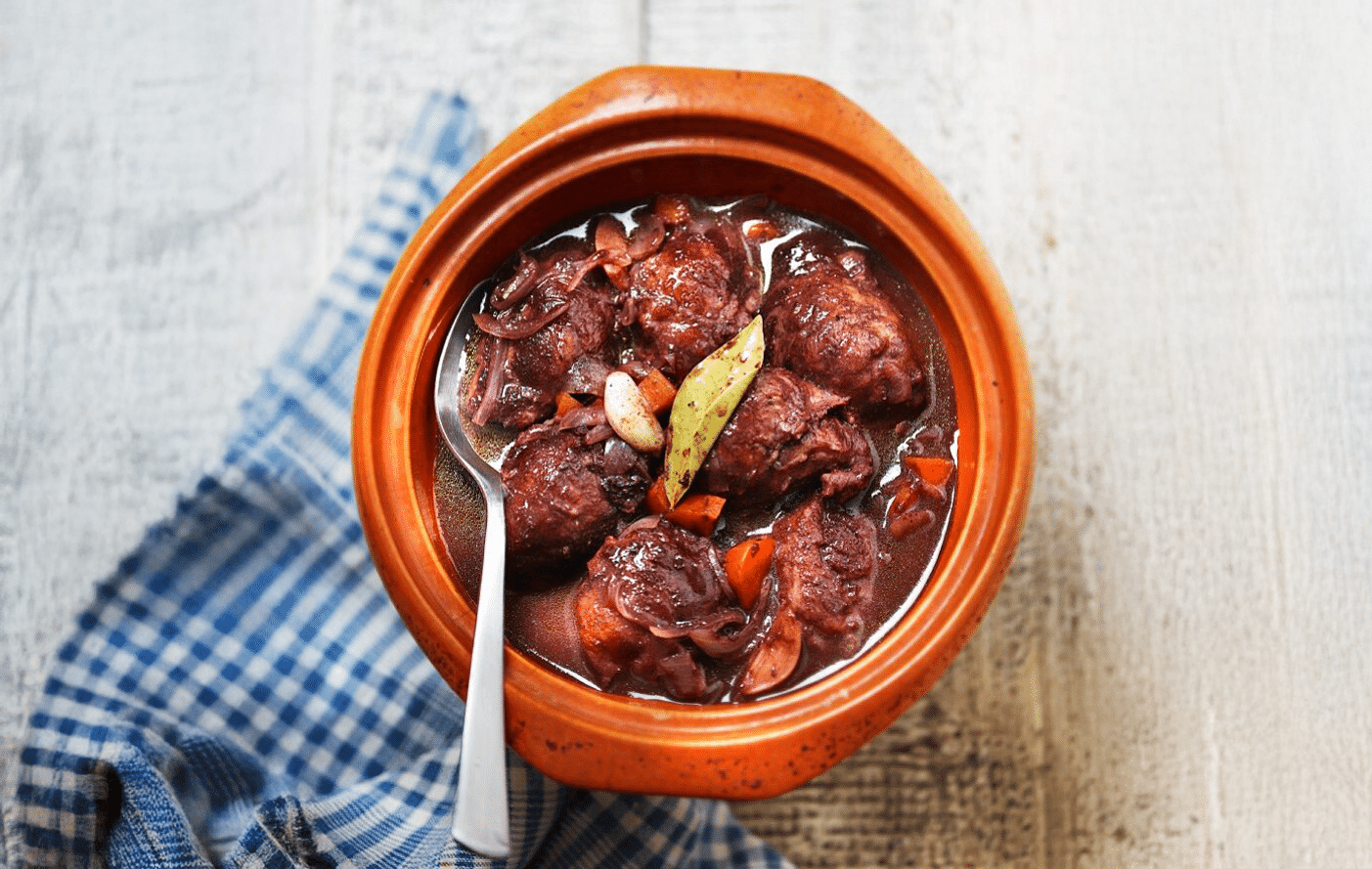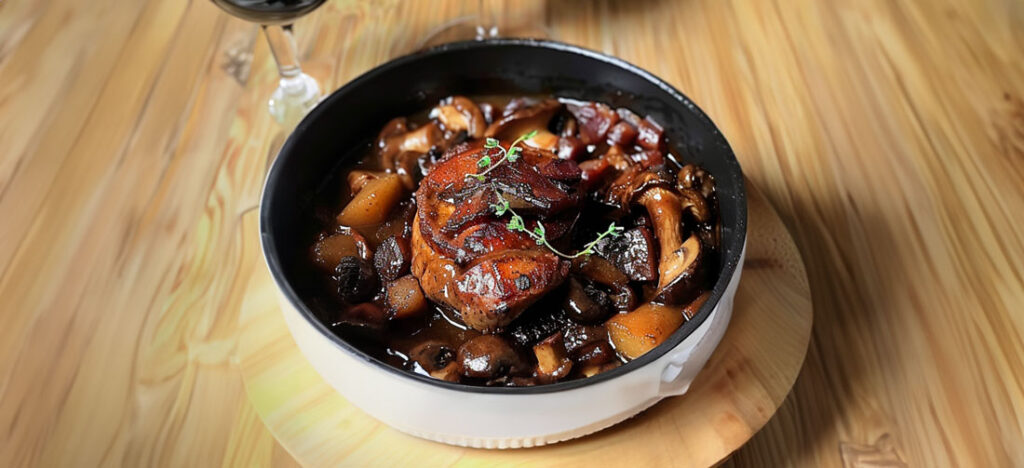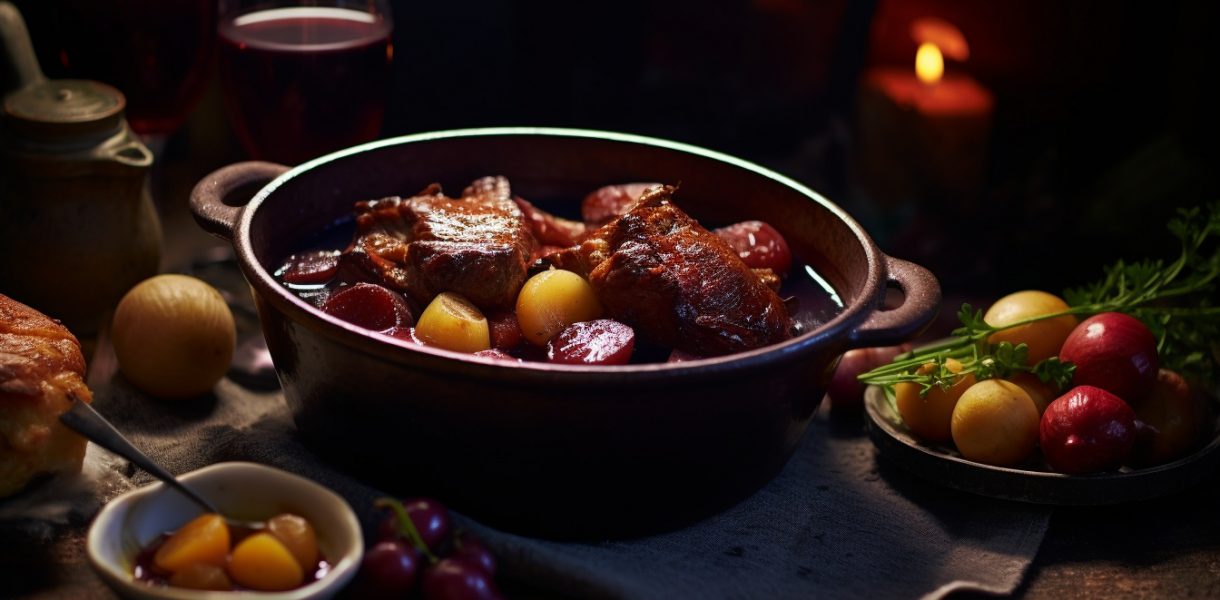
Bonjour, mes amis! Pull up a chair, let's talk about something that warms the soul: Mijoté de Canard au Vin Rouge. Doesn't just the name sound wonderfully comforting?
It's essentially duck slowly simmered in red wine. Think of it as the French countryside's answer to a chilly evening. We're talking deep, rich flavors. A symphony of savory goodness. But don't be intimidated; it's much easier to make than it sounds.
So, what exactly goes into this magical dish? Well, first, you need duck, of course. Duck legs, typically. Though you could use a whole duck cut into pieces. You want that rich, gamey flavor. And the skin? Oh, the skin! Crisped to perfection before braising – irresistible.
Then comes the star of the show: red wine. A good, robust red. Something that can stand up to the duck's richness. A Burgundy, a Bordeaux, even a Côtes du Rhône would do nicely. Don't use anything too expensive. You're going to be cooking with it for hours, remember?
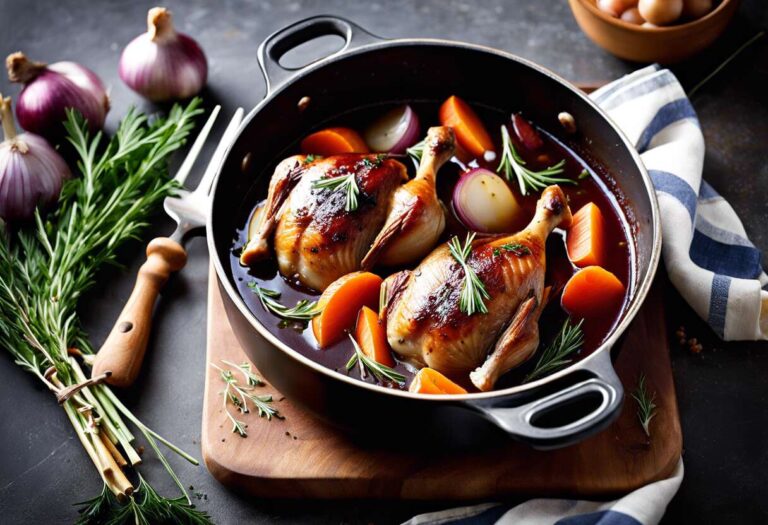
What else? Ah, aromatics! We're talking onions, carrots, celery. The holy trinity of French cooking. Garlic, of course, because garlic makes everything better. A bouquet garni – thyme, bay leaf, parsley tied together. It's like a little fragrant package of deliciousness.
Now, for the cooking process. First, you'll want to brown the duck. Get a nice sear on it. This is key! This step builds flavor. Don't overcrowd the pan. Work in batches if you need to. Golden brown is the goal!
Then, remove the duck and sauté the vegetables. Soften them up. Let them release their sweetness. Add the garlic. Don't burn it! Nobody likes burnt garlic.
Next, pour in the red wine. Let it bubble and reduce slightly. This concentrates the flavor. Now, add the duck back to the pot.
And here's the secret: Add some chicken or duck broth. Just enough to cover the duck. Bring it to a simmer. Then, reduce the heat to low. Cover the pot. And let it simmer. Slowly. For hours. At least two, maybe three. The longer, the better.
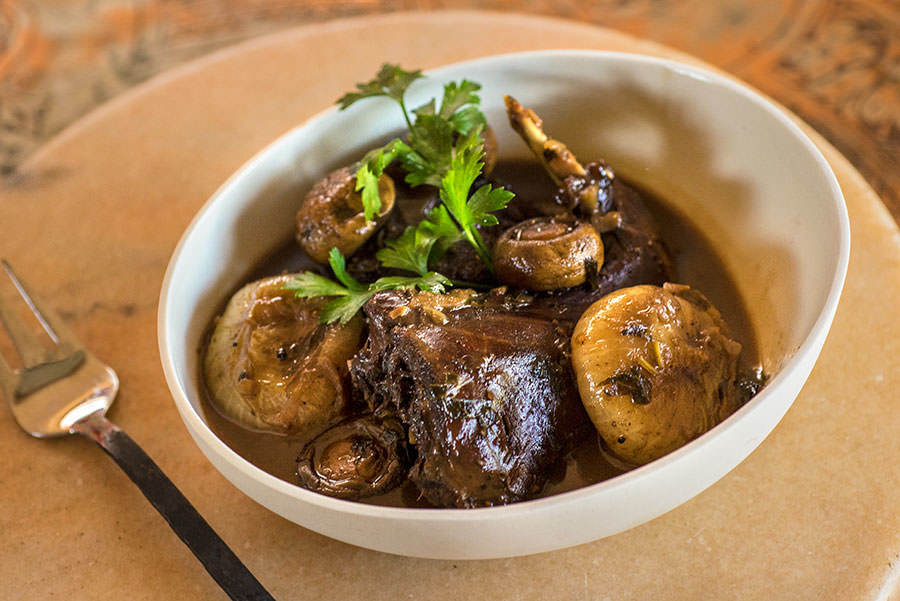
Why slow cooking?
Because time is flavor! The slow cooking process allows the duck to become incredibly tender. The flavors meld together beautifully. The wine reduces and becomes a luscious sauce. It's pure culinary magic.
Think of it like this: the wine tenderizes the duck. It breaks down the connective tissue. It infuses the meat with its complex flavors. The duck, in turn, flavors the sauce. It's a symbiotic relationship! A delicious partnership.
But wait, there's more! You might want to add some mushrooms towards the end of the cooking time. Button mushrooms, cremini mushrooms, even wild mushrooms would be lovely. They add an earthy note.
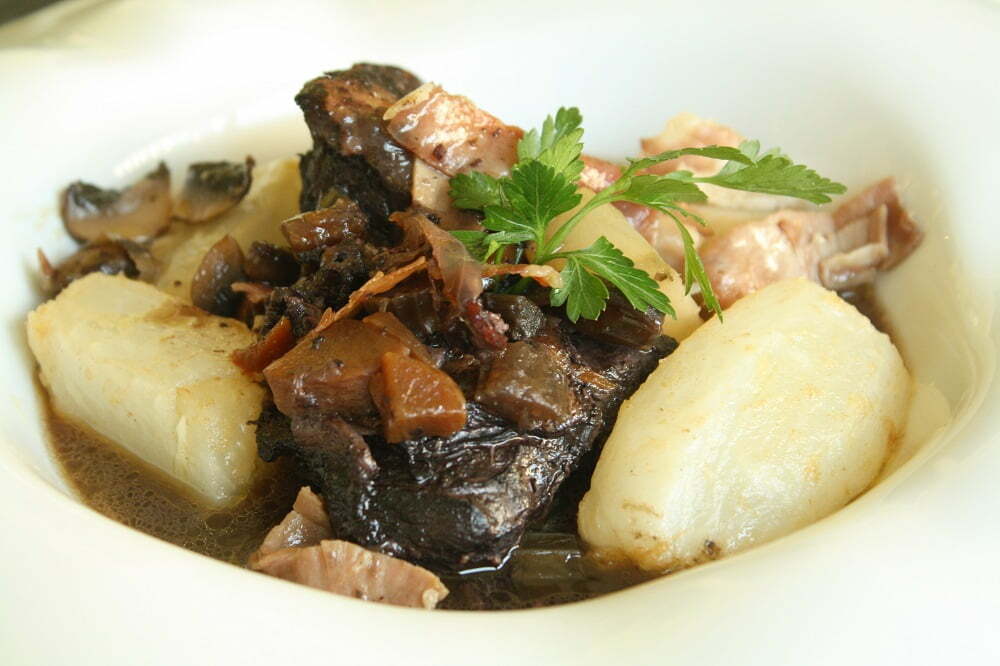
And don't forget to season with salt and pepper. Taste as you go. Adjust as needed. This is your dish. Make it your own.
Once the duck is falling off the bone, it's ready. Remove the duck from the pot. Skim off any excess fat from the sauce. You can thicken the sauce with a little beurre manié (equal parts butter and flour kneaded together). Or you can just let it reduce naturally. Your choice!
Serving Suggestions?
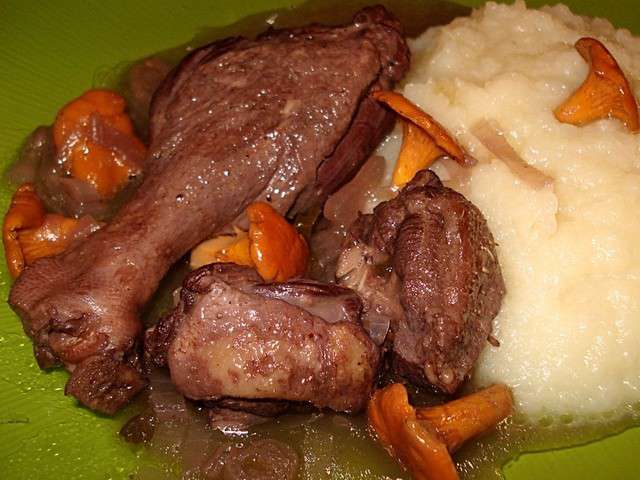
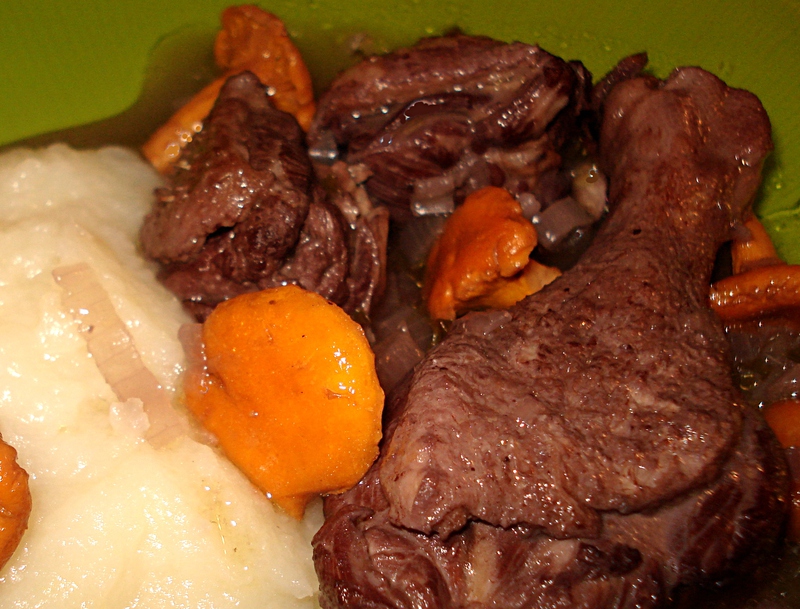
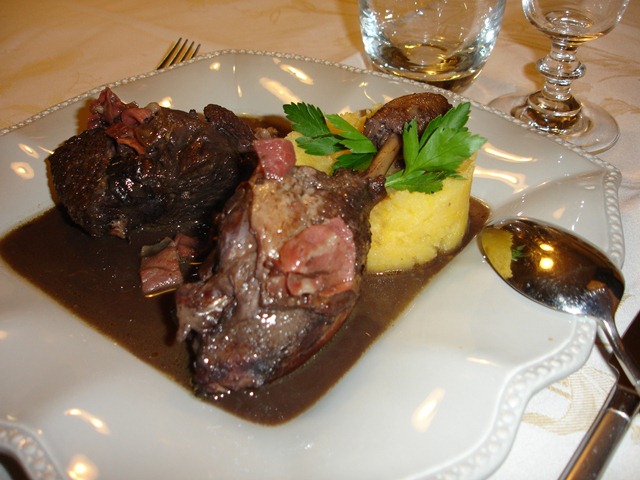
Serve the Mijoté de Canard au Vin Rouge with mashed potatoes. Or creamy polenta. Or crusty bread for soaking up the delicious sauce. A simple green salad would be a nice contrast to the richness of the dish.
And don't forget the wine! The same wine you used in the dish would be perfect. Or a slightly different one. Experiment! Have fun!
What makes this dish so special? It's the simplicity. It's the patience. It’s the love that goes into making it. It’s the way it brings people together. It's the warmth it spreads on a cold day.
Making Mijoté de Canard au Vin Rouge isn't just about following a recipe. It's about creating an experience. An experience of comfort, of connection, of pure, unadulterated deliciousness.
So, go ahead. Give it a try! You might just surprise yourself. And who knows? It might just become your new favorite dish. Bon appétit!