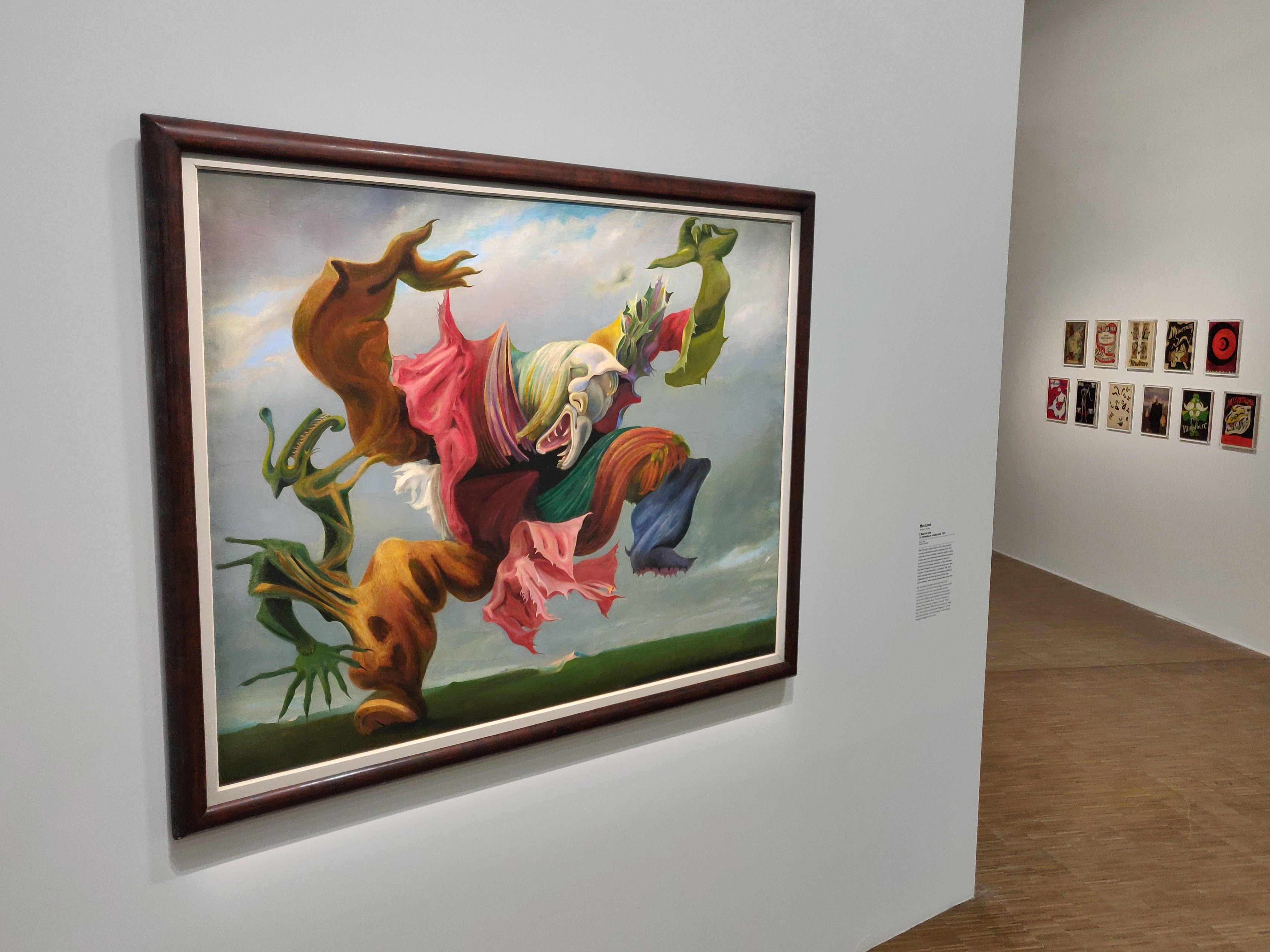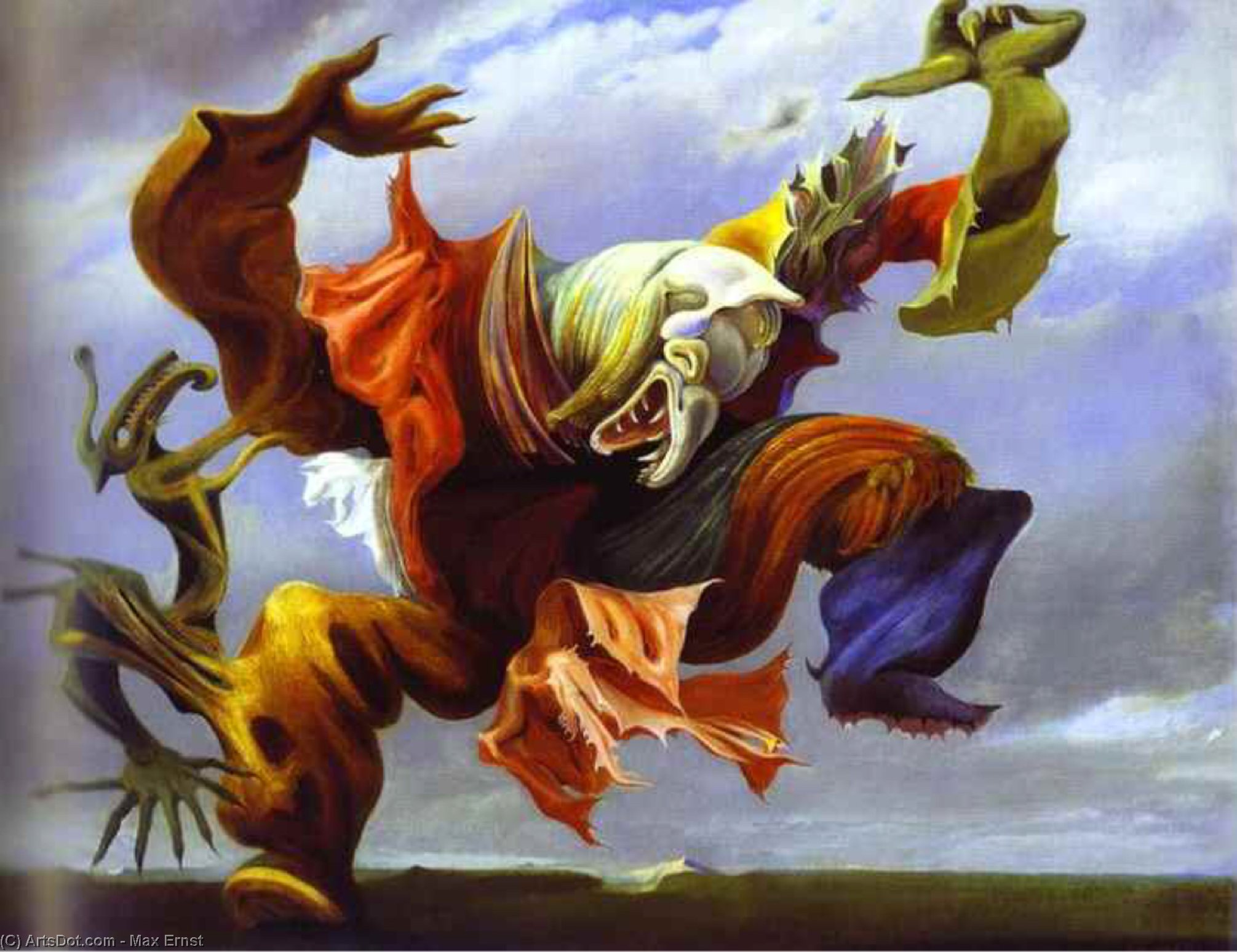
Ah, Max Ernst... Who doesn't love a bit of surrealism with their coffee? He was a wild one, wasn't he? And one of his most… peculiar, shall we say, creations is "L'Ange du Foyer." Or, as we'd say in English, "The Hearth Angel." But what is it?
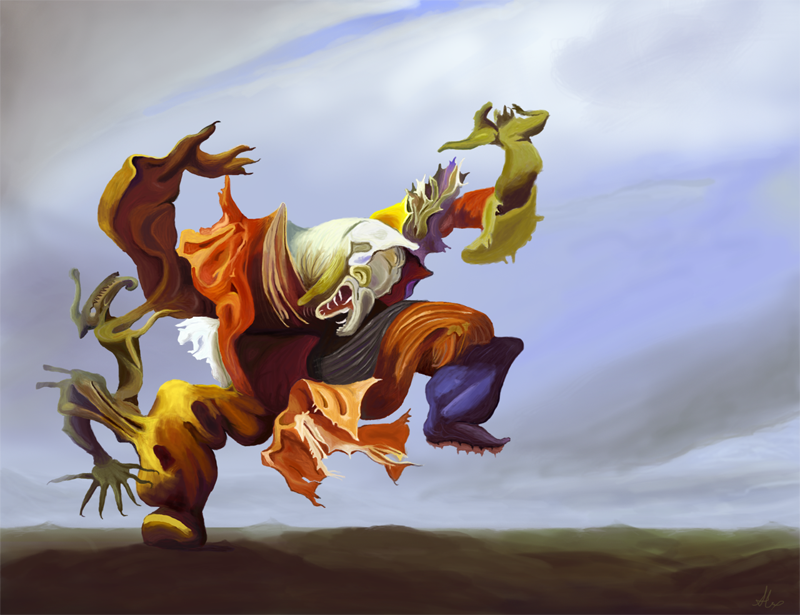
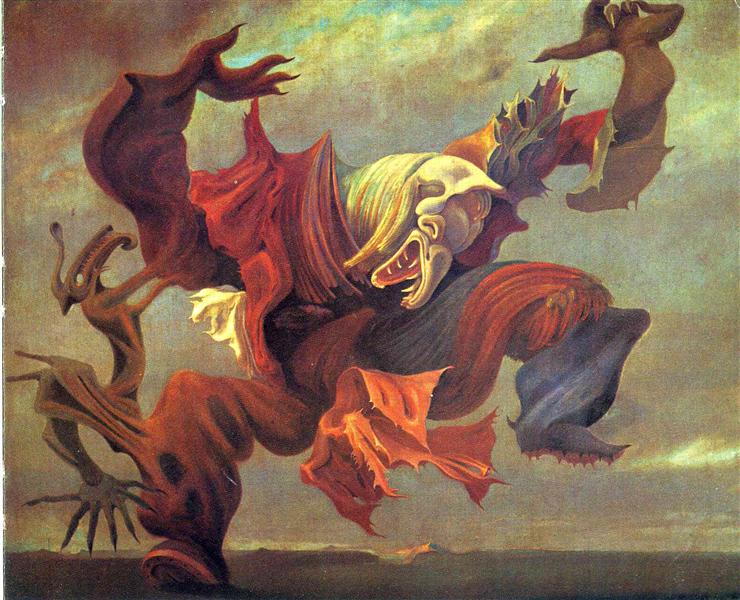
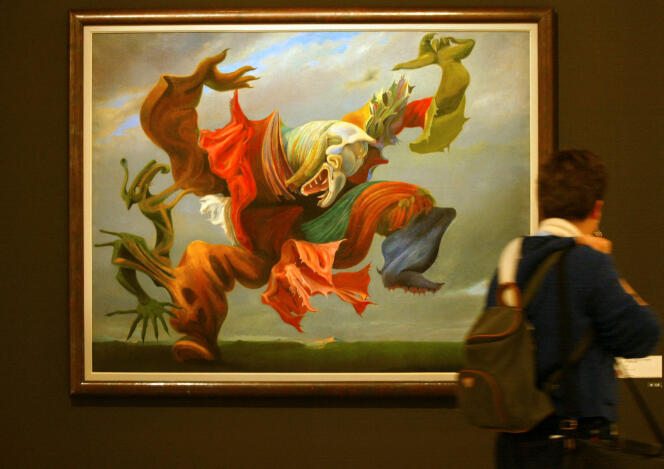
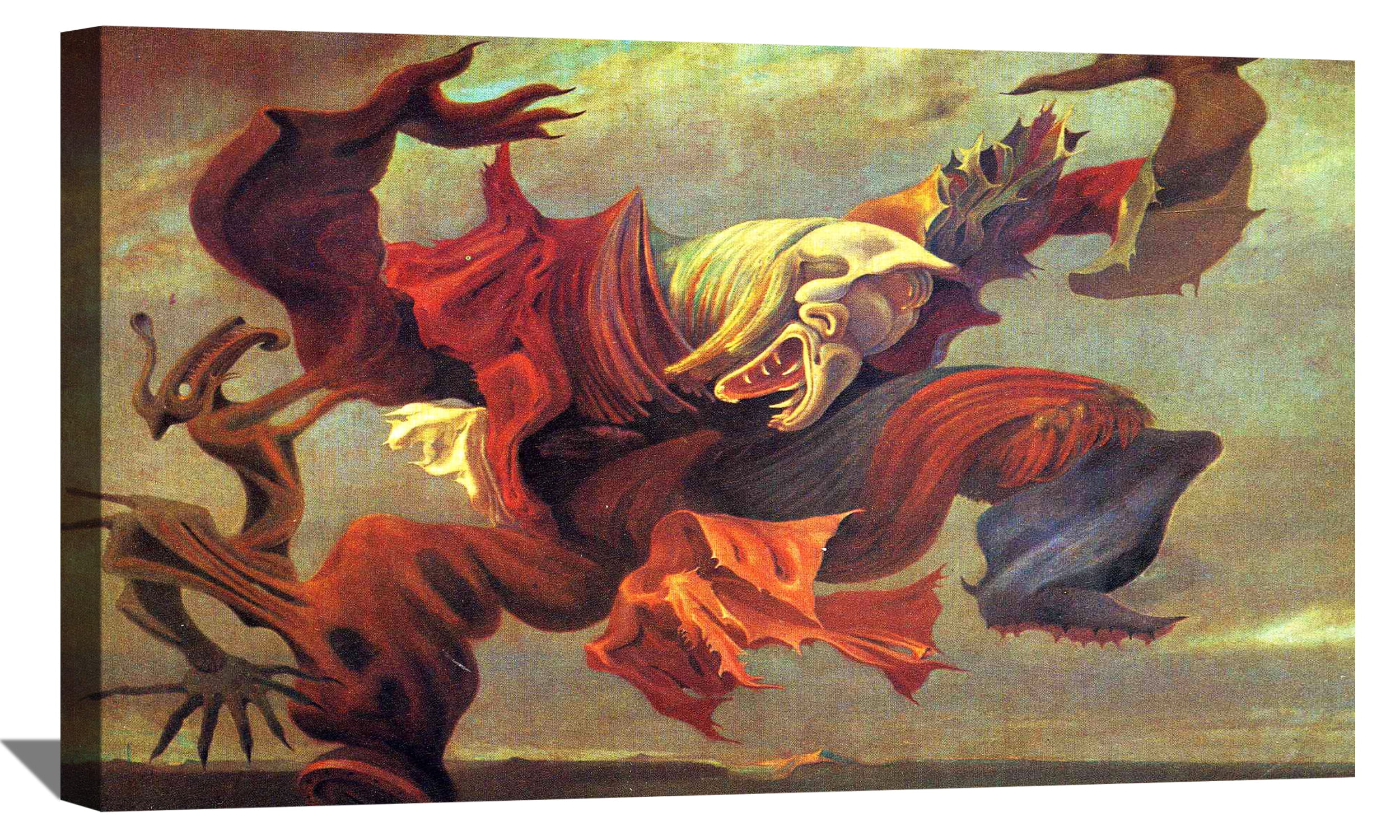
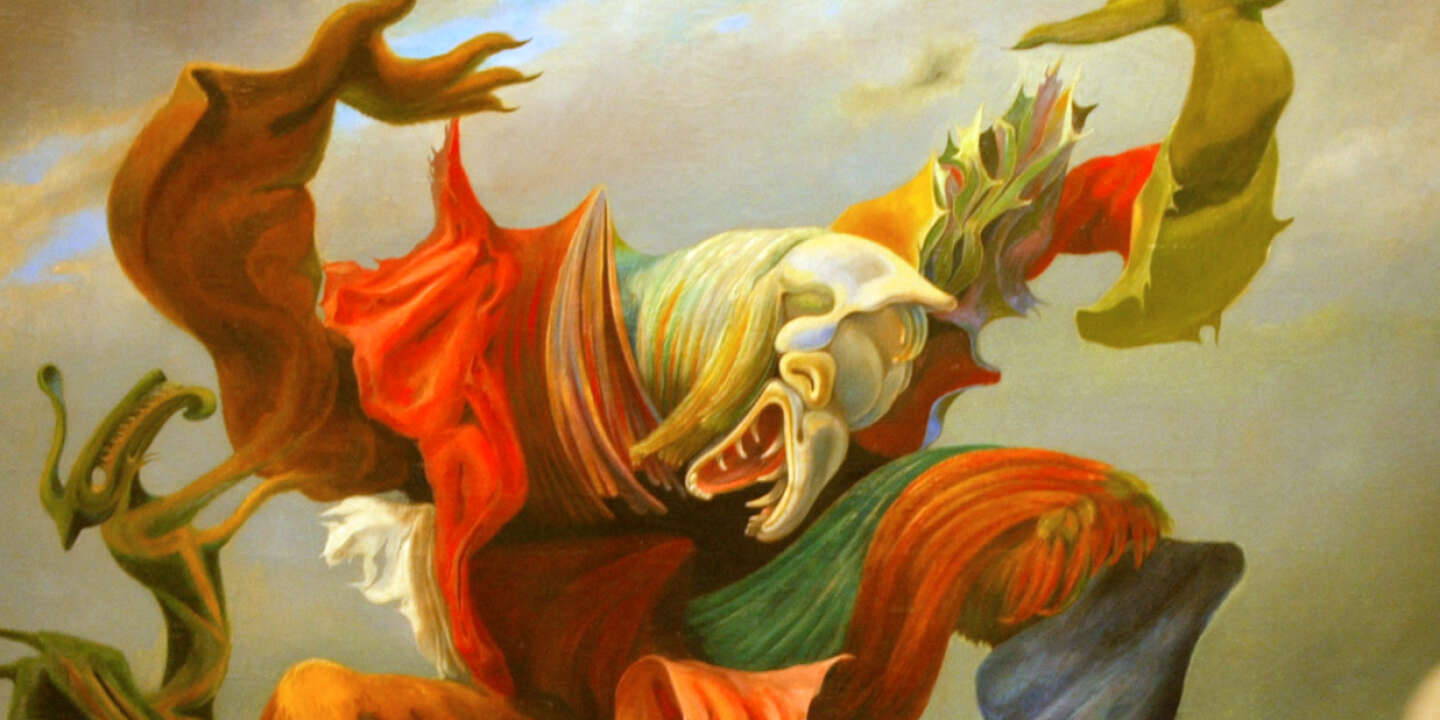
Let's paint a picture. Imagine a creature. Big. Reddish-brown. Seems almost mechanical, yet organic. Kind of menacing, but also… awkward? That's our angel. Or, rather, Ernst's version of one.
This wasn't your typical cherubic, harp-playing angel, that's for sure. We're talking about something far more disruptive. Something that challenges the very idea of what an angel, or indeed, what the foyer – the home, the heart of family life – should represent.
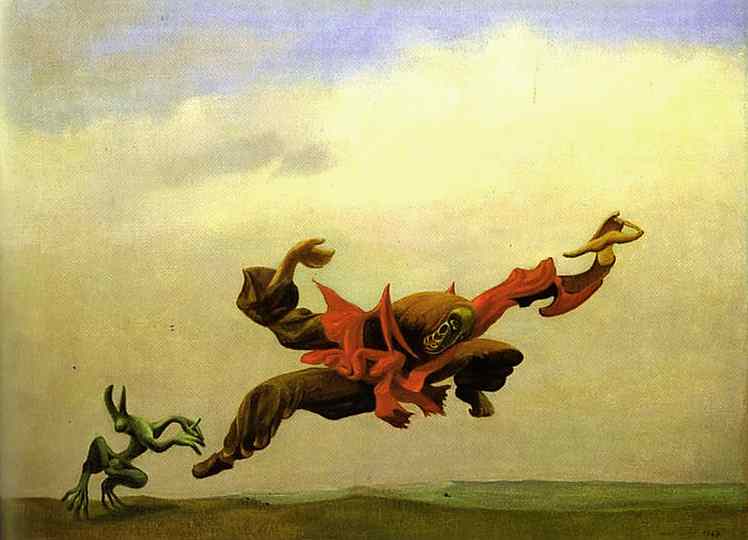
Now, here's the thing. Ernst painted this in 1937, right before the outbreak of World War II. Things were tense, weren't they? Europe was on the brink. So, could this "angel" be a symbol of the destructive forces gathering? A premonition of the chaos to come? Food for thought, non?
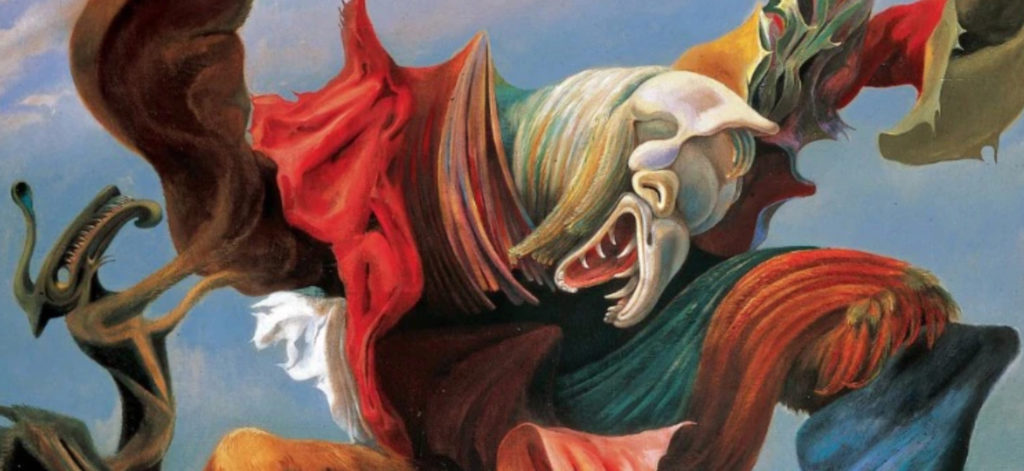
Think about it: A hearth angel isn't supposed to be scary! It’s meant to protect, to nurture, to bring warmth and comfort. So, why this monstrous figure? Why the claws? Why the aggression practically radiating from the canvas?
Some art historians say it's a representation of the destructive forces of fascism rising across Europe. The "angel" is a perversion of the ideal, a symbol of the corrupted values threatening to tear apart the fabric of society. Makes sense, doesn't it?

Of course, art is never that simple, is it? There's always room for interpretation. Maybe Ernst was poking fun at the idea of the "domestic angel," the traditional role expected of women in society. Was he suggesting that even the most seemingly innocent roles could be turned into something oppressive? Who knows for sure?
The beauty of surrealism, after all, lies in its ambiguity. It's meant to unsettle you, to make you question things. And "L'Ange du Foyer" certainly achieves that!
Let's not forget Ernst himself. He lived through World War I, so he knew a thing or two about the horrors of war. That experience undoubtedly shaped his art, imbuing it with a sense of unease and a questioning of authority.

Interestingly, Ernst actually described the painting as a parody of a victory monument. So, maybe he wasn't just warning about the rise of fascism, but also criticizing the glorification of war and violence in general. See? Layers upon layers!
And you know what else is interesting? The colours. That reddish-brown hue. It's almost like dried blood, isn't it? Or maybe rust, representing the decay of society. It's a powerful colour that immediately grabs your attention and creates a sense of foreboding.
So, next time you see "L'Ange du Foyer," don't just dismiss it as a weird, scary monster. Take a moment to consider what it might be saying. Think about the historical context, Ernst's personal experiences, and the symbolism embedded within the painting.
Beyond the Surface
But you see, "L'Ange du Foyer" is more than just a political statement or a commentary on societal roles. It's a work of art that continues to resonate with us today because it speaks to something deeper within the human psyche.
It taps into our fears, our anxieties, our sense of unease about the world around us. It reminds us that even the most seemingly stable things can be turned upside down, that even the most comforting spaces can be invaded by darkness.
It's a reminder to be vigilant, to question everything, and to never take anything for granted.

And while the image itself might be unsettling, there's also a certain beauty to it, isn't there? A raw, untamed energy that draws you in despite yourself. It's a testament to Ernst's skill as an artist, his ability to create something both terrifying and captivating at the same time.
Ultimately, "L'Ange du Foyer" is a powerful and thought-provoking work of art that continues to challenge and inspire viewers decades after it was created. It's a reminder that art can be a mirror reflecting our own anxieties and hopes, and that even in the darkest of times, there's always room for creativity and imagination.
So, perhaps, instead of fearing the "Hearth Angel," we should see it as a call to action. A reminder to fight for what we believe in, to protect our homes and our communities, and to never let the forces of darkness triumph. And maybe, just maybe, with a little bit of hope and a lot of courage, we can transform that monstrous angel into something a little more… benevolent.
Now, how about another coffee? And perhaps we can discuss Magritte next time!