Okay, so picture this: I'm sitting in a ridiculously crowded café in Montmartre, battling for a table the size of a postage stamp. The waiter, bless his heart, is juggling four plates, two glasses of wine, and a toddler threatening to launch a croissant at the Mona Lisa replica on the wall. He's sweating, but he's also… kind of graceful? Suddenly, the chaos around me clicks into place. This isn't just serving; it's performance art. And I thought, "Wow, landing that job needs more than just 'can carry a tray.'" This is where the humble, yet mighty, lettre de motivation comes in.
See, your CV is like a list of ingredients. Good ingredients, hopefully. But the lettre de motivation? That's the recipe. That's where you show them how you'll transform those ingredients into a Michelin-star experience (or at least, a decent plate of frites).
Pourquoi une Lettre de Motivation est Cruciale (Surtout en France!)
Let's be real. In France, a lettre de motivation isn't just a nice-to-have; it's practically mandatory. It's ingrained in the cultural fabric of job applications. Skipping it is like showing up to a formal dinner in your pajamas. Big non-non!
And why is that? Because it's your chance to prove you're not just another applicant. You're showing them you've actually thought about their restaurant, their team, and their customers. You're demonstrating your motivation (hence the name, duh!).
Think of it as your audition. You get to show your personality, your enthusiasm, and why you’re the perfect fit. Don't waste this opportunity! (Seriously, don't.)

Les Ingrédients d'une Lettre de Motivation Serveur Réussie
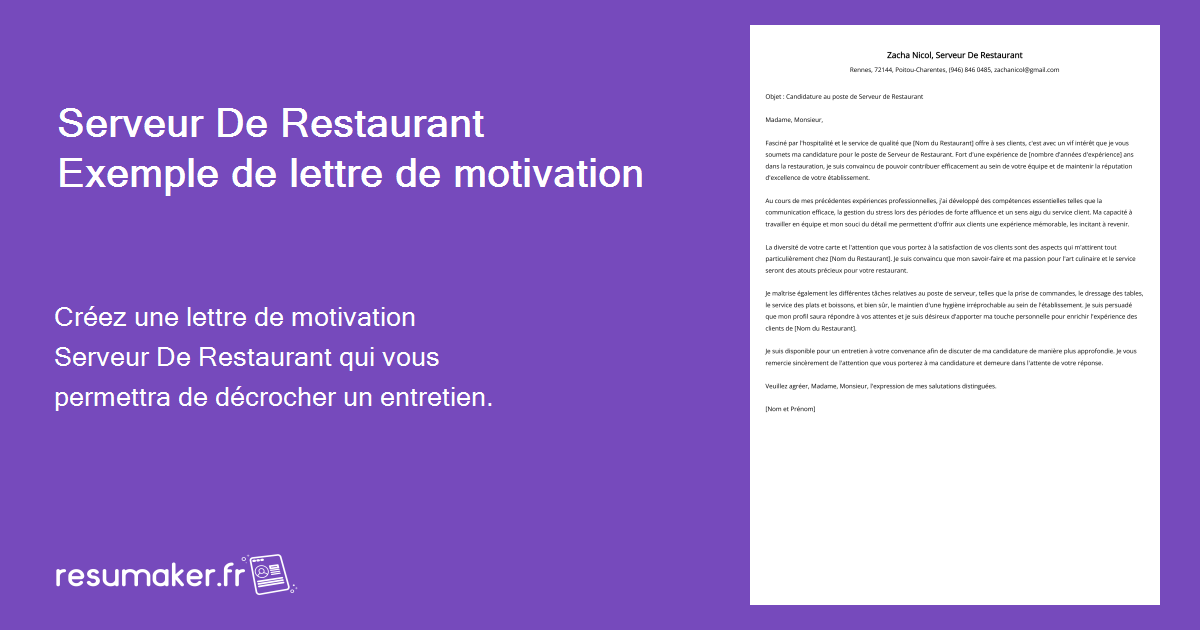
So, what goes into this culinary masterpiece of a letter? Here’s a breakdown:
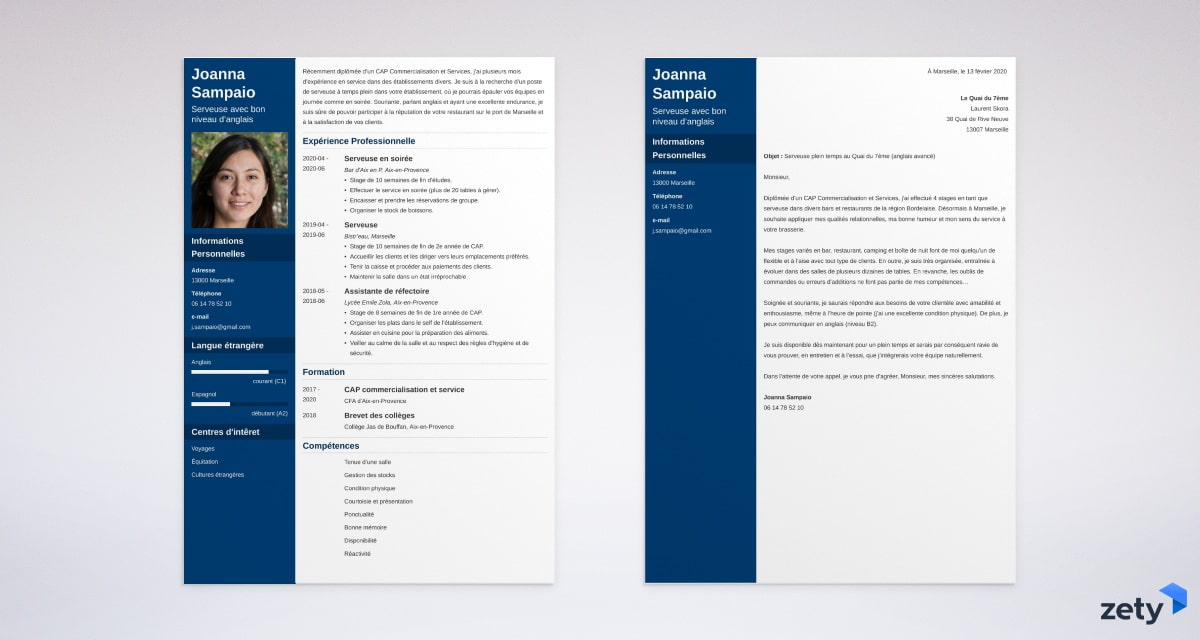
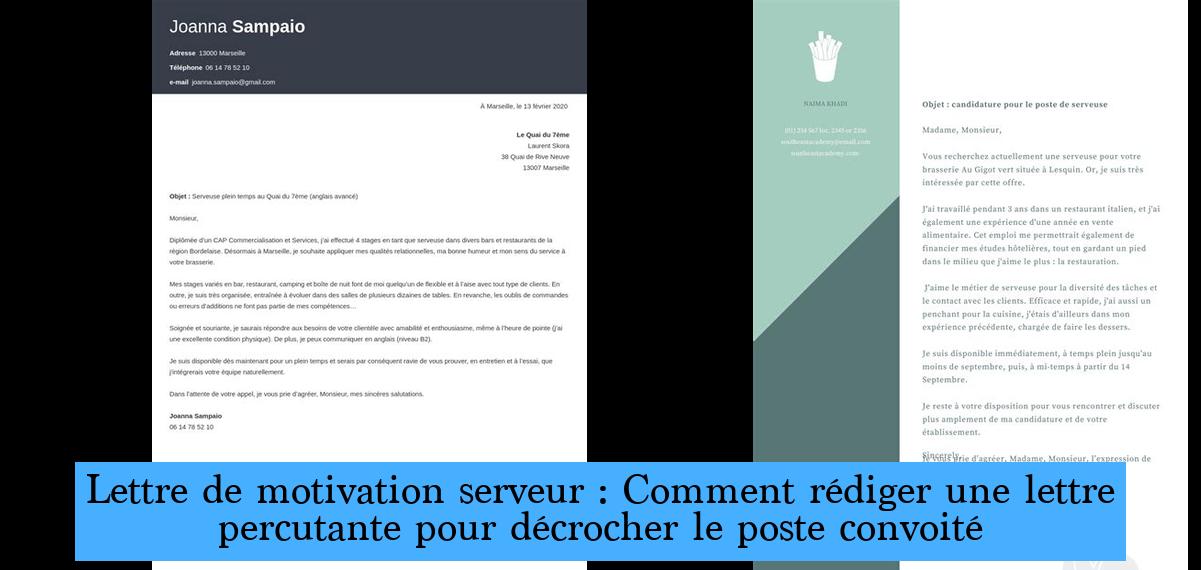
1. L'Entête: Make it Formal (But Not Too Formal)
- Your contact information: Name, address, phone number, email. Obvious, but crucial! Double-check everything. Typos are a cardinal sin.
- The recipient's information: Name of the restaurant, address, and if possible, the name of the person you're addressing (e.g., Monsieur/Madame [Nom du responsable]). If you can't find a name, "À l'attention du responsable du recrutement" works.
- Date: Don't forget the date! (Seems obvious, but you'd be surprised...).
2. L'Objet: Be Specific!
Don't just write "Candidature spontanée." Be precise! For example:
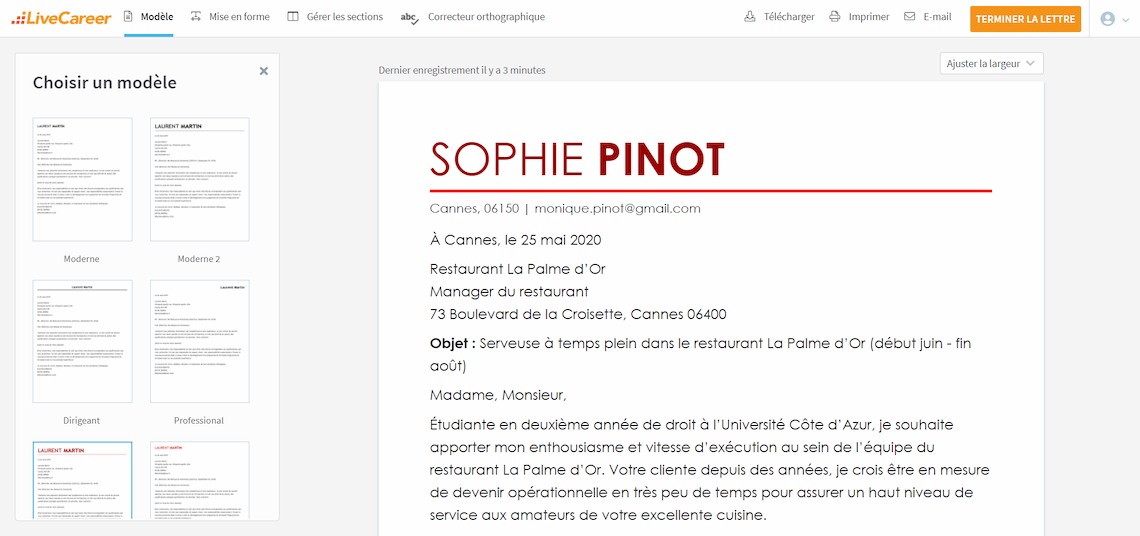
- "Candidature pour un poste de serveur/serveuse expérimenté(e)"
- "Candidature pour un poste de serveur/serveuse - CDD saisonnier"
See the difference? Specificity shows you've actually read the job posting (if there is one) and aren't just sending out generic letters.
3. Le Corps de la Lettre: Where the Magic Happens
This is the meat and potatoes (or steak-frites) of your letter. Structure it like this:
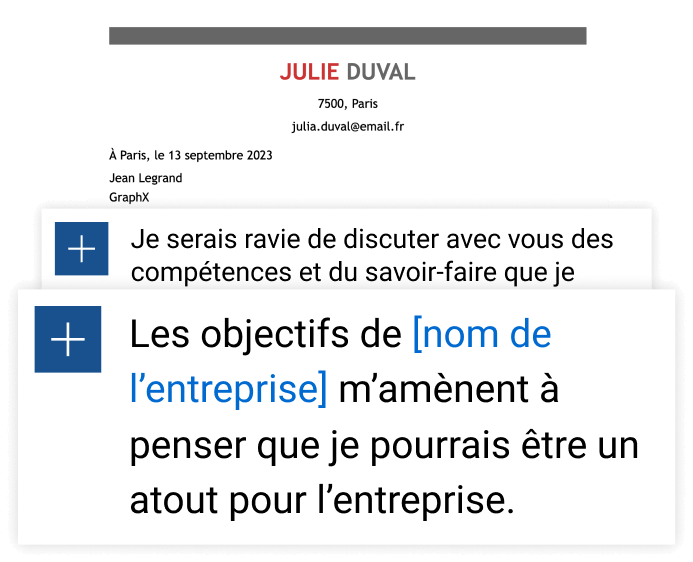
- Paragraph 1: Hook them in! Don't just state the obvious ("I'm writing to apply for..."). Start with something engaging. Maybe mention something specific you admire about the restaurant (e.g., "J'ai toujours été impressionné par l'atmosphère chaleureuse de votre établissement et la qualité de votre service."). This shows you've done your homework.
- Paragraph 2: Showcase Your Skills (and Tailor Them!) This is where you brag (subtly, of course) about your relevant experience. Highlight skills like:
- Experience: How many years have you been serving? What kind of establishments have you worked in (casual bistro, fine dining, etc.)?
- Skills:
- Taking orders accurately
- Handling cash and POS systems
- Providing excellent customer service
- Working well under pressure (essential!)
- Speaking multiple languages (a huge plus, especially in touristy areas)
- Knowledge of wines and food pairings (if applicable)
- Adapt to the Specific Restaurant: Read the job description (if there is one) and tailor your skills to match. Does the restaurant emphasize teamwork? Highlight your ability to collaborate effectively. Are they known for their wine selection? Emphasize your knowledge of wines. This shows you’re paying attention.
- Paragraph 3: Why This Restaurant? This is the key! Don't just say you need a job. Explain why you want to work at their specific restaurant.
- Research the Restaurant: Look at their website, social media, and online reviews. What are they known for? What's their vibe?
- Connect with Their Values: Do they emphasize fresh, local ingredients? Mention your passion for sustainable food. Do they have a lively, energetic atmosphere? Mention your enthusiasm and ability to thrive in a fast-paced environment.
- Show Enthusiasm: Let your personality shine through! Express your genuine interest in contributing to their team. For example: "Je suis particulièrement intéressé(e) par votre carte des vins exceptionnelle et je serais ravi(e) de partager ma passion pour le vin avec vos clients."
4. La Conclusion: Leave a Lasting Impression
- Reiterate Your Enthusiasm: Re-emphasize your interest in the position.
- Mention Your Availability: "Je suis disponible pour un entretien à votre convenance."
- Express Your Gratitude: "Je vous remercie de votre temps et de votre considération."
- Polite Closing: "Dans l'attente de vous lire, veuillez agréer, Madame, Monsieur, l'expression de mes salutations distinguées." (Or a slightly less formal alternative if you're applying to a super casual place).
- Your Signature: Sign your letter (if sending a hard copy) or type your name if sending an email.
Quelques Conseils Supplémentaires (Parce qu'on est Amis, Non?)
- Keep it Concise: Aim for one page. Recruiters are busy people. They don't want to read a novel.
- Proofread, Proofread, Proofread! Seriously. Get a friend to read it over too. Typos are a major turn-off. (And use a spell checker!)
- Use Professional Language: Avoid slang or overly casual language. This isn't a text message to your best friend.
- Be Honest: Don't exaggerate your skills or experience. You'll get caught out eventually.
- Tailor Each Letter: Resist the urge to send the same generic letter to every restaurant. Customize it to each specific establishment. It takes more time, but it's worth it.
- Practice Your French! If French isn't your first language, get someone to help you proofread and refine your letter. Good grammar and vocabulary are essential.
- Follow Up: Don't be afraid to follow up with a phone call or email a week or two after submitting your application. It shows you're proactive and interested. But don't be annoying!
So there you have it! Your guide to crafting a lettre de motivation that will impress even the most discerning French restaurateur. Now go out there and land that dream job... and maybe bring me back a croissant?