Bonjour mes amis! Settle in, grab a café au lait, and let’s chat about something colourful – literally! We're diving into les adjectifs de couleur. Color adjectives! Don't worry, it's much more fun than it sounds. Think of it as painting your French vocabulary with vibrant hues!
So, why are color adjectives important? Well, imagine trying to describe a sunset without them! Or your favourite outfit. Or even just what colour your eyes are! (Mes yeux sont marron!) They add richness, detail, and personality to your language.
Basic Colors: Your Palette
Let's start with the basics, the colors you probably already know. These are your primary pigments, the foundation of everything else. Think of them as the artists' essential tools.
Rouge - Red
Rouge. Red. Like a ripe tomato, a passionate rose, or a stop sign. It's a powerful color, isn't it? Are you wearing anything rouge today?
Bleu - Blue
Ah, bleu. Blue. The color of the sky on a clear day, the ocean depths, and a pair of well-worn jeans. Calm and serene. What shade of bleu is your favorite?
Jaune - Yellow
Sunshine in a word: jaune. Yellow. Daffodils, lemons, and happy faces. It's cheerful and bright, isn't it? Perfect for a little pick-me-up on a cloudy day.
Vert - Green
And now for the color of nature: vert. Green. Lush forests, grassy fields, and emerald gemstones. Refreshing and full of life. Did you know that "avoir le pouce vert" means "to have a green thumb?"

Noir - Black
Noir. Black. Elegant, mysterious, and classic. A little black dress, a starry night, a cup of strong coffee. Do you prefer noir or blanc (white)?
Blanc - White
Speaking of which: blanc. White. Pure, clean, and simple. Snow, clouds, a blank canvas. It's often associated with peace and innocence.
Agreement: A Touch of Grammar (But Not Too Much!)
Okay, here's the tiny bit of grammar you need to know. In French, adjectives usually come after the noun they describe. And they need to "agree" in gender and number with that noun. What does that mean? Basically, they might change a little bit!
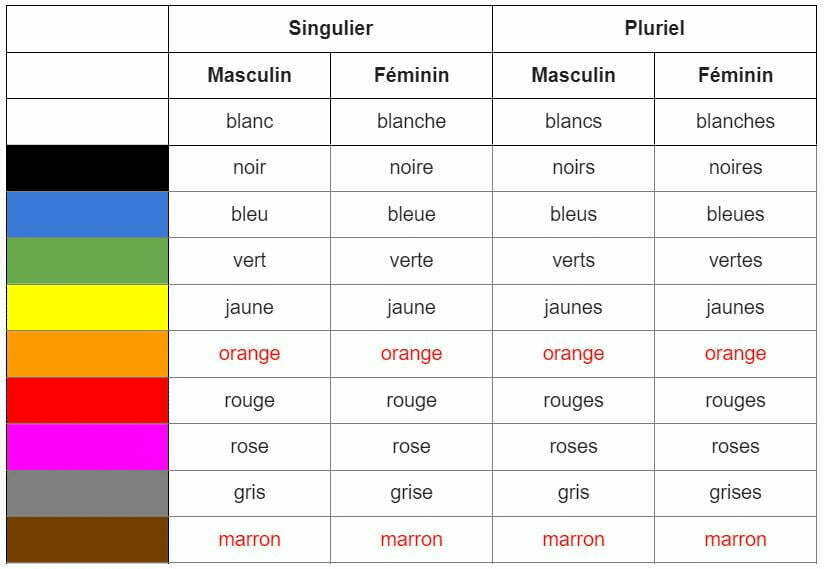
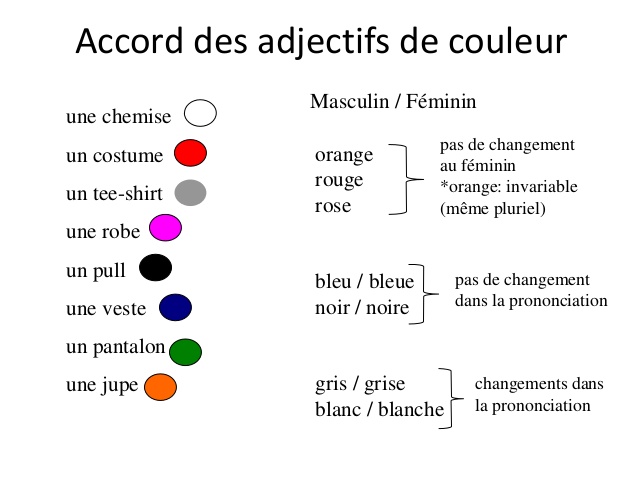
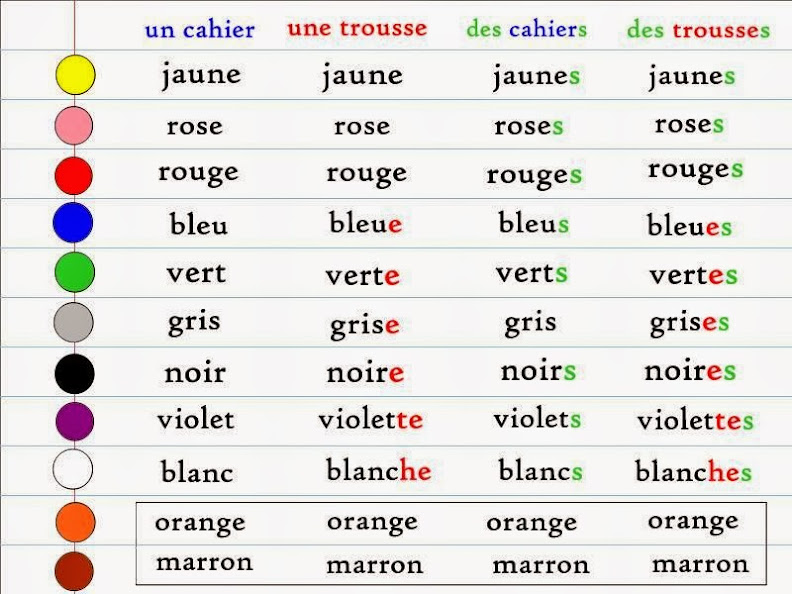
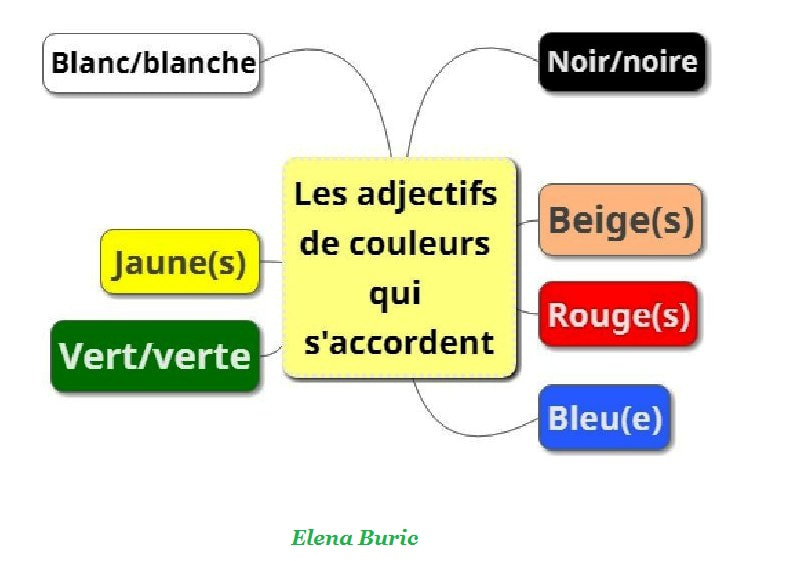
Most of the basic colors we've talked about add an "e" to the end when describing a feminine noun. For example:
- Un crayon rouge (a red pencil - masculine)
- Une fleur rougee (a red flower - feminine)
Easy, right? Now, if the noun is plural, you usually add an "s" to the end. (Though it's often silent when spoken.)
- Des crayons rouges (red pencils - masculine plural)
- Des fleurs rouges (red flowers - feminine plural)
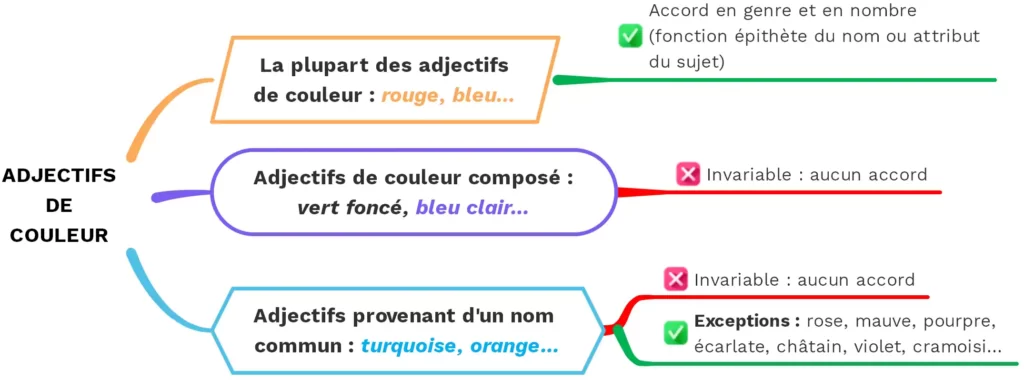
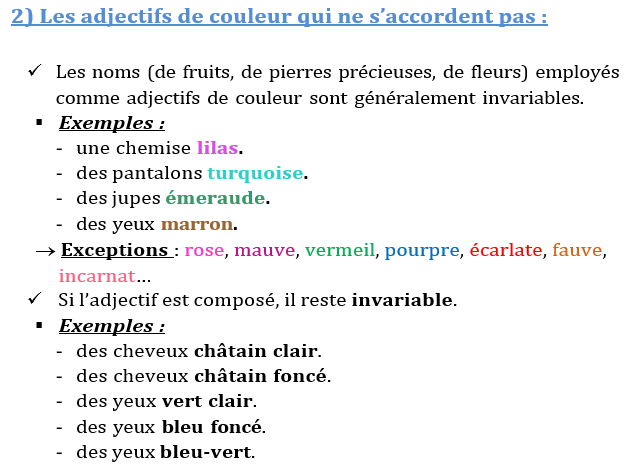
But wait! (There's always a "but," isn't there?) Some colors are invariable. They don't change! These include orange, marron (brown), and kaki (khaki). So, you'll always say une voiture orange or des chaussures marron.
Beyond the Basics: Expanding Your Colorful Vocabulary
Ready to add some more colors to your palette? Let's get a little more adventurous!
Rose - Pink
Rose. Pink. Sweet, delicate, and often associated with femininity. Think of pink flowers, pink lemonade, and pink sunsets. Fun fact: "voir la vie en rose" means "to see life through rose-colored glasses."
Gris - Grey
Gris. Grey. Neutral, sophisticated, and sometimes a little melancholic. Grey skies, grey buildings, a grey suit. "Faire grise mine" means "to look glum."
Violet - Purple
Violet. Purple. Royal, mysterious, and creative. Think of violets, amethyst gemstones, and twilight skies. It's often associated with spirituality and imagination.
Orange - Orange
We already mentioned this one, but it deserves a shout-out! Orange. Bright, energetic, and cheerful. Oranges, sunsets, and Halloween pumpkins. Remember, it's invariable! Une orange orange! (An orange orange! - Yes, it works like that!)
Marron - Brown
Another invariable friend! Marron. Earthy, warm, and comforting. Brown leaves, chocolate, and coffee. Un ours marron (a brown bear).
Adding Nuance: Light and Dark
Want to be even more precise with your color descriptions? You can add clair (light) or foncé (dark) to any color. For example:

- Bleu clair - Light blue
- Vert foncé - Dark green
You can also use adverbs like très (very) or un peu (a little) to modify the color. Un peu rouge (a little red).
Putting it All Together: Describing the World Around You
Now, let's practice! Imagine you're describing your surroundings. What colors do you see? Here are a few examples:
- Le ciel est bleu clair aujourd'hui. (The sky is light blue today.)
- Les feuilles des arbres sont vert foncé. (The leaves of the trees are dark green.)
- J'aime bien les fleurs roses dans mon jardin. (I really like the pink flowers in my garden.)
See? It's not so scary! Just practice, and you'll be describing the world in vibrant colors in no time. And remember, don't be afraid to experiment! Language is all about playing with words and expressing yourself.
So, there you have it – a little tour of les adjectifs de couleur. I hope you found it helpful and maybe even a little bit fun! Now go out there and paint the world with your French vocabulary! And remember, even if you make a mistake, it's okay. Just keep learning, keep practicing, and keep adding color to your life.
À bientôt, mes amis! And remember to always look on the bright side...preferably the jaune side!