Bonjour mes amis! Ever feel like French history is a confusing jumble of revolutions, emperors, and enough Republics to make your head spin? Fear not! Today, we're diving headfirst into the wonderfully wacky world of Les Cinq Républiques Françaises (The Five French Republics) and their, shall we say, interesting collection of presidents. Buckle up, grab a croissant (or maybe a bottle of wine, depending on how you cope with historical complexity), and prepare for a journey filled with political intrigue, questionable fashion choices, and enough existential angst to fill the Louvre.
La Première République: The OG Revolution (Kind Of)
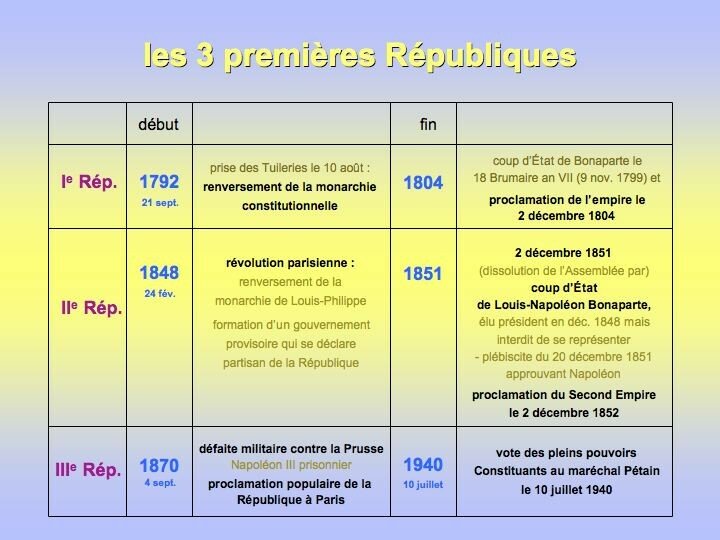
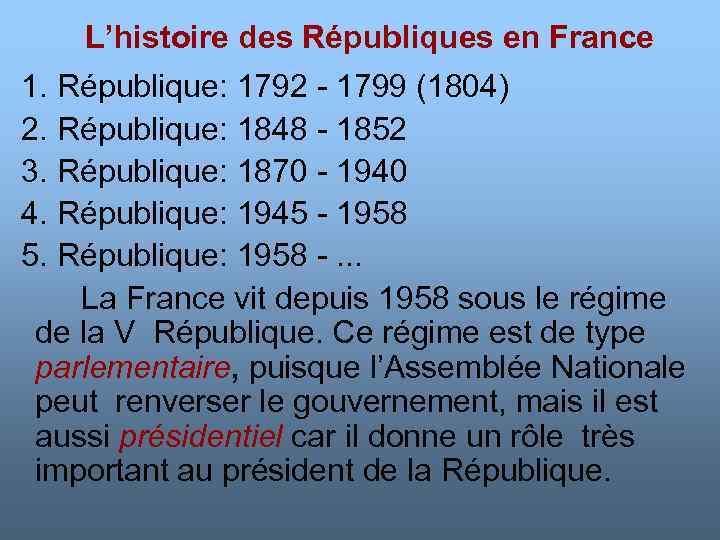
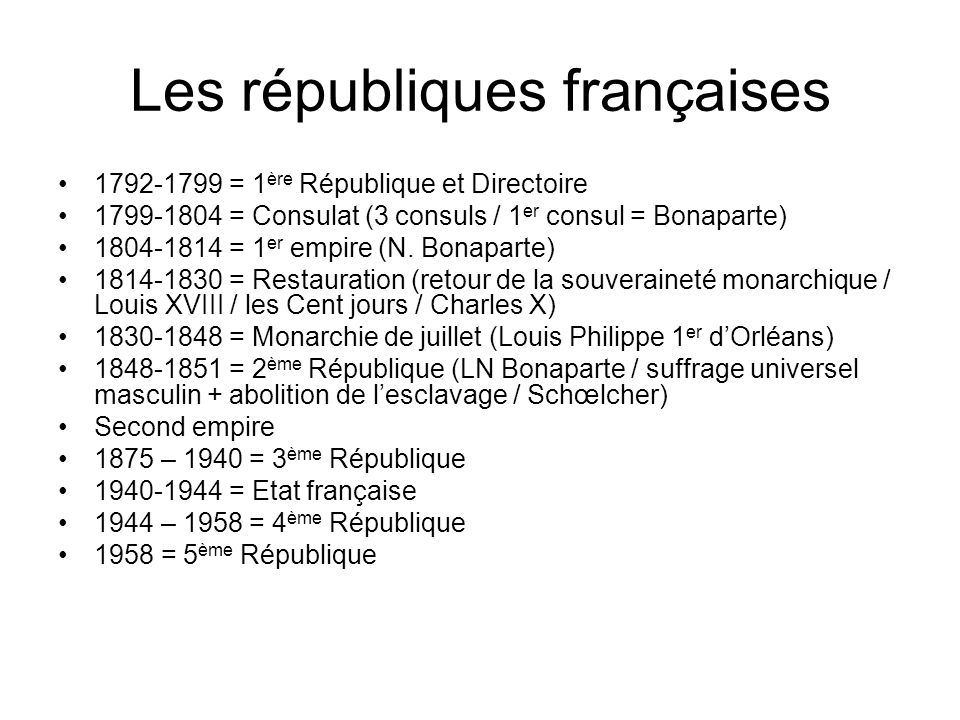
Ah, the First Republic (1792-1804). It all started with a little thing called the French Revolution. You know, the one with all the beheadings, fancy wigs, and a general sense of societal upheaval? Good times. The monarchy was out (off with their heads!), and the idea of a republic was, well, en vogue. Think of it as the original hipster republic – all about ideals and radical change.
Key Features:
- The Terror: Okay, maybe not all good times. Let's just say Robespierre wasn't known for his chill vibes. Think of him as the ultimate cancel culture champion, but with guillotines.
- The Directory: A five-man executive committee that was about as effective as herding cats. Constant infighting and corruption made it a prime example of how not to run a country.
- Napoleon Bonaparte's Entrance: Enter stage left, a young, ambitious general with a penchant for dramatic entrances and a serious complex. He saw the chaos, smelled opportunity, and decided to take over. Subtle, right?
Notable Absence of a Proper "President":
Here’s the fun part: technically, the First Republic didn’t really have a president in the modern sense. It was more of a constantly shifting power struggle between various factions. Imagine a reality TV show where the contestants are politicians, and the prize is control of France. The drama! The backstabbing! The questionable hair choices!
So, instead of a president, we had figures like Robespierre (for a terrifyingly brief period) and the Directors (who were too busy arguing to actually lead). Think of them as the "founding fathers" on a serious sugar rush. They had grand ideas, but the execution was... well, let's just say it needed some work.
La Deuxième République: The Short-Lived Dream
The Second Republic (1848-1852) was like that friend who shows up to the party late, makes a grand entrance, promises everyone a great time, and then promptly falls asleep in the corner. It was born out of another revolution (the French just love those!), fueled by socialist ideals and a desire for a more democratic France. But its lifespan was shorter than a Parisian summer romance.
Key Features:
- Universal Male Suffrage: For the first time, all men (sorry, ladies!) could vote. This was a big deal, even if it was a bit… well, exclusive.
- Louis-Napoleon Bonaparte: Nephew of the original Napoleon, he got elected president. Apparently, the French have a thing for Bonapartes. Maybe it's the hats?
- Coup d'état: Surprise! Louis-Napoleon, feeling restricted by the constitution, decided to stage a coup and become Emperor Napoleon III. Talk about a power grab!
President Louis-Napoleon Bonaparte:
Ah, Louis-Napoleon. The guy who proved that family legacies can be both a blessing and a curse. He wanted to emulate his uncle's glory, but he lacked the same… je ne sais quoi. Think of him as the "Diet Napoleon" – all the name recognition, half the charisma (and probably fewer calories). He did oversee some economic progress, but his ambition ultimately led to the Second Empire.
His election was a landmark – the first time the French directly elected a president! It was a moment of hope, a chance for a truly democratic republic. But alas, power corrupts, and absolute power corrupts absolutely. Or, in Louis-Napoleon's case, it just made him want to be Emperor.
La Troisième République: The Surprisingly Long-Lived One
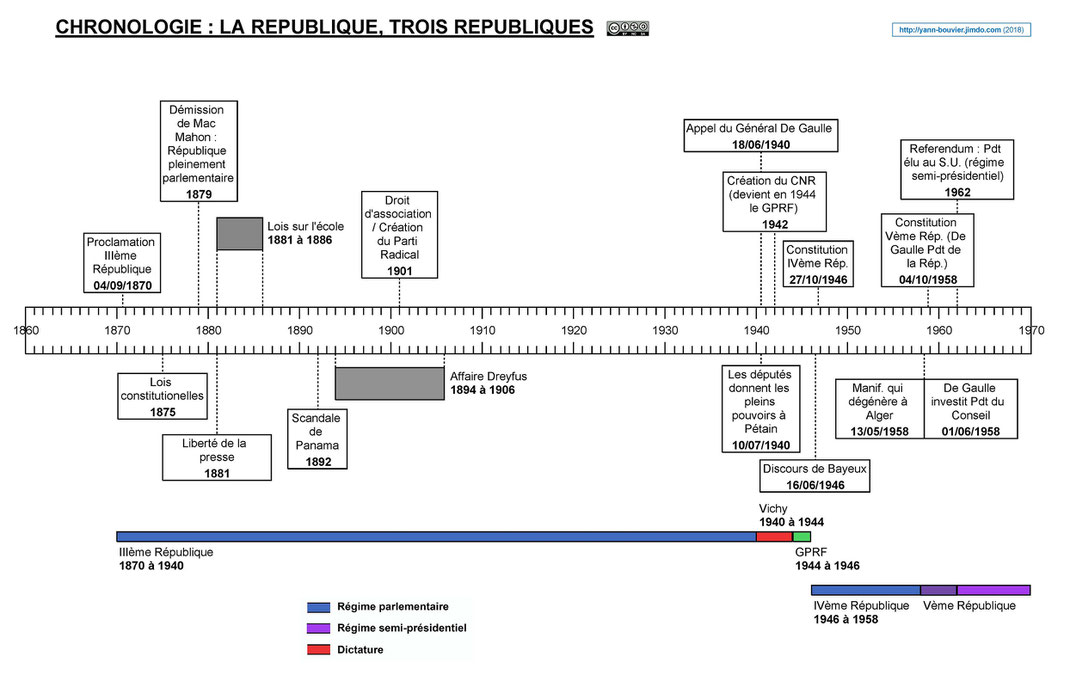
The Third Republic (1870-1940). Now this is a republic that stuck around for a while! Born out of the ashes of the Franco-Prussian War and the fall of Napoleon III, it was a bit of an underdog. No one really expected it to last, but it persevered through two world wars, countless political scandals, and enough artistic innovation to make Paris the cultural capital of the world. Think of it as the cockroach of republics – surprisingly resilient.
Key Features:
- Parliamentary System: The power resided in the Parliament, with the President having more of a ceremonial role. Think of the President as the fancy hat on top of the government – important, but not actually driving the car.
- The Dreyfus Affair: A major political scandal that divided France and exposed deep-seated anti-Semitism. Not exactly a highlight, but a crucial moment in French history.
- World War I: The Third Republic led France through the horrors of World War I, a truly testing time for the nation.
- Fall of France: In 1940, France fell to Nazi Germany, effectively ending the Third Republic. A sad end to a long and eventful era.
A Plethora of Presidents (Because Why Not?):
The Third Republic had more presidents than you can shake a baguette at! Seriously, there were so many that it's hard to keep track. They came and went like fashion trends – some were memorable, some were forgettable, and some were just plain weird.

Here are a few notable examples:
- Adolphe Thiers: The first president of the Third Republic, a conservative figure who focused on rebuilding France after the Franco-Prussian War. Think of him as the "Mr. Fix-It" of the republic.
- Patrice de Mac Mahon: A monarchist at heart, he tried to restore the monarchy but ultimately failed. Oops!
- Félix Faure: Rumored to have died in rather… compromising circumstances. Let's just say his presidency ended with a bang (allegedly).
- Raymond Poincaré: A strong leader during World War I, he symbolized French resilience and determination.
The Third Republic's presidents were a mixed bag, to say the least. Some were competent, some were clueless, and some were just plain unlucky. But they all contributed to the rich and complex history of this surprisingly durable republic.
La Quatrième République: The Sequel That Wasn't as Good as the Original
The Fourth Republic (1946-1958). Think of it as the Third Republic 2.0 – same basic concept, but with slightly better graphics and a few new features. It was born out of the aftermath of World War II, with a focus on rebuilding France and establishing a more stable political system. But, like most sequels, it didn't quite live up to the hype.
Key Features:
- Parliamentary System (Again): The power remained firmly in the hands of Parliament, leading to frequent changes in government and a general sense of instability.
- Colonial Wars: The Fourth Republic grappled with the challenges of decolonization, particularly in Indochina (Vietnam) and Algeria. These wars were costly, both in terms of human lives and political capital.
- European Integration: The Fourth Republic played a key role in the early stages of European integration, laying the groundwork for the European Union.
Presidents with Limited Power:
The presidents of the Fourth Republic were largely figureheads, with little real power. They were more like mascots than leaders, tasked with representing the country but not actually running it. Think of them as the "designated drivers" of the French government – responsible, but not exactly the life of the party.
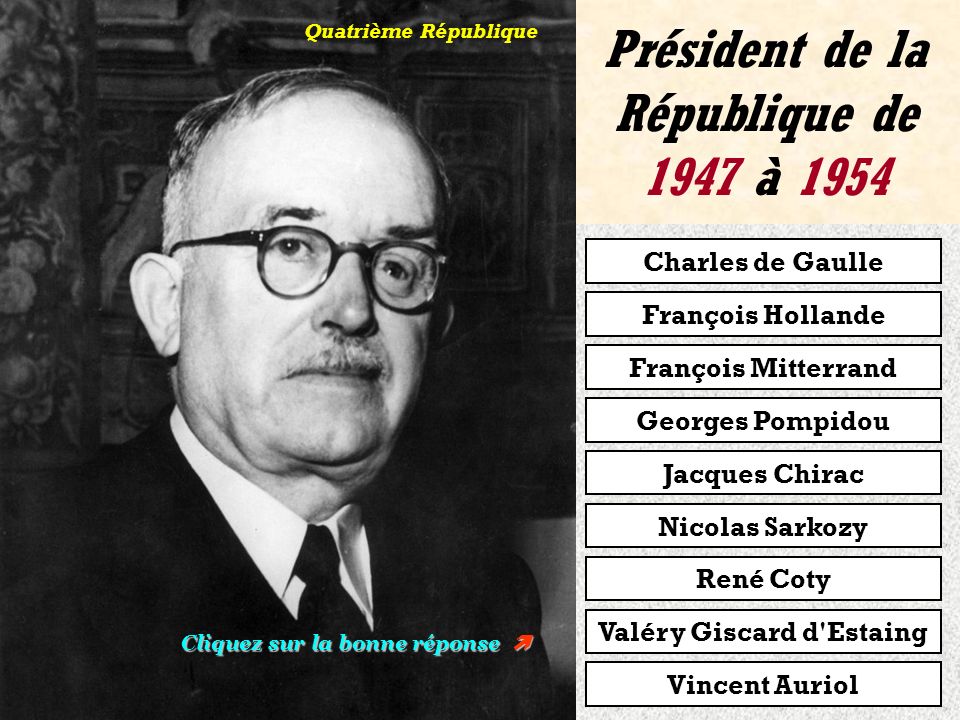
- Vincent Auriol: The first president of the Fourth Republic, a socialist who focused on social reforms and economic recovery.
- René Coty: The last president of the Fourth Republic, he called on Charles de Gaulle to return to power and resolve the Algerian crisis.
The Fourth Republic was plagued by political instability and the challenges of decolonization. It was a time of great upheaval and uncertainty, and ultimately, it paved the way for the Fifth Republic and the return of Charles de Gaulle.
La Cinquième République: The Reign of De Gaulle (and Beyond)
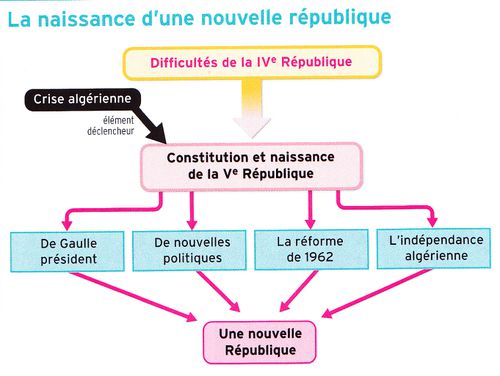
The Fifth Republic (1958-present). Voilà! This is the Republic we're living with today! Born out of the Algerian crisis and the perceived weaknesses of the Fourth Republic, it was designed to be stronger, more stable, and more… well, Gaullist. Think of it as the French government getting a serious upgrade – new software, a more powerful processor, and a stylish new design.
Key Features:
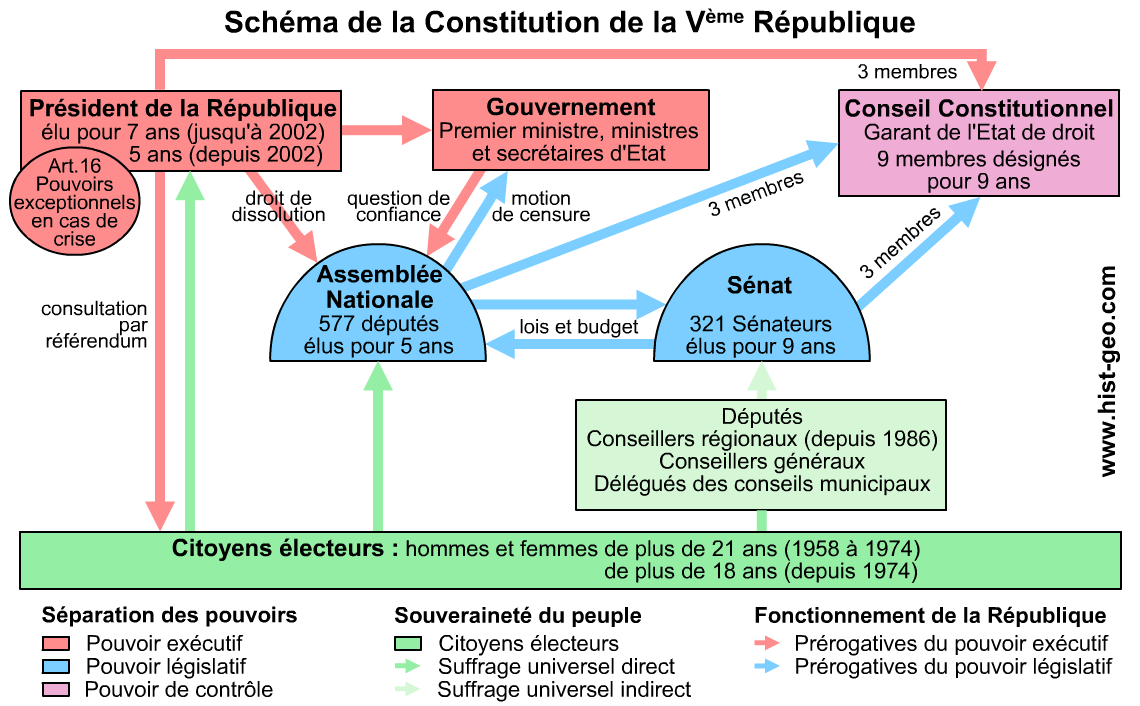
- Semi-Presidential System: A hybrid system with a President who has significant power (especially in foreign policy and defense) and a Prime Minister who is responsible to Parliament. Think of it as a power-sharing agreement between the President and the Prime Minister, with the President holding the bigger stick.
- Charles de Gaulle: The founding father of the Fifth Republic, a towering figure who shaped French politics for decades. Love him or hate him, he was a force to be reckoned with.
- Strong Executive Branch: The President has considerable power, including the ability to dissolve Parliament and call for referendums.
- Stability (Relatively Speaking): The Fifth Republic has been the most stable of the French Republics, providing a framework for economic growth and social progress.
The Presidents of the Fifth Republic: A Rogues' Gallery of Leadership (Sort Of)
Ah, the presidents of the Fifth Republic. A fascinating bunch, each with their own style, quirks, and political agendas. From the towering figure of de Gaulle to the more… controversial figures of recent years, they've all left their mark on French history.

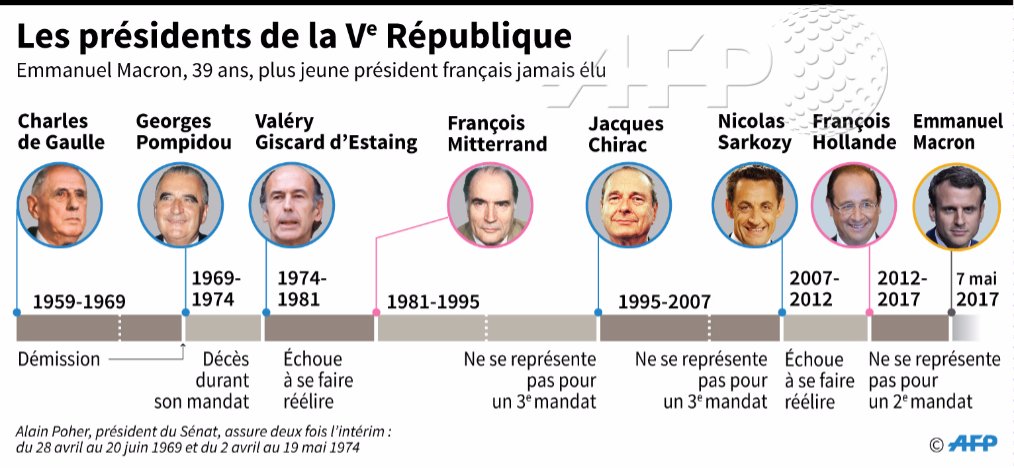
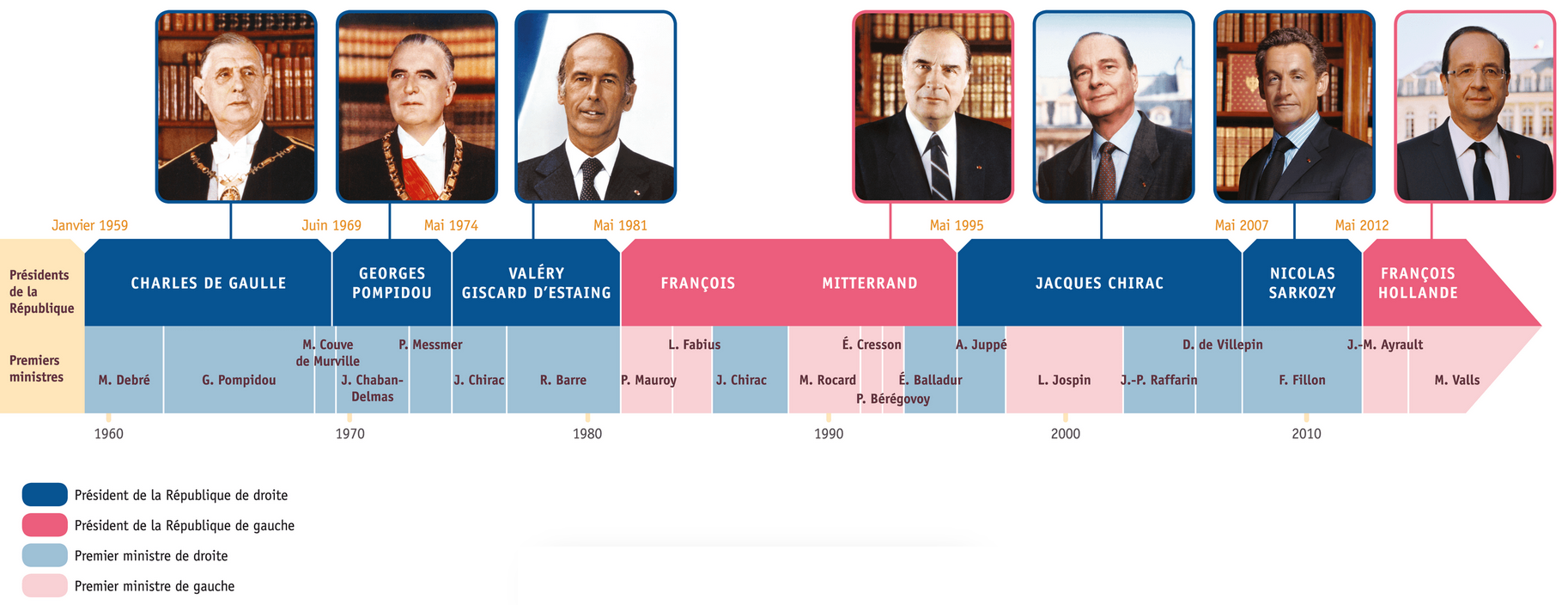
- Charles de Gaulle (1959-1969): The OG, the legend, the man who practically was France. He was a war hero, a visionary leader, and a master of political theater. He oversaw the end of the Algerian War, modernized the French economy, and asserted France's independence on the world stage. Think of him as the French equivalent of a rock star president – charismatic, influential, and always ready with a pithy quote.
- Georges Pompidou (1969-1974): De Gaulle's successor, he focused on economic growth and industrial development. Think of him as the "sensible" president – less flashy than de Gaulle, but just as effective.
- Valéry Giscard d'Estaing (1974-1981): A modernizer who lowered the voting age to 18 and legalized abortion. He also had a reputation for being a bit… aloof. Rumor has it he played the accordion. (Seriously.)
- François Mitterrand (1981-1995): The first socialist president of the Fifth Republic, he nationalized key industries, expanded social programs, and abolished the death penalty. He also had a secret second family. Scandalous!
- Jacques Chirac (1995-2007): A charismatic and popular president who opposed the Iraq War and championed environmental protection. He also had a penchant for… well, let's just say he enjoyed the finer things in life.
- Nicolas Sarkozy (2007-2012): A dynamic and controversial president who promised to shake up French society. He was known for his energetic style and his… shall we say, "colorful" personal life.
- François Hollande (2012-2017): A socialist president who struggled to revive the French economy and faced numerous challenges, including terrorist attacks. He was also known for his… well, let's just say he wasn't exactly the most charismatic leader.
- Emmanuel Macron (2017-Present): The current president of France, a young and ambitious centrist who has promised to transform the French economy and restore France's standing in the world. He's also known for his… well, let's just say he has a certain je ne sais quoi that seems to divide people.
The presidents of the Fifth Republic have been a diverse group, each with their own strengths and weaknesses. But they've all played a crucial role in shaping modern France and navigating the challenges of the 21st century.
Conclusion: So, What Have We Learned?
Well, my friends, we've journeyed through five Republics, met a cast of colorful characters, and witnessed enough political drama to make your head spin. We've seen revolutions, empires, wars, scandals, and enough existential angst to fill a Sartre novel. But through it all, France has persevered, adapting and evolving to meet the challenges of each new era.
So, the next time you're at a dinner party and someone brings up French history, you can confidently chime in with your newfound knowledge of Les Cinq Républiques. You might even impress your guests with your witty insights and historical anecdotes. Just be careful not to mention Félix Faure's unfortunate demise – unless you're trying to clear the room.
And remember, even if French history seems complicated and confusing, it's also incredibly fascinating and rewarding. So, embrace the chaos, raise a glass to the Republic, and remember: Vive la France... et ses présidents... plus ou moins! (wink, wink)