Imagine this: you're at a party, overflowing with the kind of intellectual chatter that makes you feel simultaneously stimulated and slightly inadequate. You're cornered by a guy named Bernard (there's always a Bernard, right?) who's passionately explaining his radical theory about... well, something involving quantum physics and competitive cheese sculpting. You try to keep up, nodding sagely, but inside you're just thinking, "Where did he GET all this stuff?" Is he just making it up? Did he download it directly into his brain?
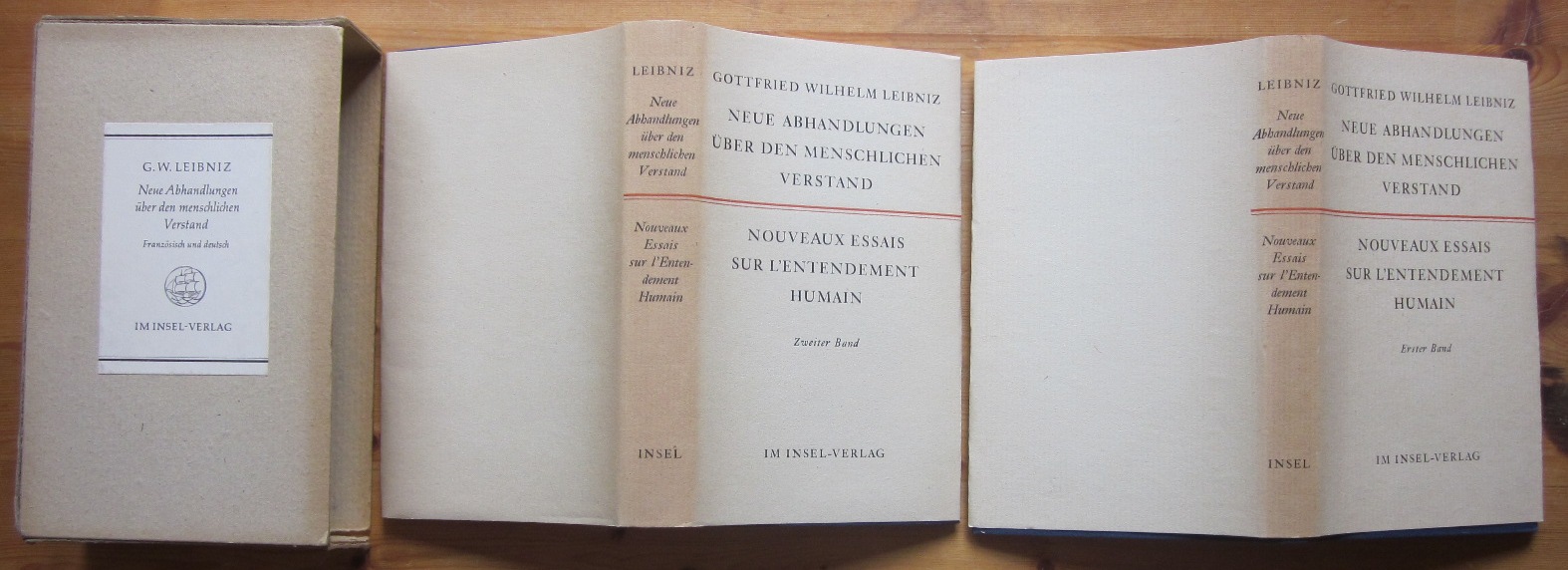
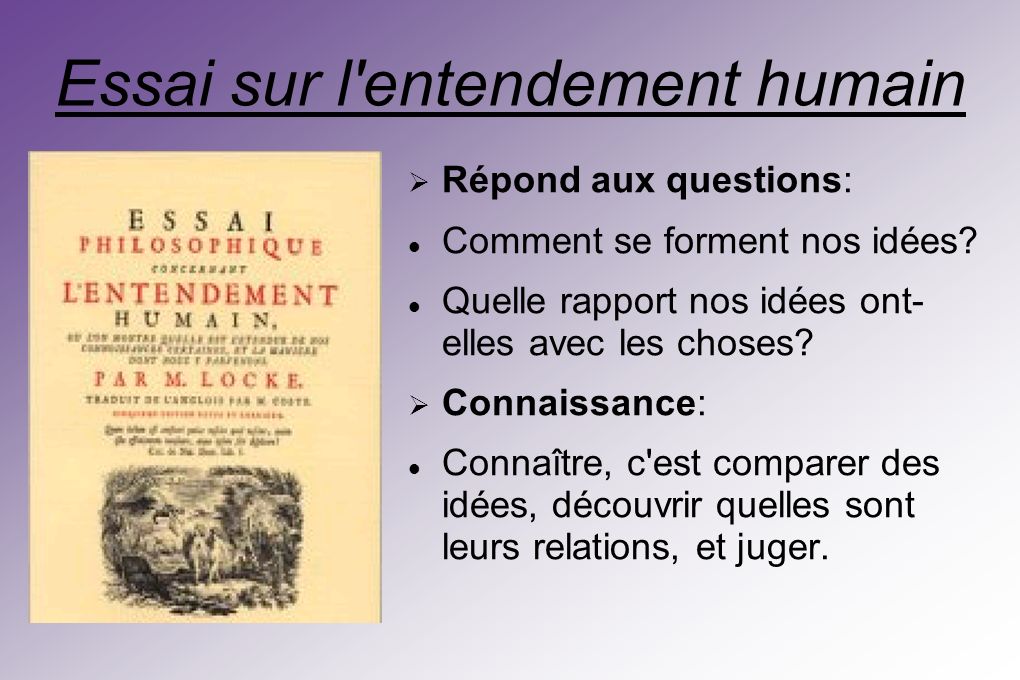
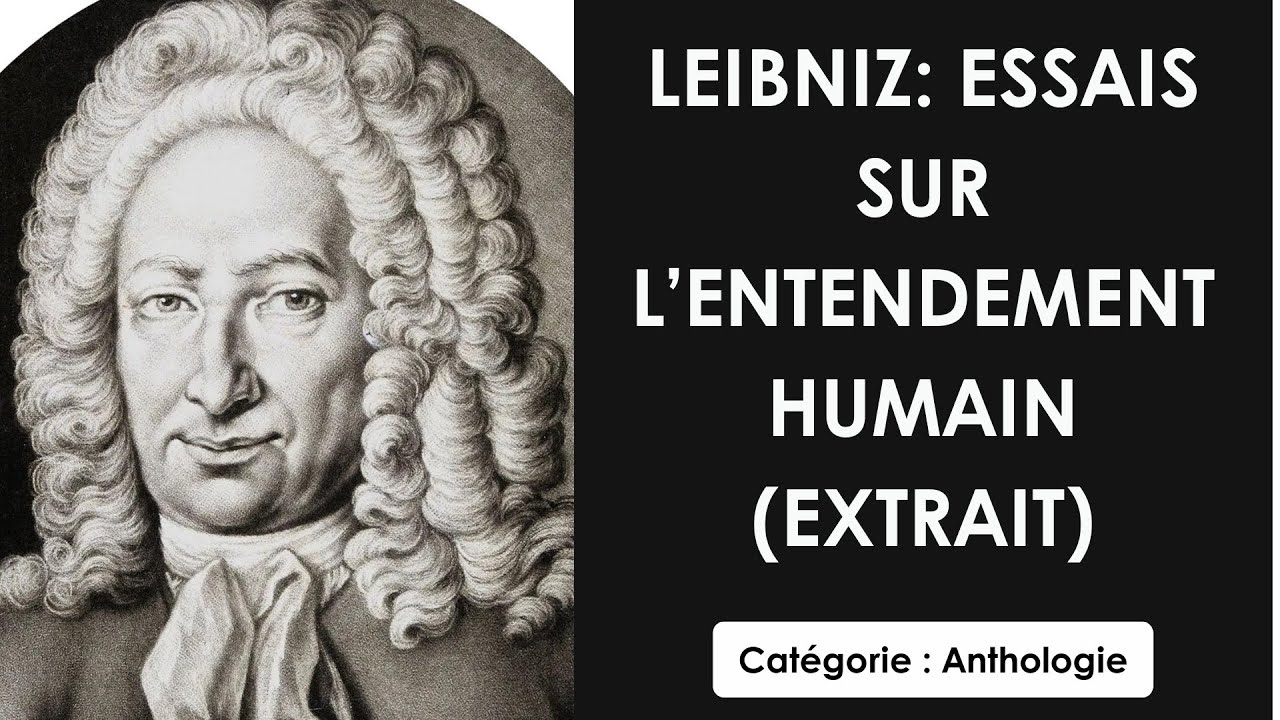
That feeling of "where does knowledge come from?" is basically what Leibniz was wrestling with in his Nouveaux Essais sur l'entendement humain (New Essays on Human Understanding). Think of it as his epic clapback to John Locke's Essay Concerning Human Understanding. Locke, bless his empiricist heart, argued that our minds are born as a tabula rasa, a blank slate. Everything we know, according to Locke, comes from experience. Leibniz, however, wasn't entirely buying it.
Leibniz vs. Locke: The Ultimate Philosophical Showdown
Okay, maybe it wasn't a cage match. More like a polite, very long, and incredibly detailed written debate. But the core disagreement between Leibniz and Locke is crucial to understanding how we think about knowledge, learning, and even ourselves. Basically, Locke said, "Experience is everything!" Leibniz, ever the thoughtful contrarian, countered, "Hold on a minute..."
The Tabula Rasa: Blank Slate or Just Waiting to Be Drawn On?
Locke's tabula rasa idea is pretty straightforward. Imagine a whiteboard, completely clean. As we live, our experiences "write" on that whiteboard. Sensory information, reflections on our experiences, all of that becomes our knowledge. Simple, right? Maybe too simple, according to Leibniz.
Leibniz didn't deny the importance of experience. Of course, we learn from seeing, hearing, touching, and all the other sensory delights (and horrors) life throws our way. But he argued that our minds aren't just passive recipients of information. We come pre-equipped with certain predispositions, tendencies, and "innate" principles. Think of it like this: even a blank whiteboard is still a whiteboard. It has a certain structure, potential, and limitations.

He uses a famous analogy: the block of marble. A sculptor doesn't just add the statue to the marble; they reveal it by removing the excess. (Side note: I always picture Michelangelo furiously chipping away at David. Makes the idea a little more dramatic, don't you think?). Similarly, experience doesn't just create knowledge; it draws out the knowledge that was already potentially present within us.
"Rien n'est dans l'intellect qui n'ait été auparavant dans les sens, excepté l'intellect lui-même"
This is Leibniz's famous quote, a direct response to Locke. It translates to something like, "Nothing is in the intellect that was not first in the senses, except the intellect itself." Boom! Mic drop. See what he did there? He acknowledged Locke's point about sensory experience being vital, but added the crucial caveat: the intellect itself, our capacity to understand, is something we're born with. It's not simply a product of experience.
Consider mathematics, for example. We don't learn that 2 + 2 = 4 simply by observing it in the world. We have an inherent capacity to understand mathematical principles. This capacity, Leibniz would argue, is innate, part of the very structure of our minds. (Okay, some of us might struggle with math more than others, but you get the idea.)

Petites Perceptions and the Unconscious Mind
Leibniz also explored the idea of petites perceptions, small perceptions that we don't consciously notice, but that still influence our thoughts and actions. Think of the subtle hum of an air conditioner, the almost imperceptible smell of coffee brewing in the next room. We might not be consciously aware of these sensations, but they still affect our overall experience and contribute to our understanding of the world.
This concept is surprisingly prescient. It foreshadows later developments in psychology, particularly the study of the unconscious mind. Leibniz essentially argued that there's a whole realm of mental activity happening beneath the surface of our conscious awareness. He was way ahead of his time! (Seriously, Freud probably owes him a beer... or a really complicated dream analysis.)

Why Should You Care About 18th-Century Philosophy?
Okay, so Leibniz and Locke had a disagreement a few centuries ago. Why does it matter to you, sitting here reading this article? Well, thinking about the origins of knowledge has some pretty profound implications:
- Education: If Leibniz is right, then education isn't just about filling empty vessels with information. It's about cultivating and developing the innate capacities that already exist within each student. It's about helping them "reveal" their potential, like Michelangelo with his marble.
- Personal Development: Understanding that you're not just a blank slate can be incredibly empowering. You have inherent strengths, talents, and predispositions. Discovering and nurturing those qualities is crucial for personal growth and fulfillment.
- Understanding Others: Recognizing that people are born with different inherent capacities and tendencies can foster empathy and understanding. We're not all starting from the same place, and that's okay.
- Artificial Intelligence: Seriously! When building AIs, how much do you pre-program, and how much do you let them learn from experience? Leibniz's ideas about innate structures could inform the development of more sophisticated and adaptable AI systems. (Who knows, maybe one day an AI will be able to convincingly sculpt cheese.)
Ultimately, Leibniz's Nouveaux Essais is a fascinating exploration of the complexities of the human mind. It challenges us to think critically about the origins of knowledge, the role of experience, and the inherent capacities that make us who we are. It's a reminder that we're not just passive recipients of information; we're active participants in the process of understanding the world. And maybe, just maybe, it can help you avoid being cornered by a philosophical Bernard at your next party. (Although, let's be honest, probably not.)
So, next time you're facing a challenge, learning something new, or just trying to make sense of the world, remember Leibniz's marble. The potential is already within you. You just need to find the right tools to reveal it. And maybe avoid Bernard at all costs.





.jpg)
![Essai sur l'entendement humain [John Locke] - fiche de lecture.](https://static.devoir-de-philosophie.com/img/preview/essai-sur-lentendement-humain-john-locke-fiche-de-lecture-2.png)