Salut les amis! Ever stumbled upon the French subjunctive and felt a little...lost? Don't worry, you're not alone! Today, let's tackle a tiny piece of the subjunctive puzzle: the present subjunctive of vouloir, which means "to want." Sounds intimidating? Nah, trust me, it's way cooler than you think.
What's the Big Deal About Vouloir in the Subjunctive?
Okay, so why bother learning this particular form? Well, vouloir is a super common verb. We use "want" all the time, right? "I want a coffee," "I want to go to the beach," "I want world peace!" (Okay, maybe not every day...). In French, the same applies! And when that "want" expresses a desire, a wish, a need... BAM! Enter the subjunctive!
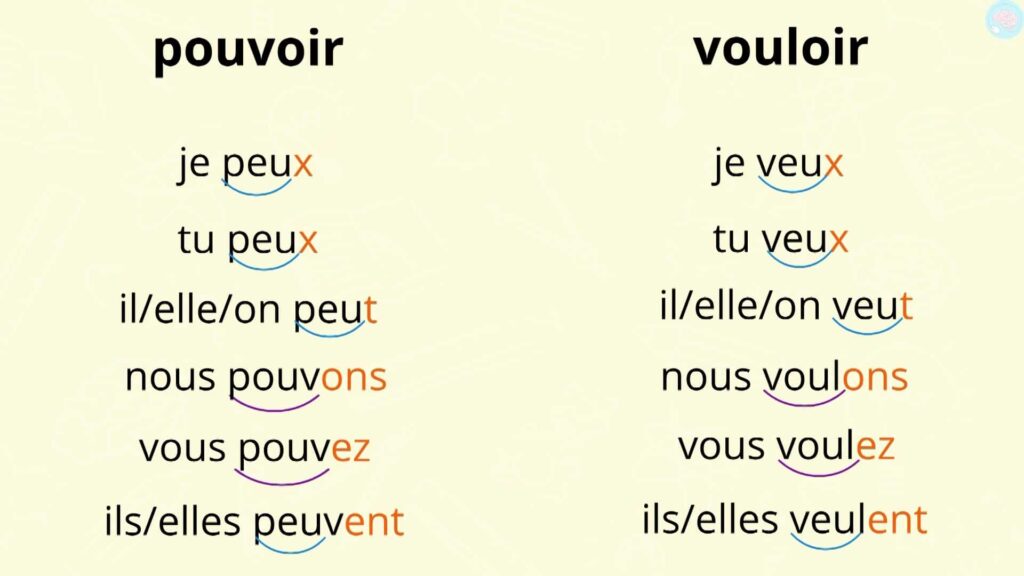
Think of it this way: Regular vouloir is like ordering a pizza – you're pretty sure you're gonna get it. Subjunctive vouloir is like wishing for a unicorn to deliver that pizza. A little more dreamy, a little less certain. Get it?
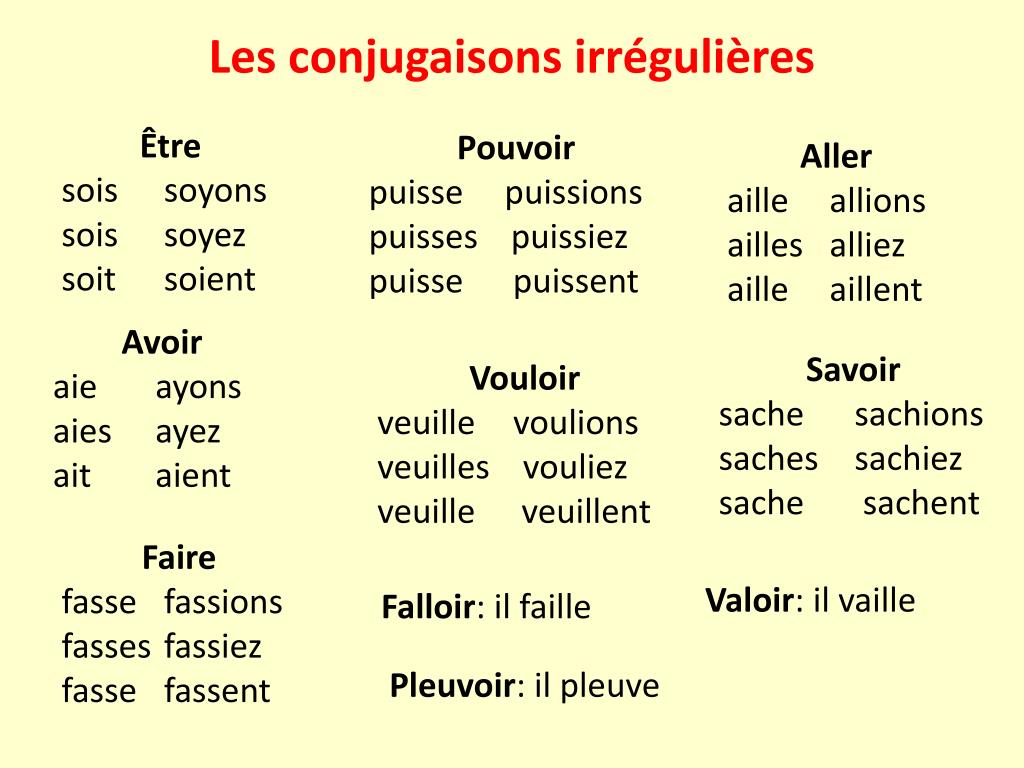
The Magic Formula: Que je veuille, que tu veuilles...
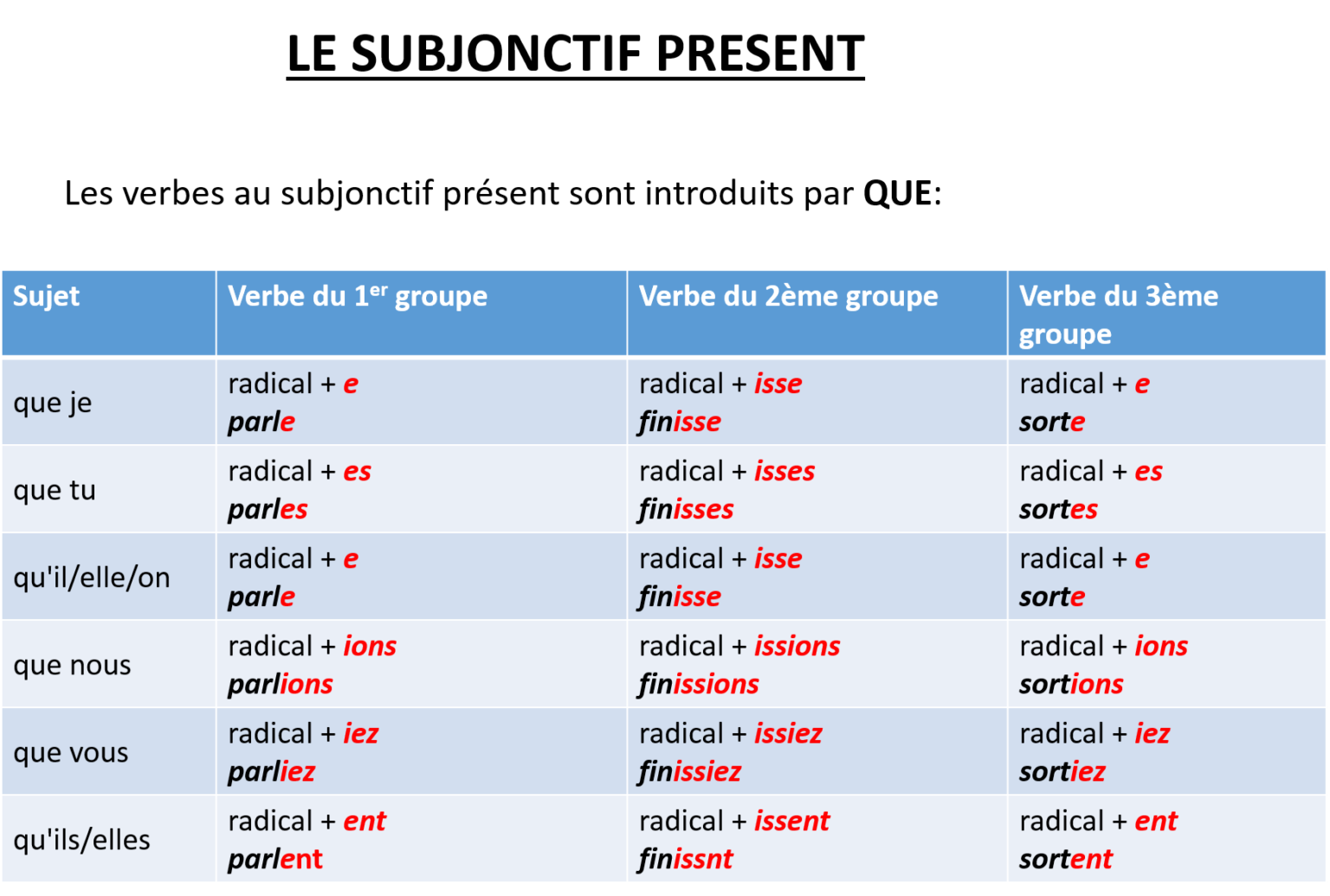
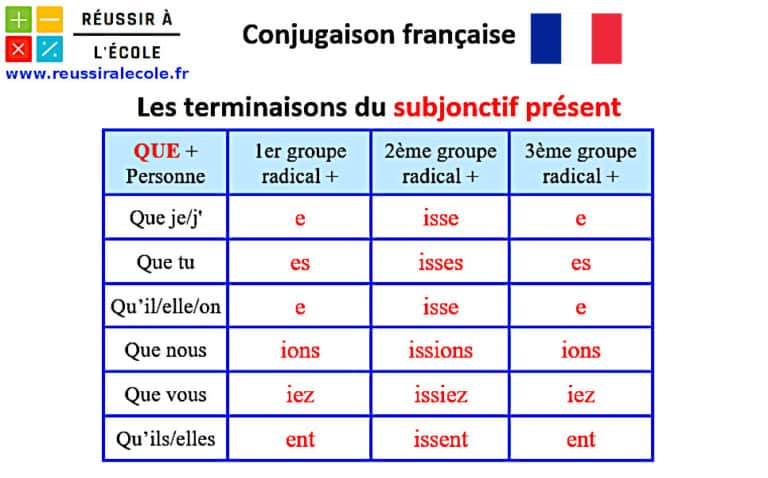
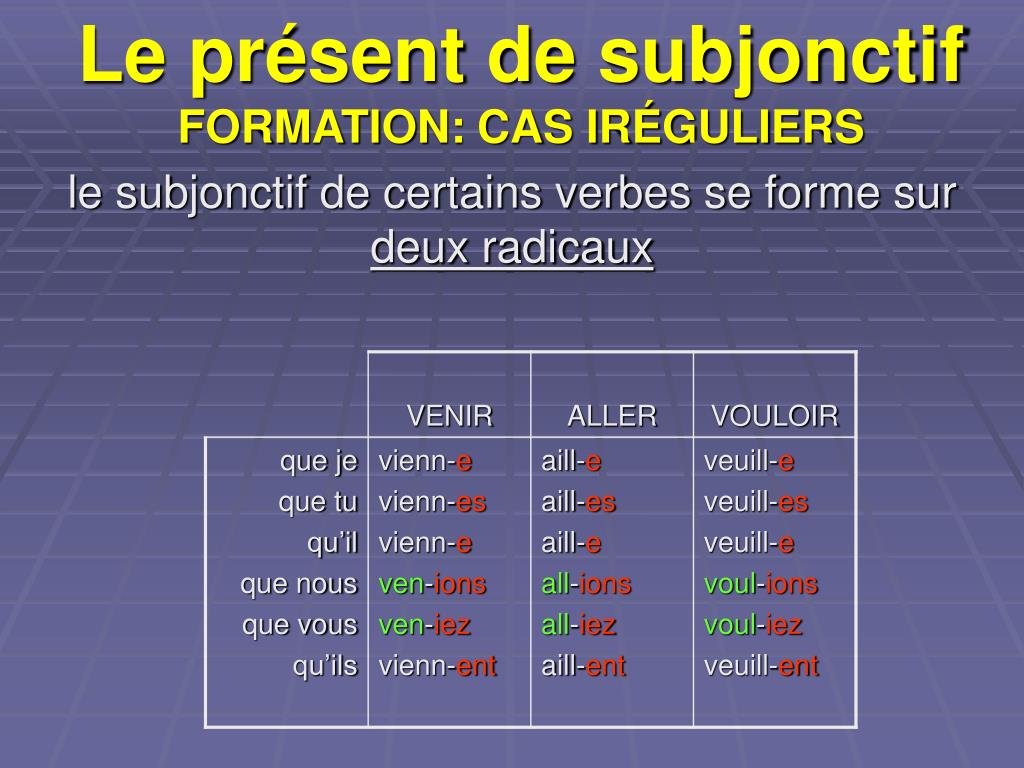
Alright, time for a quick look at the actual conjugations. Ready? It's not as scary as it looks:
- Que je veuille (that I want)
- Que tu veuilles (that you want)
- Qu'il/elle/on veuille (that he/she/one wants)
- Que nous voulions (that we want)
- Que vous vouliez (that you want)
- Qu'ils/elles veuillent (that they want)
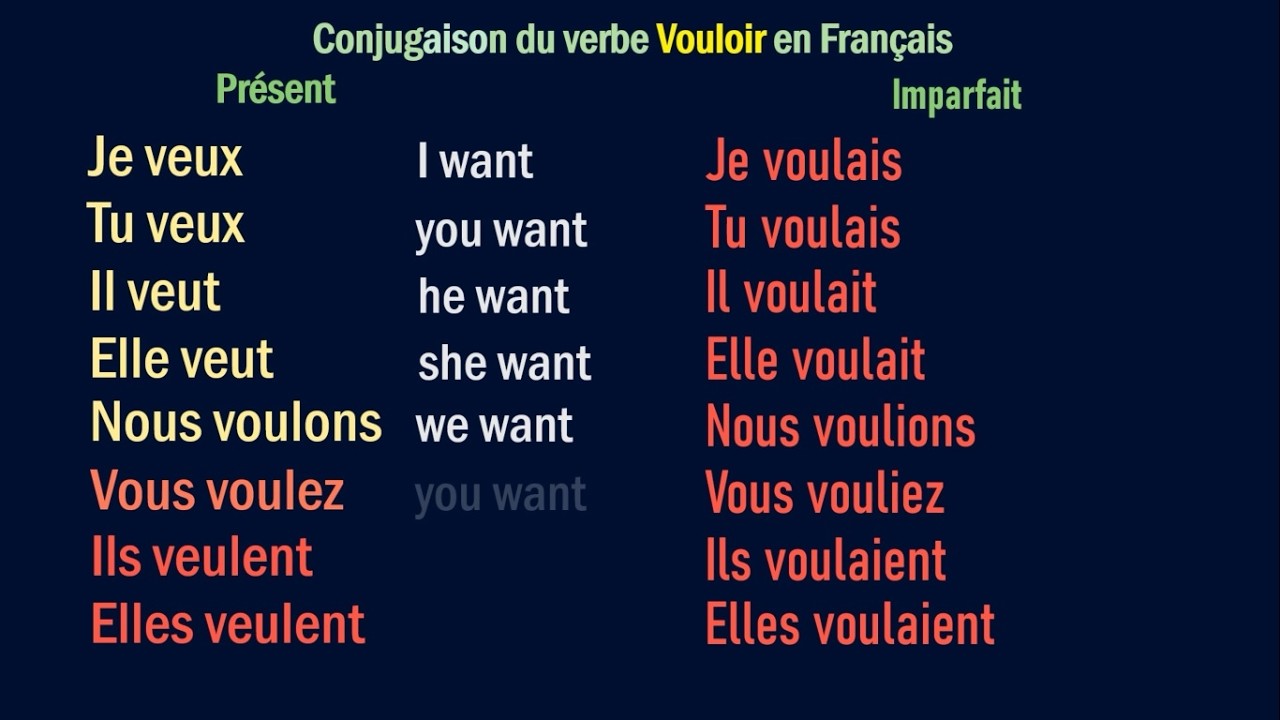
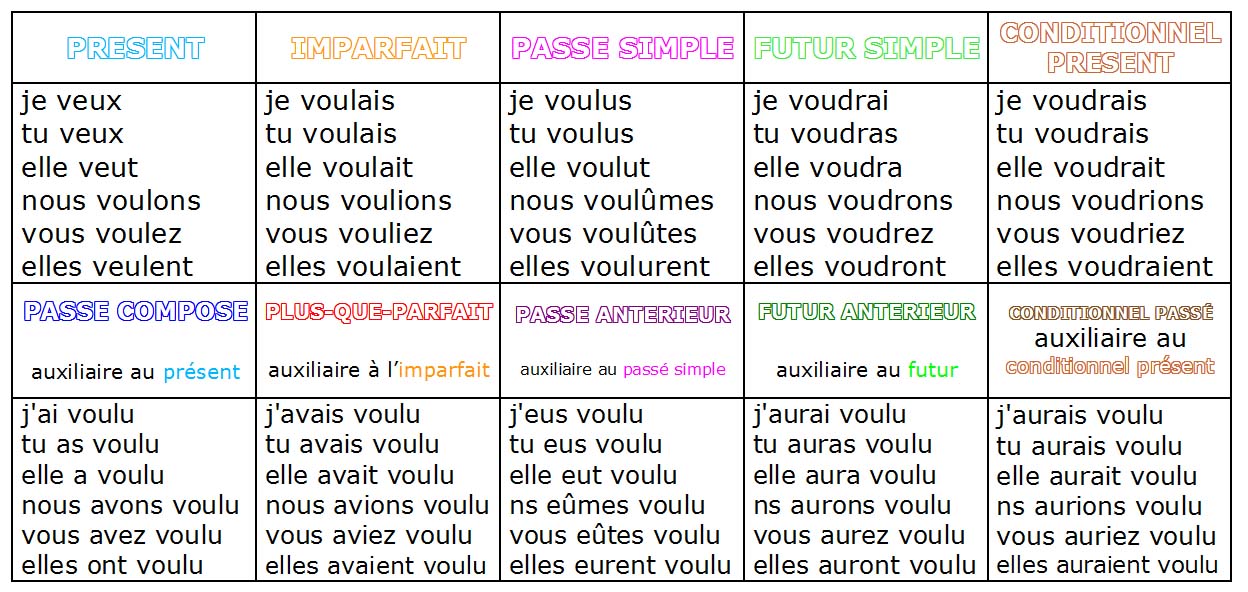
Notice anything? The "nous" and "vous" forms (voulions and vouliez) might seem familiar – they look a lot like the imperfect tense. Tricky, right? That’s French for you!
When Do We Actually Use This Thing?
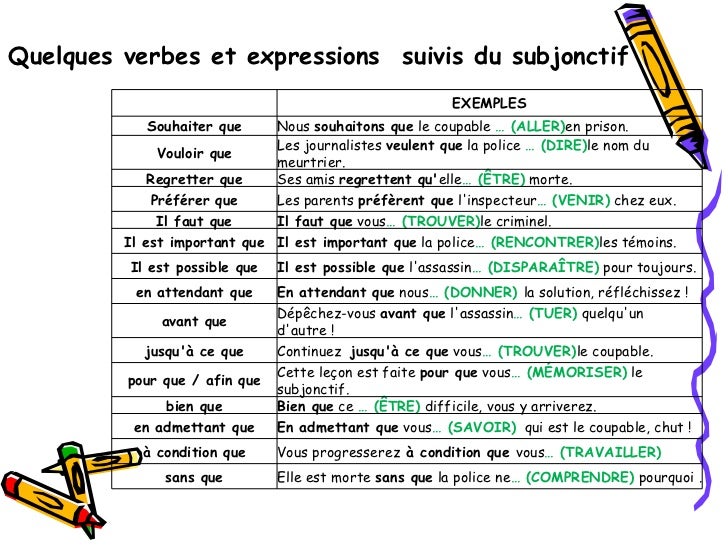
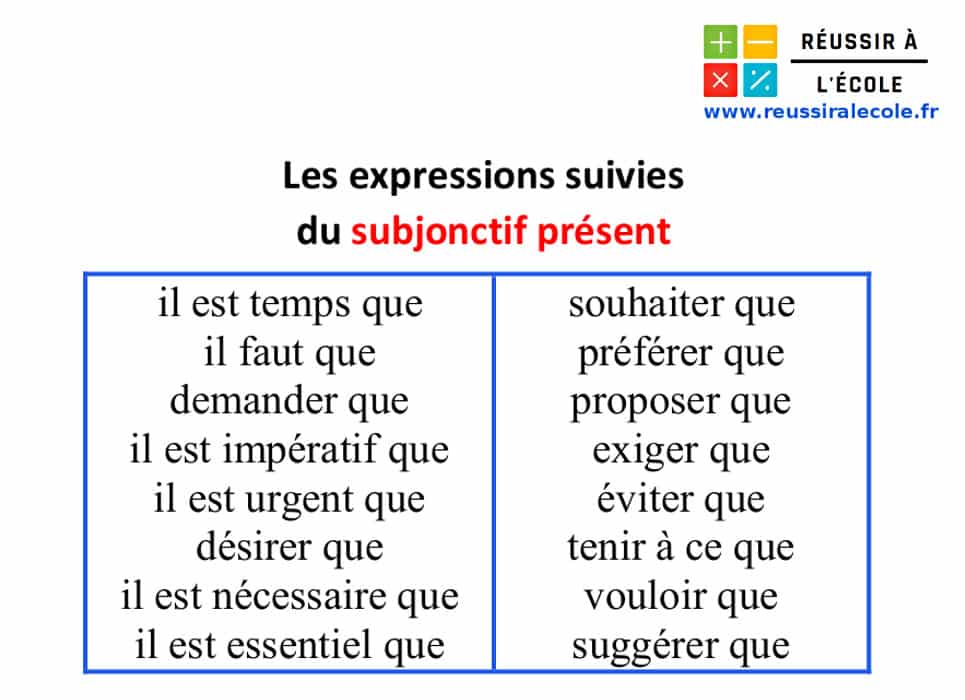
Good question! We use the subjunctive after certain conjunctions (like que after verbs of wishing or ordering), and in clauses expressing doubt, possibility, or emotion. Here are a few examples to get you thinking:
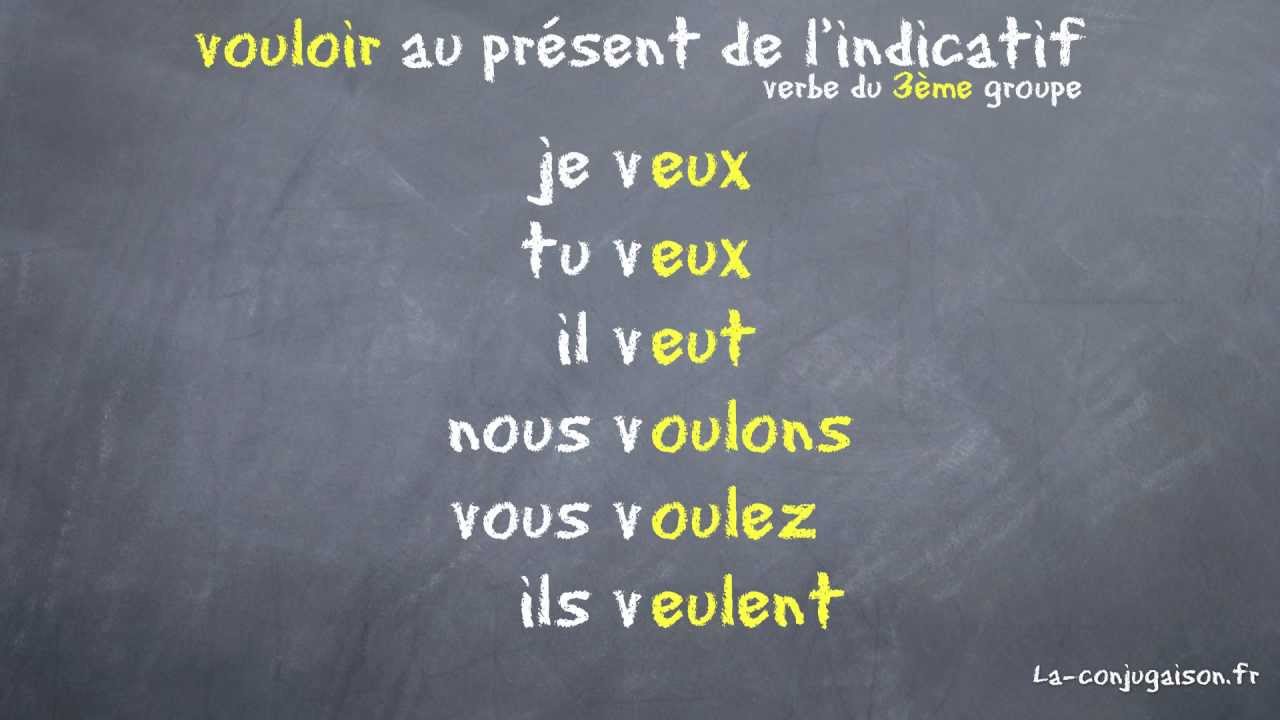
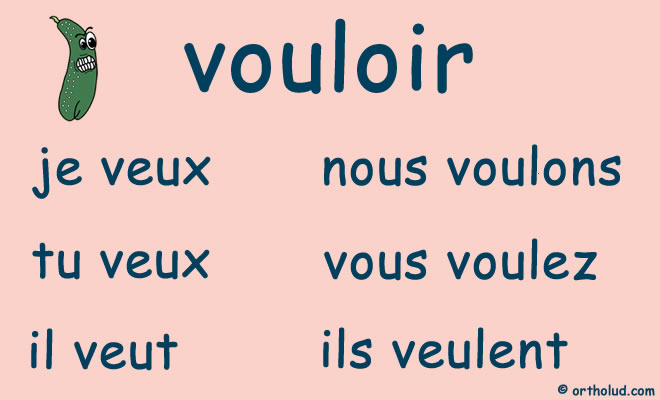
- Je veux que tu veuilles bien m'écouter. (I want you to please listen to me.) – Notice the "veux" (present indicative) followed by "veuilles" (present subjunctive). One expresses a wish, the other expresses an action that the first person want to happen.
- Il est important que nous voulions changer les choses. (It's important that we want to change things.) – Here, the emphasis is on the importance of the desire to change.
Think of the subjunctive as adding a layer of nuance, of possibility, to your sentences. It's like adding a pinch of salt to your chocolate chip cookies – it just makes everything a little more interesting!

Why Is This Actually Cool?
Okay, so maybe grammar rules aren't inherently "cool" (debatable, I know!). But mastering the subjunctive is like unlocking a secret level in French. It allows you to express yourself with greater precision and sophistication. Plus, you'll finally understand all those fancy French songs and movies!
Learning the subjunctive shows that you’re not just memorizing phrases; you’re truly understanding how the language works. And that, my friends, is pretty darn awesome. So, keep practicing, keep exploring, and keep wanting (voulant!) to learn more! À bientôt!