Salut, mes amis! Ever feel like your French is stuck in neutral? Like you're just talking about doing things, instead of, well, doing them? I get it. That's why we're diving headfirst into something super useful, super easy, and super fun: Le Futur Proche! (That’s “The Near Future” for those not encore fluent. See? You're already learning!).
Think of the Futur Proche as your French superpower. It’s the key to expressing what you're just about to do. No more complicated conjugations, no more head-scratching over subjunctive mood. Just pure, simple, and delightfully practical French. Ready to unlock this superpower? Let’s go!
What Is Le Futur Proche, Exactly?
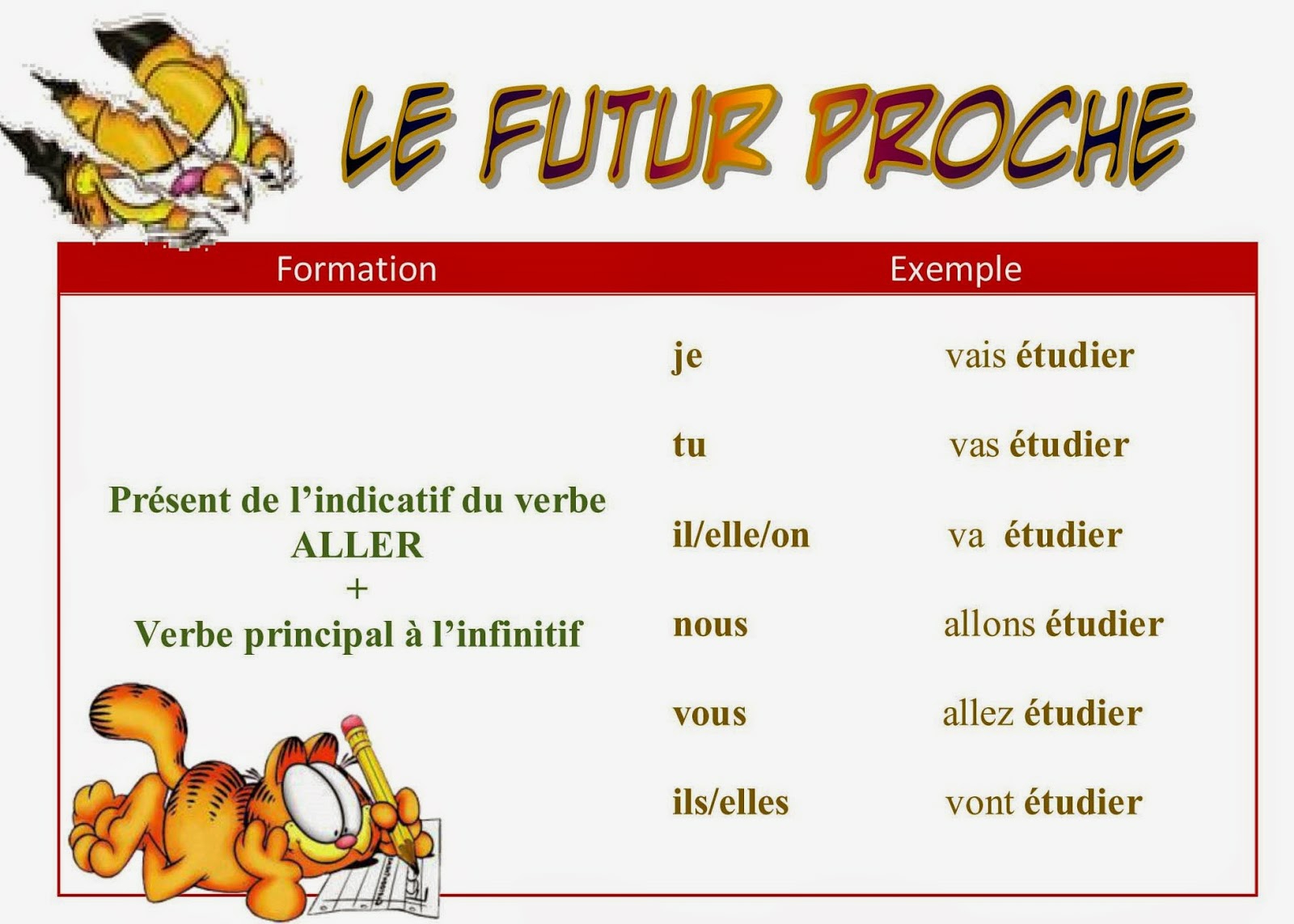
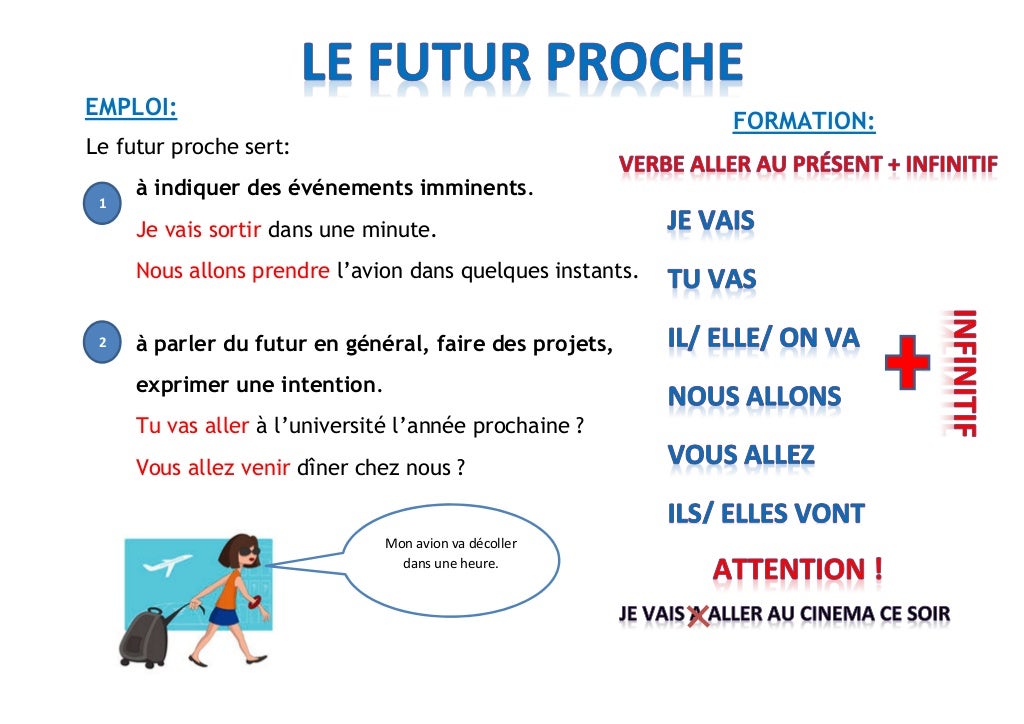
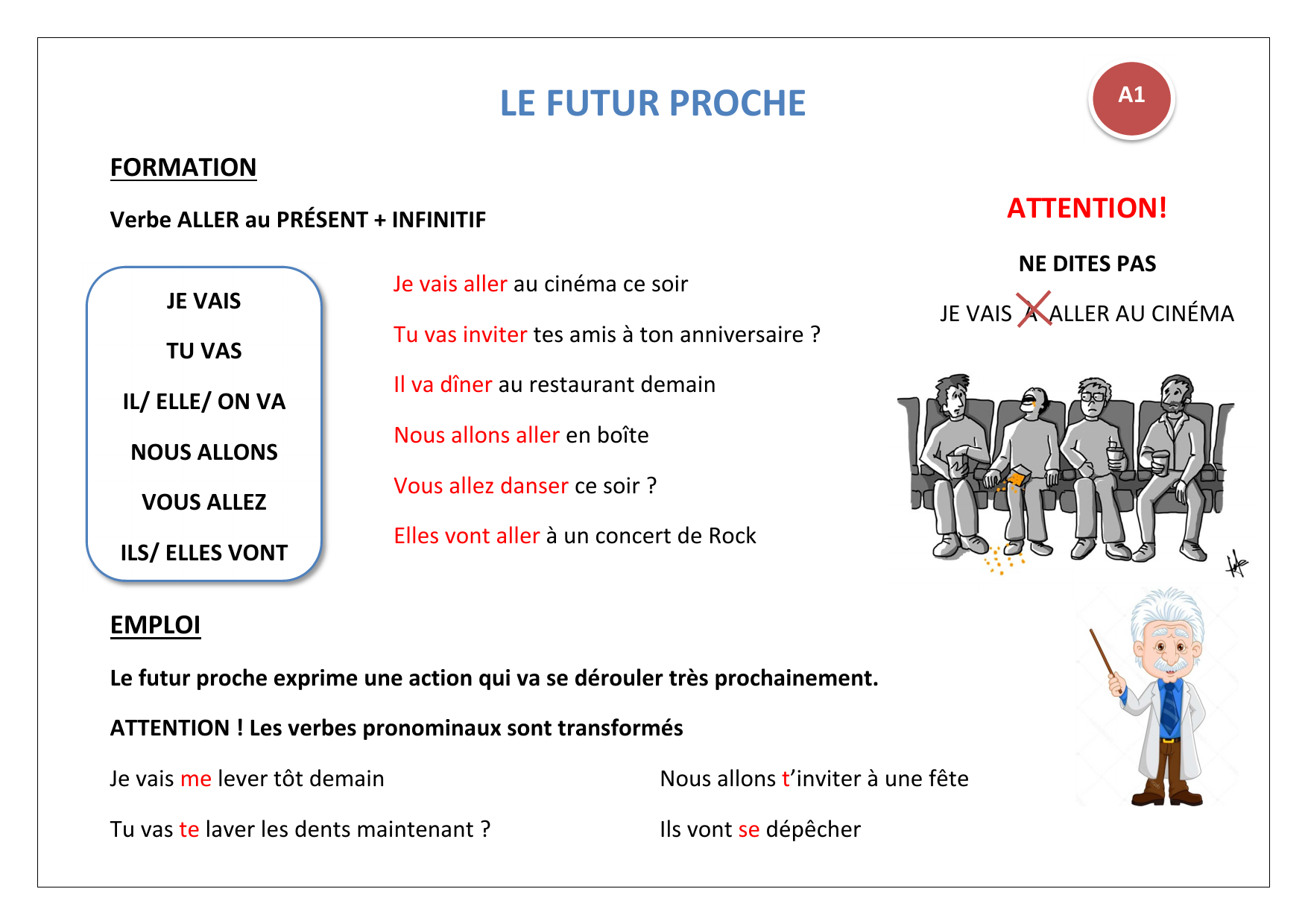
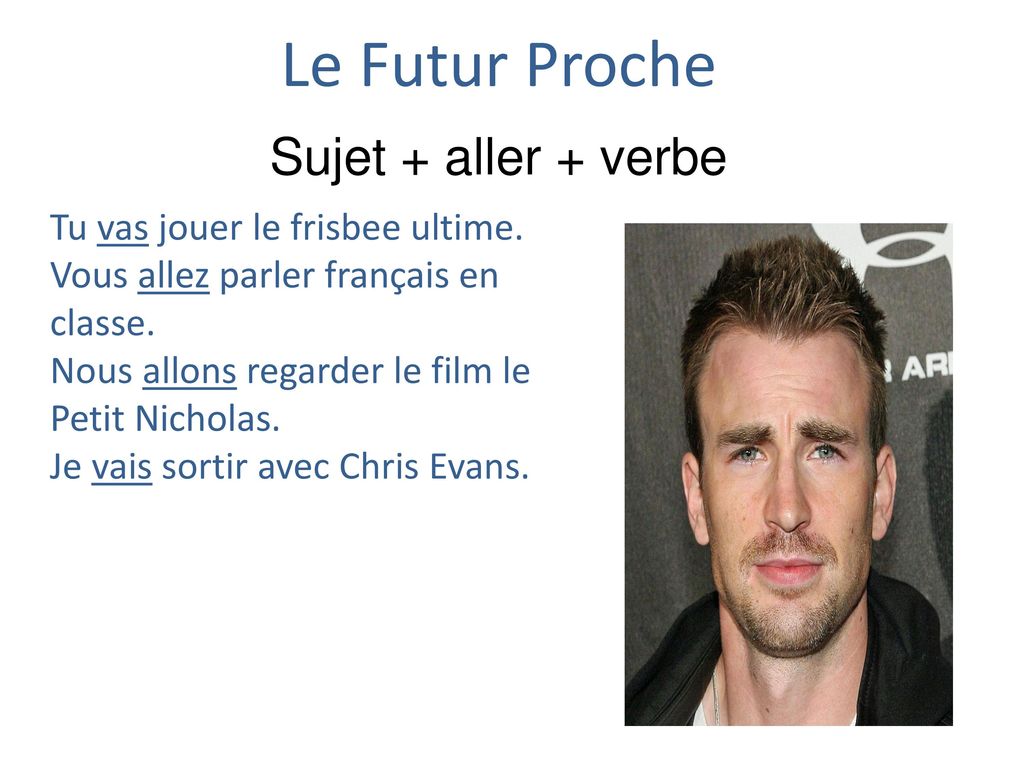
Okay, let’s break it down. The Futur Proche, at its heart, is incredibly straightforward. It's built with two key ingredients: the verb "aller" (to go) conjugated in the present tense, followed by the infinitive (the basic, unconjugated form) of the verb you actually want to use. Think of it like this: "I am going to..." and then, BAM! The action!
It's the French equivalent of saying "I'm going to" or "I'm about to" in English. Simple, right? Trust me, it is!
The Magic Formula: Aller + Infinitive
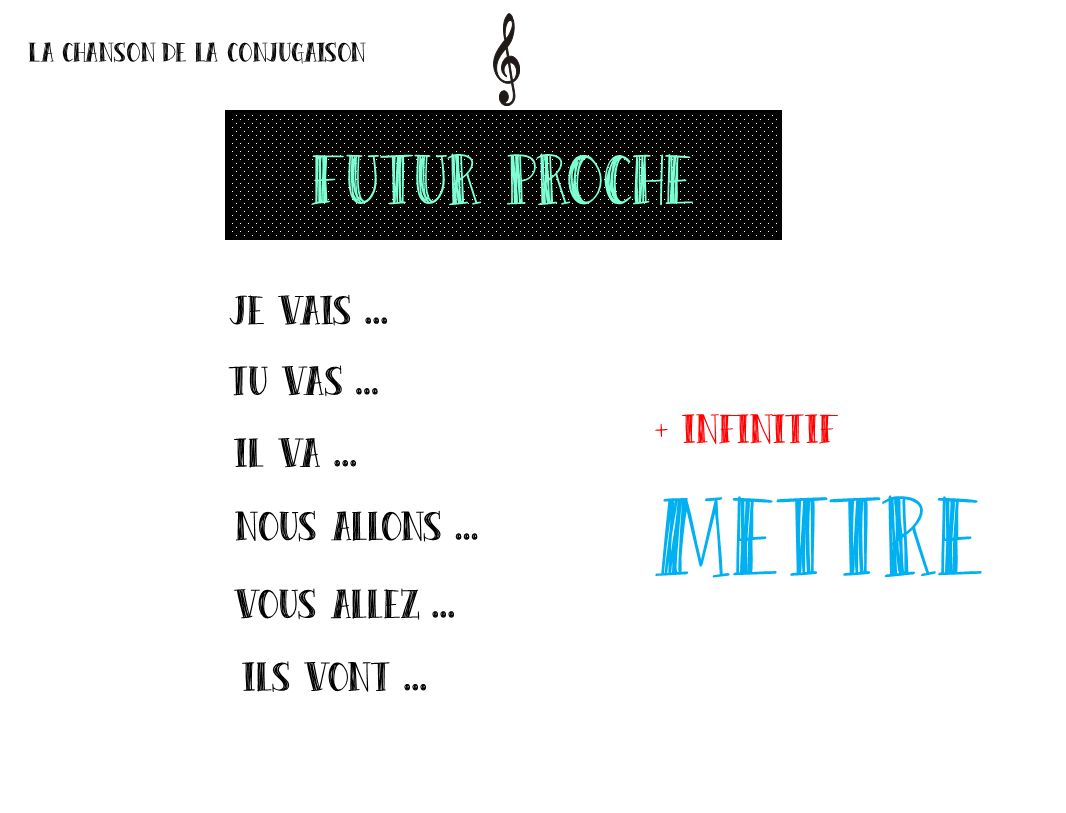
Let’s get practical. Here's the "aller" conjugation, because memorizing this is crucial:
Je vais (I am going)
Tu vas (You are going)
Il/Elle/On va (He/She/One is going)
Nous allons (We are going)
Vous allez (You are going - formal/plural)
Ils/Elles vont (They are going)
Now, let’s throw in some infinitives. How about "manger" (to eat)?
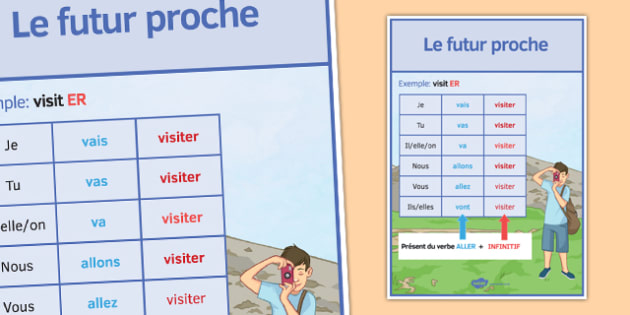
Je vais manger (I am going to eat)
Tu vas manger (You are going to eat)
Il/Elle/On va manger (He/She/One is going to eat)
Nous allons manger (We are going to eat)
Vous allez manger (You are going to eat)
Ils/Elles vont manger (They are going to eat)
See? No rocket science involved! You've just described what you and your friends are about to chow down on! Swap out "manger" with any other infinitive: "regarder" (to watch), "étudier" (to study), "danser" (to dance) – the possibilities are endless!
Why Should You Care About Le Futur Proche?
Great question! (I knew you were thinking it!). Here's why mastering the Futur Proche is a game-changer for your French:
- It's Super Easy to Use: Seriously, it's one of the easiest tenses to grasp. You probably already know "aller," and infinitives are your friends.
- It's Incredibly Common: Native French speakers use the Futur Proche all the time in everyday conversation. You'll hear it everywhere!
- It Makes You Sound More Fluent: Instead of fumbling with more complex future tenses, you can express yourself clearly and confidently. Plus, you'll sound like you know what you're talking about (which, after this article, you totally will!).
- It Opens Doors: Expressing your intentions and plans is crucial for communication. The Futur Proche allows you to do just that, making you a more active participant in conversations.
Think about all the situations where you can use this! Ordering food at a restaurant ("Je vais prendre le steak, s'il vous plaît"), making plans with friends ("Nous allons aller au cinéma ce soir"), or even just telling someone what you're about to do ("Je vais répondre à cet email"). The possibilities are literally infinite! (Okay, maybe not literally infinite, but you get the idea).

Putting Le Futur Proche Into Practice: Let's Get Real!
Okay, time for some real-world examples! Let's imagine you're hanging out with your French-speaking buddy, Sophie.
You: "Qu'est-ce que tu vas faire ce week-end, Sophie?" (What are you going to do this weekend, Sophie?)
Sophie: "Je vais aller au marché samedi matin, puis je vais déjeuner avec ma mère. Et toi?" (I'm going to go to the market on Saturday morning, then I'm going to have lunch with my mother. And you?)
You: "Je vais étudier le français! Et après, je vais regarder un film." (I'm going to study French! And after, I'm going to watch a movie.)
Boom! You just had a mini-conversation entirely in Futur Proche! See how natural and easy it sounds?
Here are a few more scenarios to get your creative juices flowing:

- Planning a trip: "Nous allons visiter Paris l'année prochaine!" (We are going to visit Paris next year!)
- Making a suggestion: "On va essayer ce nouveau restaurant?" (Are we going to try this new restaurant?)
- Declaring your intentions: "Je vais apprendre le français couramment!" (I am going to learn French fluently!)
Think of the Futur Proche as your secret weapon for sounding more like a native speaker. It's like having a linguistic shortcut that instantly elevates your French game!
Avoiding Common Pitfalls (Because We All Make Mistakes!)
Alright, even the best French learners stumble sometimes! Here are a couple of common mistakes to watch out for:
- Forgetting the "aller": Don't just say "Je manger pizza." You need that "aller" in there! It's "Je vais manger pizza." Remember, "aller" is the key!
- Conjugating the infinitive: The infinitive stays in its basic form. Don't conjugate it! "Je vais manger," not "Je vais mange."
- Overusing the Futur Simple: While the Futur Simple (the "true" future tense) is still used, the Futur Proche is much more common in everyday speech. Don't feel pressured to use the Futur Simple unless you're writing a formal essay or giving a speech.
Don't worry about making mistakes! Everyone does! The important thing is to keep practicing and learning. The more you use the Futur Proche, the more natural it will become.
Beyond the Basics: Taking Your Futur Proche Skills to the Next Level
Ready to really impress your French-speaking friends? Here are a few ways to take your Futur Proche skills to the next level:

- Add adverbs: Spice things up with adverbs like "bientôt" (soon), "juste" (just), or "probablement" (probably). For example, "Je vais bientôt partir" (I am going to leave soon).
- Use reflexive verbs: Incorporate reflexive verbs to describe actions you do to yourself. For example, "Je vais me coucher tôt" (I am going to go to bed early).
- Listen to French conversations: Pay attention to how native speakers use the Futur Proche in real-life situations. This will help you get a feel for the natural rhythm and flow of the language.
The more you immerse yourself in French, the more comfortable you'll become with the Futur Proche and all its nuances. Don't be afraid to experiment and try new things! The key is to have fun and enjoy the learning process.
Le Futur Proche: Your Gateway to French Fluency
So there you have it! Le Futur Proche, demystified. You've learned what it is, why it's important, and how to use it in everyday conversation. Armed with this knowledge, you're well on your way to speaking French with greater confidence and fluency. Remember, learning a language is a journey, not a destination. Every step you take, every word you learn, brings you closer to your goal. And mastering the Futur Proche is a HUGE step in the right direction!
Don't just take my word for it! Go out there, start practicing, and see for yourself how much easier and more enjoyable French can be. You've got this! (Tu vas y arriver!)
Now, what are you going to do with your newfound knowledge? I hope you're inspired to dive deeper into the world of French grammar, to explore new vocabulary, and to connect with French speakers from around the globe. The possibilities are endless! And remember, je vais vous encourager à chaque étape du chemin! (I am going to encourage you every step of the way!). Bonne chance, et à bientôt!