Okay, imagine this. You're at a party. Loud music, flashing lights, the whole shebang. You're trying to navigate through the crowd, clutching your lukewarm drink, when BAM! You bump into someone. Instinctively, you blurt out, "Oh mon Dieu, pardon!" Even though you haven't spoken French since that awkward family vacation to Nice when you were twelve. Why French? Where did that even come from? It's like a little program just fired off in your head without you even thinking about it. Kind of creepy, right? That, my friends, is a tiny, insignificant peek into the wild world of consciousness and, dare I say it, "Le Code de la Conscience." (Dramatic music, please!)
But seriously, that little anecdote got me thinking. We do so many things on autopilot. We have gut reactions, ingrained habits, sudden inspirations... It's almost like there's a software running in the background of our brains, dictating our actions and reactions. And what if that software could be... decoded? That's the core idea behind "Le Code de la Conscience," a concept popularized by, among others, Stanislas Dehaene in his excellent book "Consciousness and the Brain: Deciphering How the Brain Codes Our Thoughts". Now, before you start picturing Keanu Reeves hacking the Matrix, let’s break it down.
What Exactly Is "Le Code de la Conscience"?
Alright, hold on to your hats because things are about to get a little bit brainy (pun intended!). "Le Code de la Conscience" isn't some secret government document or a hidden string of binary code. It's a metaphor. (Yes, I know, metaphors can be a bit annoying sometimes, but stick with me!). It's the idea that consciousness, that elusive feeling of being you, is a result of specific neural processes happening in your brain. Think of it like this: your brain is the hardware, and consciousness is the software running on it. But the software itself is built on a code – a set of underlying rules and mechanisms.
The goal of neuroscientists like Dehaene is to figure out what that code is. What are the specific brain regions involved? How do neurons communicate with each other? What are the necessary conditions for a conscious experience to arise? Basically, they're trying to reverse-engineer consciousness. Daunting task, right? (Spoiler alert: they haven't cracked the whole thing yet, but they're making serious progress!).
Key Concepts: Building Blocks of the Code
So, what are some of these building blocks that make up the potential "Code de la Conscience"? Here are a few key concepts that researchers are focusing on:
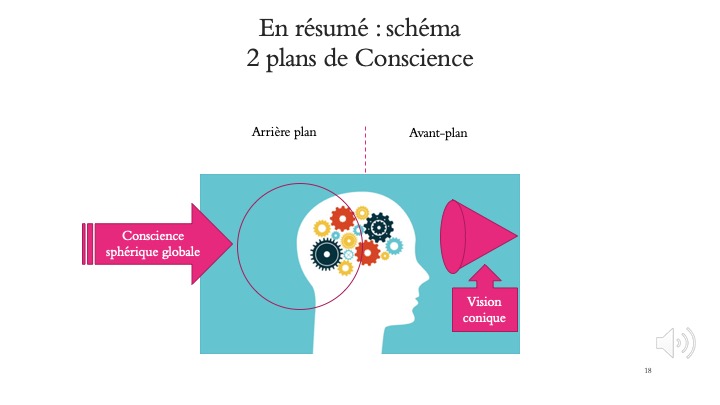
- Global Workspace Theory: Imagine your brain as a theater. Different brain regions are like actors vying for attention on the stage. When information becomes "conscious," it's broadcast to the entire "global workspace" (the theater). This global broadcasting allows different parts of the brain to access and process the information. Think of it as the brain's internal internet. (Pretty cool, huh?)
- Attention: Attention is like the spotlight in that theater. It determines which information gets highlighted and broadcast to the global workspace. Without attention, information remains in the shadows, processed unconsciously (like, say, the feeling of your socks on your feet… until I just made you think about it!).
- Information Integration: It's not just about broadcasting information; it's about integrating it. Conscious experiences are not just a collection of separate sensations. They are unified, coherent wholes. This requires different parts of the brain to communicate and integrate information from different sources. It's like a symphony orchestra, where individual instruments come together to create a harmonious sound.
- Neural Correlates of Consciousness (NCCs): These are the specific brain activities that are consistently associated with conscious experiences. For example, researchers have identified NCCs for seeing a face, hearing a sound, or feeling pain. Finding these correlates is a crucial step in understanding the neural basis of consciousness.
These concepts might sound a bit technical, but they're all aimed at understanding how the brain creates that subjective feeling of being aware. It's like trying to understand how a computer program works by looking at its underlying code. You need to understand the variables, the functions, and the algorithms to see how it all comes together.
Why Should We Care About "Le Code de la Conscience"?
Okay, you might be thinking, "This is all very interesting, but why should I care about the intricacies of neuroscience?" Well, besides the sheer intellectual curiosity of understanding how our own minds work, there are some very practical implications:
- Understanding and Treating Neurological Disorders: If we understand the "code" of consciousness, we can potentially diagnose and treat disorders like coma, vegetative state, and Alzheimer's disease. Imagine being able to assess the level of awareness in a patient who can't communicate. It's a game-changer.
- Developing Artificial Intelligence: If we want to create truly conscious AI, we need to understand what consciousness is in the first place. Cracking the "Code de la Conscience" could provide the blueprint for building machines that are not just intelligent but also aware. (But let's be honest, that's a slightly terrifying prospect too, right?)
- Improving Education and Learning: Understanding how attention and information integration work can help us develop better educational strategies and learning techniques. By optimizing the way we process information, we can learn more effectively and retain more knowledge.
- Ethical Considerations: As we gain a deeper understanding of consciousness, we also need to grapple with some serious ethical questions. What are the moral implications of altering consciousness? What are the rights of individuals with impaired consciousness? These are questions that we need to start addressing now.
Essentially, understanding "Le Code de la Conscience" has the potential to revolutionize medicine, technology, and our understanding of ourselves. It's a field that is rapidly evolving, and it's incredibly exciting to see what the future holds.
So, What's Next? Cracking the Code, One Neuron at a Time
The quest to decipher "Le Code de la Conscience" is far from over. Researchers are using a variety of tools and techniques, including:
- Brain Imaging: Techniques like fMRI and EEG allow us to observe brain activity in real-time and identify the neural correlates of consciousness.
- Computational Modeling: Computer models can simulate brain activity and test different hypotheses about how consciousness arises.
- Lesion Studies: By studying patients with brain damage, researchers can identify the brain regions that are essential for consciousness.
- Animal Studies: Animal models can provide insights into the neural mechanisms of consciousness that are difficult or impossible to study in humans.
These tools, combined with rigorous scientific investigation, are slowly but surely unraveling the mysteries of consciousness. It's a long and challenging process, but the potential rewards are enormous.
So, the next time you find yourself doing something on autopilot – maybe you instinctively reach for your phone when you're bored, or you suddenly remember the lyrics to a song you haven't heard in years – take a moment to reflect on the incredible complexity of your own mind. You are a walking, talking, thinking (and sometimes French-speaking) miracle. And the "Code de la Conscience" is the key to understanding how that miracle works. Who knows, maybe one day you will contribute to cracking the code! (Just don't let the robots win, okay?).
A bientôt! (See, there I go again with the French… it's all that unconscious programming!)
![[Stanislas Dehaene] Le code de la conscience - YouTube](https://i.ytimg.com/vi/mSqX_dwLA40/maxresdefault.jpg)