Ah, La Fontaine! Just the name conjures images of powdered wigs, ridiculously long monologues, and animals behaving in ways animals definitely shouldn't. And amongst his menagerie of morally-questionable creatures, none is perhaps more…well, inflated… than the frog in "Le Boeuf et la Grenouille." Prepare yourselves, dear readers, for a deep (but not too deep, we don’t want to drown in profundity) dive into this classic tale of ambition gone horribly, hilariously wrong. Think of it as your literary amuse-bouche before the main course of real life overwhelms you. Consider this your mental palate cleanser, a literary sorbet if you will. And frankly, who doesn't need a little sorbet right now?
The Setup: A Frog with Freudian Issues (Probably)
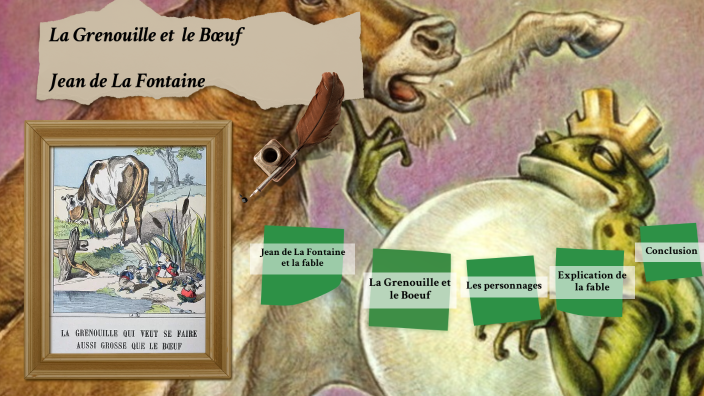
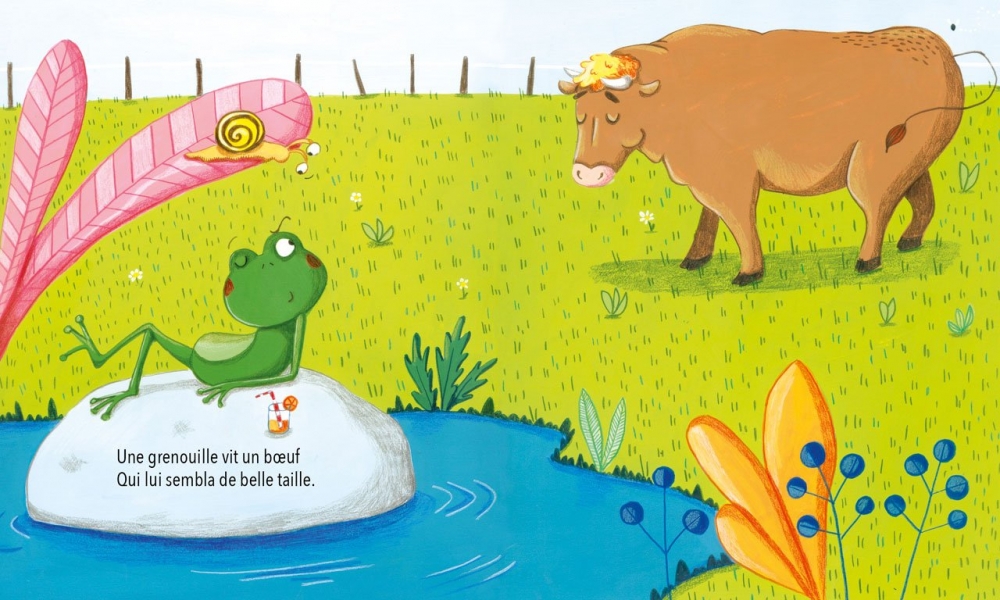
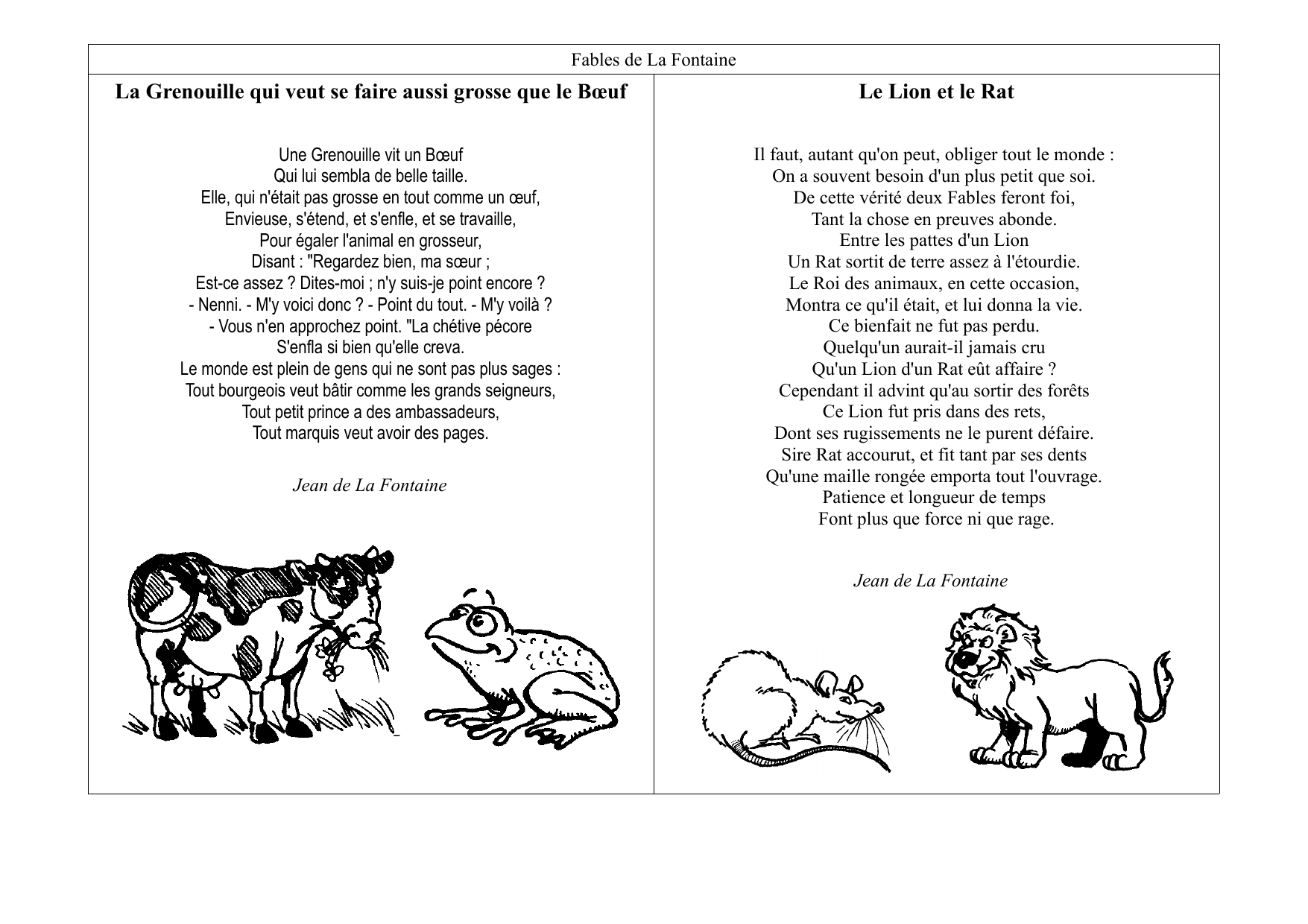
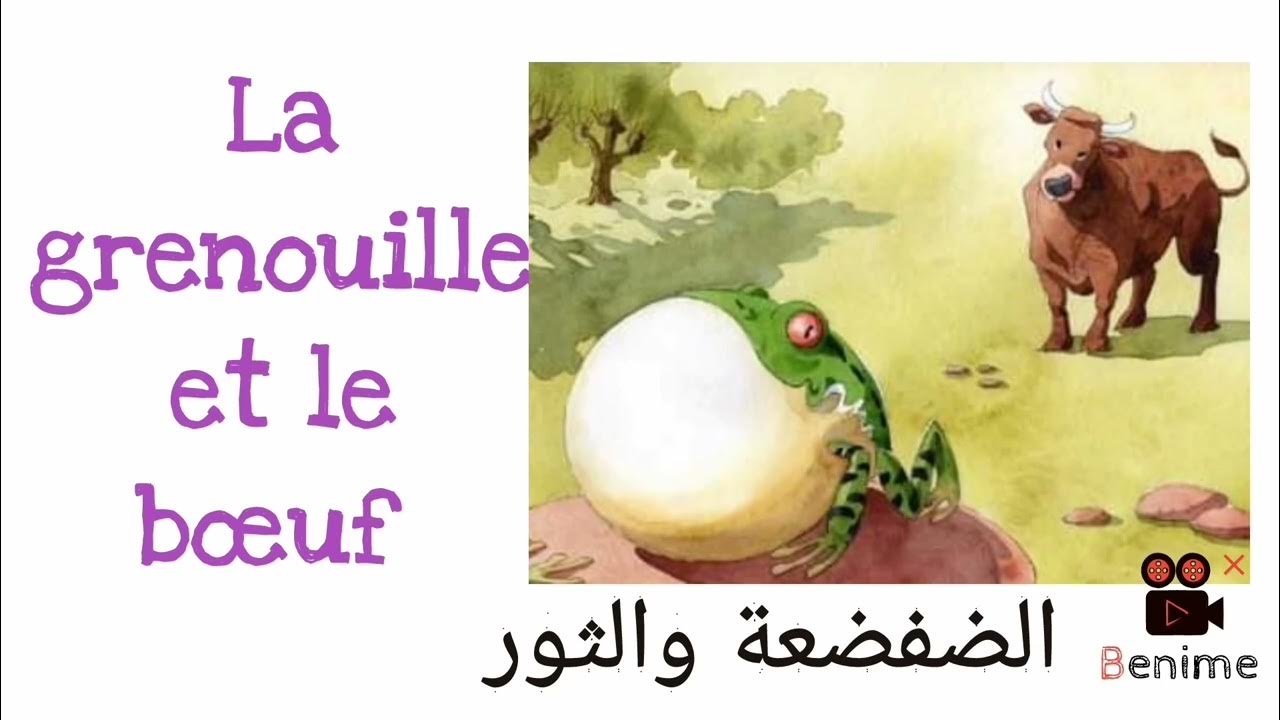
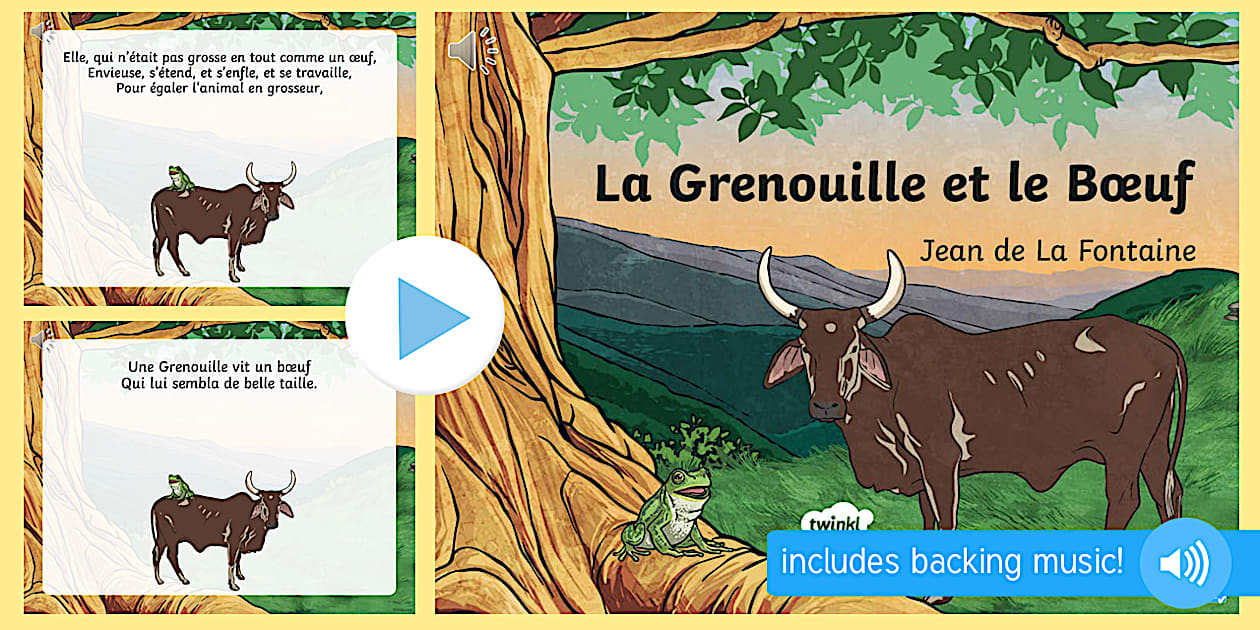
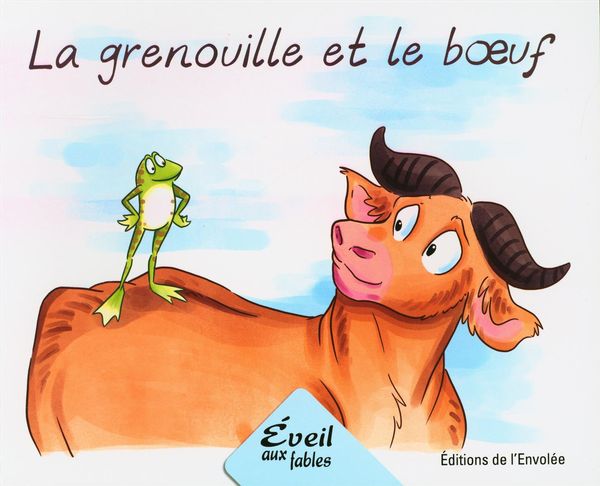
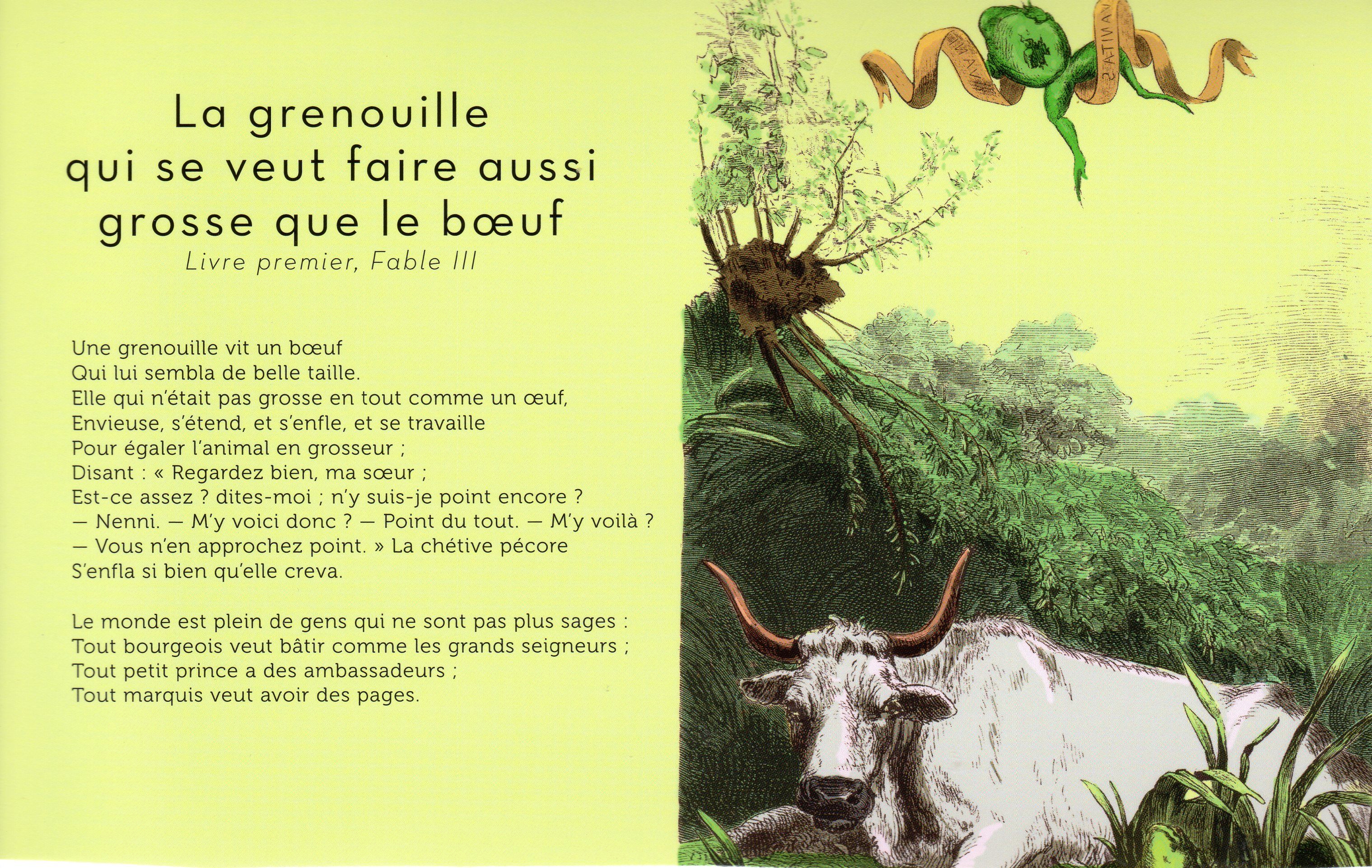
Our story opens with a frog. Just a regular, everyday frog, probably dreaming of flies and lily pads. But, oh no! This is no ordinary amphibian! This frog has ambitions. He sees an ox. A big ox. A really, really, ridiculously big ox. Think "Paul Bunyan's pet" big. And instead of thinking, "Wow, what a magnificent beast, I should probably just admire it from a safe distance," our little froggy friend thinks, "I can be that!" Because, you know, that's always a realistic goal. Like aiming to become the Eiffel Tower when you're a garden gnome.
The subtext, of course, is ripe for Freudian analysis. Is the ox a stand-in for the father figure? Is the frog's desire to emulate it a manifestation of penis envy? (Okay, maybe not the penis part, but you get the idea.) We’re not going to delve too deeply into that quagmire of psychological speculation. We're here for laughs, not a thesis defense! But let's just say, this frog has some serious issues.
Why is this funny?
- The sheer absurdity: A frog trying to become an ox is like me trying to become a supermodel. Possible? Theoretically. Likely? Absolutely not.
- The universal relatability: We've all been there. We've all had that moment of delusional ambition where we thought we could conquer the world (or at least, land that promotion we were woefully unqualified for).
- The irony: The frog is literally trying to inflate himself, which is a metaphor so blatant it practically slaps you in the face.
The Inflation Games: A Comedy of Errors (and Air)
So, our frog starts to puff himself up. He inhales. He expands. He looks to his brethren (presumably a gaggle of gossiping female frogs, because, well, why not?) and asks, "Am I as big as the ox now?"
The other frogs, being the brutally honest creatures they are (or perhaps just jealous of his audacity), reply, "Nope."
Undeterred, our frog inhales again. He stretches his skin to its limit. He probably starts to turn a fetching shade of purple. "And now? Am I as big as the ox now?"
Again, the chorus of croakers: "Still no."
This continues, of course, escalating with each attempt. The frog, fueled by his ego and a complete lack of self-awareness, becomes increasingly desperate. He sucks in more air than a hot air balloon at a county fair. He is quite literally “full of himself”.
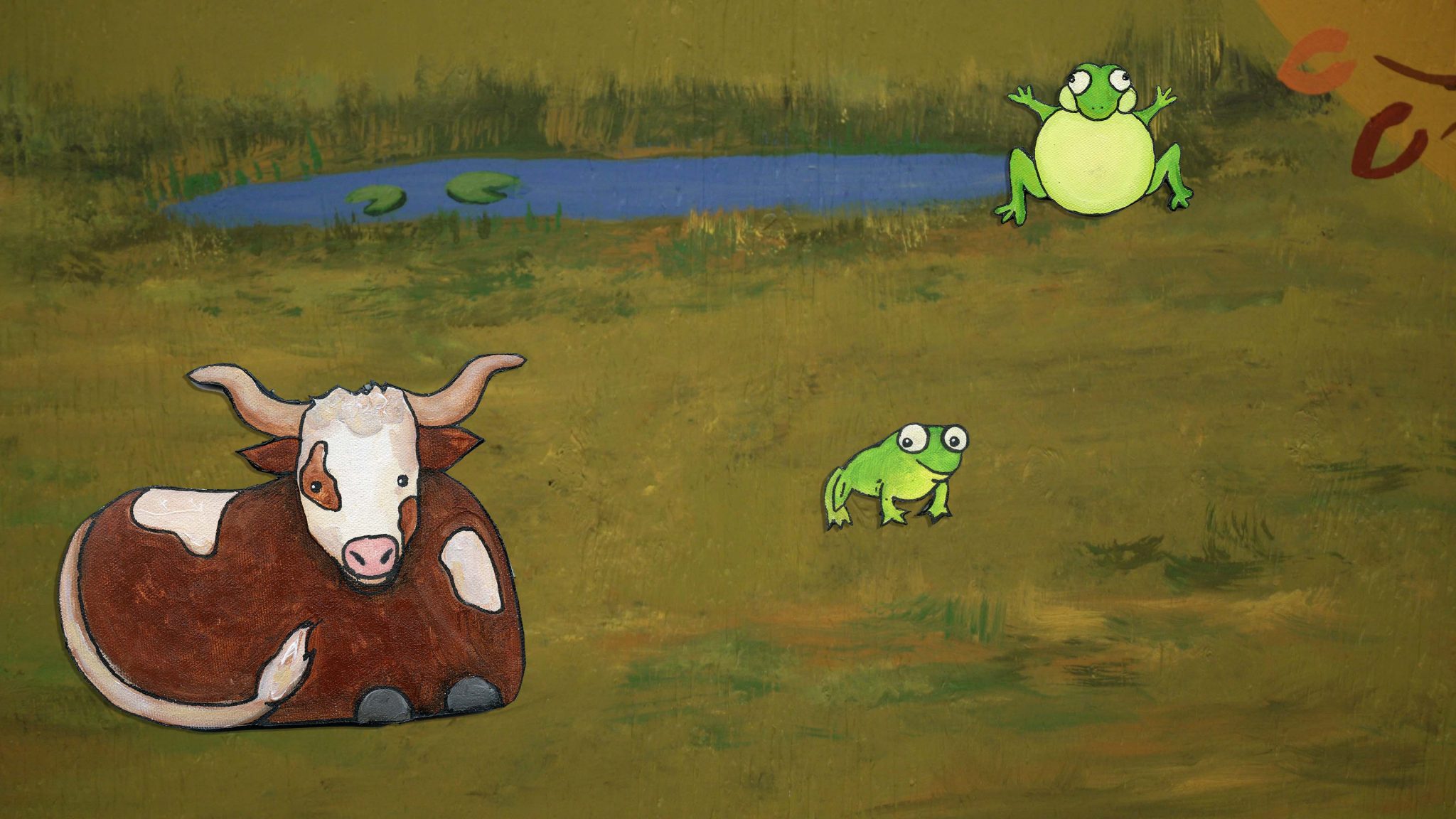
Imagine the scene. A tiny frog, growing larger and larger, straining every muscle (or whatever frogs use to inflate themselves), his eyes bulging, his skin shimmering. It's like a cartoon waiting to happen. Picture it animated with the Looney Tunes cast providing sound effects. Boing! Squeak! Pop! Pure gold.
Visualizing the Absurdity
Let's try to paint a picture here, shall we?
- A minuscule frog, green and glistening, looking with utter envy at a massive, majestic ox. The contrast itself is comical.
- The frog puffing up, his skin stretching thin, veins popping, looking like a grotesque, wobbly balloon animal.
- The other frogs, lounging on lily pads, watching with a mixture of amusement and morbid fascination, like spectators at a particularly gruesome sporting event.
- The ox, completely oblivious to the frog's existence, chewing its cud and generally being ox-like, a picture of serene indifference.
The humor derives from the sheer impossibility, the unyielding discrepancy, between aspiration and reality. It's the David versus Goliath story, only David is a delusional frog and Goliath is completely unaware that a battle is even taking place.
The Inevitable End: A Popping Good Time (for Everyone But the Frog)
You can probably guess what happens next. Our frog, in his relentless pursuit of bovine grandeur, inflates himself just a little too much. His skin reaches its breaking point. And then… POP!
He explodes. Or deflates spectacularly. Or maybe just lets out a pathetic squeak and collapses in a heap of green goo. The exact details are left to the reader's imagination, but the outcome is the same: the frog's ambition exceeds his capacity, and he suffers a rather humiliating (and probably fatal) demise.
The other frogs, presumably, shrug and go back to catching flies. The ox continues to graze, blissfully unaware that he was the unwitting catalyst for a amphibian tragedy of epic (though admittedly miniature) proportions.
It’s poetic, really, in a dark, slightly twisted, completely hilarious way. Like watching a mime slip on a banana peel, only the mime is a frog and the banana peel is an unattainable goal. The sweet irony of the moment is not lost on us.
Why the "Pop!" is so Satisfying
There's a reason why the ending is so impactful (and amusing):
- Catharsis: We've all wanted to see someone get taken down a peg, especially someone as arrogant and self-deluded as our froggy friend.
- Schadenfreude: Let's be honest, there's a little bit of pleasure in watching someone else fail spectacularly. It makes us feel a little bit better about our own shortcomings. (Don't worry, it's a perfectly normal, if slightly shameful, human emotion.)
- The ultimate punchline: The "pop" is the culmination of all the build-up, the perfect comedic payoff. It's the "whack" in a slapstick routine, the pie in the face, the pratfall on the ice.
The Moral of the Story: Know Your Limits (and Maybe Lay Off the Air)
So, what's the moral of this bizarre little fable? Well, there are several, depending on how you want to interpret it:
- Be yourself: Don't try to be something you're not. Embrace your inner frog (or whatever you happen to be).
- Know your limits: Don't overestimate your abilities. Aim high, but be realistic. You can't fly if you don't have wings (unless you're a very talented squirrel).
- Don't be envious: Comparing yourself to others is a recipe for misery (and potential amphibian-related explosions).
- Pride comes before a fall (or a pop): Arrogance and hubris are rarely rewarded. Humility is a virtue, even in the animal kingdom.
Essentially, the story is a cautionary tale about the dangers of unchecked ambition and the folly of trying to be something you're not. It’s a reminder that sometimes, the best thing you can do is accept yourself for who you are, warts and all (pun intended!).
Alternative Interpretations (Because Why Not?)
Of course, we can't resist offering a few more… creative interpretations of the story:
- A critique of social climbing: The frog represents those who desperately try to emulate the wealthy and powerful, often to their own detriment. Think of it as a 17th-century version of "Keeping Up with the Kardashians," only with more amphibians and less botox.
- A warning against political overreach: The frog's inflated ego mirrors the ambition of tyrannical rulers who overextend their power, leading to their inevitable downfall. It's basically a miniature version of the French Revolution, starring a frog.
- A metaphor for the dangers of excessive consumerism: The frog's insatiable desire for more is a reflection of our society's obsession with material possessions, which can ultimately lead to emptiness and dissatisfaction. It's a cautionary tale about the perils of "retail therapy."
The beauty of fables is that they're open to interpretation. You can find whatever meaning you want in them, whether it's a profound philosophical insight or a simple chuckle at the expense of a hapless frog.

La Fontaine's Genius: Making Us Laugh While Teaching Us Lessons
Jean de La Fontaine was a master of his craft. He could take a simple story and imbue it with layers of meaning, all while making you laugh out loud. His fables are timeless because they tap into universal human experiences: ambition, greed, envy, vanity. He wasn't just writing about animals; he was writing about us. He was holding up a mirror to society, reflecting our flaws and foibles in a way that was both entertaining and insightful.
He also had a wicked sense of humor. He wasn't afraid to poke fun at the powerful, the pretentious, and the just plain foolish. His fables are full of witty observations and satirical jabs, making them as relevant today as they were centuries ago. And let’s be honest, the man knew how to write a good punchline. He delivered a satisfying ending every time.
Why La Fontaine Still Matters
In a world of fleeting trends and disposable entertainment, La Fontaine's fables endure. Here's why:
- They're timeless: Human nature hasn't changed much in the past few centuries. The same vices and virtues that La Fontaine wrote about are still prevalent today.
- They're accessible: The stories are simple and easy to understand, even for children. But they also contain deeper layers of meaning that can be appreciated by adults.
- They're entertaining: Let's face it, they're just plain funny. Who doesn't love a good story about a talking animal behaving badly?
- They teach valuable lessons: The fables offer timeless wisdom about morality, ethics, and the human condition.
So, the next time you're looking for a bit of light reading that's also surprisingly insightful, pick up a copy of La Fontaine's fables. You might just learn something about yourself (and have a good laugh in the process).
Beyond the Boeuf: Other Amphibian Antics in Literature
While "Le Boeuf et la Grenouille" is arguably La Fontaine's most famous amphibian-themed fable, it's not the only example of froggy characters in literature. From fairy tales to modern novels, frogs have hopped their way into our imaginations (and sometimes, our nightmares).
Consider these examples:
- The Frog Prince: A classic fairy tale about a spoiled princess who learns a valuable lesson about keeping promises. Also, a reminder that sometimes, you have to kiss a few frogs before you find your prince (literally).
- Toad of Toad Hall (from "The Wind in the Willows"): A wealthy and impulsive toad with a penchant for motorcars and getting into trouble. A reminder that even the most privileged among us can be prone to foolishness.
- Kermit the Frog: The lovable Muppet who taught us that it's not easy being green. A reminder that even in a world of chaos and absurdity, there's always room for kindness and optimism.
- Hypnotoad: (From Futurama) ALL GLORY TO THE HYPNOTOAD!
Frogs, it seems, are surprisingly versatile literary characters. They can be symbols of transformation, greed, innocence, or just plain absurdity. And their presence in literature reminds us that even the smallest and most unassuming creatures can have a big impact on our stories (and our lives).
In Conclusion: Don't Be a Frog! (Unless You're a Really Cool Frog)
So, what have we learned from our little foray into the world of inflated amphibians? Well, we've learned that ambition is good, but delusional ambition is not. We've learned that comparing ourselves to others is a waste of time (and potentially dangerous to our physical well-being). And we've learned that Jean de La Fontaine was a comedic genius with a penchant for talking animals and moral lessons.
The takeaway? Don't be like the frog. Don't try to be something you're not. Embrace your own unique talents and abilities. And for goodness sake, stay away from anything that involves excessive inflation. Unless you're a tire. Or a bouncy castle. Then, by all means, inflate away!
But if you're just a regular, everyday human (or frog), remember that true happiness comes from accepting yourself for who you are, not from trying to be someone you're not. And if you happen to see an ox, just admire it from a safe distance. Trust us, it's better for everyone involved.
Now, if you'll excuse me, I'm off to find a lily pad and contemplate the meaning of life. Or maybe just take a nap. After all, it's exhausting dispensing wisdom and cracking jokes about exploding frogs. À bientôt, mes amis!
And remember, if you ever feel tempted to inflate yourself to achieve your goals, just think of our little froggy friend and the inevitable… pop! You'll thank me later.