Bonjour mes amis! Pull up a chair, grab a café au lait, and let's chat about something that often trips up French learners: l'accord de l'adjectif qualificatif. Sounds fancy, right? But don't worry, it's more like a friendly dance than a complicated algebra equation. Think of it as making sure your adjectives are properly dressed for the occasion.
What exactly is this "accord," you ask? Well, simply put, it's the agreement. Like a good host makes sure everyone feels comfortable, French requires your adjectives to agree in gender and number with the nouns they describe. That’s it!
Gender & Number: The Dynamic Duo
French nouns, as you probably know, are either masculine or feminine. This isn't about real-world gender, mind you; a table (une table) is feminine, even though it doesn't have a gender in our usual sense. And a tree (un arbre) is masculine. So, when you use an adjective to describe the table, it needs to be feminine. And if you're talking about more than one table? Plural is a must!
“Okay,” you might say, taking a sip of your coffee. “That sounds easy enough. But what does it look like?” Great question! Let's break it down.
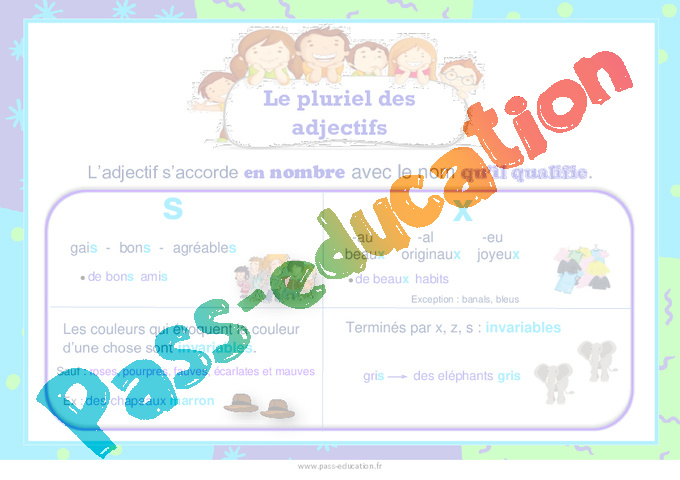
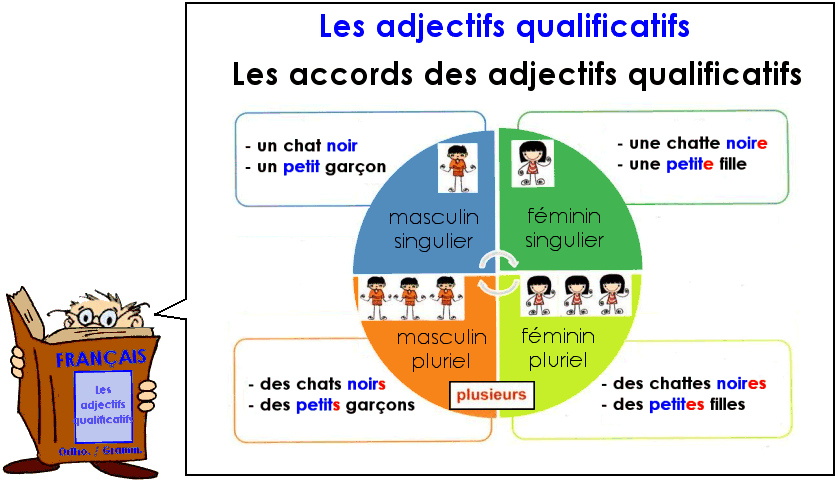
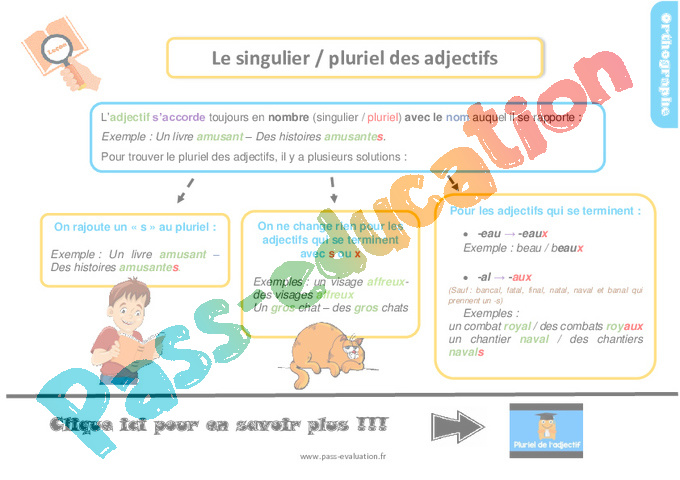
The Basic Rule: Adding –e and –s
The most common way to make an adjective feminine is to add an "e" to the end. And to make it plural, you usually add an "s." Think of it like putting on your dancing shoes!
For example:
- Grand (masculine singular) – Big
- Grande (feminine singular) – Big
- Grands (masculine plural) – Big
- Grandes (feminine plural) – Big
See? Simple addition! Un grand arbre (a big tree), une grande table (a big table), des grands arbres (big trees), des grandes tables (big tables). See how the adjective changes to match the noun?
A Little Digression: Those Tricky Silent "e"s
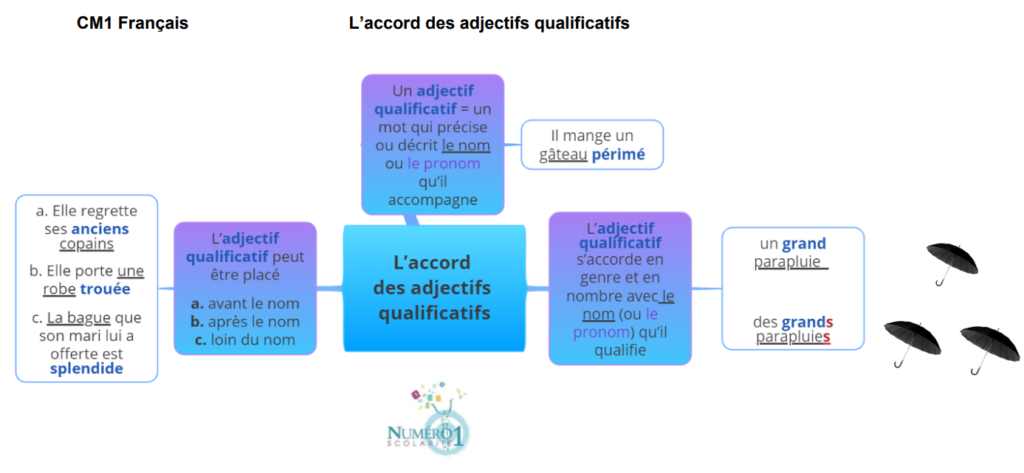
Now, a little detour. What happens when an adjective already ends in "e" in its masculine singular form? Well, good news! It stays the same for the feminine singular. No extra "e" needed.
For example:
- Rouge (masculine singular & feminine singular) – Red
So, un livre rouge (a red book) and une voiture rouge (a red car). Easy peasy, right?
Exceptions, Exceptions Everywhere! (But Don't Panic!)
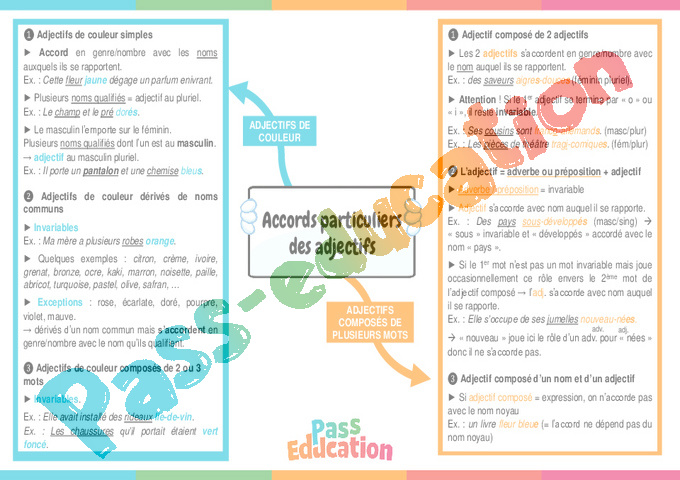
Of course, it wouldn't be French without a few exceptions. And l'accord de l'adjectif qualificatif has its fair share. But don't let that scare you! They become familiar with practice. Really! Think of them as quirky friends you learn to love.
A Few Common Irregularities
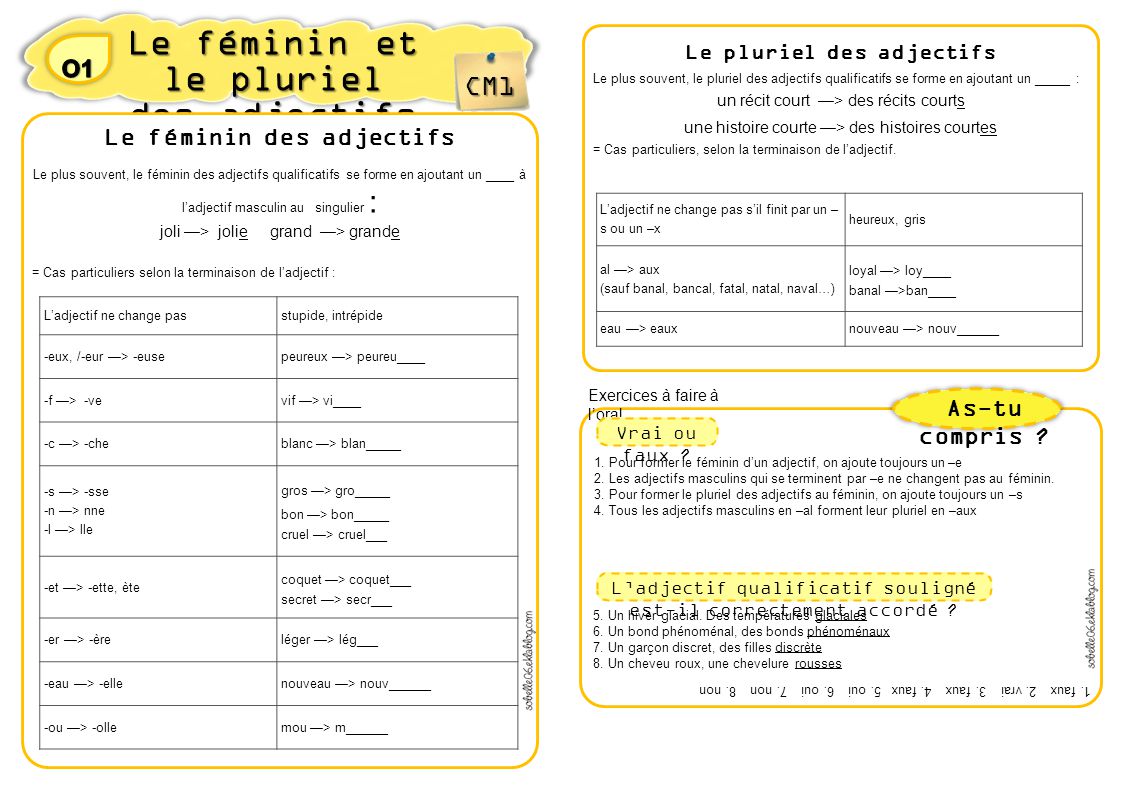
- Adjectives ending in "-f" often change to "-ve" in the feminine: Actif (active) becomes Active.
- Some adjectives have completely different feminine forms: Beau (beautiful) becomes Belle. Nouveau (new) becomes Nouvelle. Vieux (old) becomes Vieille.
- Adjectives ending in "-er" often change to "-ère" in the feminine: Premier (first) becomes Première.
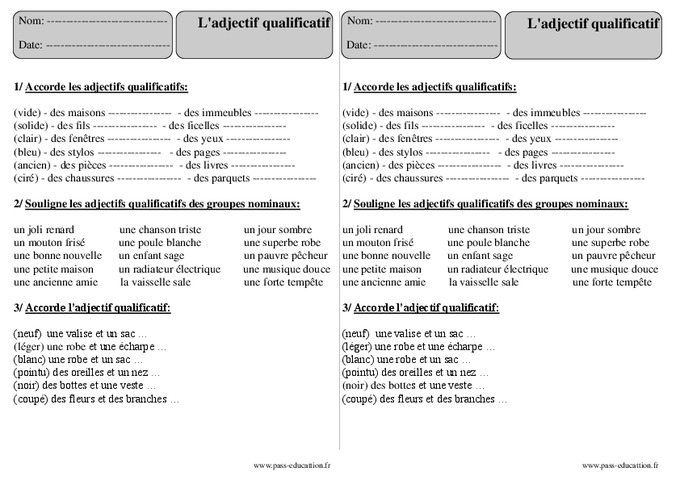
Yes, there are more. But these are some of the most common. The key is to practice, practice, practice. That's where those exercices pdfs come in handy!

Where to Find Those Helpful Exercices PDFs?
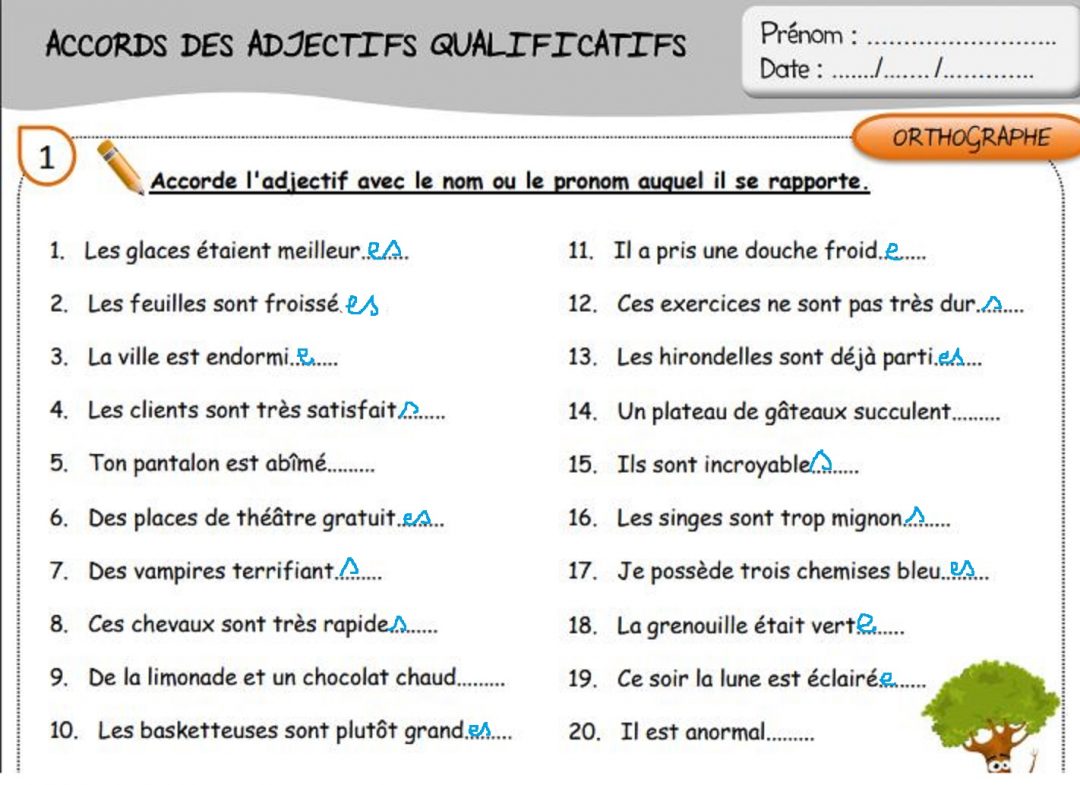
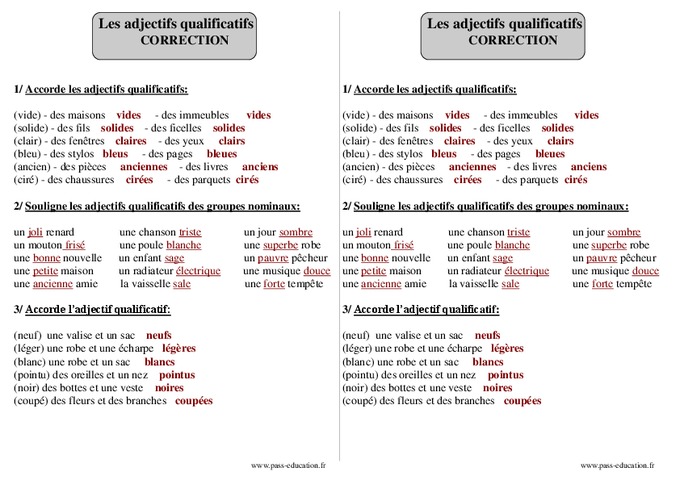
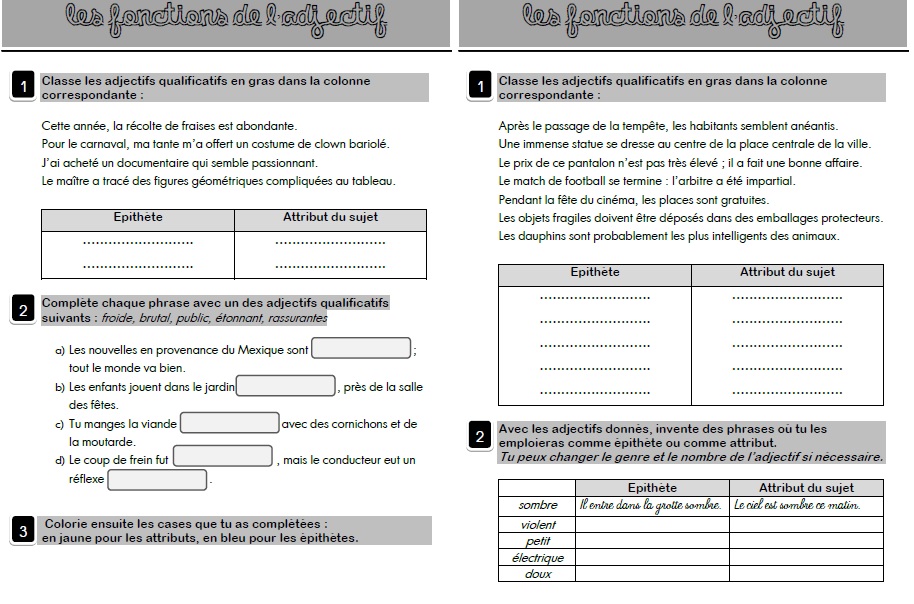
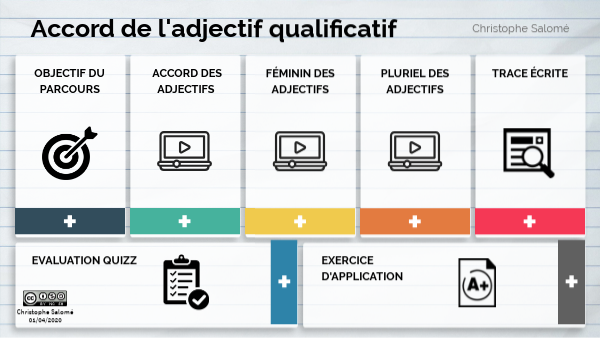
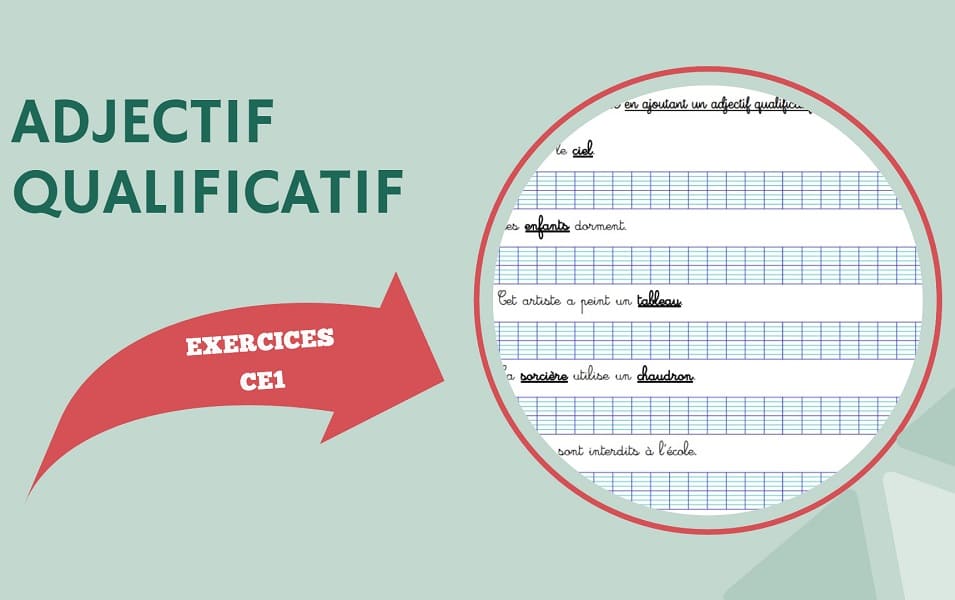
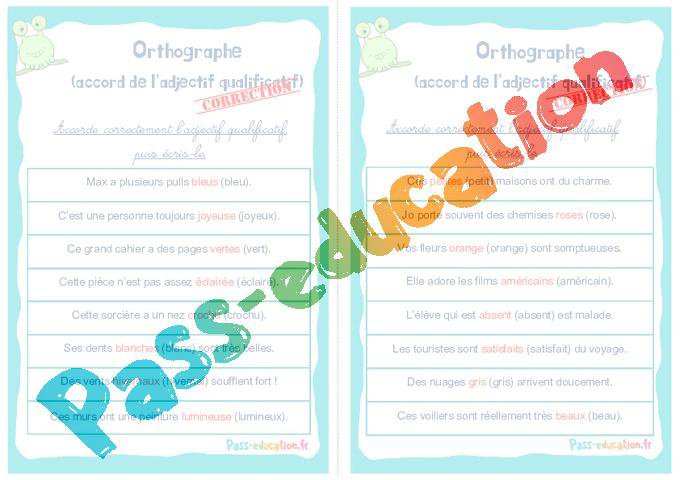
Ah, yes! You're eager to put this newfound knowledge to the test! There are tons of L'accord De L'adjectif Qualificatif Exercices Pdf available online. A quick search on Google or your favorite search engine should yield plenty of results. Look for ones that offer a mix of fill-in-the-blanks, multiple-choice, and sentence-writing exercises.
Also, check out websites dedicated to French grammar. Many of them offer free downloadable worksheets. And don’t forget about your textbook (if you have one)! It probably has exercises specifically designed to reinforce this concept.
Pro Tip: Don't just passively fill in the blanks. Think about why you're choosing a particular form of the adjective. Analyze the noun it's describing. And if you make a mistake? No problem! That's how we learn!
Adjective Placement: Another Consideration
Hold on, before you rush off to download those exercises, let's quickly touch on adjective placement. In French, most adjectives come after the noun they describe. For example: une voiture rouge (a red car). BUT... there are some exceptions! (Of course!).
Certain common adjectives, often referred to as BAGS adjectives (Beauty, Age, Goodness, Size), usually come before the noun. Think Beau (beautiful), Age (old/new), Gentil (kind/nice), Size (grand/petit).
For instance: une belle voiture (a beautiful car). See how "belle" comes before "voiture"?
So, when you're doing those exercises, pay attention to both the accord (agreement) and the placement of the adjective.
Putting It All Together: An Example
Let's imagine you want to say "The beautiful old house." In French, it would be: La belle vieille maison.
Let's break it down:
- Maison (house) is feminine singular.
- Belle (beautiful) is the feminine singular form of "beau." It comes before "maison" because it's a BAGS adjective.
- Vieille (old) is the feminine singular form of "vieux." It also comes before "maison" because it's a BAGS adjective.
See how everything agrees and is in the right place? You've got this!
Don't Be Afraid to Make Mistakes!
Learning French is a journey, not a race. And l'accord de l'adjectif qualificatif is just one little step along the way. Don't be discouraged if you make mistakes. Everyone does! The important thing is to keep practicing and to learn from your errors.
Think of those exercises PDFs as your friendly training ground. A safe space to experiment, make mistakes, and ultimately, master this important aspect of French grammar. With each exercise you complete, you'll gain confidence and fluency. And before you know it, you'll be dancing the adjective agreement dance like a pro!
Final Thoughts: Embrace the Beauty of the Language
Learning a new language opens up a whole new world. It's about more than just grammar rules and vocabulary lists. It's about connecting with people, understanding different cultures, and experiencing the world in a new way. So, embrace the challenge, enjoy the process, and celebrate your progress along the way.
So go out there and conquer those L'accord De L'adjectif Qualificatif Exercices Pdf! You've got this! And remember, even if you stumble, the French language, like a good friend, will always be there to help you back on your feet. Bonne chance! (Good luck!)
.png)