Ah, La Prose du Transsibérien et de la Petite Jehanne de France. Just saying the title feels like I've just swallowed a particularly chewy croissant whole. Right? It’s a mouthful, and frankly, so is the poem itself. But don't let that intimidate you! We're going to unpack this literary behemoth with the grace of a tipsy ballerina (me, usually, after one glass of wine).
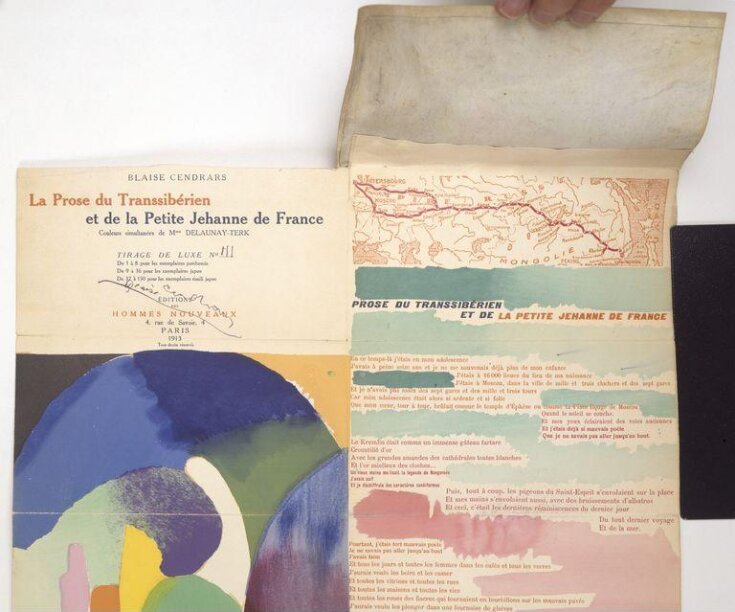
So, what is this thing, besides a prime example of why French literature professors get paid the big bucks? Well, it's a long poem. Like, really long. Like, if you printed it out, it might wrap around your cat twice. It's by Blaise Cendrars, a Swiss writer who apparently had a fondness for train journeys and very long sentences. And it's illustrated by Sonia Delaunay, a Ukrainian-French artist who clearly had a thing for bright colors and geometric shapes. Think "avant-garde travel brochure gone wild."
What's the Big Deal, Anyway?
Okay, so it’s a long, visually interesting poem. So what? Why are we still talking about it over a century later? Good question! (I planted that in your mind, by the way, you're welcome.) The answer is, it's kind of a big deal in the world of modern poetry. It broke all the rules. It threw the sonnet out the window and replaced it with a stream-of-consciousness that's part travelogue, part fever dream, and part existential crisis, all fueled by a very strong cup of Russian tea (probably laced with something stronger, let's be honest).
A Breakdown for the Intrepid Reader (That's You!)
Let's dissect this poetic beast, shall we? Don't worry, no formaldehyde involved. Just a little literary curiosity and maybe another glass of wine (for me, anyway).
- The Trans-Siberian Railway: Obvious, right? It's in the title! The poem is a journey, both physical and emotional, across Russia on the Trans-Siberian Railway. Think of it as Cendrars' slightly manic travel blog, but written in verse and with considerably more angst.
- Little Jehanne of France: Ah, Jehanne. The poem's other anchor. She's a prostitute in Moscow, and she represents... well, a lot of things. Innocence lost, the corruption of the world, the eternal feminine, possibly a metaphor for France itself. Basically, she's complicated. She's the Mary Magdalene of modernist poetry, minus the pesky biblical context.
- Stream of Consciousness: This is where things get… interesting. Cendrars doesn't exactly tell a story. He throws images, memories, and observations at you like a literary ninja. It's like eavesdropping on someone's very intense inner monologue during a very long train ride. Expect detours, tangents, and sudden shifts in topic. Think James Joyce on wheels.
- Color and Abstraction: Delaunay's illustrations aren't just pretty pictures. They're an integral part of the poem. The colors, shapes, and abstract forms mirror the poem's themes and create a visual rhythm that complements the text. It's like a visual soundtrack to Cendrars' words. Imagine synesthesia, but on paper and REALLY LOUD.
- The Poem as Object: Originally, La Prose du Transsibérien was printed on a single sheet of paper that, when unfolded, was about two meters long! The idea was that it should be the same height as the Eiffel Tower (because, why not?). It's not just a poem; it's a thing, an art object, a statement.
Decoding the Chaos: A User's Guide to Cendrars
Okay, so how do you actually read this thing without your brain turning into a plate of overcooked noodles? Here are a few tips:

- Don't Try to Make Sense of Everything: Seriously. Just let the words wash over you. Embrace the chaos. Think of it as a Jackson Pollock painting, but with verbs.
- Pay Attention to the Images: Cendrars is a master of imagery. He uses vivid descriptions and striking metaphors to create a powerful sense of place and feeling. Imagine snapshots taken from a speeding train window: fleeting, fragmented, but intensely real.
- Look for Recurring Motifs: Certain images and themes pop up again and again in the poem. These motifs help to create a sense of unity and coherence, even amidst the apparent chaos. Keep an eye out for things like the color red, the sound of bells, and the figure of Jehanne.
- Consider the Historical Context: La Prose du Transsibérien was written on the eve of World War I. The poem reflects the anxieties and uncertainties of a world on the brink of cataclysm. It's a snapshot of a society teetering on the edge of modernity, grappling with new technologies and changing social values. Think of it as the literary equivalent of a nervous breakdown just before the apocalypse.
- Read it Aloud (If You Dare!): Seriously, reading this poem aloud can be a transformative experience. The rhythm and sound of the words are just as important as their meaning. Plus, you'll get some funny looks from your neighbors. It's a win-win!
Key Themes and Motifs (For the Academically Inclined… or Just Curious)
Alright, let’s dive a little deeper, shall we? (Don't worry, I promise not to get too pretentious.) La Prose du Transsibérien is brimming with thematic goodness. Here are a few key ideas to chew on:
- Modernity and Technology: The poem celebrates the dynamism and energy of the modern world, particularly the transformative power of technology. The Trans-Siberian Railway itself is a symbol of this technological progress, connecting distant lands and cultures. But there's also a sense of unease, a fear that technology is dehumanizing and alienating. It’s like being both thrilled and terrified by your new iPhone at the same time.
- Travel and Exploration: The poem is, at its core, a travelogue. But it's not just about seeing new places; it's about the transformative power of travel itself. The journey across Siberia becomes a metaphor for the journey of life, with all its unexpected twists and turns. Think of it as "Eat, Pray, Love," but with more vodka and less self-help.
- Memory and Nostalgia: The poem is filled with memories of the past, both personal and collective. Cendrars reflects on his childhood, his travels, and the history of Europe. There's a sense of nostalgia for a simpler time, but also a recognition that the past is gone and cannot be recovered. It’s like that feeling you get when you look at old photos and think, "Wow, I had so much hair back then!"
- The City and the Country: The poem contrasts the bustling, chaotic energy of the city (Moscow, Paris) with the vast, desolate landscapes of Siberia. The city represents modernity and progress, while the country represents tradition and the natural world. It’s like the eternal struggle between your desire to live in a trendy loft downtown and your secret longing for a quiet cabin in the woods.
- Love and Loss: Love, in its various forms (romantic, platonic, even patriotic), flickers throughout the poem, often tinged with a sense of loss and disappointment. Jehanne, in particular, embodies this theme, representing both the allure and the danger of romantic entanglement. It’s like that ex you still think about sometimes, even though you know they were terrible for you.
Delaunay's Visual Symphony: More Than Just Pretty Pictures
Okay, let's talk about Sonia Delaunay, the unsung heroine of this literary extravaganza. Her illustrations aren't just decorative; they're an integral part of the poem's meaning. Here's why they matter:

- Color as Emotion: Delaunay uses color to convey emotion and create mood. Bright, vibrant colors like red and yellow evoke feelings of energy and excitement, while darker colors like blue and black suggest melancholy and despair. Think of it as a visual mood ring for your soul.
- Geometric Abstraction: Delaunay's use of geometric shapes and abstract forms reflects the poem's fragmented and non-linear structure. The shapes mirror the poem's themes and create a visual rhythm that complements the text. It’s like visual jazz, all improvisation and bold experimentation.
- Simultaneity: Delaunay's artistic style, known as "Simultaneism," aimed to capture the simultaneous experience of different sensations and perceptions. Her illustrations reflect this by presenting multiple perspectives and viewpoints at the same time. It’s like trying to watch three different TV shows at once, but in a good way.
- Integration with the Text: The illustrations aren't just placed next to the text; they're integrated into it. The colors and shapes often echo the themes and images of the poem, creating a sense of visual harmony. It's like a perfectly choreographed dance between words and images.
- A Visual Counterpoint: In some ways, Delaunay's illustrations offer a counterpoint to Cendrars's often-dark and pessimistic vision. Her bright, optimistic colors provide a glimmer of hope amidst the chaos and despair. It's like a ray of sunshine peeking through the clouds on a rainy day.
Why It Still Matters Today: The Poem That Refuses to Grow Old
So, why should you care about a century-old poem about a train ride across Russia? Because La Prose du Transsibérien is still relevant today. It speaks to our modern anxieties, our fascination with technology, and our longing for connection in an increasingly fragmented world. It's a poem that dares to break the rules, to experiment with form and language, and to challenge our assumptions about what poetry can be. It's the literary equivalent of a punk rock anthem, refusing to conform to expectations and screaming its message loud and clear.
Consider this:

- It's a Precursor to Modern Stream of Consciousness: Cendrars was experimenting with stream-of-consciousness long before James Joyce became a household name (well, a household name among English majors, anyway).
- It Explores Universal Themes: Travel, love, loss, memory – these are themes that resonate with readers of all ages and backgrounds.
- It's a Beautiful Example of Collaboration: The poem is a testament to the power of collaboration between artists. Cendrars and Delaunay created something truly unique by combining their talents and visions.
- It's a Reminder to Embrace Chaos: In a world that often feels overwhelming and confusing, La Prose du Transsibérien reminds us to embrace the chaos, to find beauty in the unexpected, and to trust our instincts.
So You've Read It… Now What?
Congratulations! You've tackled La Prose du Transsibérien et de la Petite Jehanne de France. You deserve a medal. Or at least a very strong drink (vodka, perhaps?). Now, go forth and impress your friends with your newfound knowledge of modernist poetry. Casually drop Cendrars' name at your next dinner party. Quote a few lines from the poem (in French, if you're feeling particularly ambitious). Watch as everyone marvels at your intellectual prowess. (Or, more likely, rolls their eyes and changes the subject. But hey, you tried!)
In all seriousness, though, I hope this little guide has helped you to appreciate this remarkable poem. It's not always easy to understand, but it's definitely worth the effort. It's a journey, a challenge, and an experience that will stay with you long after you've finished reading it.
Final Thoughts (and a Few Witty Remarks)
- If you're feeling inspired, why not try writing your own "Trans-Siberian" poem? Just grab a notebook, hop on a train (or a bus, or even your bicycle), and start writing down whatever comes to mind. Don't worry about making sense – just let your thoughts flow. You might be surprised at what you come up with.
- If you're planning a trip on the real Trans-Siberian Railway, be sure to bring a copy of La Prose du Transsibérien with you. It'll make the journey even more memorable (and possibly more confusing).
- And if you ever meet Blaise Cendrars in the afterlife, be sure to thank him for writing such a wonderfully weird and challenging poem. (And maybe ask him what he was smoking when he wrote it.)
So there you have it. La Prose du Transsibérien et de la Petite Jehanne de France: a poem so long, so colorful, and so utterly bonkers that it's practically a national treasure. Now, if you'll excuse me, I'm going to go lie down and try to make sense of it all. And maybe pour myself another glass of wine. Because, let's be honest, I've earned it. À votre santé!
P.S. If you understood everything I just said, you're either a literary genius or you've had way too much coffee. Either way, congratulations!
A Final, Cheeky Analogy
Think of "La Prose du Transsibérien" as that one friend you have who's incredibly intelligent, but also a complete mess. They talk a mile a minute, jumping from topic to topic with no apparent rhyme or reason. They're always late, their apartment is a disaster, and they probably haven't slept in three days. But you love them anyway because they're fascinating, insightful, and always up for an adventure. That's "La Prose du Transsibérien" in a nutshell. Embrace the chaos, people! Embrace the chaos!