Imagine this: I'm chatting with a friend, let's call her Sophie, who's just gotten into a minor fender-bender. She's convinced she's in the right, citing a specific traffic law. But then I, being the nosy friend I am (aren't we all?), ask her, "Okay, but has that law actually been interpreted that way in court recently?" Her face drops. That's when it hit me again: the law isn't just what's written down, is it? It's also about how judges understand and apply it. Which brings us to the big question: Is jurisprudence actually a source of law?
What exactly is "Jurisprudence," anyway?
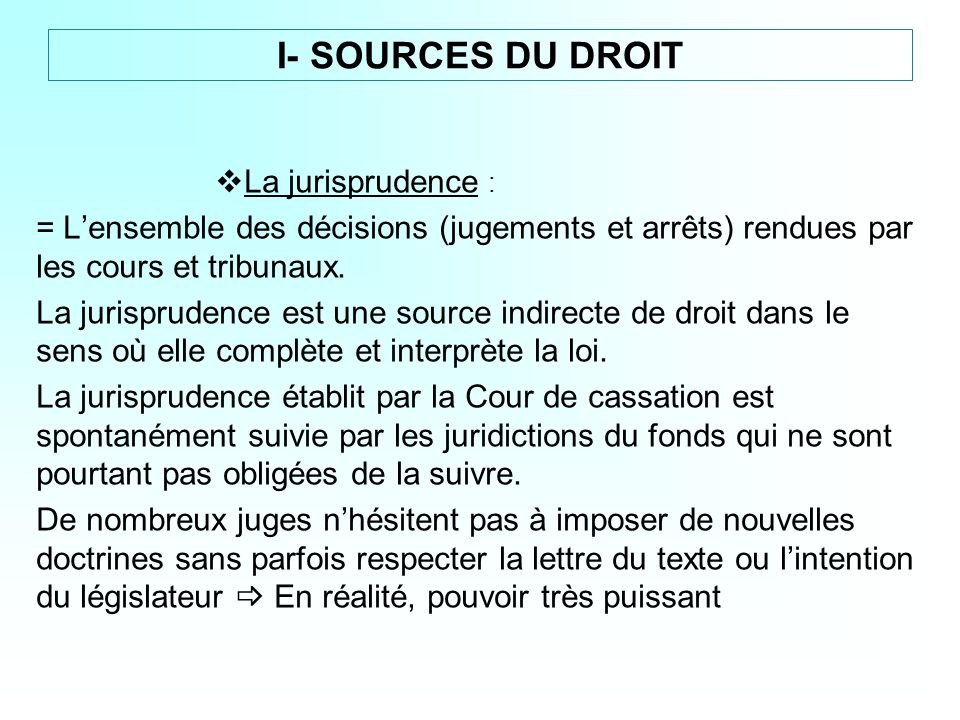
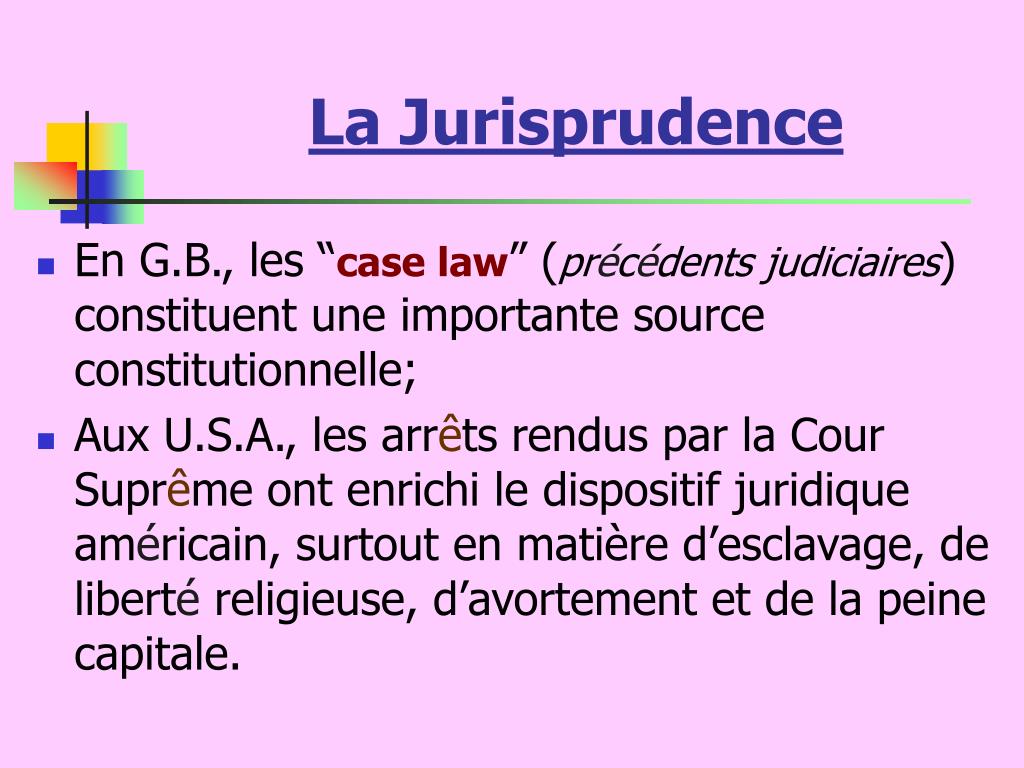
First, a little refresher. Jurisprudence, in the French context, basically refers to the collection of court decisions, particularly from higher courts like the Cour de Cassation or the Conseil d'État. It's not just any old ruling, though. It's when a court consistently interprets a law in a particular way over time, creating a coherent and predictable pattern. Think of it as the courts 'filling in the blanks' of the written law.
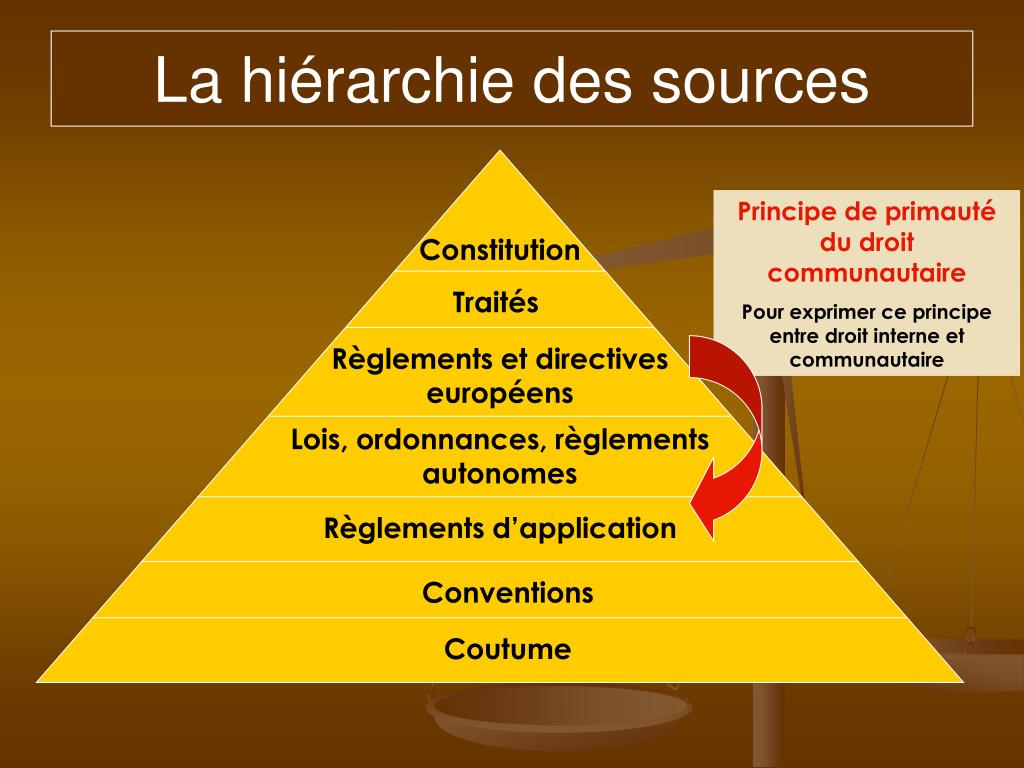
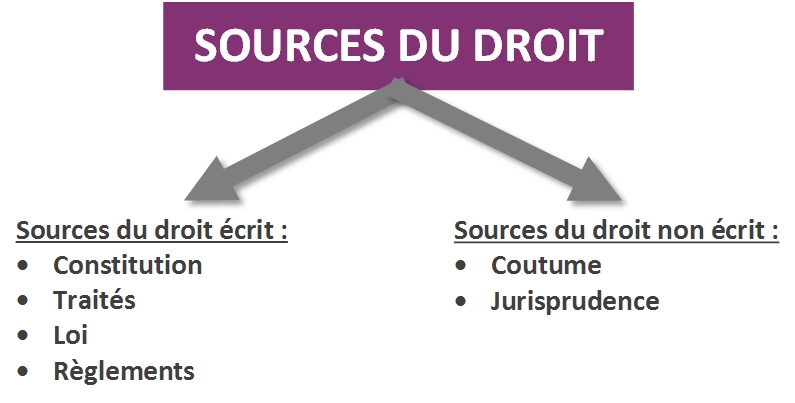
Now, legal purists will tell you that only the loi (the written law passed by the legislature) is the primary source of law. They'll argue that judges are just supposed to apply the law, not make it. But, honestly, is it ever that simple?
The Argument for Jurisprudence as a Source
Here's where it gets interesting. Let's consider these points:
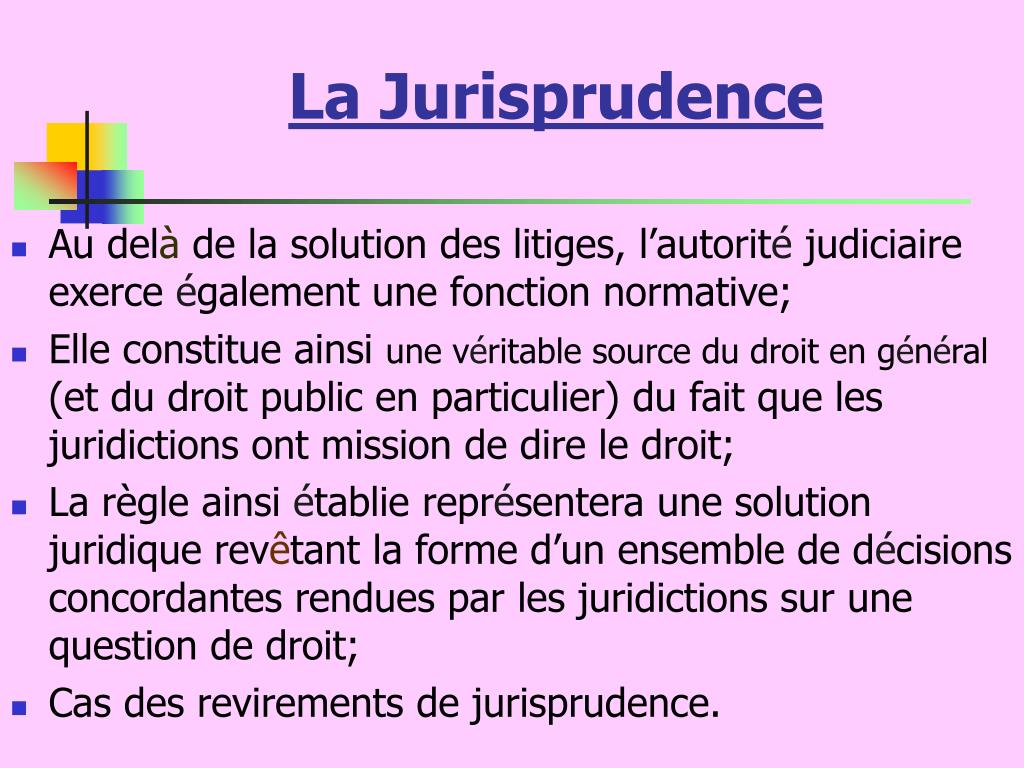
- Interpretation is Key: Laws are often vague or open to interpretation. Who decides what they really mean? Judges do! Their interpretations have a huge impact. Seriously, a law on paper is useless if nobody knows how to apply it.
- Filling Legal Gaps: Sometimes, the law just doesn't cover a specific situation. Courts have to come up with solutions, which then become precedents for future cases. Imagine a world without judicial innovation? Chaos!
- Stability and Predictability: Jurisprudence creates a consistent understanding of the law, allowing businesses and individuals to make informed decisions. You can't plan anything if the rules are constantly changing.
So, while France doesn't formally recognize jurisprudence as a primary source of law like statute, it undeniably acts as an important influence. Judges are supposed to follow precedent (stare decisis isn't as strong in France as in common law systems, but it still exists). And lawyers definitely spend a lot of time researching past rulings to build their cases. Admit it, that's practically making law!
The counter-argument (and why it's a little weak)
Those purists I mentioned? They have a point, kind of. If judges are effectively making law, are they overstepping their bounds? Shouldn't that power be reserved for the elected legislature?

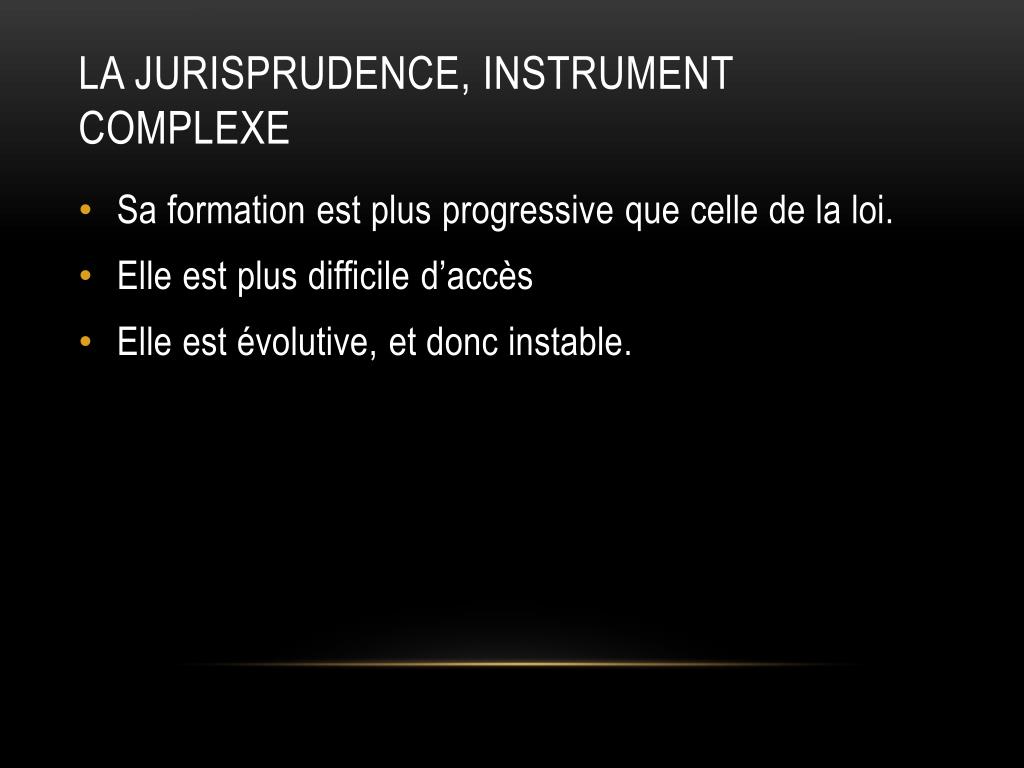
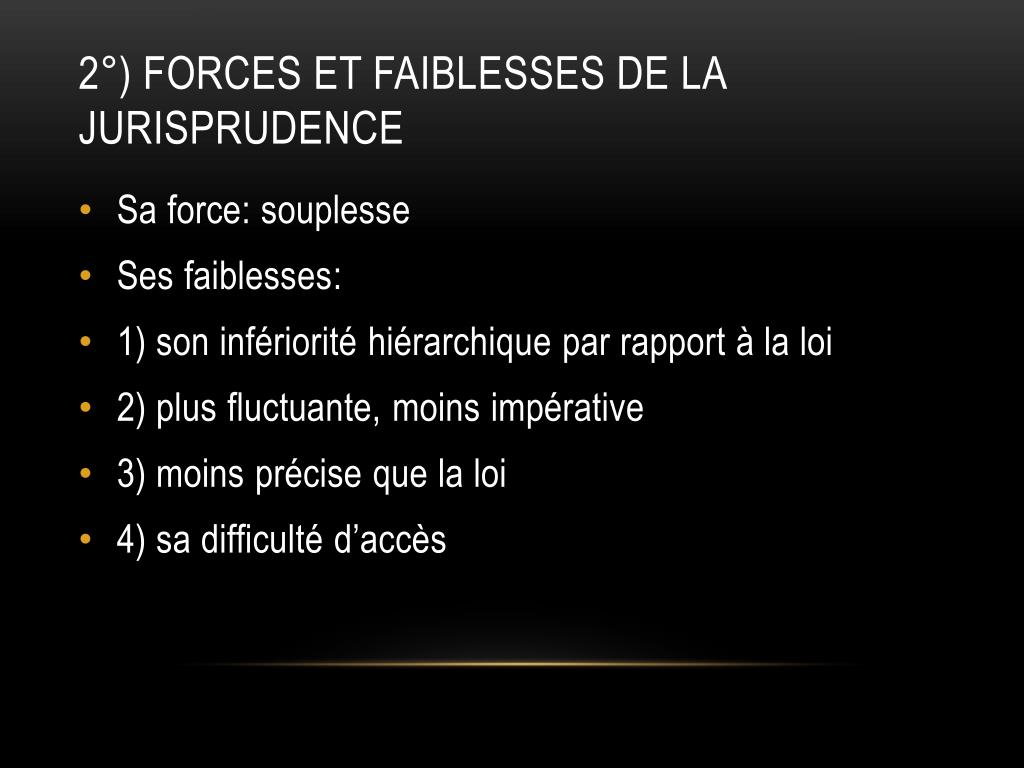
Well, it’s a valid concern. But here's the thing: jurisprudence evolves over time. New rulings can overturn old ones, and the legislature can always pass new laws to clarify or overrule judicial interpretations. It's a dynamic system, a conversation between the legislative and judicial branches. That makes sense, right?
Ultimately, while la loi holds the highest formal position, jurisprudence plays a crucial, often understated, role in shaping the actual application and understanding of the law in France. So, next time you hear someone talking about "the law," remember to ask, "Yeah, but what does the jurisprudence say?" It might just change everything.
(And maybe even save Sophie from a hefty bill!)