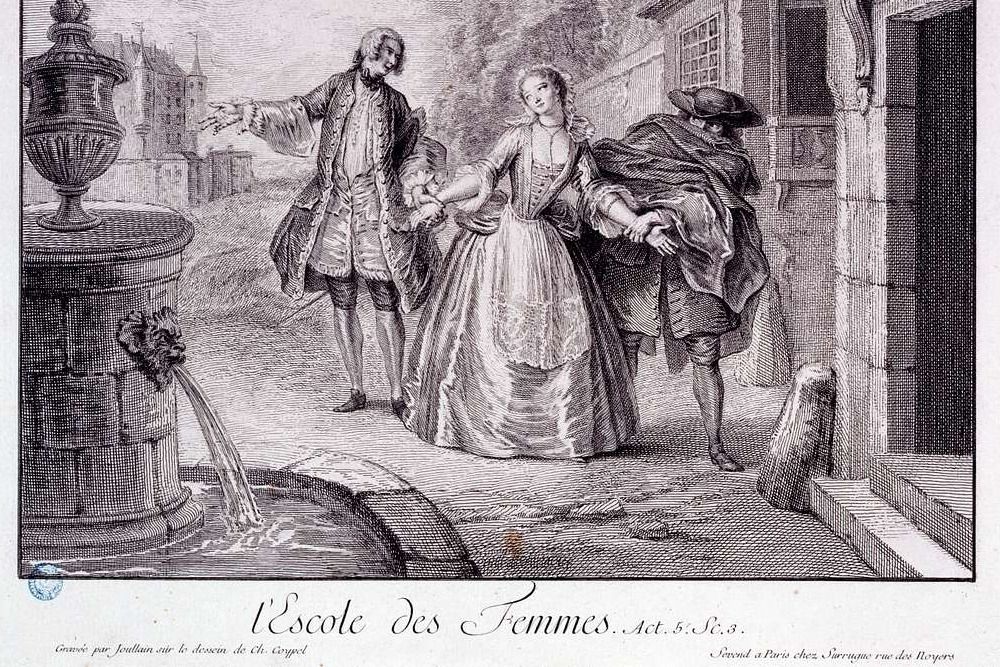
Okay, imagine this: you're at a party, right? And you overhear this guy, super confident, bragging about how he's totally figured out women. He's got this whole system, this whole strategy to make sure he gets the "perfect" wife. You roll your eyes, obviously, because who thinks like that? Well, that's pretty much the starting point of Molière's L'École des Femmes. Except, you know, it's 17th-century France, and the guy is way more…elaborate. Get ready, because this is going to be a ride.
The Setup: Arnolphe's Grand Plan
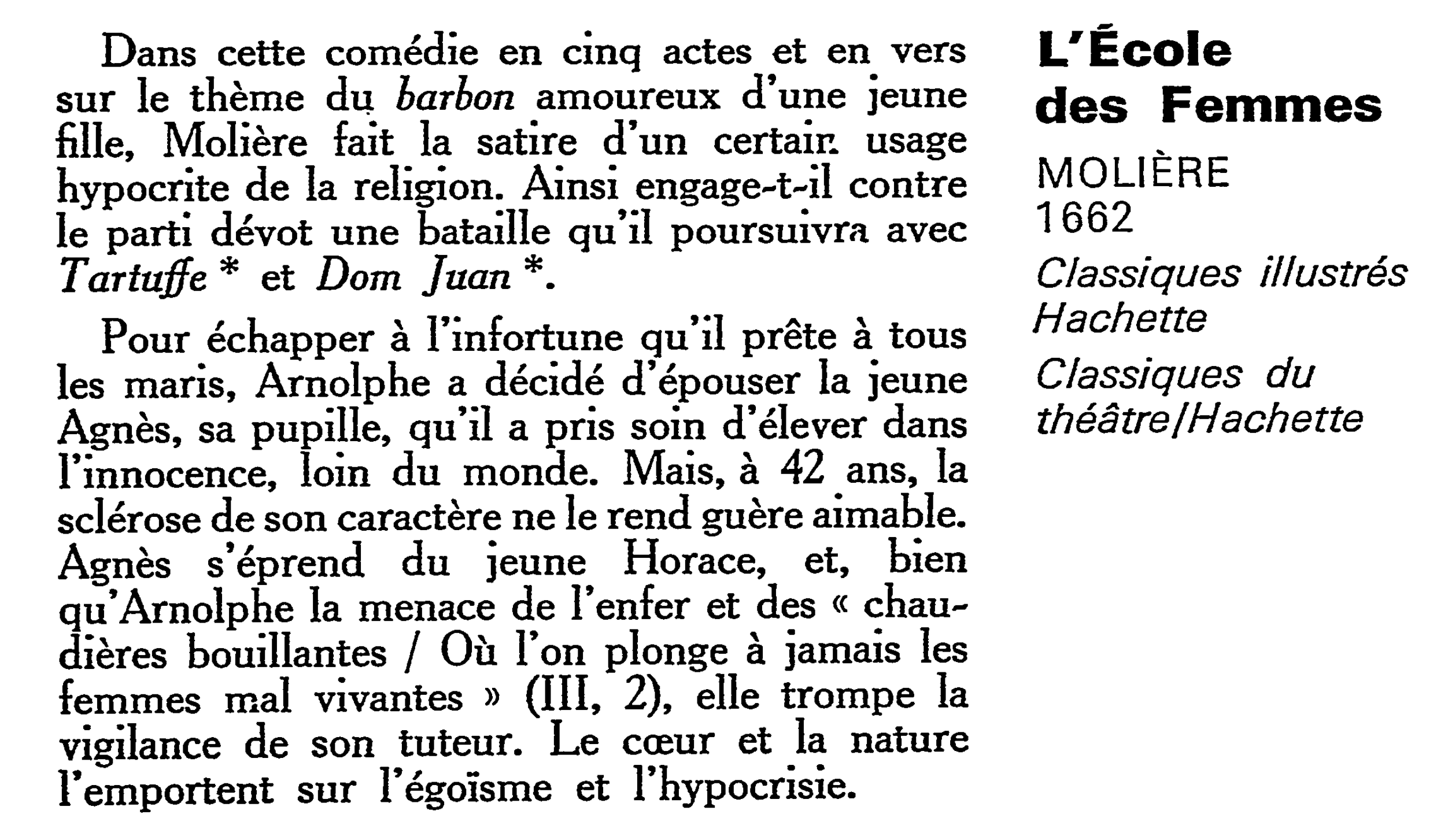
Let's introduce our "hero" (and I use that term very loosely): Arnolphe. He's a middle-aged, wealthy bachelor who's absolutely terrified of being cuckolded. Like, seriously paranoid. So, what's his genius solution? He decides to raise a young girl, Agnès, in complete isolation and ignorance. His reasoning? If she knows nothing about the world, about men, about love, she'll be totally innocent and faithful. Basically, he wants a blank slate he can mold into the perfect, obedient wife. Yeah, the cringe is real.
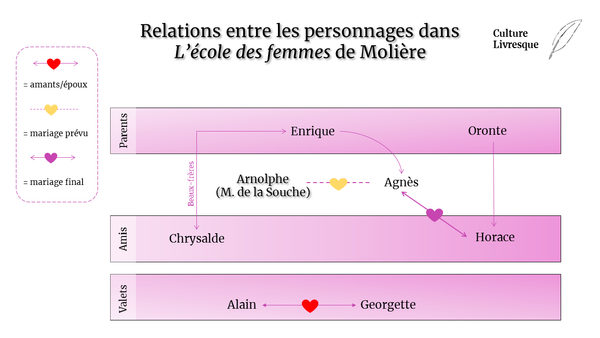
He even goes so far as to change his name to Monsieur de la Souche, which roughly translates to "Mr. Stump" or "Mr. Blockhead." Subtle, Arnolphe, real subtle. He thinks this disguise will help him keep his plans a secret. (Spoiler alert: it doesn't.)
The Isolation Ward (aka Arnolphe's House)
Agnès lives in Arnolphe's house under the watchful eyes of two servants, Alain and Georgette, who are... well, let's just say they're not exactly Mensa members. They're more like incompetent guard dogs who are easily distracted by, say, a shiny button. This whole setup is, obviously, deeply problematic. I mean, talk about control issues, right? But hey, it's comedy, so we're supposed to laugh (even if it's a slightly uncomfortable laugh).
Important Takeaway #1: Arnolphe's plan is built on the assumption that ignorance equals virtue. He believes that if Agnès is kept in the dark, she'll be incapable of infidelity. It's a pretty patronizing and, frankly, stupid idea. Think about it: does shielding someone from the world actually make them virtuous, or just naive? (Food for thought!)
Enter Horace: The Romantic Wrench
So, Arnolphe's got his little experiment all set up, thinking he's in complete control. But then, dun dun DUNNNN! Enter Horace, the young, charming, and (crucially) completely oblivious son of Arnolphe's old friend, Oronte. Horace has just returned to town and, wouldn't you know it, he falls head-over-heels for Agnès. And Agnès, who's never experienced anything like this before, is equally smitten. Oh, the irony!

Here's where it gets really interesting: Horace, completely unaware of Arnolphe's true identity (he only knows him as Monsieur de la Souche), confides in him about his pursuit of Agnès! He sees Arnolphe as a wise, older man who can offer him advice. Can you imagine the internal torment Arnolphe is going through? He's hearing all about how this young guy is trying to seduce the girl he's planning to marry! The dramatic irony is delicious.
Imagine this scene: Arnolphe, disguised as Monsieur de la Souche, pacing back and forth while Horace enthusiastically describes his latest attempt to woo Agnès. It's like a masterclass in uncomfortable comedy.
The Comedy of Errors (and Mistaken Identities)
The play then becomes a series of increasingly ridiculous situations. Horace, bless his naive heart, keeps running to "Monsieur de la Souche" for advice, while Arnolphe tries desperately to sabotage Horace's efforts without revealing his true identity. This leads to a lot of slapstick, misunderstandings, and near-misses. The servants, Alain and Georgette, are of course, instrumental in creating these chaotic situations. Their bumbling attempts to follow Arnolphe's instructions often backfire spectacularly, making everything even more complicated.

Bullet points of comedic highlights:
- Horace throwing rocks at Agnès's window (and sometimes hitting Arnolphe instead).
- Agnès innocently following Horace's instructions, much to Arnolphe's dismay.
- Arnolphe's increasingly frantic attempts to control the situation.
- Alain and Georgette misinterpreting everything.
Think of it like this: It's a classic farce, where everything that can go wrong, does go wrong. But beneath the surface, there's a deeper commentary on power, control, and the absurdity of trying to manipulate love.
Agnès: From Naive Girl to…Something More
While Arnolphe tries to keep Agnès ignorant, she's actually learning quite a bit, thanks to Horace. She starts to question Arnolphe's teachings and develops her own understanding of love and relationships. Initially, she's presented as a somewhat blank slate, but she gradually gains agency and intelligence. She's not just a passive victim; she's actively participating in the unfolding drama.
One of the most significant moments is when Agnès writes a letter to Horace. Arnolphe, thinking he's still in control, dictates the letter to her, intending it to be a rejection. But Agnès, clever girl, subtly alters the wording to express her true feelings for Horace. That's when you see her really start to come into her own.
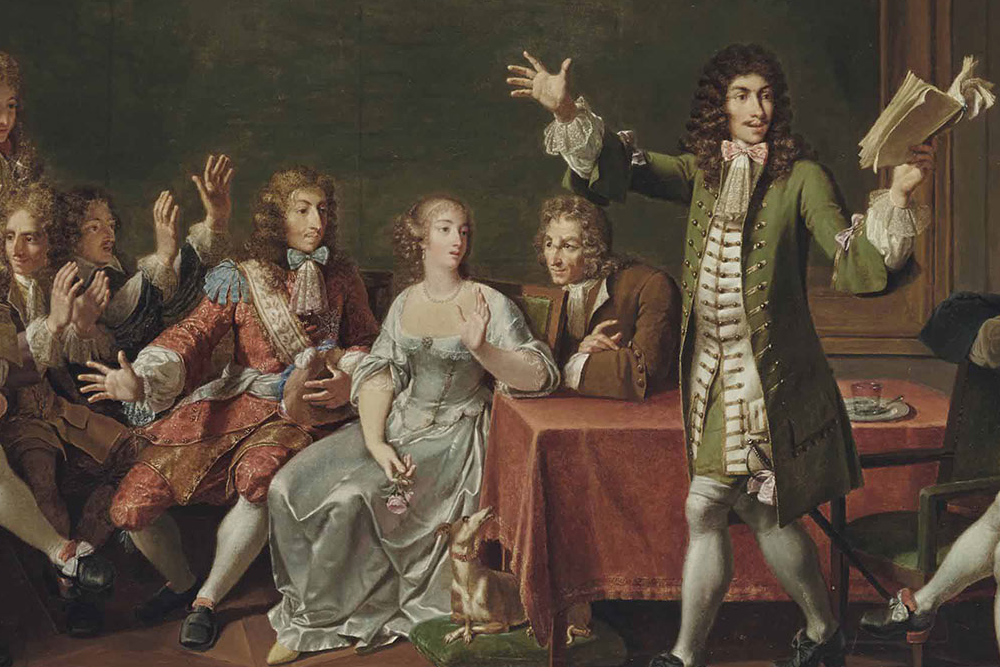
Important Takeaway #2: Agnès's character development challenges Arnolphe's entire premise. He thought he could control her by keeping her ignorant, but in reality, her experiences with Horace allow her to develop her own understanding of the world and her own desires. Isn't that often the way it works in real life?
The (Slightly Messy) Conclusion
Of course, in a comedy, everything has to come to a head eventually. Through a series of revelations (and a good dose of dramatic irony), the truth about Arnolphe's identity and his manipulative plan is exposed. Horace discovers who "Monsieur de la Souche" really is, and everyone is, understandably, shocked. And by everyone, I mean Arnolphe is shocked that he was discovered.
Now, the ending is a bit…convenient. It turns out that Agnès is actually the daughter of Arnolphe's old friend, Oronte! (Remember him, Horace's father?) This means that Agnès and Horace are actually a suitable match. Talk about a plot twist! The play ends with Oronte arranging for Agnès and Horace to marry, leaving Arnolphe utterly defeated and alone. Serves him right, don't you think?

Some might argue that the ending is a bit too neat. It relies on a rather contrived coincidence to resolve the conflict. But hey, it's a comedy! We're not necessarily looking for perfect realism here. We want a happy ending, even if it's a bit improbable.
Final Thoughts: More Than Just a Funny Play
L'École des Femmes is definitely a funny play, full of witty dialogue, slapstick humor, and ridiculous situations. But it's also a play that raises some important questions about power, control, and the nature of love. It challenges the idea that women are inherently innocent or naive and suggests that true virtue comes from knowledge and experience, not from ignorance. And it holds a mirror up to the absurdity of trying to manipulate and control another person's feelings. Arnolphe's disastrous plan serves as a cautionary tale about the dangers of arrogance and the futility of trying to force love.
So, the next time you hear someone bragging about how they've "figured out" relationships, remember Arnolphe and his grand plan. It's a good reminder that love is complicated, unpredictable, and definitely not something you can control. Plus, it makes for a great story at a party. (Just maybe don't try Arnolphe's methods yourself.)
Food for thought: If you had to rewrite the ending, how would you do it? Would you give Agnès more agency? Would you punish Arnolphe more severely? The possibilities are endless!