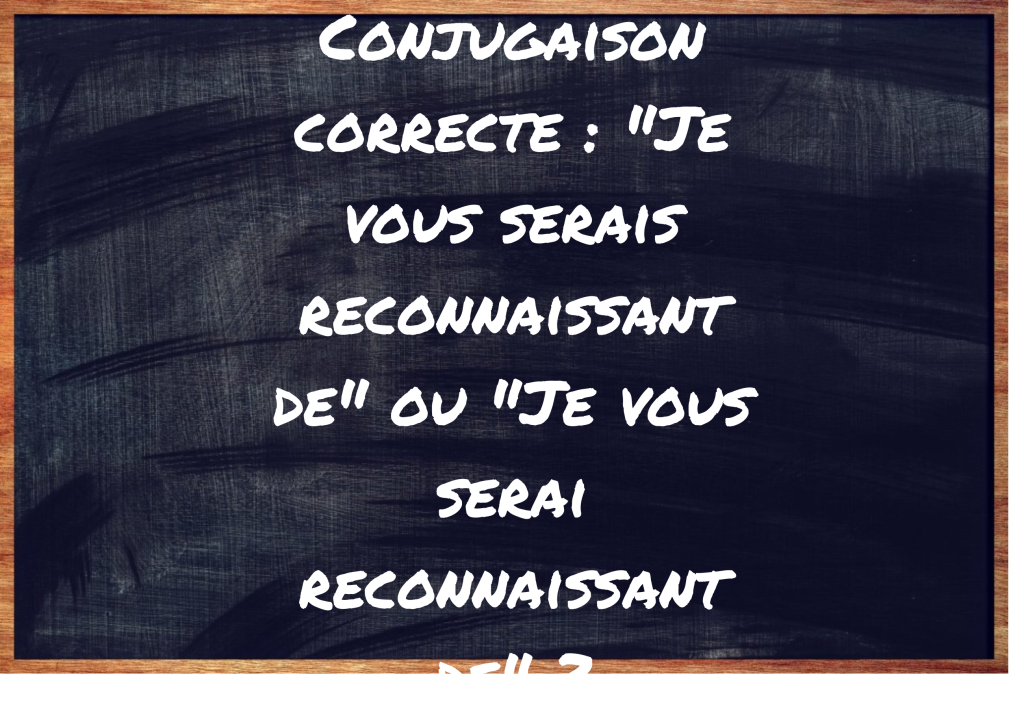
Ever stumbled upon a phrase that just sounds… fancy? Like it belongs in a period drama or maybe whispered dramatically across a candlelit dinner table? Well, let's talk about one of those gems: "Je vous serais reconnaissante de bien vouloir…"
Sounds intimidating, right? Like a summons from the Queen of France? But trust me, it's not as scary as it seems. Think of it as the French equivalent of "I'd be grateful if you could," but with a little extra flair. We're going to unpack this expression, see why it's still kicking around, and maybe even give you the confidence to use it yourself. Because, who wouldn't want to sound just a little bit more sophisticated?
Unpacking the Phrase: What Does It Really Mean?
Let’s break it down piece by piece. "Je vous serais reconnaissante" translates to "I would be grateful to you." Simple enough, yeah? It's a way of expressing gratitude before someone has even done you the favor. It's anticipating their kindness, which is a pretty cool move, don't you think?
Now, "de bien vouloir" is where things get a tad more nuanced. It’s essentially saying "to be willing to." But it's not just any willingness. It's a willing, gracious, considerate willingness. It’s polite and suggests that performing the requested action is something they're doing out of their own goodwill.
So, put it all together, and "Je vous serais reconnaissante de bien vouloir…" means "I would be grateful if you would be so kind as to…" or "I would be grateful if you would be willing to…" See? Not so scary after all! It’s just a really, really polite way of making a request.

Why Bother Using It? Isn't There Something Simpler?
Okay, fair point. You could totally just say "S'il vous plaît" (please) or "Pourriez-vous…?" (Could you…?). So why even bother with this mouthful? Well, there are a few reasons:
- Level of Formality: This phrase is super formal. Think of it like the difference between texting your best friend "Hey, grab me a coffee?" and sending a perfectly worded email to your boss asking for a raise. It conveys respect and acknowledges that you're asking someone to go out of their way for you.
- Adding Weight to Your Request: It subtly emphasizes the importance of your request. It’s like saying, "This really matters to me, and I understand that you're doing me a big favor." It’s not demanding; it's persuasive.
- Showing Respect: It demonstrates that you understand and appreciate the social hierarchy. Using formal language shows that you respect the other person's position and authority. Imagine using it when requesting something from a professor, a government official, or even your future in-laws! Impressive, right?
- The Art of the Compliment (Indirectly): By phrasing your request in this way, you're almost implicitly complimenting the other person's willingness to help and their general good nature. Clever, huh?
Think of it like this: saying "Je vous serais reconnaissante de bien vouloir…" is like sending a handwritten letter with a wax seal, while saying "S'il vous plaît" is like sending a quick text message. Both get the message across, but one is significantly more memorable.
When Should You Bust Out This Phrase?
So, when is it appropriate to unleash this phrase onto the world? Here are a few scenarios:
- Formal Emails: This is a classic. If you're writing to someone you don't know well, or someone in a position of authority, this phrase is your best friend. Think job applications, formal complaints, or requests for information from an organization.
- Official Letters: Similar to emails, formal letters practically demand this level of politeness.
- Requests for Favors: Asking a colleague to cover your shift? Need a recommendation letter from your professor? This phrase will help grease the wheels. Just make sure the favor warrants such formality. Asking your neighbor to borrow a cup of sugar probably doesn't require this level of politeness.
- Addressing People in High Positions: When speaking to someone like a judge, a politician, or a CEO, this phrase shows respect and deference.
Basically, any situation where you want to be perceived as extremely polite and respectful is a good time to consider using "Je vous serais reconnaissante de bien vouloir…"
Situations to Avoid: When is it overkill?
While this phrase is powerful, it's also crucial to know when not to use it. Imagine saying it to your best friend when asking them to pass the salt at dinner. It would be...weird, right? Here's when to avoid it:

- Casual Conversations: Save it for the formal occasions. Using it in a casual setting can come across as stiff, pretentious, or even sarcastic.
- With Close Friends and Family: Unless you're intentionally being funny, stick to simpler expressions with loved ones.
- When a Simpler Phrase Will Do: Don't overcomplicate things. If "S'il vous plaît" or "Pourriez-vous…?" is sufficient, stick with those.
Think of it like wearing a tuxedo to a barbecue. Sure, you'll be the best-dressed person there, but you'll also look completely out of place. Knowing when not to use the phrase is just as important as knowing when to use it!
Alternatives and Variations: Expanding Your Politeness Arsenal
Okay, so you're sold on the idea of extra politeness, but maybe "Je vous serais reconnaissante de bien vouloir…" still feels a bit too much. Don't worry! There are other options:
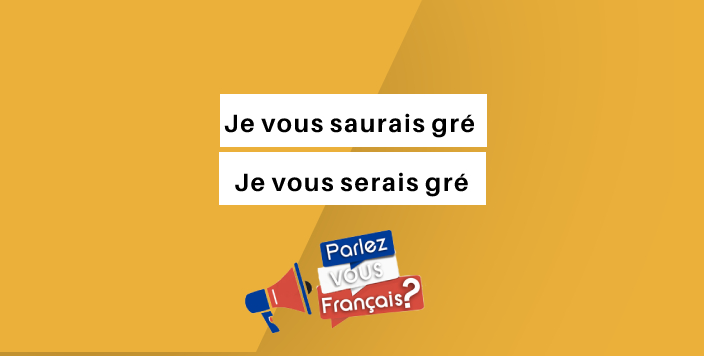
- Je vous saurais gré de…: This is a slightly less formal, but still very polite, alternative. It translates to "I would be grateful to you for…"
- Pourriez-vous… s'il vous plaît?: A classic! "Could you… please?" Simple, effective, and always appropriate in most situations.
- Auriez-vous l'amabilité de…?: "Would you have the kindness to…?" This is another elegant and formal option.
These variations offer different levels of formality, allowing you to choose the one that best suits the situation. It's like having a politeness dial that you can adjust to the perfect setting.

The Takeaway: Embrace the Politeness Power!
So, there you have it! "Je vous serais reconnaissante de bien vouloir…" is more than just a fancy French phrase. It's a tool that can help you express respect, emphasize the importance of your requests, and navigate formal situations with grace and style.
Will you use it every day? Probably not. But knowing it exists and understanding its nuances gives you a deeper appreciation for the art of polite communication. And who knows, maybe it will even open a few doors for you along the way. So, go forth and spread the politeness! Just remember to use it wisely and with a touch of French flair.
Now, je vous serais reconnaissante de bien vouloir share this article with your friends! 😉