Okay, confession time. I recently spent a solid hour trying to explain to my overly logical, spreadsheet-loving friend why a madeleine dipped in tea could trigger such profound nostalgia. He just stared blankly. Like, blinked-twice-and-ran-a-diagnostic-on-my-sanity blankly. That's when it hit me: some things just aren't quantifiable. Some things are about feeling, about the sheer, unadulterated longing for something you can't quite grasp. And that, my friends, is precisely where the song "Heureux qui comme Ulysse" comes in.
So, what is it about this song that resonates so deeply with so many people? It’s not exactly a chart-topper in the traditional sense. It doesn’t have a catchy beat that’ll get you dancing (unless you’re into very, very slow waltzes, no judgement!). But it possesses something far more powerful: a haunting beauty that speaks to the universal human desire for home, for belonging, and for the bittersweet ache of memories.
The Odyssey, Sung
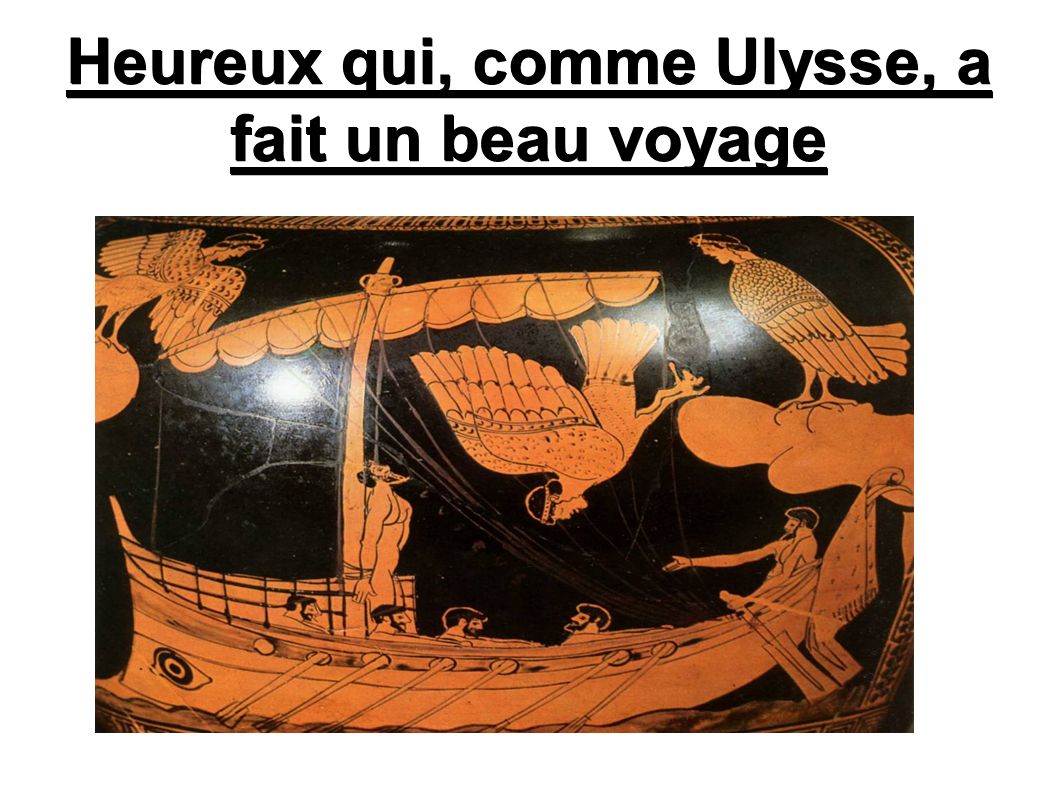
The title itself, "Heureux qui comme Ulysse a fait un beau voyage," translates to "Happy is he who, like Ulysses, has made a beautiful voyage." Even if your French is rusty (or non-existent, no shame in that, we’ve all been there!), the name Ulysses (or Odysseus, depending on your preferred mythology) probably rings a bell. We're talking about the epic adventurer, the guy who took ten years to get home after the Trojan War, battling cyclops, sirens, and his own inner demons along the way. Talk about a long commute!
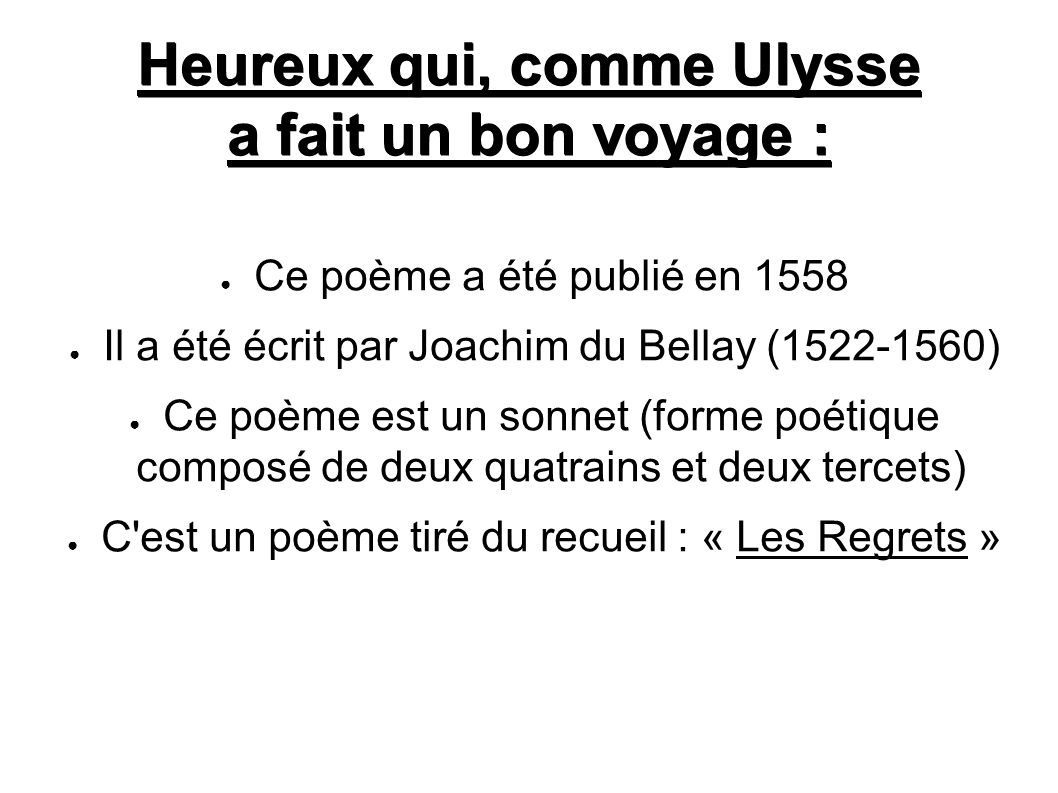
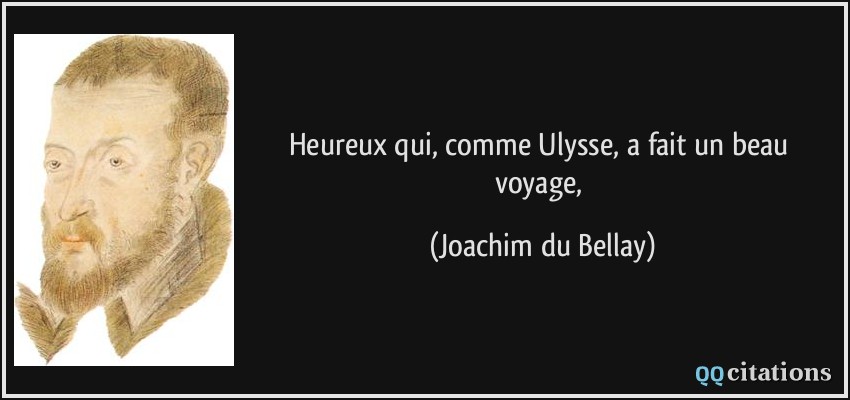
The song, penned by Joachim du Bellay in the 16th century as a poem, and later set to music, uses Ulysses' arduous journey as a metaphor for life itself. A life filled with adventure, challenges, and ultimately, the longing for a return to simpler times, to the place where we truly belong. Think of it as the ultimate travel brochure, only instead of pristine beaches and all-inclusive resorts, it's selling the idea of... coming home. Bit of a marketing twist, huh?
Decoding the Lyrics: More Than Just Pretty Words
Let’s dig a little deeper into those oh-so-French lyrics, shall we? Because while the melody is beautiful, the true power lies in Du Bellay’s evocative words. Get ready for some potential existential pondering!
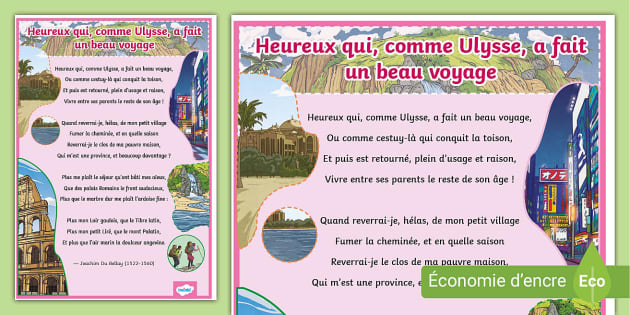
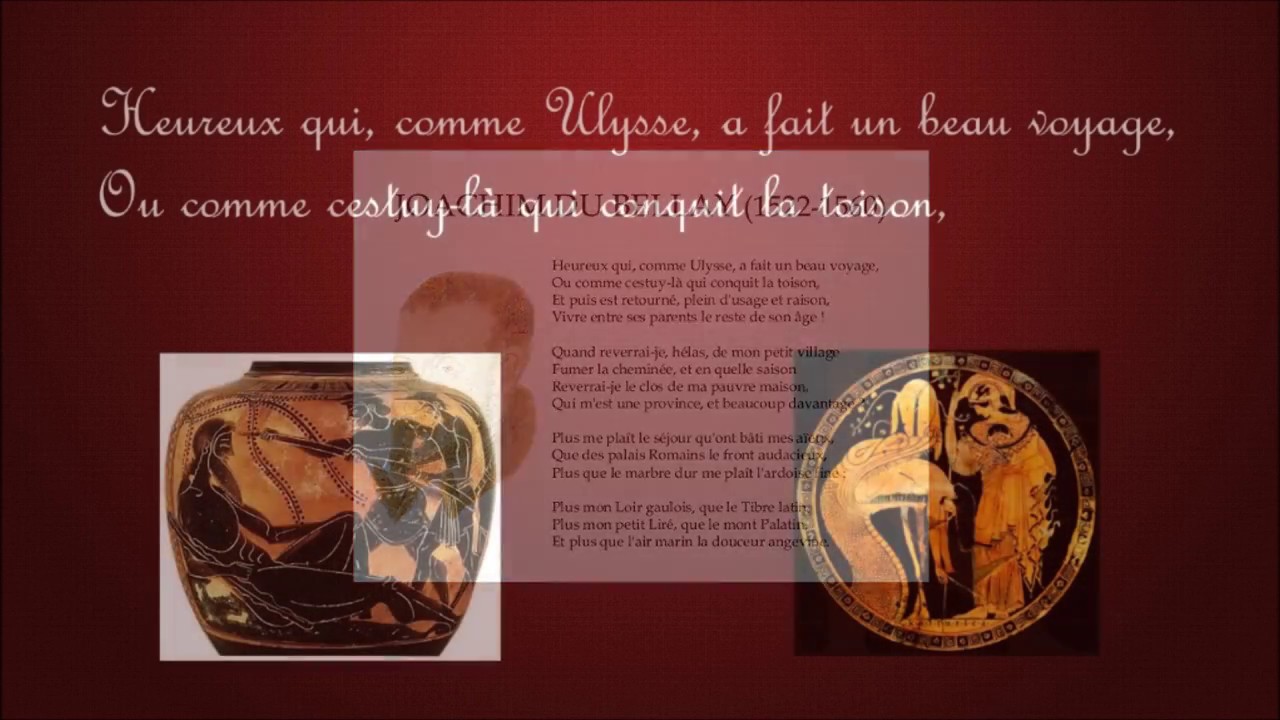
- “Heureux qui, comme Ulysse, a fait un beau voyage, Ou comme cestuy-là qui conquit la toison”: As we said before, this sets the scene. Happy is he who, like Ulysses, has made a beautiful journey, or like he who conquered the Golden Fleece. Basically, it's praising those who’ve embarked on grand adventures. But there's a subtle irony here, isn't there? Because these adventures, however glorious, ultimately lead to… longing.
- “Et puis est retourné, plein d’usage et raison, Vivre entre ses parents le reste de son âge!”: "And then returned, full of experience and reason, to live among his parents for the rest of his days!" This is where the punchline hits. After all the travels, the battles, the triumphs, the ultimate reward is… returning home to your family. Is that… it?
- "Quand reverrai-je, hélas, de mon petit village Fumer la cheminée, et en quelle saison Reverrai-je le clos de ma pauvre maison, Qui m’est une province, et beaucoup davantage?": This is the heart of the poem, the raw, unfiltered longing. "When shall I see again, alas, from my little village, the chimney smoking, and in what season shall I see again the enclosure of my poor house, which is a province to me, and much more?" It's not just about a physical place; it's about a feeling, a sense of belonging that transcends geographical boundaries. That "et beaucoup davantage?" gets me every time!
- "Plus me plaît le séjour qu’ont bâti mes aïeux, Que des palais Romains le front audacieux, Plus que le marbre dur me plaît l’ardoise fine:": "More pleasing to me is the dwelling that my ancestors built, than the audacious front of Roman palaces, more than hard marble pleases me fine slate." The speaker is rejecting the grandeur and opulence of Rome in favor of the humble, familiar comfort of his ancestral home. It's a rejection of superficiality in favor of authenticity. Take that, Instagram influencers!
- "Plus mon Loire gaulois, que le Tibre latin, Plus mon petit Liré, que le mont Palatin, Et plus que l’air marin la douceur angevine.": "More pleasing to me is my Gallic Loire, than the Latin Tiber, more pleasing to me my little Liré, than Mount Palatine, and more than the sea air the Angevin sweetness." This is intensely personal. He's specifically calling out his local landmarks, his little corner of the world, as being more precious than the iconic symbols of Roman power and history. It's a celebration of the small, the intimate, the uniquely personal.
The Power of Nostalgia: Why This Song Still Matters
So, why does a 16th-century poem about a mythological hero resonate with us today? The answer, I think, lies in the universal human experience of nostalgia. We all have a "little village" in our hearts, a place (real or imagined) that represents safety, comfort, and belonging. It might be your childhood home, a favorite vacation spot, or even just a feeling you associate with a particular time in your life.
This song taps into that deep well of longing, reminding us of the things that truly matter in life. It's a gentle reminder that the most profound experiences are often found not in grand adventures or exotic locales, but in the simple, everyday moments shared with loved ones in a place we call home. Cue the warm fuzzy feelings!

Beyond the Lyrics: Interpretations and Adaptations
Over the years, "Heureux qui comme Ulysse" has been interpreted and adapted by countless artists. From classical renditions to more contemporary interpretations, the song continues to find new audiences. Each artist brings their own unique perspective to the piece, highlighting different aspects of the poem's themes. Some emphasize the sense of longing, while others focus on the joy of homecoming. The fact that it can be interpreted in so many ways speaks to its enduring power and relevance.
It’s been performed by giants of French song like Georges Brassens, who added his own distinctive style and irreverence to the classic. Brassens' version, in particular, injected a certain… skepticism, shall we say? He wasn’t afraid to poke fun at the romanticized idea of returning home. It’s a fascinating counterpoint to more sentimental interpretations.

More Than Just a Song: A Reminder
“Heureux qui comme Ulysse” is more than just a beautiful song. It's a reminder to appreciate the simple things in life, to cherish the connections we have with our loved ones, and to never forget the place we call home. It's a reminder that even after the most incredible adventures, the greatest joy may lie in returning to the familiar, the comfortable, and the truly meaningful. So, next time you're feeling lost or overwhelmed, take a moment to listen to this timeless classic. You might just find yourself feeling a little bit… happier. And hey, maybe you'll even convince your spreadsheet-loving friend that madeleines dipped in tea aren't completely insane. Good luck with that!
So, go ahead, give it a listen. And let me know what you think. What does "home" mean to you? What are the small, everyday things that bring you joy? I'd love to hear your thoughts! And, if you're feeling particularly adventurous, maybe even try learning the lyrics. You might just surprise yourself with how deeply they resonate.