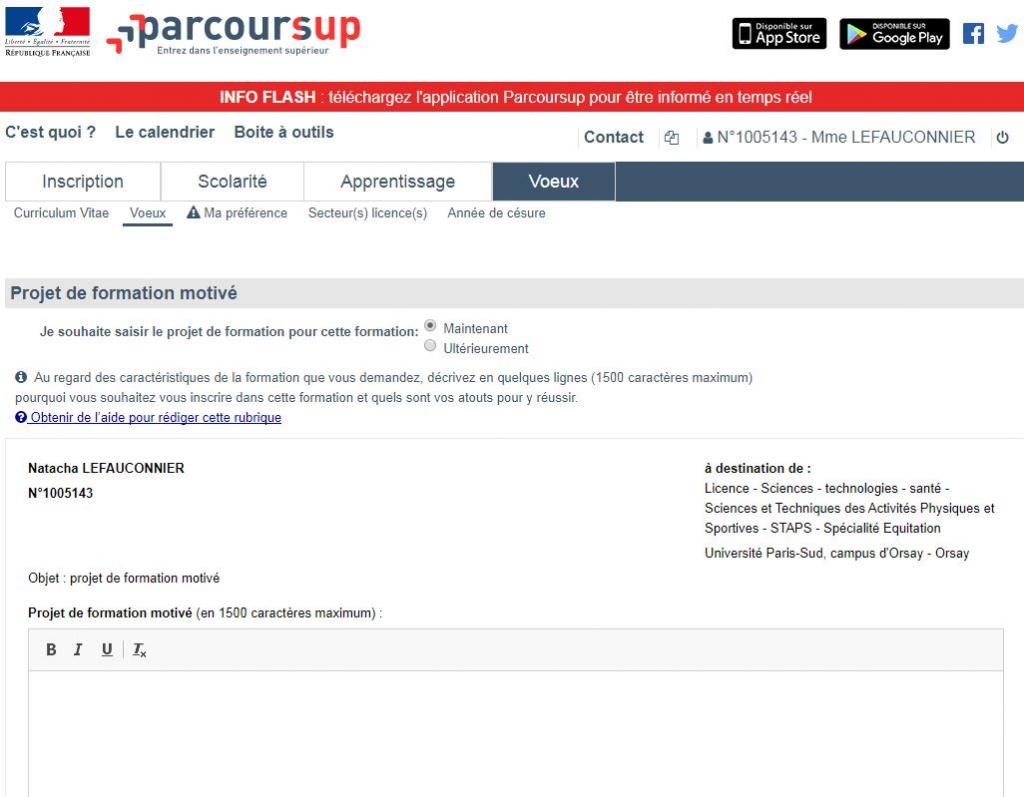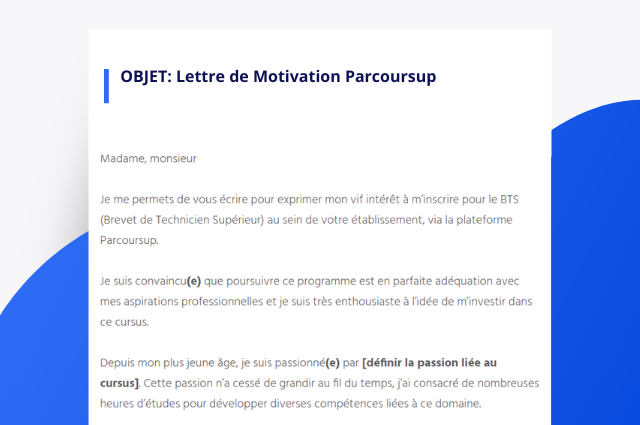
Okay, imagine this: I'm chilling at a café, eavesdropping (don't judge me!) on two stressed-out high schoolers. They're frantically discussing their Parcoursup applications, and one of them is nearly in tears. "But which formule de politesse do I use?!" she wails, holding a crumpled letter. "Is 'Veuillez agréer, Monsieur, l'expression de mes sentiments distingués' too much? Is 'Cordialement' too...casual?!" I nearly choked on my croissant. It hit me then: This seemingly tiny detail can feel like life or death when you're staring down the barrel of university admissions. And honestly? I get it.
The truth is, the formule de politesse in your Parcoursup lettre de motivation does matter. It's the final handshake, the last impression you leave. Mess it up, and you risk undoing all the hard work you put into crafting a compelling and insightful letter. But don't panic! We're here to navigate this tricky territory together. Think of me as your personal formule de politesse guru.
Why even bother with formules de politesse?
Let's be real, in a world of emojis and instant messages, the whole concept of formal closings can feel a bit antiquated. Why can't we just say "Bye!" and be done with it? Well, here's the thing: it's about respect and showing awareness of the context. It demonstrates that you understand you're not just writing to a friend; you're addressing a selection committee who are judging your application.
It's a signal of your professionalism and attention to detail. It's like wearing the right shoes to an interview – it might seem insignificant, but it shows you care about presenting yourself well. And believe me, in a sea of applications, standing out for the right reasons is key!
Plus, let's be honest, the French love their formalities. They appreciate it when you play by the rules, even if those rules seem a little strange to us sometimes. It's part of the cultural landscape. So, embrace it!
Choosing the Right Formule de Politesse: A Breakdown
Alright, let's dive into the specifics. Here are some options, ranked from most formal to least formal, along with my (totally subjective, but hopefully helpful) commentary:
The "Grandma Would Approve" Options (Super Formal)
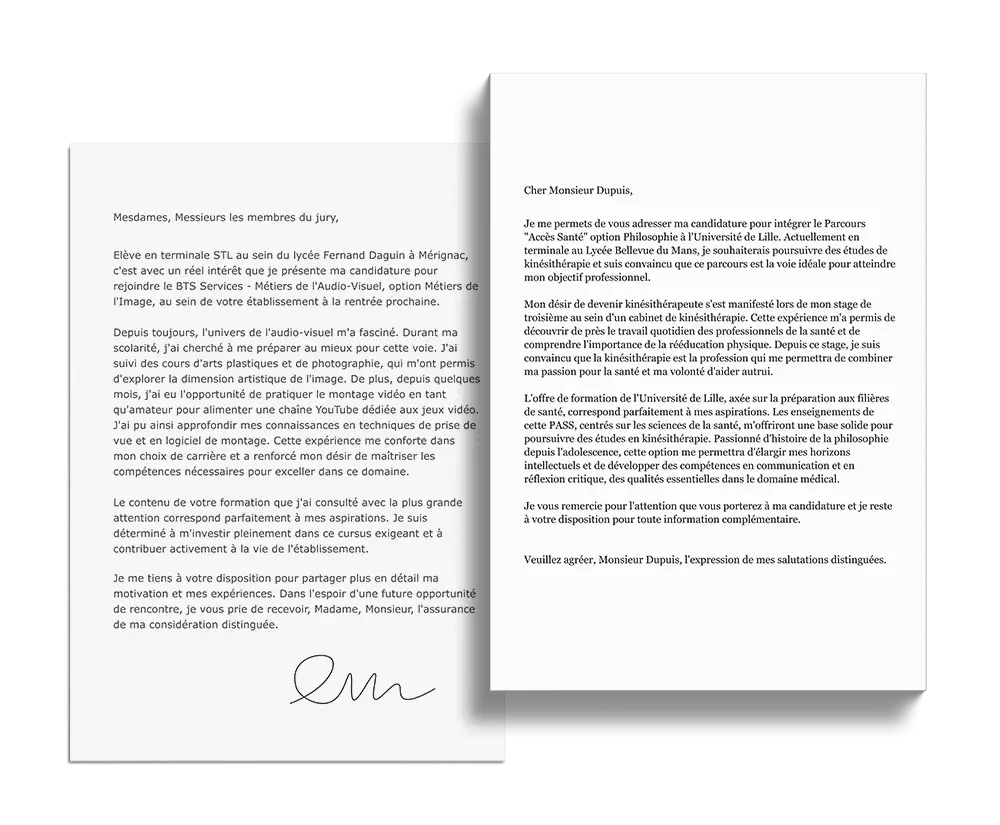
- Veuillez agréer, Madame/Monsieur, l'expression de mes sentiments les plus distingués. (Please accept, Madam/Sir, the expression of my most distinguished feelings.)
- Je vous prie d'agréer, Madame/Monsieur, l'expression de ma très haute considération. (I beg you to accept, Madam/Sir, the expression of my highest consideration.)
My Take: These are... intense. Unless you're applying to a very traditional field (like law or diplomacy), they're probably overkill. They feel a bit stuffy and might even make you seem out of touch. Imagine using these in a letter about wanting to study video game design. Awkward, right? Unless your target audience is a panel of 80-year-old academics, tread carefully!
![Lettre de motivation STAPS [exemples et conseils Parcoursup]](https://cdn-images.livecareer.fr/pages/lettre_de_motivation_staps_lcfr_1.jpg)
The "Safe and Sound" Options (Formal but Modern)
- Veuillez agréer, Madame/Monsieur, l'expression de mes salutations distinguées. (Please accept, Madam/Sir, the expression of my distinguished greetings.)
- Je vous prie d'agréer, Madame/Monsieur, mes sincères salutations. (I beg you to accept, Madam/Sir, my sincere greetings.)
My Take: These are solid, reliable choices. They're formal enough to show respect but not so formal that they feel archaic. They work well for most Parcoursup applications. These are your go-to choices if you're unsure what else to use.
The "Slightly Less Stuffy" Options (Semi-Formal)
- Cordialement, (Cordially,)
- Sincèrement, (Sincerely,)
My Take: These are getting closer to being acceptable, especially if you are addressing your letter to a specific professor rather than "Madame/Monsieur" or the selection committee. But, you should really only use this if you have had contact with the person before, or if the subject of your email/letter is more casual. The key here is knowing who you are sending the application to.
The "Please Don't Use These" Options (Too Informal)
- Amicalement, (Friendly,)
- Bien à vous, (All the best to you,)
- Salutations, (Greetings,)
My Take: Absolutely not. These are way too casual for a formal application. Think of these as the equivalent of wearing ripped jeans to a job interview. Just don't. Seriously. Unless the instructions on the Parcoursup site explicitly encourage informal language (which is highly unlikely), steer clear of these.
Key Considerations for Choosing Your Formule de Politesse
Okay, so you have your list of options. How do you choose the right one? Here are a few factors to consider:
The Formule de Politesse Checklist: Get it Right!
Here's a quick checklist to ensure you nail it:
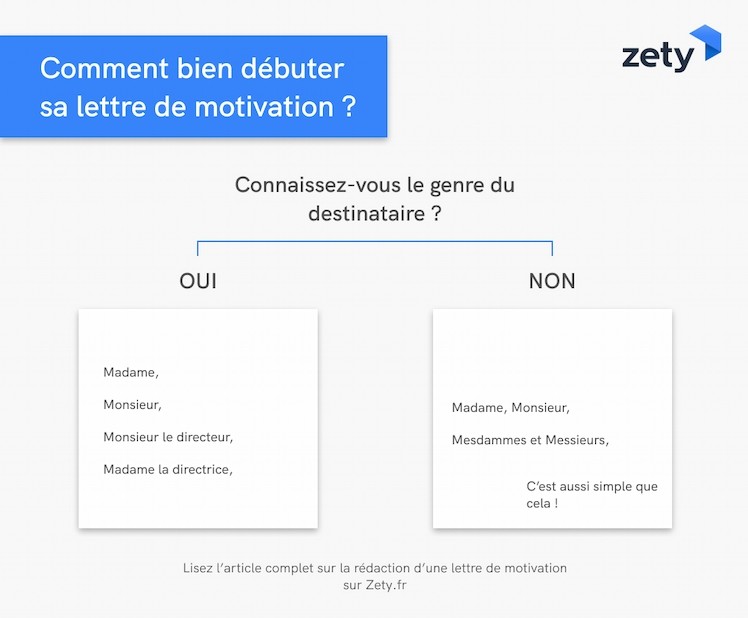
- Madame/Monsieur: Make sure you address the recipient correctly. If you know their name and gender, use it. If you don't, "Madame/Monsieur" is perfectly acceptable.
- The Right Verb: "Agréer" is the most common verb used in formal formules de politesse. Make sure you conjugate it correctly!
- No Abbreviations: Don't use abbreviations like "M." or "Mme." Write everything out in full.
- Capitalization: Capitalize the first word of the formule de politesse (e.g., "Veuillez") and the first word after the comma (e.g., "Madame").
- Punctuation: Make sure you include the comma after the formule de politesse, and the full stop is implied at the very end.
Final Thoughts: It's Just One Piece of the Puzzle
Look, choosing the right formule de politesse is important, but it's not the most important thing. The content of your letter, your passion for the subject, and your overall qualifications are what really matter. Don't let the fear of getting the closing wrong paralyze you.
So, take a deep breath, choose a formule de politesse that feels appropriate, and focus on crafting a letter that truly showcases your potential. And remember, if you're still unsure, err on the side of formality. It's always better to be slightly too formal than to be too casual. Now go forth and conquer Parcoursup! You got this!


![Lettre de motivation PASS/LAS [modèle et exemple Parcoursup]](https://cdn-images.livecareer.fr/pages/lettre_de_motivation_pass_lcfr_1.jpg)