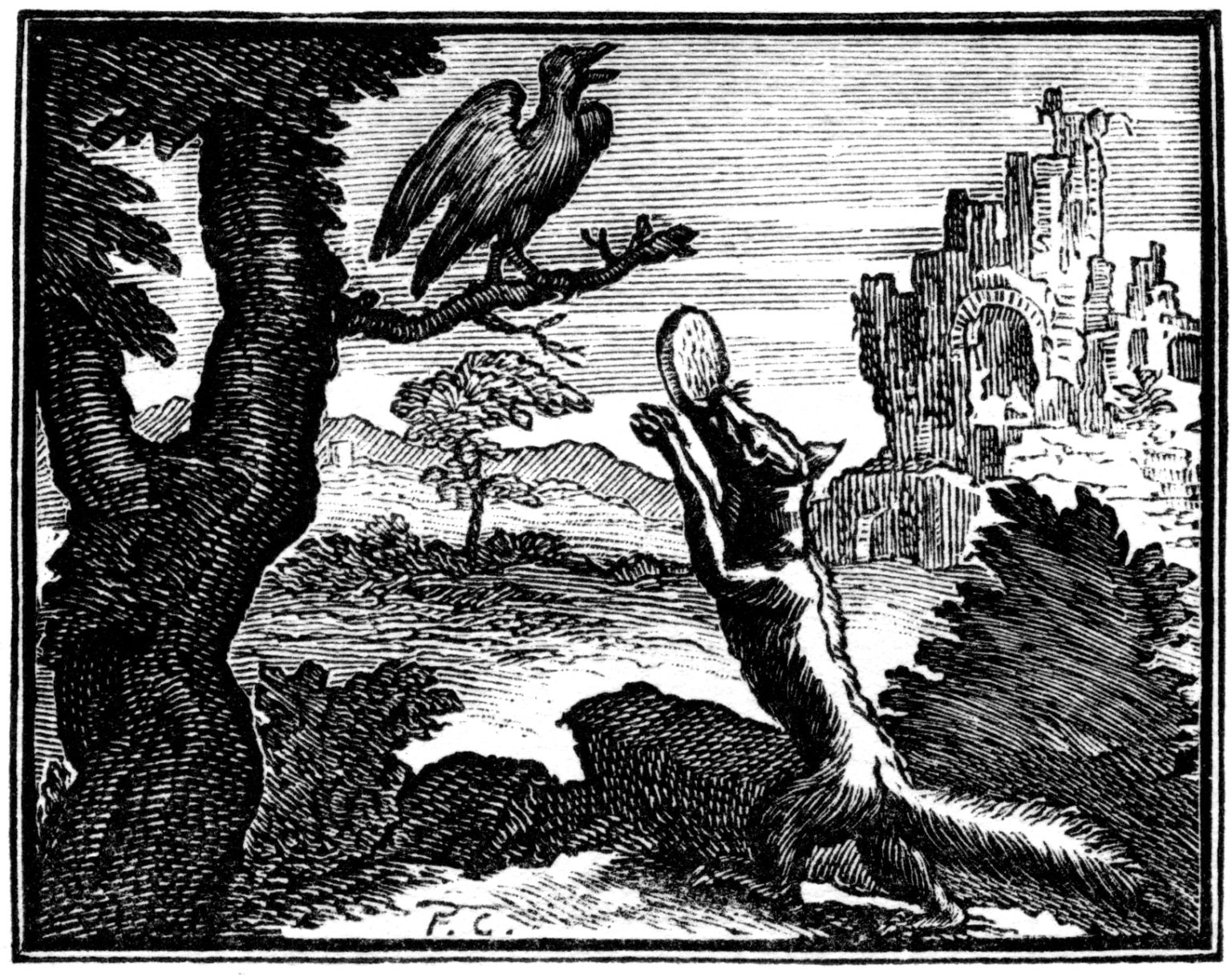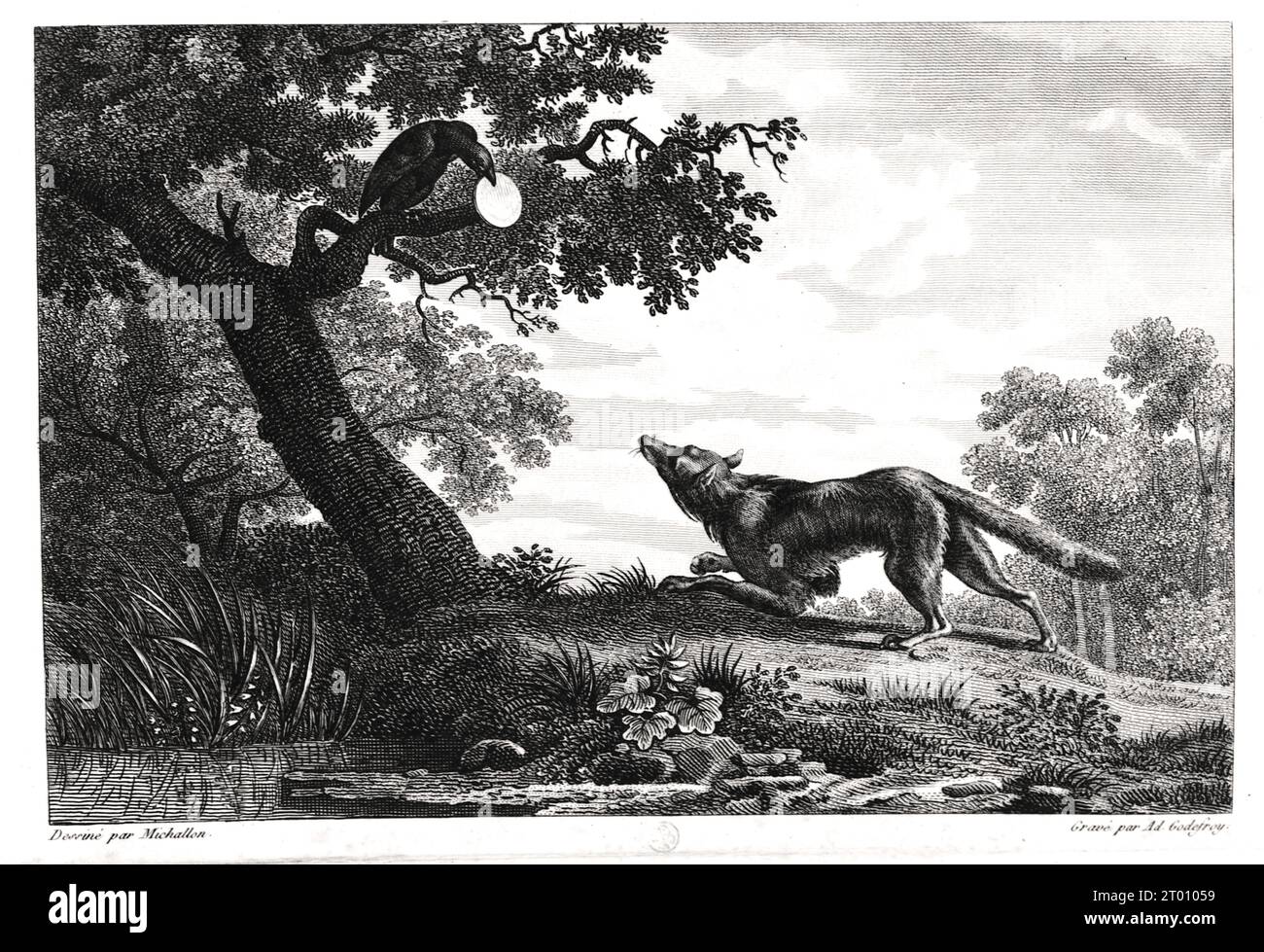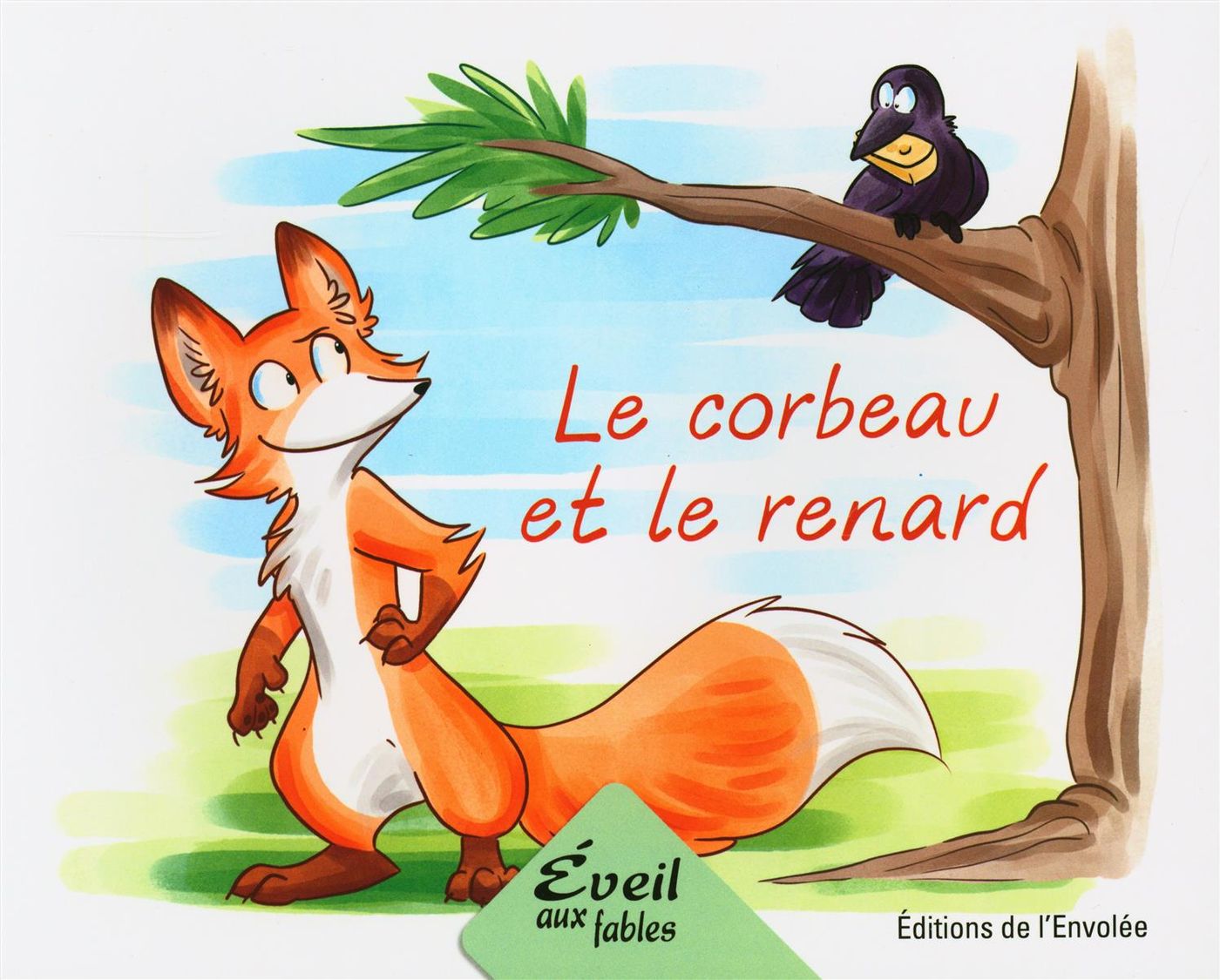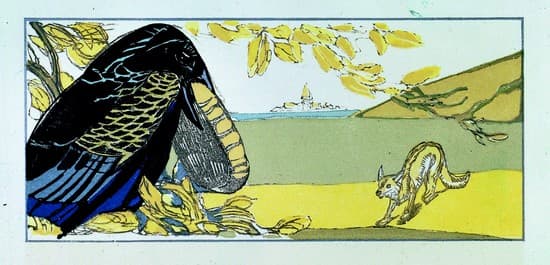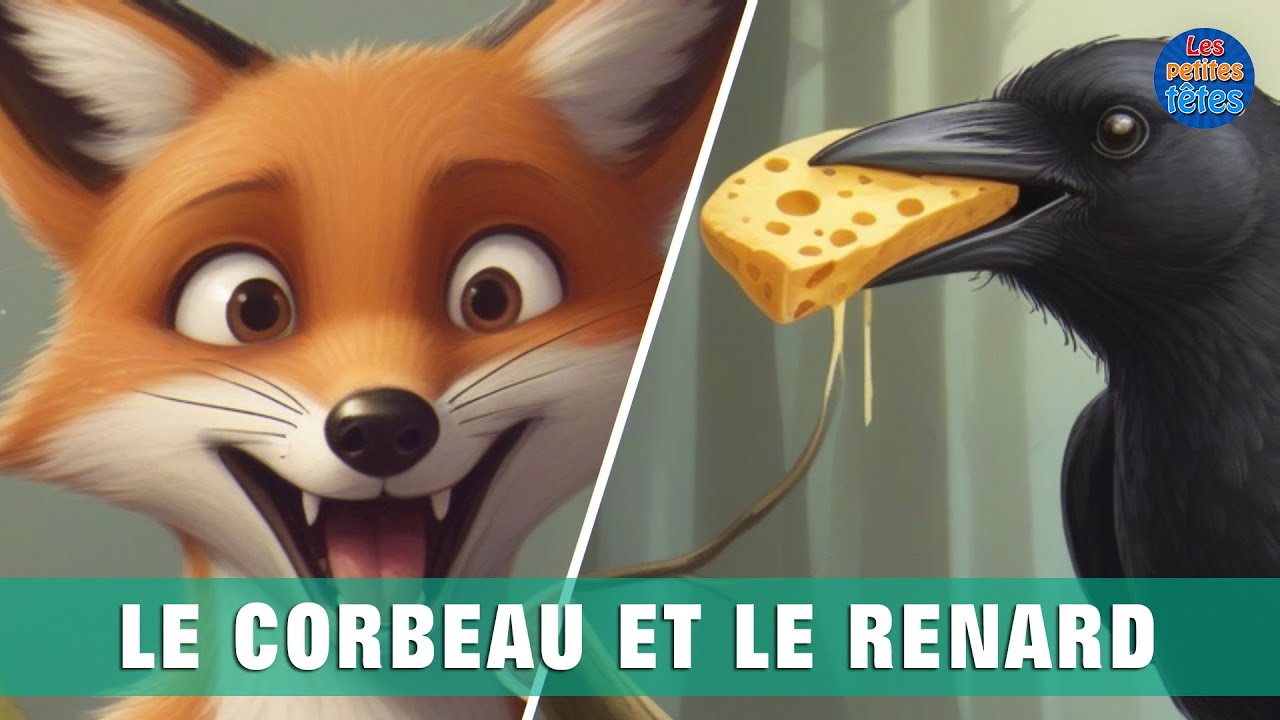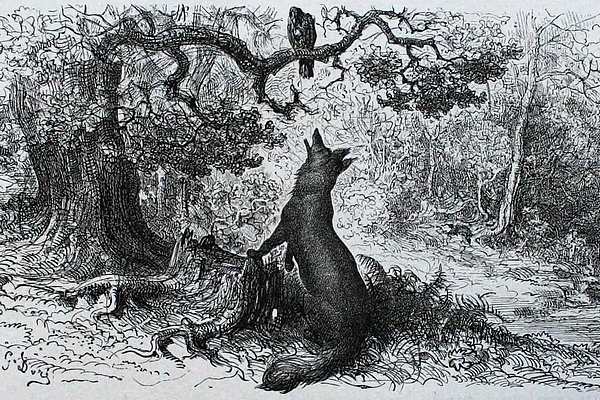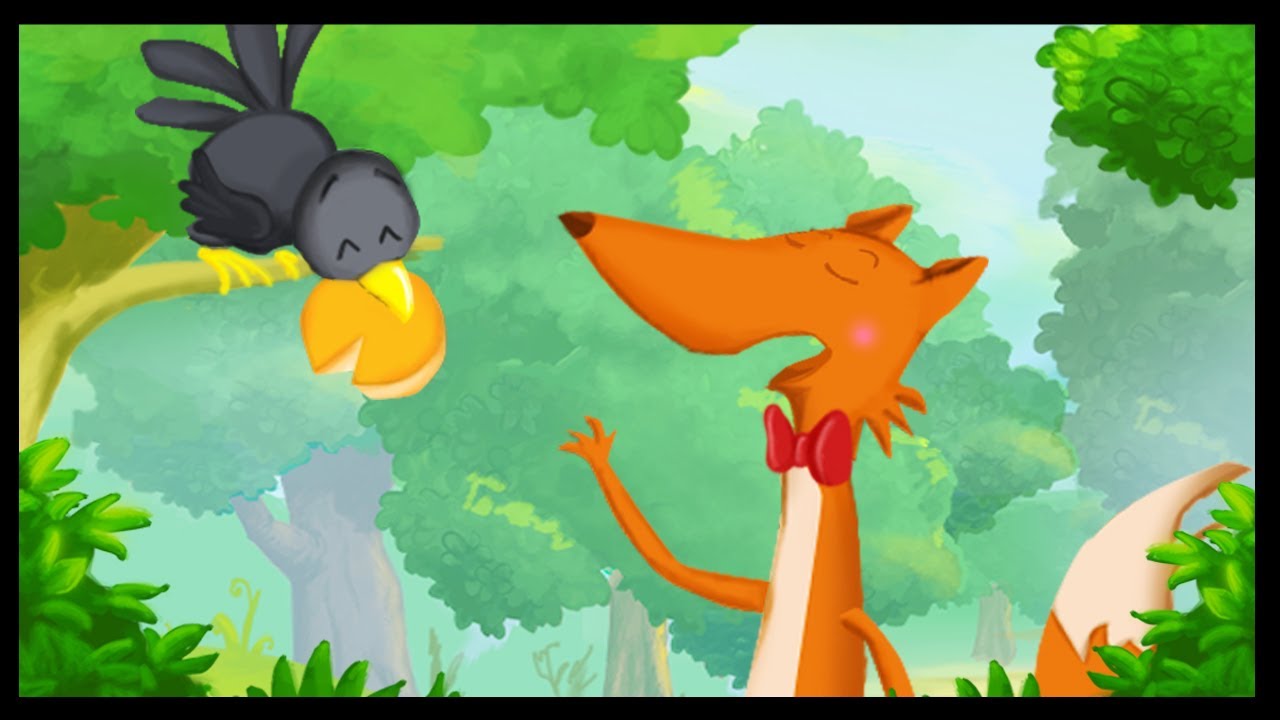
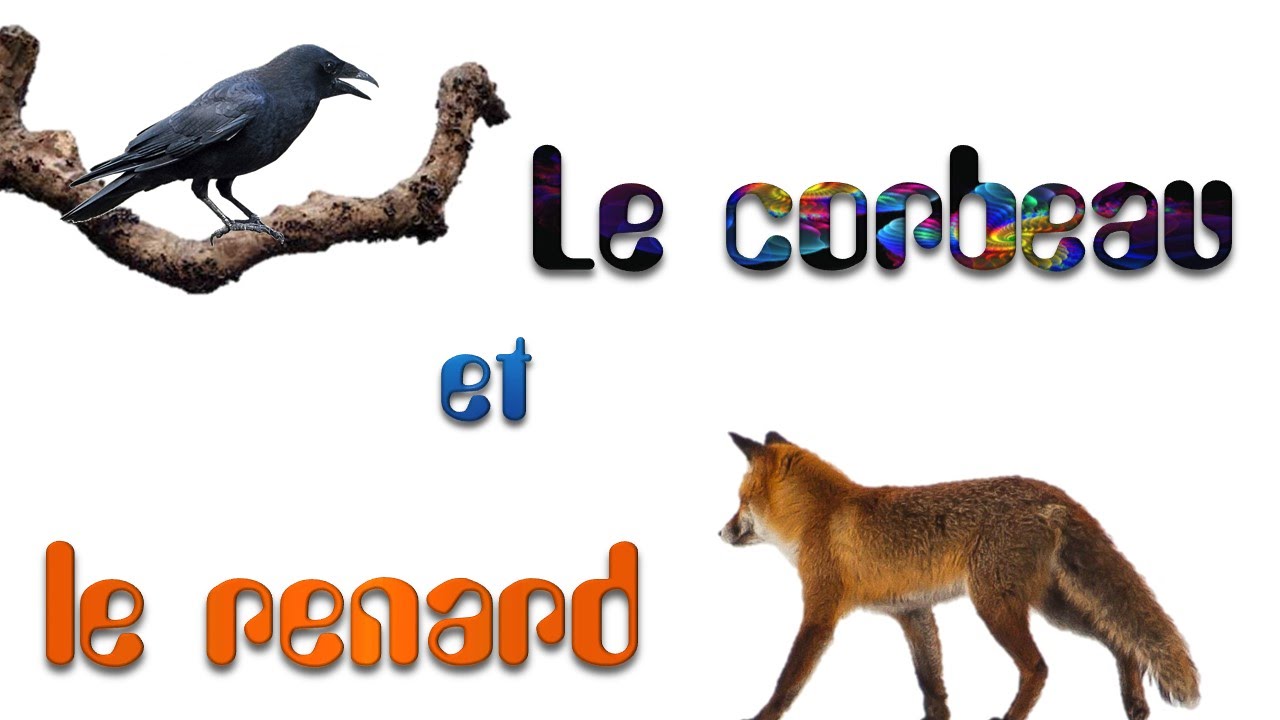
Ah, Jean de La Fontaine! Quel farceur, ce type! He's basically the OG meme lord of 17th century France, except instead of pictures with impact font, he gave us meticulously crafted verses packed with social commentary. And his most famous hit? Le Corbeau et le Renard, of course! The Crow and the Fox, a timeless tale of flattery, cheese, and avian gullibility. Let's dive into this masterpiece, shall we? Prepare for a wild ride filled with cunning foxes, singing crows, and maybe even a slightly stale piece of Gruyère.
The Set-Up: A Feathered Friend and a Dairy Delicacy
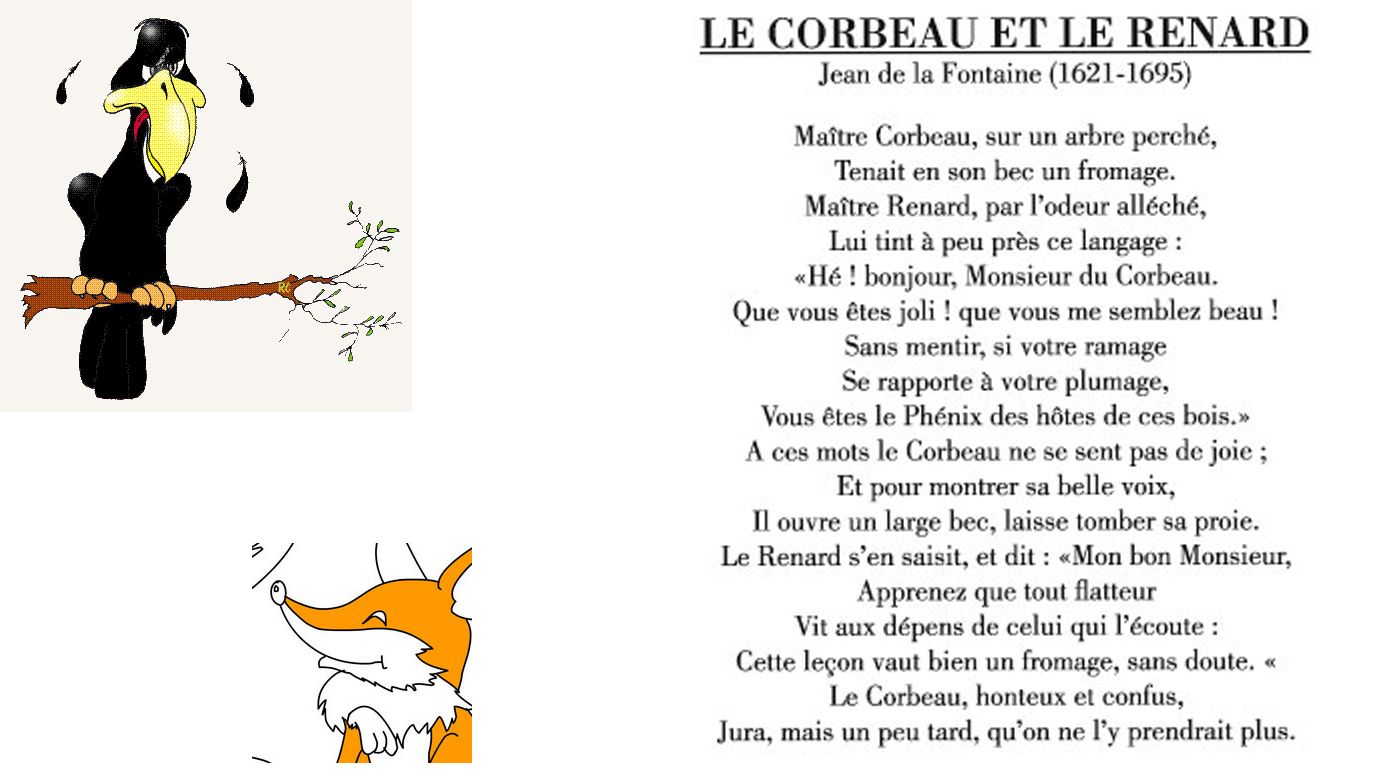
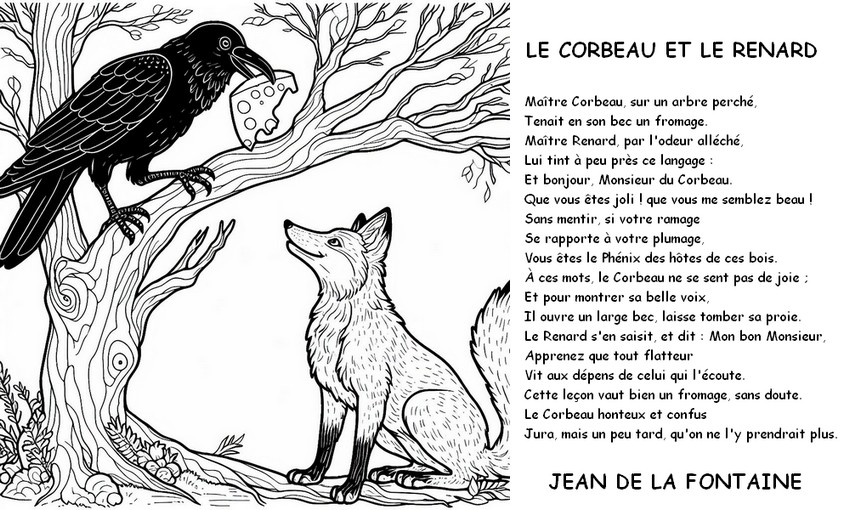
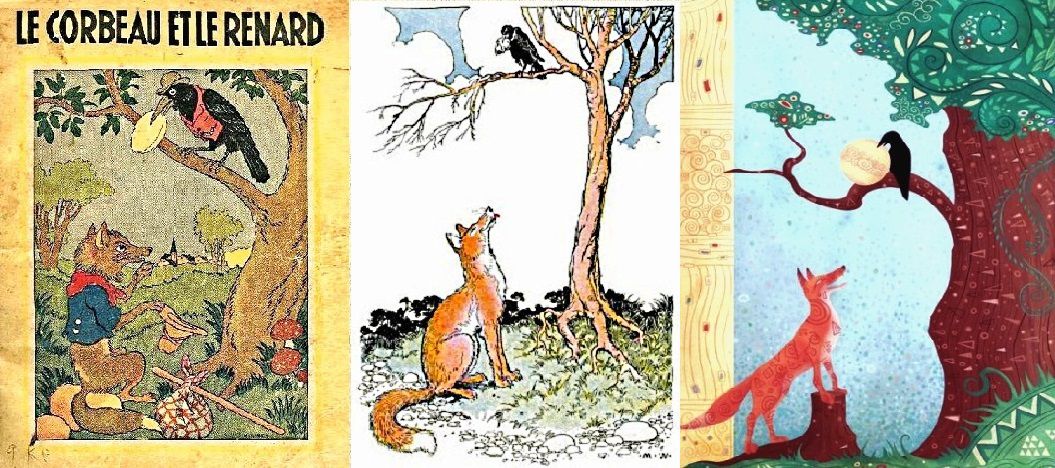
Our story opens, as many good stories do, with a bird. Specifically, a crow. Now, crows, as we all know (or at least, as La Fontaine wants us to believe), are not exactly known for their intellectual prowess. This particular crow, however, is having a really good day. Why? Because he's managed to snag a piece of cheese! Not just any cheese, mind you. This is, in my mind, a particularly aromatic, possibly slightly aged, chunk of deliciousness. Maybe a Brie? A Camembert? Perhaps even a Roquefort, daring the crow to truly live on the edge. We don't know for sure, La Fontaine keeps it delightfully vague. But it's cheese. And our crow is thrilled.
Perched high upon a tree, our crow is basking in the glory of his cheesy conquest. He's probably imagining all the delicious ways he's going to savor this prize. Maybe he'll nibble it slowly, letting the flavors melt in his mouth. Maybe he'll just gobble it down in one glorious bite. The possibilities are endless! He's on top of the world! Or, you know, on top of a tree. Close enough.
Enter the Villain (or is he?) – The Sly Fox
Suddenly, our feathered friend is rudely interrupted. Emerging from the undergrowth comes a fox. Now, foxes are portrayed very consistently throughout literature. Clever, cunning, charming...and always, always on the lookout for a free lunch. This fox is no exception.
He spies the crow and his cheesy treasure and immediately recognizes an opportunity. Now, some might call him a con artist, a swindler, a downright villain. But I prefer to think of him as…an opportunistic entrepreneur. He sees a need (his own hunger) and he’s ready to provide a service (flattery) in exchange for payment (cheese). It's basic economics, really!
The Art of Flattery: Buttering Up the Bird
The fox, with a twinkle in his eye and a voice smoother than melted butter (presumably a very expensive French butter), begins his assault. He doesn't just ask for the cheese outright. Oh no, that would be far too pedestrian. Instead, he opts for a more sophisticated approach: flattery. He starts by praising the crow's appearance.
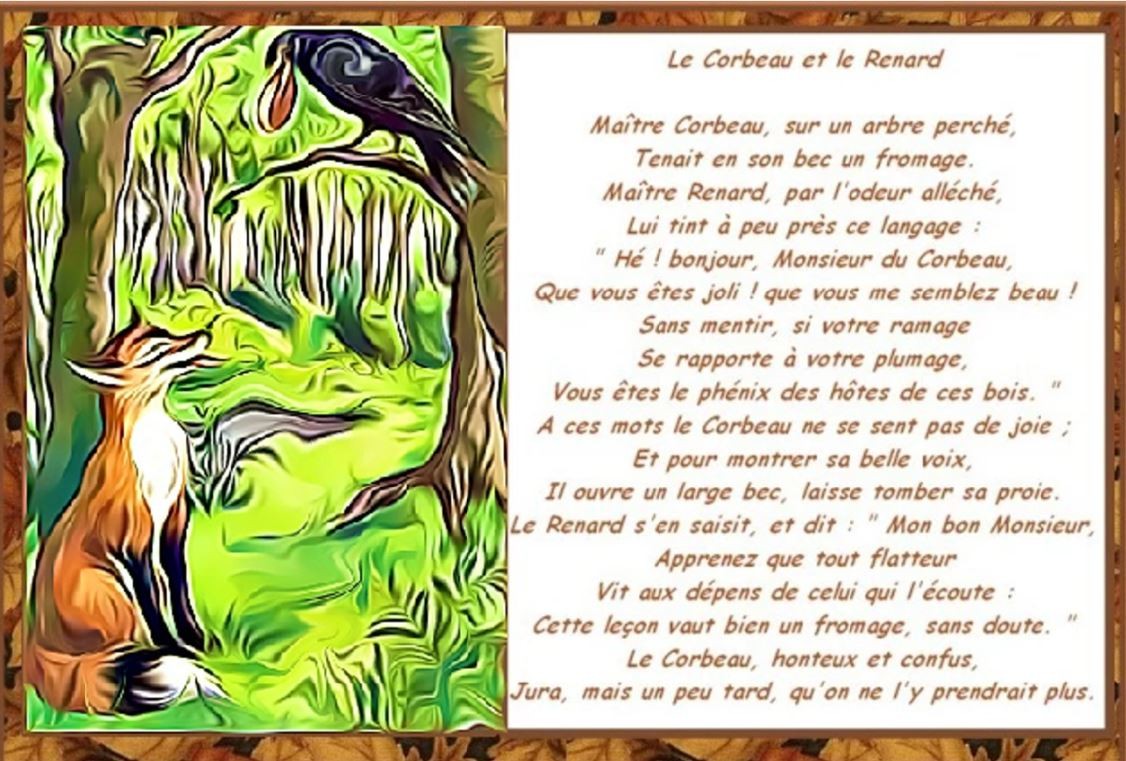
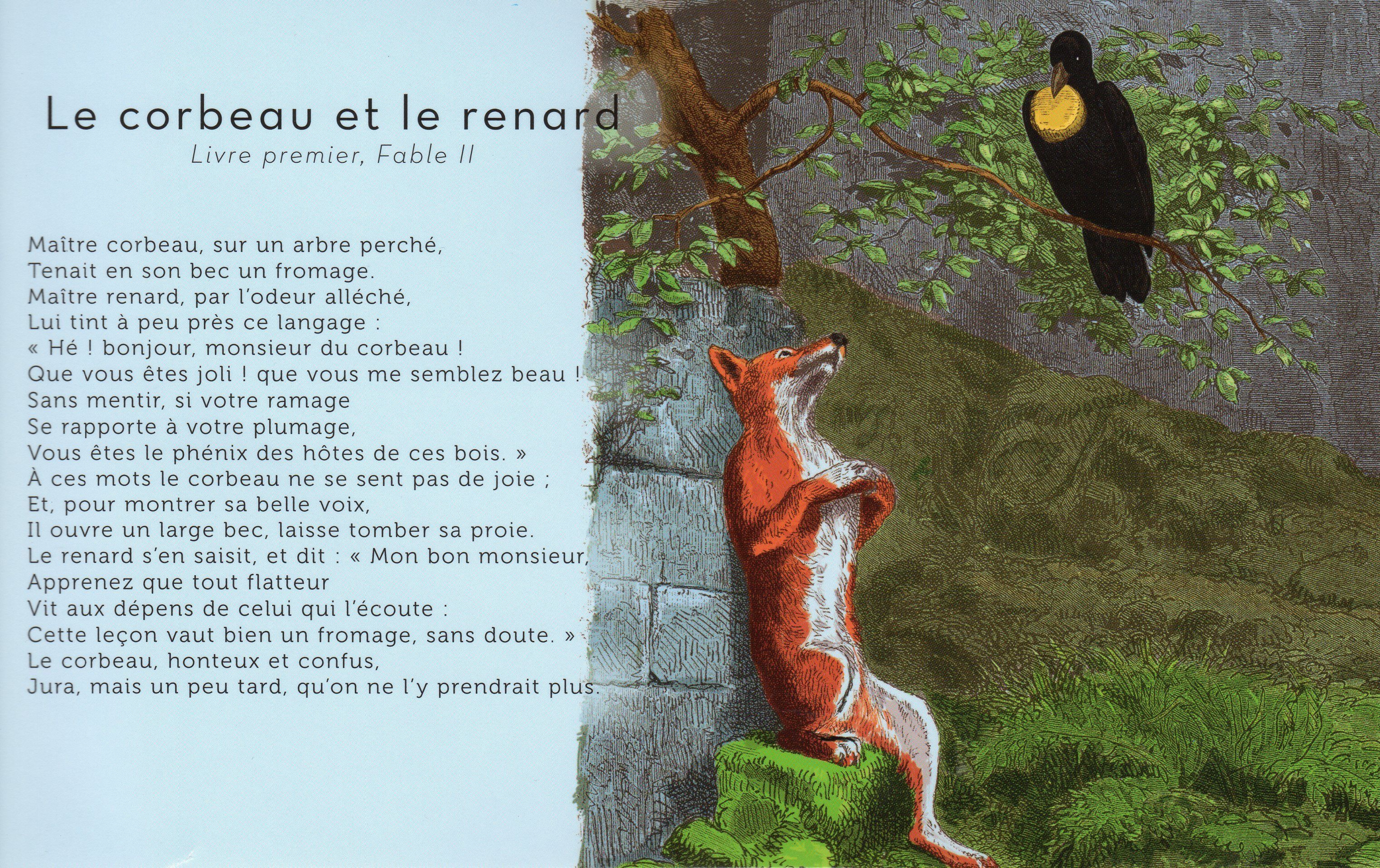
- "Bonjour, Monsieur le Corbeau!" (Good day, Mr. Crow!) The fox begins, all sweetness and light.
- "Que vous êtes joli! que vous me semblez beau!" (How handsome you are! How beautiful you seem to me!) He continues, laying it on thick.
- He then compliments the crow's feathers ("Your plumage! So magnificent!").
- And, of course, he mentions the crow's impressive stature ("Such a noble bearing!").
He goes on and on, piling compliment upon compliment, each one more outrageous than the last. He's basically writing the crow's online dating profile, except with a slightly more…culinary motive.
Now, here's where the humor really kicks in. The fox knows exactly what he's doing. He's playing on the crow's vanity, stroking his ego, and manipulating him with the precision of a seasoned politician. And the crow? He's falling for it hook, line, and sinker.
The Fatal Flaw: A Song of Cheese and Stupidity
The fox's master plan hinges on one crucial element: the crow's voice. Apparently, according to the fox (who, let's remember, is a totally unbiased observer), the crow's singing voice is…well, let's just say it's not exactly Pavarotti material.

“If your song matches your plumage,” the fox declares, with a dramatic flourish, “you are surely the phoenix of these woods!” Now, this is where the crow should have been suspicious. Phoenix? Seriously? But alas, the crow's vanity has completely overridden his common sense. He's so caught up in the flattery that he's willing to believe anything.
Desperate to prove the fox right (and, let's be honest, to show off a little), the crow puffs out his chest, opens his beak, and…let’s just say the resulting sound wasn't exactly harmonious. It was more like a strangled squawk, a cacophony of avian awkwardness. The sound, shall we say, left something to be desired.
The Cheese Conspiracy: A Falling Fiasco
And as the crow opens his beak to sing his disastrous aria, the inevitable happens: the cheese falls out. Ker-plunk! Right into the waiting jaws of the fox. Our cunning friend snatches up the prize with a triumphant grin.
The crow, meanwhile, is left standing there, beak agape, realizing the terrible mistake he has made. He's been outsmarted, outmaneuvered, and, most importantly, out-cheesed.
The Moral of the Story: A Lesson in Humility (and Cheese Safety)
With the cheese safely secured, the fox delivers his final blow: the moral of the story. And it's a doozy.
“My dear crow,” the fox says, probably with a mouthful of cheese, "learn that every flatterer lives at the expense of those who listen to him. This lesson is worth a cheese, without a doubt."
In other words: Don't be a gullible idiot. And definitely don't trust foxes who compliment your singing voice, especially when you're holding a delicious piece of cheese.
Key Takeaways from the Crow's Culinary Catastrophe:
- Vanity is a dangerous thing. It can cloud your judgment and make you vulnerable to manipulation.
- Flattery is often a tool. People rarely compliment you without an ulterior motive (especially if they’re foxes).
- Don't sing with your mouth full. This is generally good advice, regardless of whether or not you're being flattered by a fox.
- Always protect your cheese. This should be a life motto.
The Fox's Fortune: A Cheesy Conclusion (Literally)
So, the fox gets his cheese, the crow learns a valuable (albeit painful) lesson, and we, the readers, get a chuckle out of their misadventures. But what happens next? Does the fox savor his ill-gotten gains? Does he share it with his family? Does he sell it for a profit? We don't know. La Fontaine leaves it to our imagination.
Personally, I like to think that the fox, after enjoying his cheesy snack, decides to use his cunning and charm for good. Maybe he becomes a negotiator, mediating disputes between warring squirrels. Or perhaps he opens a consulting firm, advising other animals on how to avoid being tricked by flatterers. The possibilities are endless! (Although, let’s be honest, he probably just goes after another crow with another piece of cheese.)
The crow, hopefully, learns his lesson and becomes a little more skeptical of compliments. He might even take singing lessons to actually improve his voice (although, let's be realistic, he's probably still going to sound like a strangled squawk). He probably also invests in a cheese safe. You know, for future cheesy acquisitions. Prevention is key!
Why This Fable Still Matters: A Modern-Day Moral
Le Corbeau et le Renard is more than just a cute story about a bird and a fox. It's a timeless tale that speaks to the human (and avian) condition. It reminds us to be wary of flattery, to be humble, and to always protect our cheese (both literally and metaphorically).
In today's world, where we are constantly bombarded with advertising, social media influencers, and political spin, the lesson of the crow and the fox is more relevant than ever. We need to be able to recognize flattery for what it is: a tool used to manipulate us. We need to be skeptical of promises that seem too good to be true. And we need to protect our "cheese" – our values, our beliefs, our possessions – from those who would try to take advantage of us.
Real-World "Crow and Fox" Scenarios:
- Social Media Influencers: "Buy this amazing product! It will change your life!" (Spoiler alert: it probably won't).
- Political Campaigns: "Vote for me! I will solve all your problems!" (Spoiler alert: they probably won't).
- Nigerian Princes: "I have millions of dollars for you! Just send me your bank account information!" (Spoiler alert: it's a scam).
- That Friend Who Always Asks for Favors: "You're the best! Can you help me move this weekend?" (Spoiler alert: they probably won't reciprocate).
La Fontaine: The Master of Subversive Snark
Let's not forget the genius behind it all: Jean de La Fontaine. This wasn't just a random story he cobbled together. La Fontaine was a master of social commentary, subtly poking fun at the aristocracy and the foibles of human nature through animal characters. He was basically the Jon Stewart of his time, but with rhymes and adorable woodland creatures.
His fables are filled with wit, wisdom, and a healthy dose of cynicism. He wasn't afraid to call out hypocrisy and stupidity, even if it meant ruffling a few feathers (pun intended). And that's why his work continues to resonate with us centuries later.
He took inspiration from Aesop, naturally, but he imbued his versions with a uniquely French flair. He added nuance, humor, and a touch of philosophical depth. He transformed simple moral tales into works of art.
So, What's the Real Moral? (The One I Secretly Believe)
While the stated moral is about flattery, I think there's a deeper, more subversive message lurking beneath the surface. Perhaps La Fontaine is suggesting that sometimes, it's okay to be a little vain. Maybe it's okay to enjoy a compliment, even if it's a bit over the top. After all, who doesn't like to be told they're beautiful, intelligent, and possess an extraordinary singing voice? (Even if it's a blatant lie.)
Maybe La Fontaine is saying that life is too short to be constantly suspicious of everyone. Sometimes, you just have to take a leap of faith, embrace the moment, and sing your heart out (even if you sound like a strangled squawk). And if you happen to lose a piece of cheese in the process, well, that's just the price you pay for living life to the fullest.
Or maybe I'm just overthinking it. Maybe it's just a story about a stupid crow and a clever fox. But where's the fun in that?
Final Thoughts: A Cheesy Farewell
Le Corbeau et le Renard is a delightful reminder that even the simplest stories can contain profound truths. It's a testament to the power of language, the allure of flattery, and the enduring appeal of cheese (seriously, who doesn't love cheese?). So, the next time someone compliments you, take a moment to consider their motives. And always, always, keep a close eye on your cheese. You never know when a cunning fox might be lurking nearby.
And with that, I bid you adieu! May your days be filled with delicious cheese, genuine compliments, and a healthy dose of skepticism. Just remember, if a fox tells you that you sing like an angel, maybe, just maybe, hold onto that cheese a little tighter. Or better yet, just eat it. Before he gets the chance to trick you. After all, who needs a compliment when you have a delicious Camembert? À bientôt! (And try not to drop the cheese!) And remember to always be très skeptical of compliments from anyone with pointy teeth and a penchant for poultry. It's just good common sense!
So, the next time someone tries to butter you up, remember the crow and the fox. And if you happen to be holding a particularly delicious piece of cheese, maybe just keep your mouth shut. Unless, of course, you really want to show off your singing voice. But don't say I didn't warn you!
Now, if you'll excuse me, I'm going to go find a piece of cheese. And maybe practice my singing. Just in case a fox happens to wander by. (But I promise, I won't drop the cheese!)
In Summary: Lessons From La Fontaine
Here’s a quick recap of the vital life lessons we’ve gleaned from this timeless tale:
- Beware the Sweet Talkers: If someone’s laying it on a bit too thick, pump the brakes! They probably want something.
- Vanity Will Get You Nowhere (Except Cheeseless): A little self-confidence is great, but don’t let your ego write checks your beak can’t cash.
- Protect Your Assets: Whether it’s cheese, money, or your good name, guard it fiercely.
- Singing with Food in Your Mouth is Generally a Bad Idea: Just…don’t.
- Foxes Are Opportunists (No Offense to Any Foxes Reading This): They’re just playing the game. It’s up to you not to be the pawn.
- French Fables Are Awesome: End of discussion.
- Cheese is Amazing: Seriously, go get some right now. You deserve it. (But watch out for foxes!)
The Crow & Fox: A Recipe for Disaster (or Comedy)
So, there you have it. Le Corbeau et le Renard, a timeless tale of cheese, flattery, and avian embarrassment. A perfect example of why La Fontaine is considered a literary genius. Now, go forth and be wise. And for goodness sake, protect your cheese! (And maybe work on your singing. Just in case.)
And finally, remember the most important lesson of all: never underestimate the power of a good pun. Or a delicious piece of cheese. À bientôt!
And now, the punchline you've all been waiting for... Why did the crow cross the road? To prove he could, without dropping the cheese! (Okay, I'll see myself out.)