Alright, mes amis, pull up a chair, grab a café, and let me tell you about something that sounds way more complicated than it actually is: the Exploitation Agricole à Responsabilité Limitée, or EARL. Say that three times fast after a glass of wine, I dare you!
Basically, it's the French version of a limited liability company… for farmers. Imagine, if you will, a farmer named Jean-Pierre. Jean-Pierre, bless his cotton socks, wants to grow the most magnificent zucchini the world has ever seen. But Jean-Pierre isn't a fool. He knows that farming, like life, can throw you some curveballs – droughts, locust plagues, the price of fertilizer going bonkers… the usual suspects.
So, Jean-Pierre, being a smart cookie, decides he doesn't want to risk losing his entire farm, his house, and his vintage accordion collection if, say, a rogue herd of goats develops a taste for his prize-winning zucchinis and he gets sued into oblivion. That's where the EARL comes in to save the day!
What in the Zucchini is an EARL?
Think of an EARL as a shield. A lovely, legal, lettuce-green shield that protects your personal assets from the risks associated with your farm. It's like saying, "Okay, I'm running a farm, and if the farm goes belly up, only the farm's assets are at risk, not my personal stash of cheese and berets."
It’s a legal structure where several people (usually family members, because who else would trust you with their hard-earned savings?) pool their resources to run a farm collectively. It’s all about sharing the profits (and the risks!). Ensemble, c'est tout! As they say.
But Why Bother?
Good question! Let's break it down with some bullet points, because everyone loves bullet points, right?
- Limited Liability: This is the big one. Your personal assets are protected. If the farm goes bust, creditors can't come after your house, your car, or your grandmother's prized poodle (assuming she hasn't already bequeathed it to the cat).
- Easier Transfer of Ownership: Want to pass the farm down to your children? With an EARL, it's often much smoother and less complicated than inheriting a traditional farm. Think less paperwork, more time for pétanque.
- Tax Advantages: Oui, oui! There can be some tax benefits to forming an EARL, depending on your specific situation. Talk to a good accountant (one who doesn't charge by the grape) for the full scoop.
- Access to Funding: Sometimes, banks are more willing to lend money to a structured entity like an EARL than to an individual farmer. It shows you're serious and organized (even if your barn is still held together with duct tape).
Who Can Form an EARL?
Generally, you need at least two people to form an EARL. These can be family members, friends, or even that mysterious hermit who lives on the edge of your field and claims to speak to the cows. The point is, you need a partner (or partners). There is an exception! Since 2010, a single-person EARL (EARL unipersonnelle) is possible. So, Jean-Pierre, if he really wants to go solo on his zucchini empire, can do so! He just needs to make sure he talks to the zucchinis themselves for partnership advice.
How Does it Work, Exactly?
Okay, here comes the slightly less funny part, but I promise to keep it brief. Forming an EARL involves a few key steps:
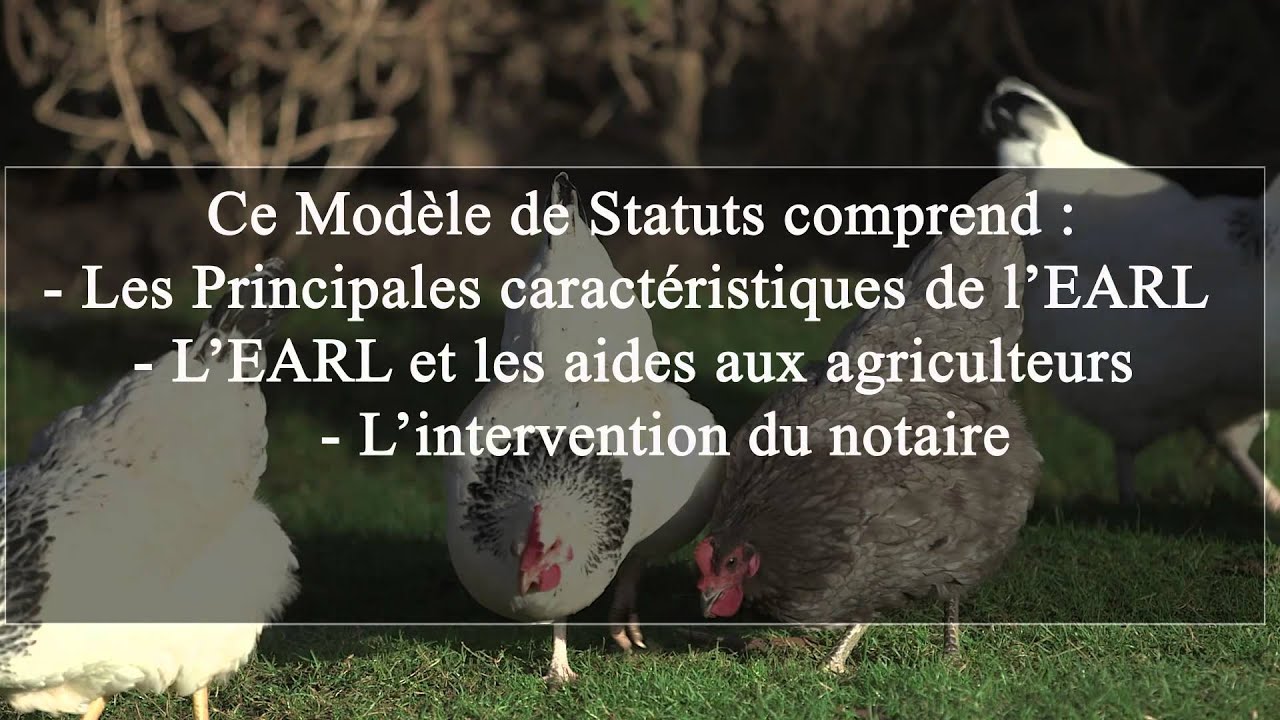
- Drafting the Statutes: This is your EARL's constitution, outlining the rules of the game, who's responsible for what, and how decisions are made. It's like the farm's rulebook, only hopefully less likely to be used as kindling for a bonfire.
- Contributing Capital: Each partner contributes something of value to the EARL, be it cash, land, equipment, or even their expertise in milking cows blindfolded.
- Registering the EARL: You need to register your EARL with the appropriate authorities (the Chambre d'Agriculture, for example). Think of it as getting your farm a fancy new ID card.
- Appointing a Manager (Gérant): Someone needs to be in charge, making the day-to-day decisions and keeping things running smoothly. This could be you, your partner, or even a highly trained marmoset (though I wouldn't recommend the latter).
The Downside (Because There's Always a Catch)
While EARL-ing is generally a good idea, it's not all sunshine and sunflowers. There are a few potential downsides to consider:
- Administrative Burden: Setting up and running an EARL involves more paperwork and bureaucracy than simply farming on your own. You'll need to keep accurate records, file taxes, and generally be more organized than the average scarecrow.
- Decision-Making Challenges: When you have multiple partners, you might not always agree on everything. This can lead to disagreements, arguments, and potentially even zucchini-throwing contests.
- Initial Costs: Setting up an EARL involves some initial costs, such as legal fees and registration fees. It's an investment, but one that should pay off in the long run.
EARL: The Secret Weapon of French Farmers (Maybe)
So, is an EARL right for you? Well, that depends. If you're a solo farmer with nothing to lose but your monocle, maybe not. But if you're planning to farm with family, are worried about liability, or want to make your farm a more sustainable and professional operation, then an EARL might just be the perfect solution.

Think of it this way: An EARL is like a good baguette. It provides structure, support, and makes everything else taste better. It is a quintessential part of French agriculture and helps ensure the continuity and success of family farms.
Just remember to choose your partners wisely, keep good records, and always, always, have a backup plan in case those rogue goats develop a taste for something other than your prize-winning zucchinis.
Now, if you'll excuse me, I'm off to practice saying "Exploitation Agricole à Responsabilité Limitée" backwards. Wish me luck!