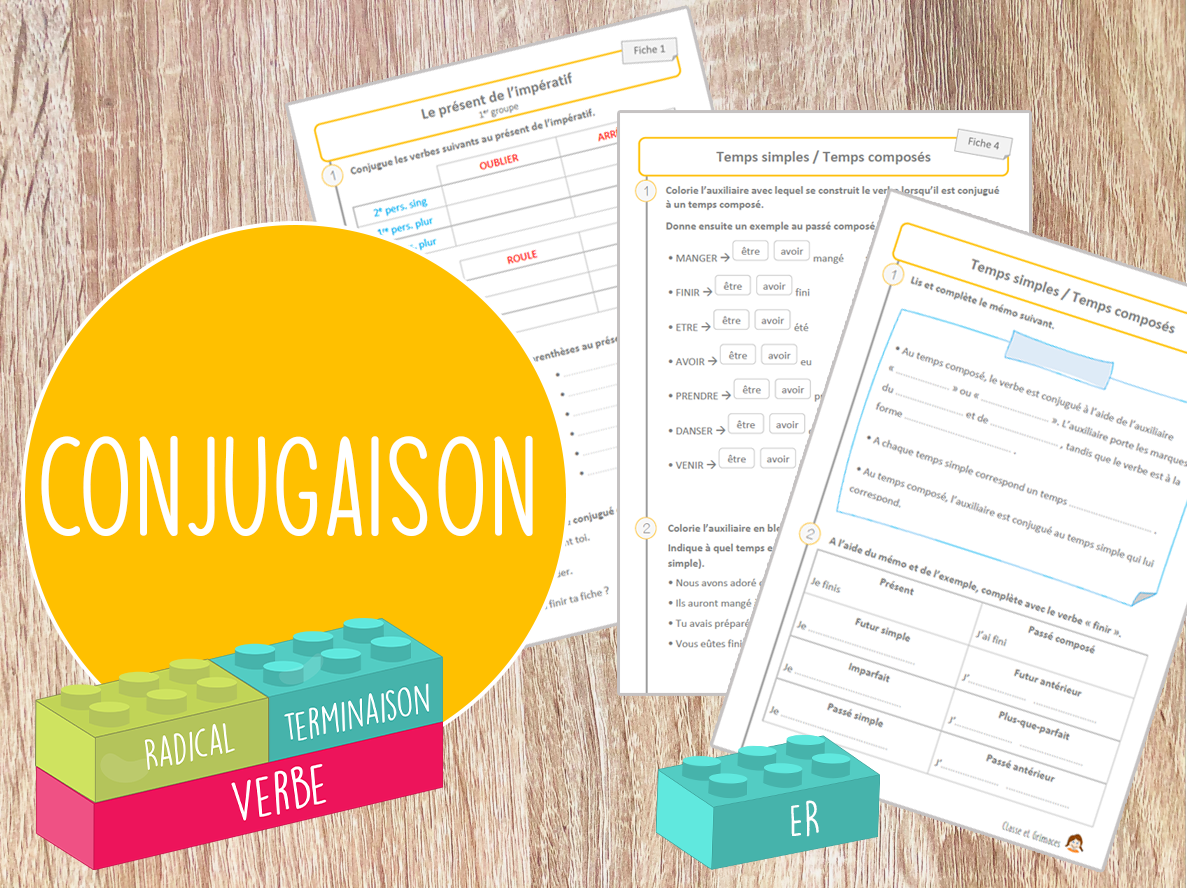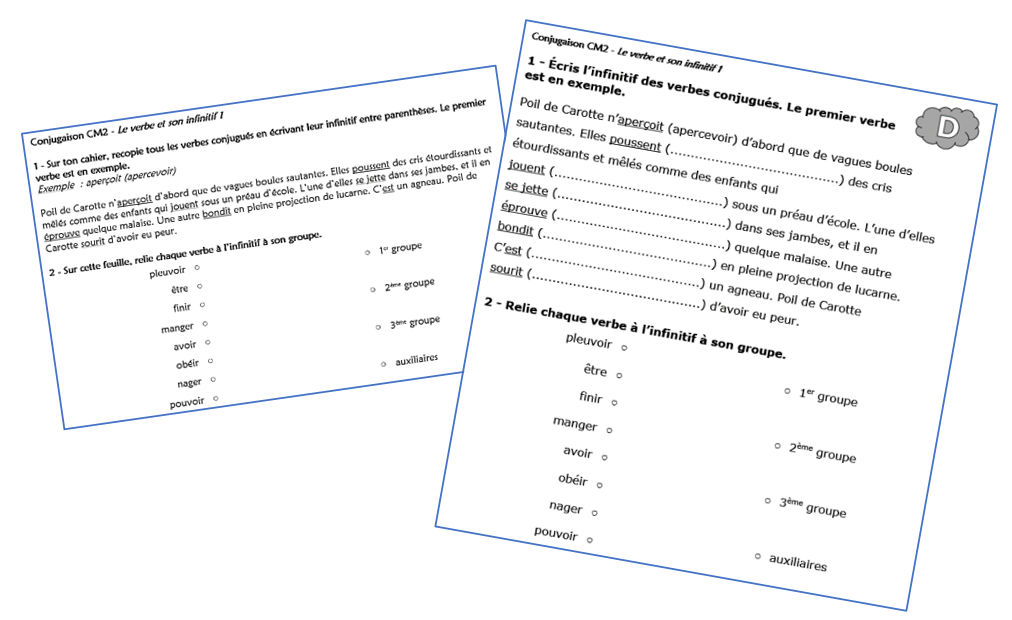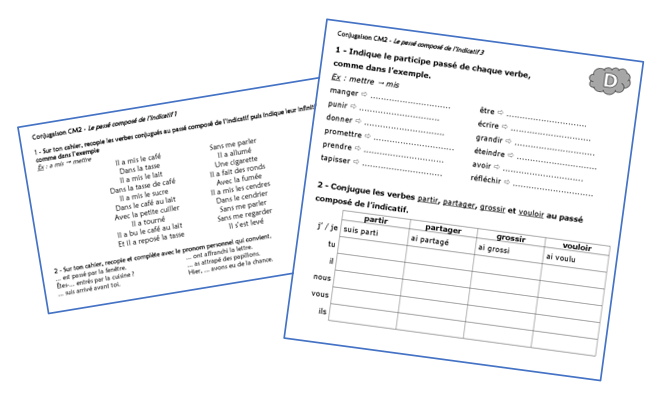
Ah, le passé composé! Even the name sounds fancy, doesn't it? But don't let it intimidate you. For our CM1 students – and even those of us who just want a little refresher – mastering this tense is like unlocking a secret level in the French language. Think of it as your linguistic cheat code for talking about yesterday's adventures, last week's escapades, or even just what you ate for breakfast.
Why is the passé composé so important? Well, in French, it's your go-to for narrating completed actions in the past. Forget laborious descriptions; the passé composé gets straight to the point. It's the linguistic equivalent of a perfectly brewed café: strong, efficient, and absolutely essential.
Un peu de grammaire, s'il vous plaît!
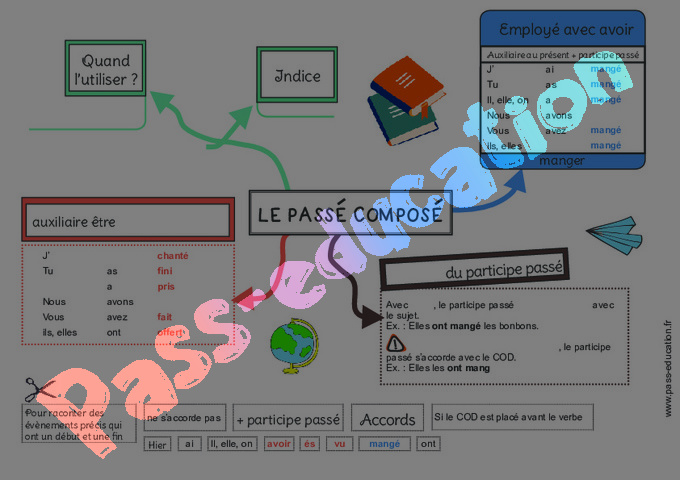
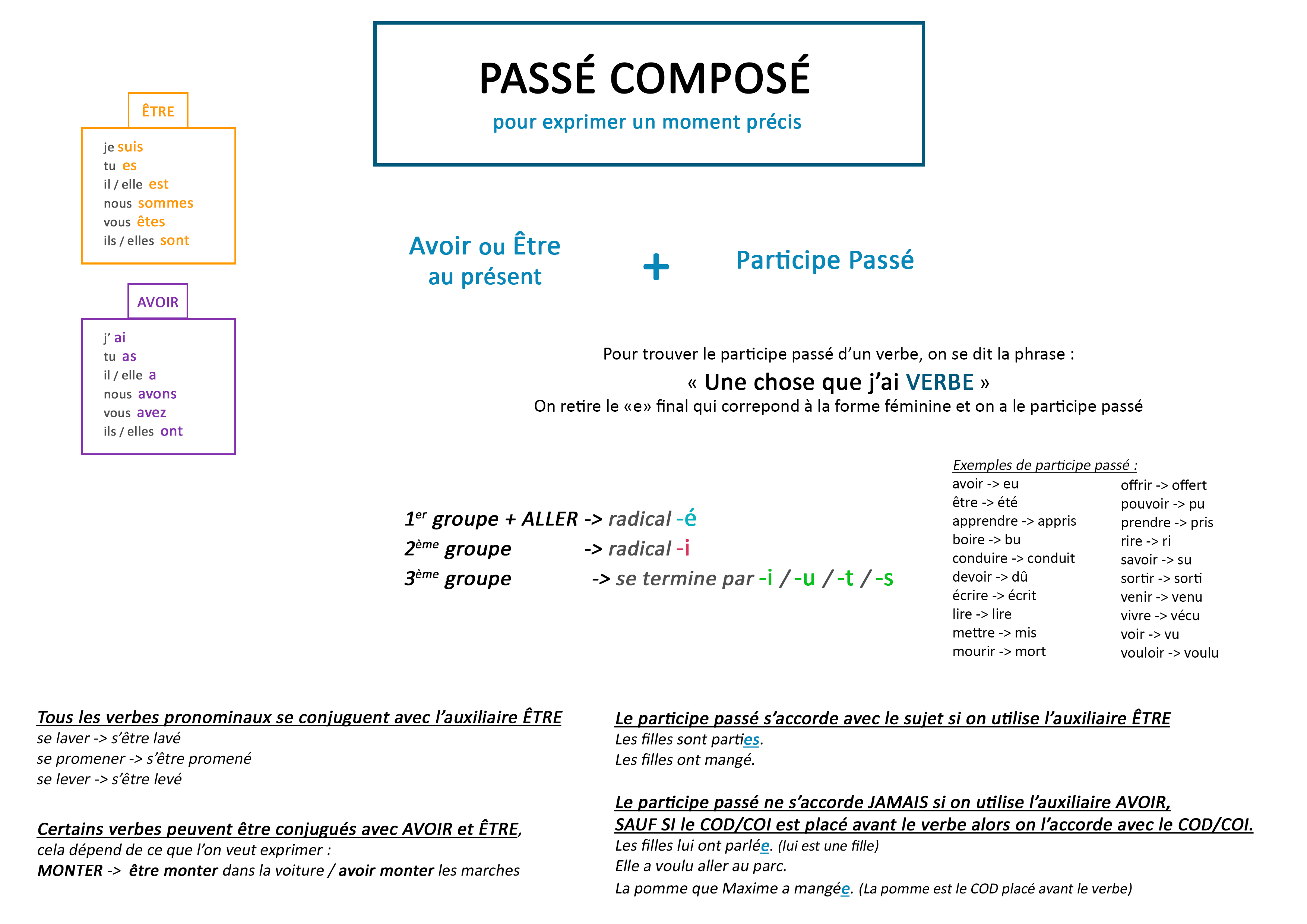
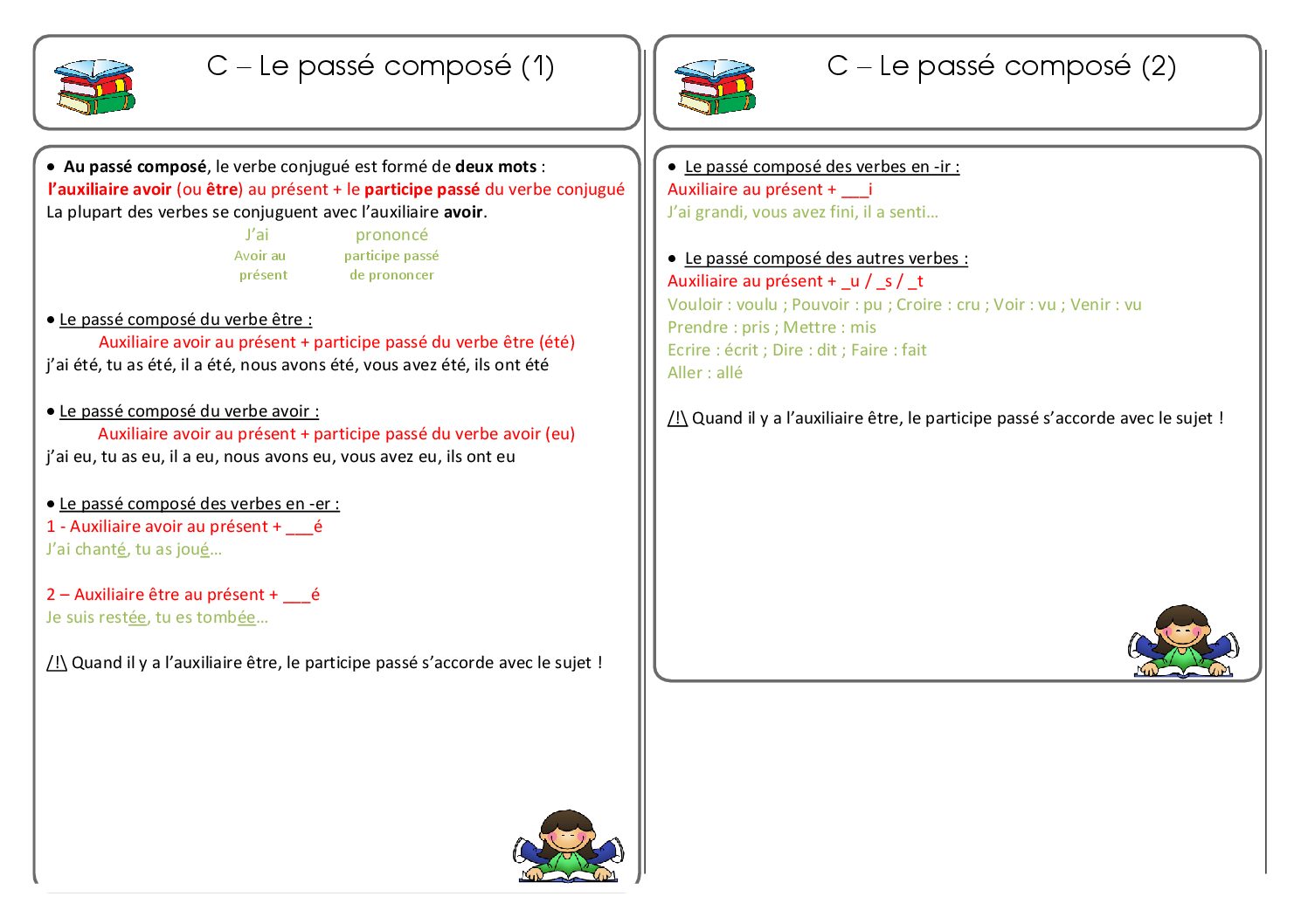
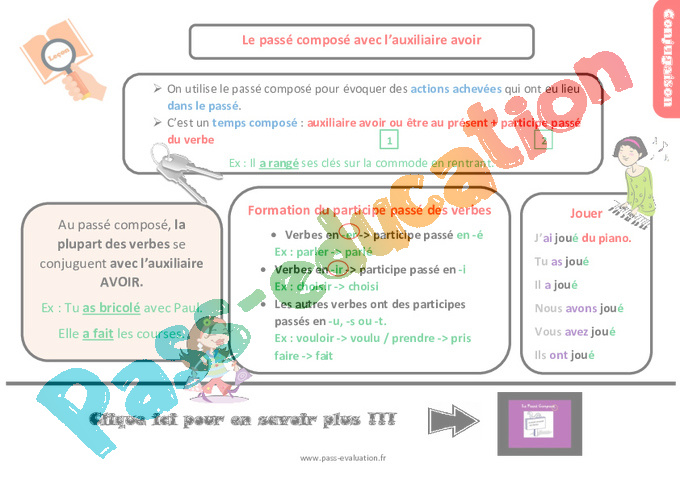
Okay, let's break it down. The passé composé is formed with two elements: an auxiliary verb (être or avoir) and the past participle of the verb. Think of it as a dynamic duo!
- Avoir: This is the most common auxiliary verb. Most verbs take avoir. For example, "J'ai mangé une baguette" (I ate a baguette). Notice the ai is the present tense conjugation of avoir.
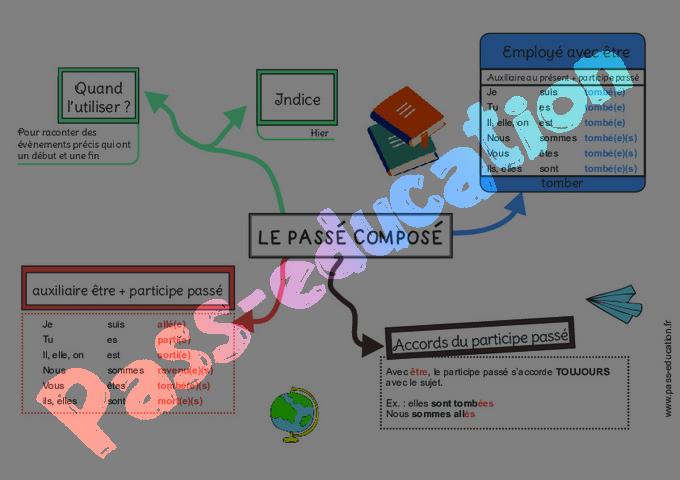
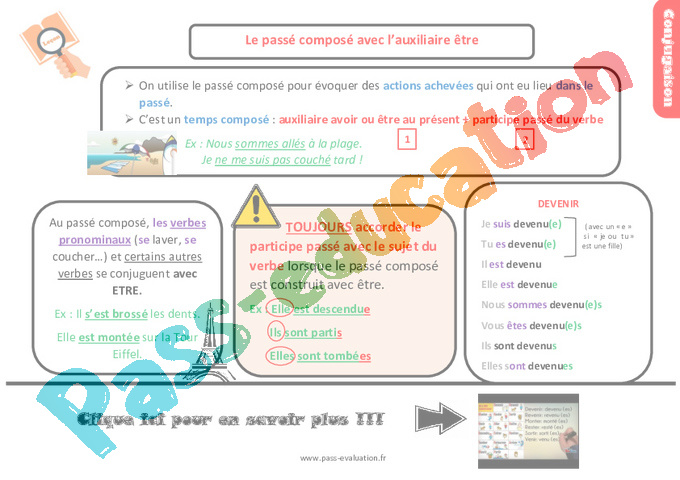
- Être: Some verbs, especially those related to movement or a change of state (think aller, venir, monter, descendre, naître, mourir), use être. A classic example: "Je suis allé(e) au cinéma" (I went to the cinema). Don't forget the agreement of the past participle with the subject when using être! (Adding an 'e' for feminine subjects or 's' for plural).
And then there's the past participle itself! To form the past participle:
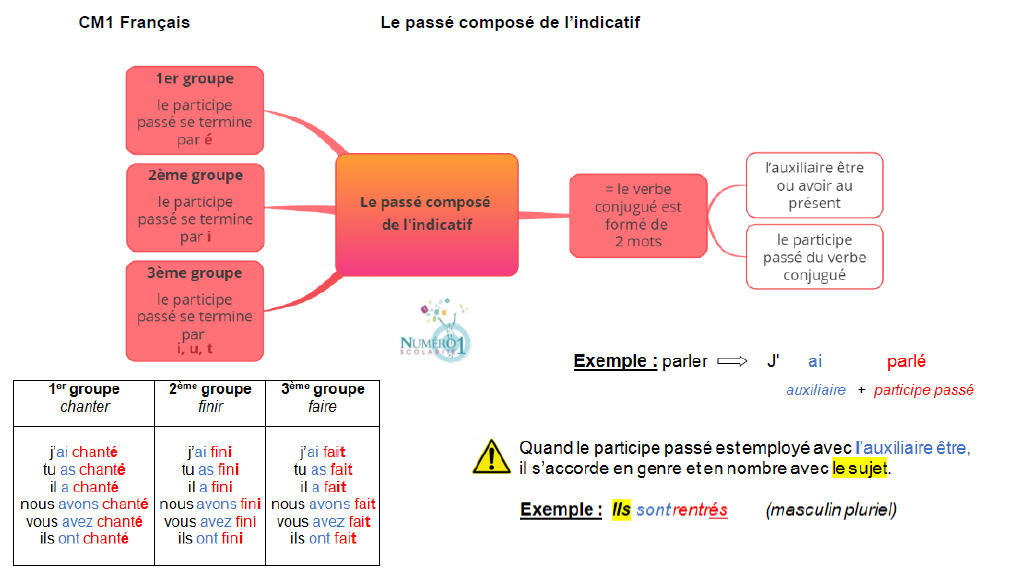
- -er verbs: Change the -er to -é. Parler becomes parlé.
- -ir verbs: Change the -ir to -i. Finir becomes fini.
- -re verbs: Change the -re to -u. Vendre becomes vendu.
Of course, French wouldn't be French without a few exceptions! Irregular verbs like avoir (eu), être (été), faire (fait) have their own past participles that you'll need to memorize. Think of them as VIP verbs; they deserve special treatment.
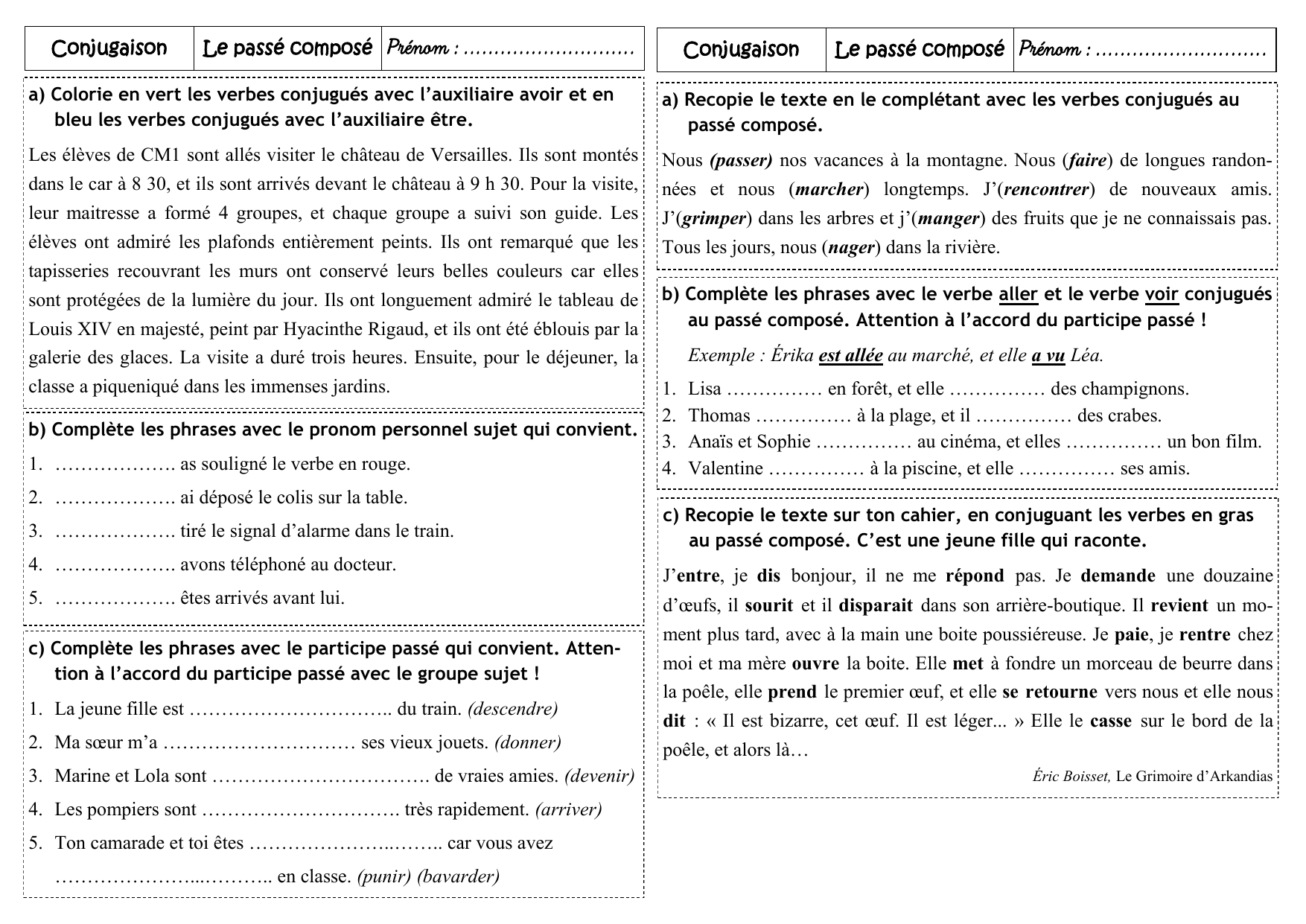
Exercices et corrections: Let's Practice!
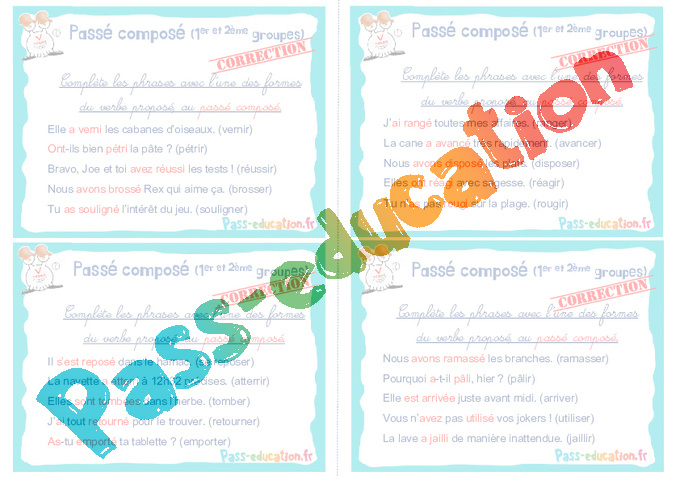
Time for some fun! Here are a few sentences to try, perfect for CM1-level practice, with answers so you can check your progress:
- (Manger) Je ________ une pomme. (I ate an apple.) Réponse: J'ai mangé une pomme.
- (Aller) Tu ________ au parc. (You went to the park.) Réponse: Tu es allé(e) au parc.
- (Regarder) Elle ________ la télé. (She watched TV.) Réponse: Elle a regardé la télé.
- (Venir) Nous ________ à la maison. (We came home.) Réponse: Nous sommes venu(e)s à la maison.
- (Faire) Vous ________ vos devoirs. (You did your homework.) Réponse: Vous avez fait vos devoirs.
- (Être) Ils ________ contents. (They were happy.) Réponse: Ils ont été contents.
Want more practice? Try converting simple present tense sentences into the passé composé. It's a great way to solidify your understanding. You can also find tons of free worksheets and online exercises specifically designed for CM1 students. Websites like Quizlet and iEducation offer interactive games and quizzes that make learning grammar actually enjoyable.
Tips and Tricks for Passé Composé Success
- Listen to French! Pay attention to how native speakers use the passé composé in everyday conversation. Podcasts, movies (with subtitles!), and even French music can help you internalize the rhythm and flow of the tense.
- Read! Reading French books and articles will expose you to a variety of sentence structures and help you identify the passé composé in context.
- Don't be afraid to make mistakes! Learning a language is all about trial and error. Embrace your mistakes as opportunities to learn and grow. Even the most fluent speakers make errors sometimes.
- Use mnemonic devices! Create silly rhymes or associations to remember which verbs take être. For example, picture all the verbs of movement dancing together!
Reflecting on Yesterday, Today, and Tomorrow
The passé composé is more than just a grammar rule; it's a tool for connecting with our past. It allows us to share our experiences, learn from our mistakes, and celebrate our achievements. By mastering this tense, we unlock a deeper understanding of the French language and culture. Next time you’re chatting with a friend or writing in your journal, try using the passé composé to recount your day. You might be surprised at how easily it comes! Think about it: Qu'est-ce que tu as fait aujourd'hui? (What did you do today?). The answer? You have mastered a little piece of French! Félicitations!