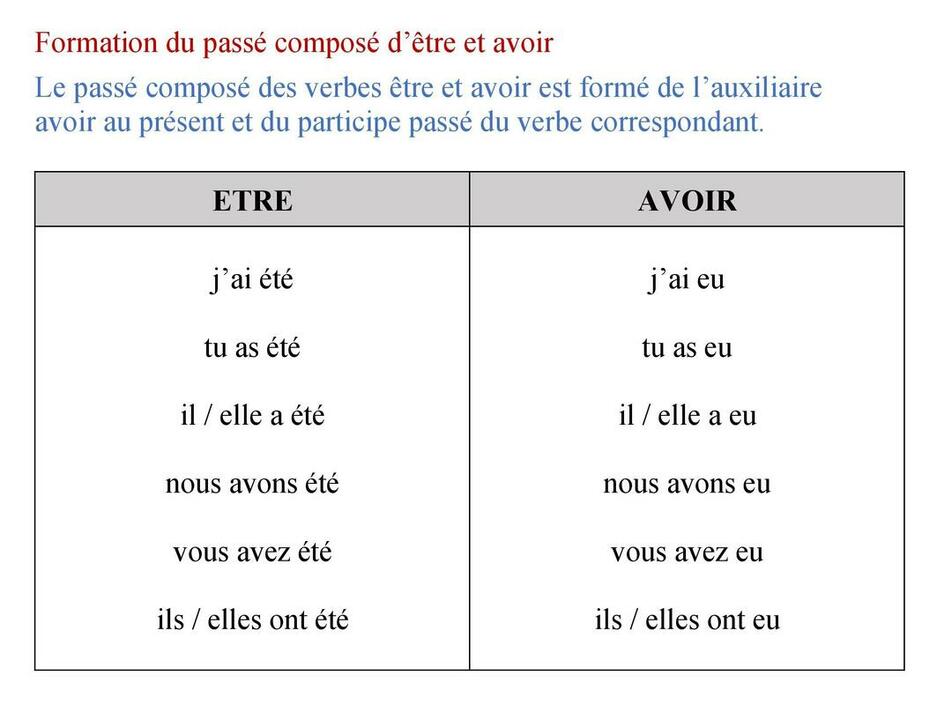
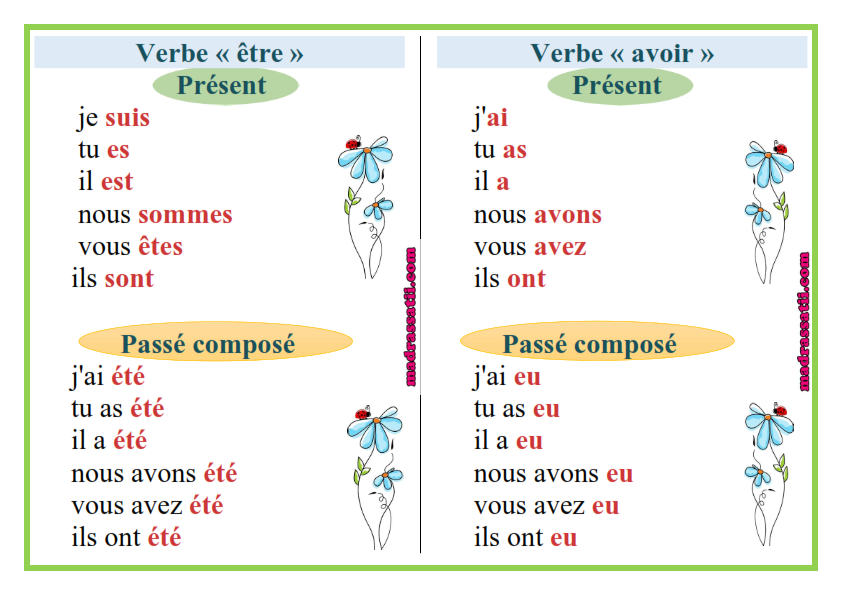
Salut, mes amis! Grab a croissant and a café au lait, because we're about to dive headfirst into the glorious, sometimes terrifying, world of the passé composé! Specifically, the "être" and "avoir" situation. Think of it as the French grammar equivalent of a reality TV show – full of drama, unexpected twists, and the occasional moment where you want to throw your textbook at the wall. But fear not! We’ll conquer this together.
The Plot Thickens: Why "Être" and "Avoir" Matter
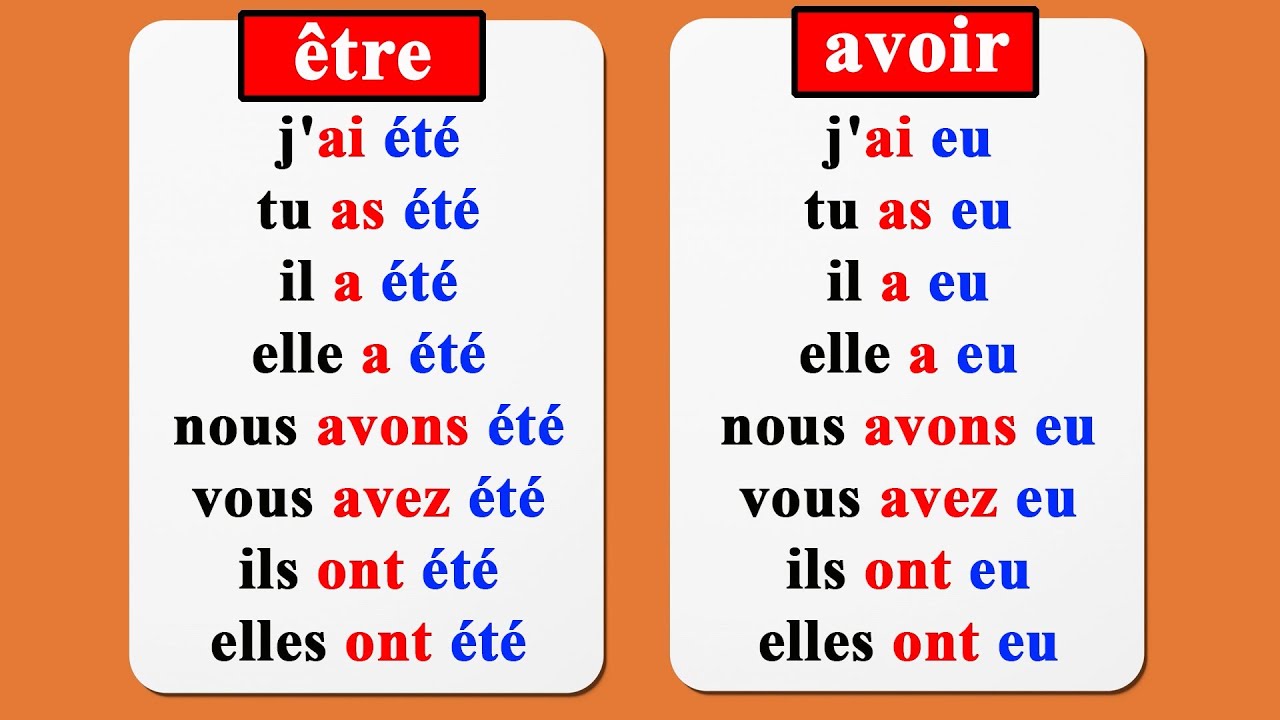
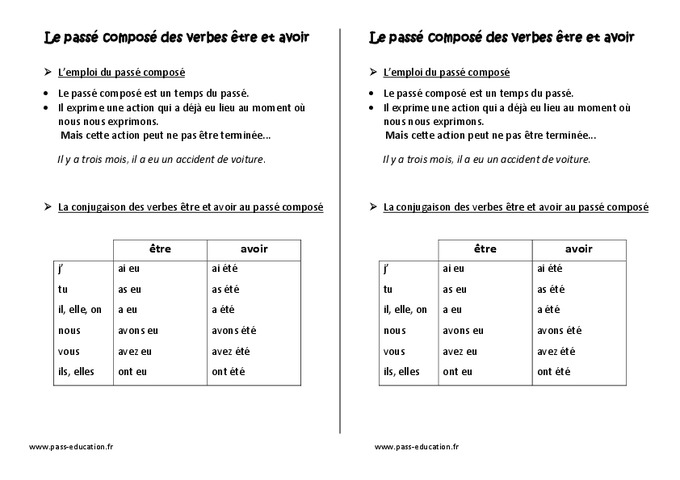
So, the passé composé is a past tense in French. Easy enough, right? But no! French grammar, being the sassy beast it is, throws in a curveball. To form the passé composé, you need an auxiliary verb: either "avoir" (to have) or "être" (to be). And figuring out which one to use can feel like deciphering ancient hieroglyphics after a particularly potent bottle of wine.
Avoir is the more common auxiliary verb. Think of it as the default setting. It's the dependable friend who's always there for you. But then there's être. Oh, être… Être is the cool, mysterious one who only shows up when certain conditions are met. It's the grammar equivalent of that elusive friend who only texts you at 3 a.m.
"Avoir": The Reliable Workhorse
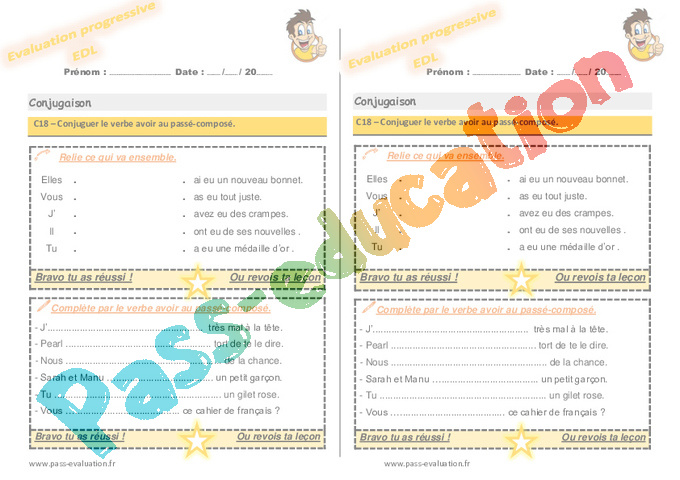
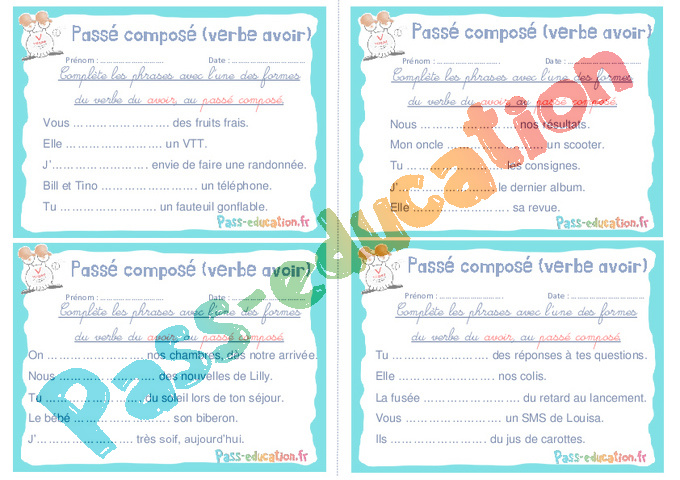
Most verbs in French use avoir to form the passé composé. It's like, "I have eaten," "I have watched," "I have conquered the world" (okay, maybe not that last one for everyone). The structure is simple:
Subject + avoir (conjugated) + past participle
For example:
- J'ai mangé une baguette. (I ate a baguette.)
- Tu as regardé un film. (You watched a movie.)
- Il a acheté une voiture. (He bought a car.)
- Nous avons visité Paris. (We visited Paris.)
- Vous avez étudié le français. (You studied French.)
- Ils ont vendu leur maison. (They sold their house.)
See? Pretty straightforward. Just conjugate avoir correctly and slap on the past participle of your verb. Job done! (… Until être shows up to complicate things.)
"Être": The Diva of Verbs
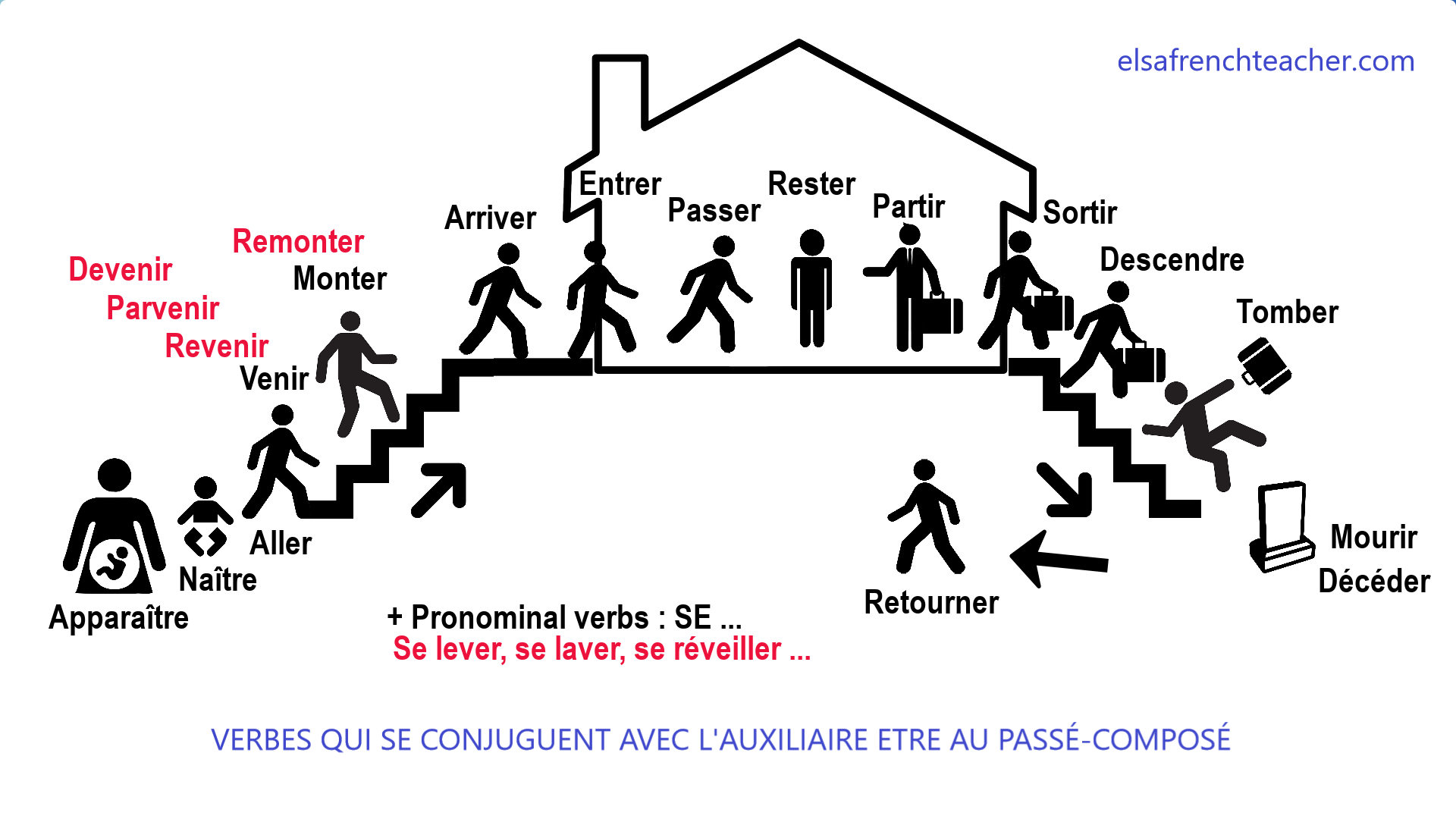
Now, let's talk about être. Être isn't just a verb; it's a whole vibe. It's dramatic, it's selective, and it demands attention. It only hangs out with a specific group of verbs, mostly those related to movement and states of being. These are often referred to as "Dr. & Mrs. Vandertramp" verbs. Think of it as a very exclusive party. Not just any verb gets an invite.

Dr. & Mrs. Vandertramp: The Guest List
Here are the main verbs that take être in the passé composé. Memorize these, my friends. They are your passport to passé composé success!
- Devenir (to become)
- Revenir (to come back)
- Monter (to go up)
- Rester (to stay)
- Sortir (to go out)
- Venir (to come)
- Aller (to go)
- Naître (to be born)
- Descendre (to go down)
- Entrer (to enter)
- Rentrer (to re-enter)
- Tomber (to fall)
- Retourner (to return)
- Arriver (to arrive)
- Mourir (to die)
- Partir (to leave)
Okay, that's a lot. Take a deep breath. You don't have to memorize them all right now. Just familiarize yourself with them. Think of them as your VIP club members.
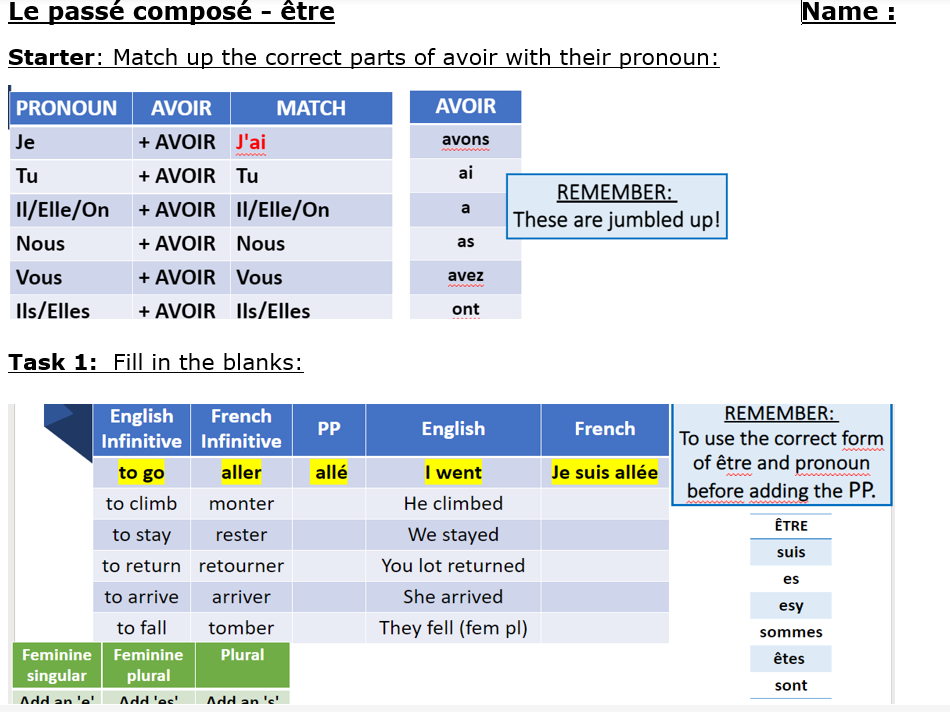
When using être, the structure is:
Subject + être (conjugated) + past participle
For example:
- Je suis allé(e) au cinéma. (I went to the cinema.)
- Tu es arrivé(e) en retard. (You arrived late.)
- Il est parti en vacances. (He left on vacation.)
- Nous sommes revenus hier. (We came back yesterday.)
- Vous êtes monté(e)(s) à la tour Eiffel. (You went up the Eiffel Tower.)
- Elles sont tombées amoureuses. (They fell in love.)
The Gender Agreement Saga: A Twist!
Here's where things get even more interesting (or, depending on your perspective, more infuriating). When using être, the past participle has to agree in gender and number with the subject. Yes, you read that right. More grammar rules! Because why not?
- If the subject is feminine singular, add an "e" to the past participle.
- If the subject is masculine plural, add an "s" to the past participle.
- If the subject is feminine plural, add "es" to the past participle.
Let's look at those examples again, paying close attention to the agreement:
- Je suis allé (masculine singular) / Je suis allée (feminine singular) au cinéma.
- Tu es arrivé (masculine singular) / Tu es arrivée (feminine singular) en retard.
- Nous sommes revenus (masculine plural) / Nous sommes revenues (feminine plural) hier.
- Vous êtes monté (masculine singular) / Vous êtes montée (feminine singular)/ Vous êtes montés (masculine plural) / Vous êtes montées (feminine plural) à la tour Eiffel.
Confusing? Absolutely! But practice makes perfect. And copious amounts of coffee helps too.
Reflexive Verbs: Être's Other Best Friends
As if the Dr. & Mrs. Vandertramp verbs weren't enough, être also insists on being the auxiliary verb for all reflexive verbs. Reflexive verbs are those verbs where the action reflects back on the subject. They always have a reflexive pronoun (me, te, se, nous, vous, se) attached to them.
For example:

- Se laver (to wash oneself)
- Se réveiller (to wake oneself up)
- S'habiller (to get dressed)
- Se coucher (to go to bed)
So, to form the passé composé of a reflexive verb, you use être and, of course, make sure the past participle agrees with the subject. Here's the structure:
Subject + reflexive pronoun + être (conjugated) + past participle (with agreement!)
Examples:
- Je me suis lavé(e). (I washed myself.)
- Tu t'es réveillé(e) tôt. (You woke up early.)
- Il s'est habillé rapidement. (He got dressed quickly.)
- Nous nous sommes couchés tard. (We went to bed late.)
- Vous vous êtes amusé(e)(s). (You had fun.)
- Elles se sont disputées. (They argued.)
A Few More Tricky Bits (Because Why Not?)
Some verbs can take either avoir or être, depending on the context. These are usually verbs of movement. The difference in meaning can be subtle, but important.
For example:
- Descendre: J'ai descendu la valise. (I brought the suitcase down.) - Je suis descendu(e) de la voiture. (I got out of the car.)
- Monter: J'ai monté les escaliers. (I climbed the stairs.) - Je suis monté(e) à la tour Eiffel. (I went up the Eiffel Tower.)
- Sortir: J'ai sorti les poubelles. (I took out the trash.) - Je suis sorti(e) avec mes amis. (I went out with my friends.)
When these verbs have a direct object (something being acted upon), they usually take avoir. When they describe a movement or state of being, they take être. Think of it this way: if you're actively doing something to something else, it's avoir. If you're just being, it's être.
Exercises: Put Your Knowledge to the Test!
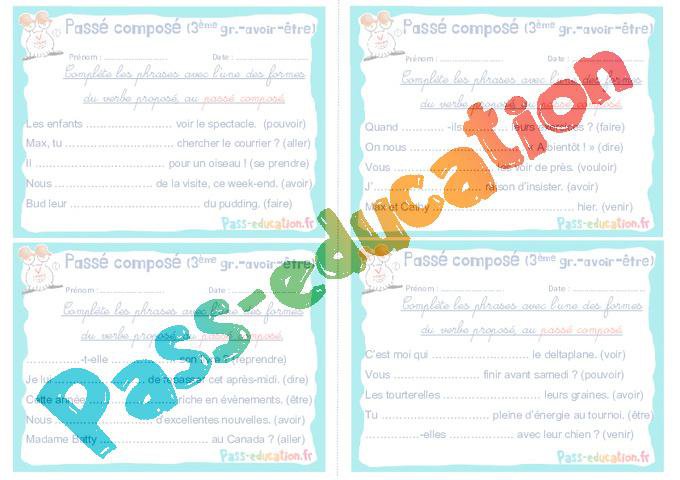
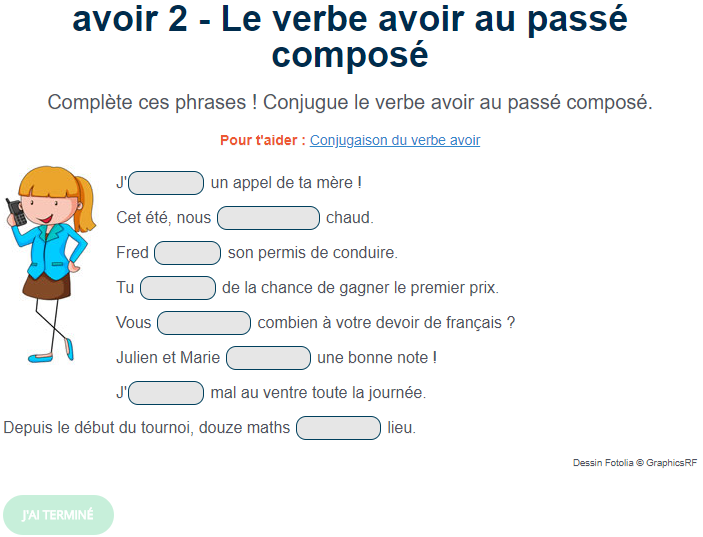
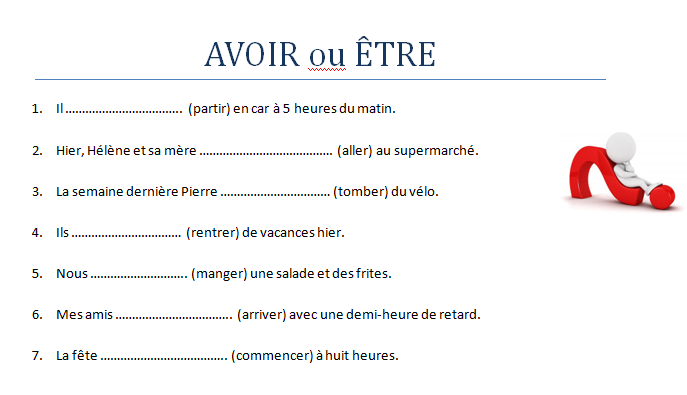
Alright, enough theory! Time to put your passé composé prowess to the test. Grab a pen, a piece of paper, and maybe another croissant. Here are a few sentences to practice with. Fill in the blanks with the correct form of avoir or être and the past participle of the verb in parentheses, remembering to make the participle agree when necessary.
- Elle _________ (arriver) à l'heure.
- Nous _________ (manger) une pizza.
- Ils _________ (aller) au parc.
- Je _________ (finir) mes devoirs.
- Tu _________ (se réveiller) tard.
- Vous _________ (visiter) Rome.
- Elle _________ (tomber) amoureuse.
- Nous _________ (partir) en vacances.
- Il _________ (acheter) une nouvelle voiture.
- Je _________ (se coucher) tôt.
(Answers are below, but try them yourself first!)
Answers:
- est arrivée
- avons mangé
- sont allés
- ai fini
- t'es réveillé(e)
- avez visité
- est tombée
- sommes partis
- a acheté
- me suis couché(e)
Conclusion: You've Conquered the Passé Composé (Almost!)
The passé composé with être and avoir can seem daunting, but with practice and a sense of humor, you can master it. Remember the Dr. & Mrs. Vandertramp verbs, the reflexive verbs, and the agreement rules. And don't be afraid to make mistakes! That's how we learn. Think of it as a game. A very complicated, slightly maddening, but ultimately rewarding game.
So, go forth and conjugate! And remember, even if you mess up, at least you can say you tried. And that, my friends, is something to be proud of. À bientôt!