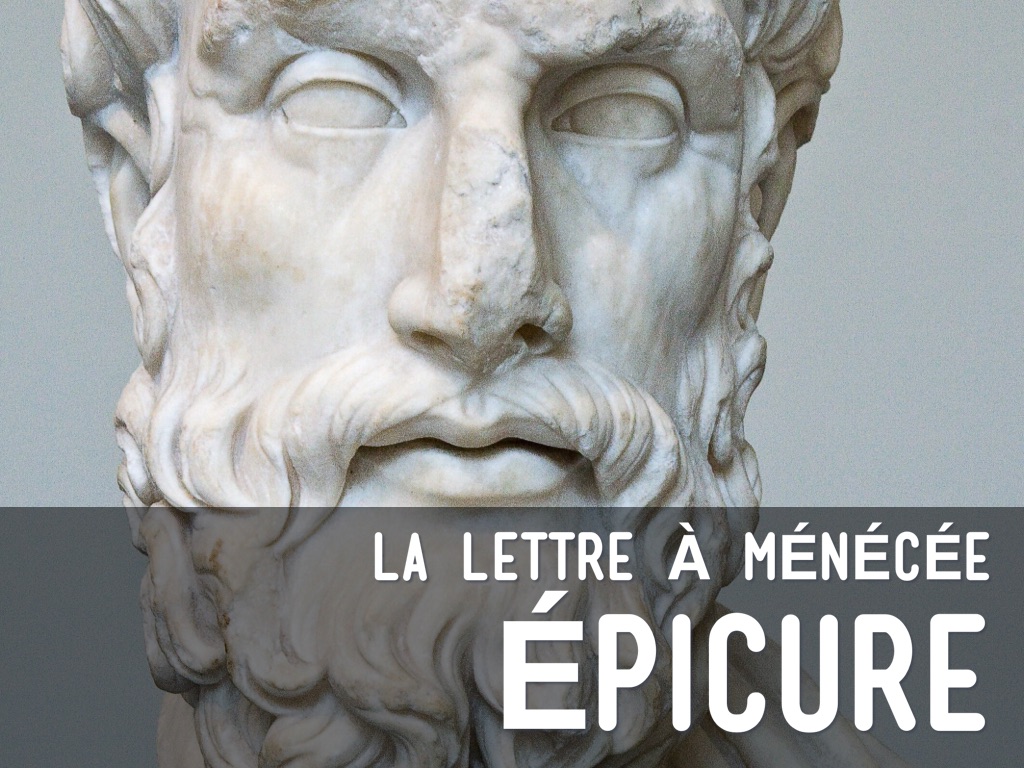
Okay, picture this: I'm scrolling through Twitter (yeah, I know, mea culpa), and I stumble upon this quote that's attributed to some old dead guy. It goes something like, "Death is nothing to us, since when we exist, death is not present, and when death is present, we do not exist." My initial reaction? Eye roll. Deep, theatrical eye roll. Sounds depressing, right? Like something a goth teenager would write in their diary. But the more I pondered it – and, let's be honest, the more I Googled it – the more I realized there's actually some seriously interesting stuff bubbling beneath the surface. This, my friends, is the essence of Epicurus's Letter to Menoeceus, or Lettre à Ménécée as the French elegantly call it. Prepare to have your preconceptions challenged!
Who Was This Epicurus Dude Anyway?
Alright, before we dive into the letter itself, let's quickly establish who we're dealing with. Epicurus (born around 341 BCE) wasn't just some gloomy philosopher scribbling away in a dark room. He was a bon vivant, a lover of pleasure, albeit a rather nuanced one. He founded his own school, The Garden, where he preached a philosophy centered on achieving ataraxia (tranquility, freedom from disturbance) and aponia (absence of pain). Sounds pretty good, doesn't it? Forget the Stoic ideals of enduring hardship; Epicurus was all about maximizing happiness... but with caveats, of course.
Think of him less as a hedonist throwing wild parties (though, I wouldn’t be surprised if they happened occasionally), and more as a mindful minimalist, focused on cultivating inner peace and contentment. Now, let's see what wisdom he bestowed upon his friend Menoeceus (and, by extension, us).
Breaking Down the Lettre à Ménécée
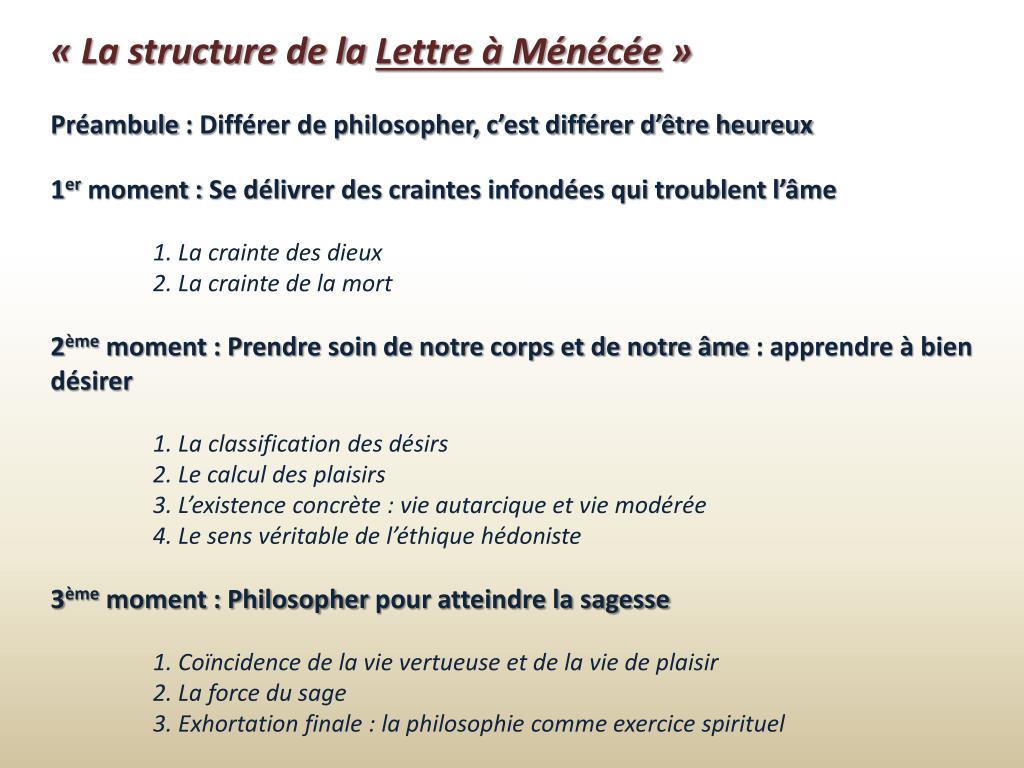
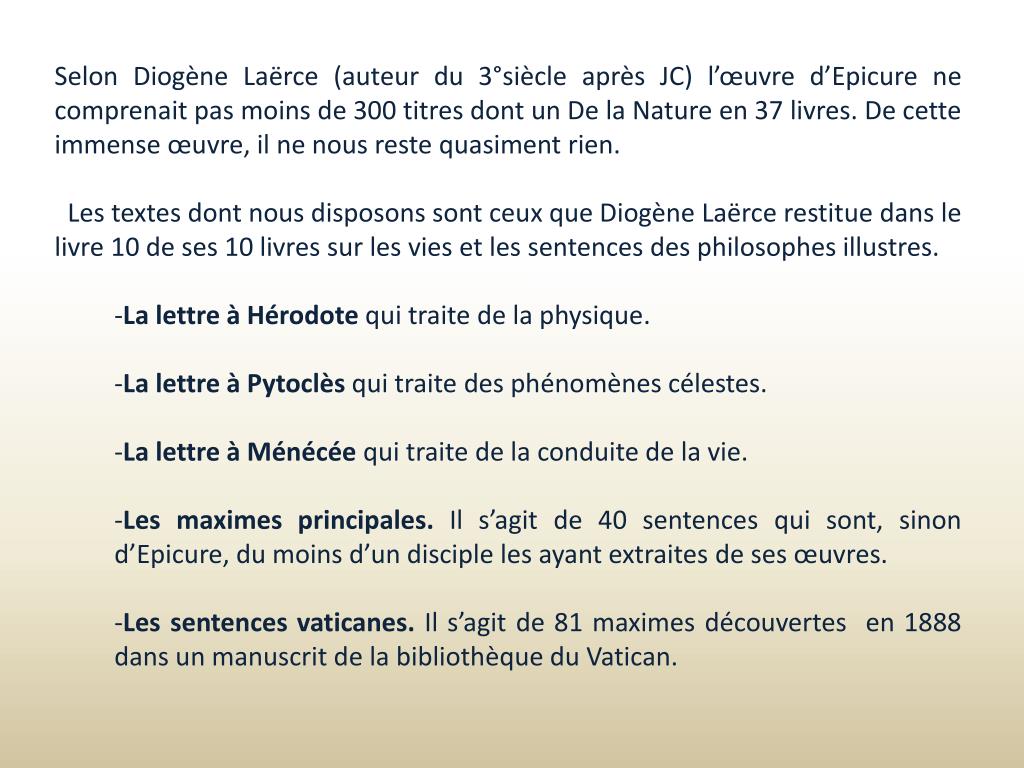
This letter isn't some sprawling, multi-volume treatise. It's relatively concise, but packed with powerful ideas. It can be roughly divided into sections, and here are the key themes:
1. The Gods Aren't Out to Get You (Probably)
Epicurus argues against the common belief that the gods are constantly interfering in human affairs, punishing the wicked and rewarding the righteous. He believed that the gods, if they exist, are perfectly happy and blissful, and wouldn't bother with our petty dramas. This isn't to say he denied the existence of gods entirely; it's more that he saw them as distant and detached. So, basically, stop blaming Zeus for your bad hair day.
Think about it: wouldn't a truly perfect being have better things to do than micromanage our lives? It's a liberating thought, isn't it?

2. Fear of Death is Pointless (Seriously)
This is the big one, the quote that started it all. Epicurus's argument against the fear of death is incredibly logical, and arguably quite comforting. As mentioned earlier, he points out that death is simply the absence of sensation. When we are alive, death is not present; when death is present, we are not alive. Therefore, death can't harm us because we won't even be there to experience it.
He uses the analogy of time: we don’t fear the time before we were born, so why fear the time after we die? Makes you think, right?
Of course, this isn't about glorifying suicide or recklessly endangering your life. It's about living fully in the present, without being paralyzed by the fear of an inevitable future event. Think of it as radical acceptance. Now, that's good philosophy.

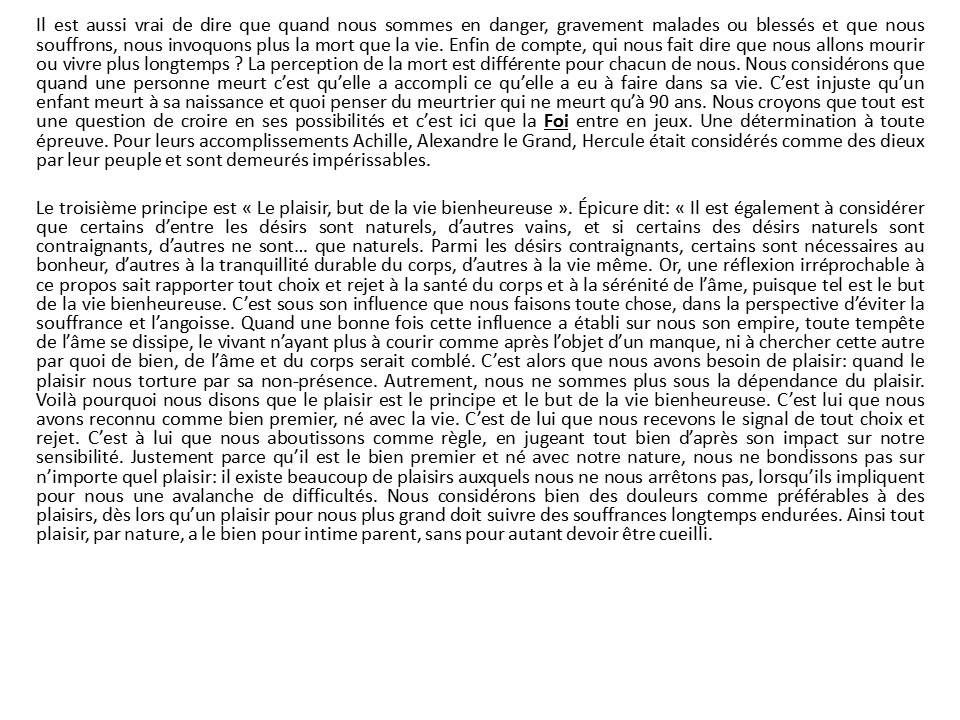
3. Pleasure is the Goal (But Not That Kind of Pleasure)
Okay, this is where things get interesting. When Epicurus talks about pleasure as the ultimate goal, he's not advocating for a life of debauchery. He distinguishes between different types of pleasure. He wasn’t suggesting you give up paying your taxes so you could go get that Louis Vuitton handbag that you've been eyeing. He differentiates between:
- Kinetic pleasure: This is the kind of pleasure we get from satisfying a desire, like eating when we're hungry, or drinking when we're thirsty. These pleasures are temporary and often lead to pain in the long run (think hangovers).
- Katastematic pleasure: This is the absence of pain and disturbance. It's a state of tranquility and contentment. This is the kind of pleasure that Epicurus prioritized.
Epicurus believed that true happiness comes from minimizing pain and maximizing inner peace. This involves things like:
- Prudence: Making wise choices that lead to long-term well-being.
- Friendship: Cultivating strong, supportive relationships.
- Virtue: Living an ethical and moral life.
So, ditch the constant pursuit of fleeting pleasures, and focus on cultivating lasting contentment. Makes sense, right? Less Instagram scrolling, more quality time with loved ones.
4. Living Wisely is the Key
Epicurus emphasized the importance of living wisely, justly, and beautifully. He believed that these virtues were intrinsically linked to pleasure. You can't truly be happy if you're constantly acting selfishly or immorally. Virtue isn't just a means to an end; it's an essential component of a fulfilling life.

Basically, being a good person is actually good for you. Who knew?
Why Should We Care About This Stuff Today?
So, why bother reading a letter written over 2,300 years ago? Because Epicurus's ideas are surprisingly relevant to our modern lives. We live in a world that's constantly bombarding us with messages telling us that we need more, bigger, better things to be happy. Epicurus offers a powerful counter-narrative: that true happiness comes from within, from cultivating inner peace and contentment.
Think about it: are you really happier after buying that new gadget? Or does the initial excitement quickly fade, leaving you craving the next dopamine hit? Epicurus encourages us to break free from this cycle of endless desire and to focus on what truly matters.

Moreover, his perspective on death can be incredibly liberating in a world obsessed with youth and immortality. Accepting the inevitability of death allows us to appreciate the present moment more fully and to live each day with intention.
In Conclusion (For Now...)
The Lettre à Ménécée isn't just some dusty old philosophical text. It's a practical guide to living a happier, more meaningful life. It challenges us to question our assumptions about happiness, death, and the good life. It encourages us to prioritize inner peace over fleeting pleasures and to cultivate strong, supportive relationships.
So, the next time you're feeling overwhelmed by the stresses of modern life, take a moment to reflect on Epicurus's wisdom. You might be surprised at how relevant his ideas still are. And hey, maybe I won't roll my eyes quite so hard the next time I see an ancient quote on Twitter. Maybe. But even Epicurus, I suspect, wouldn’t take that too seriously.
Ultimately, the Lettre à Ménécée reminds us that the pursuit of happiness is an ongoing journey, not a destination. It's about making conscious choices that align with our values and lead to a life of ataraxia and aponia. And who wouldn't want a little more of that?