
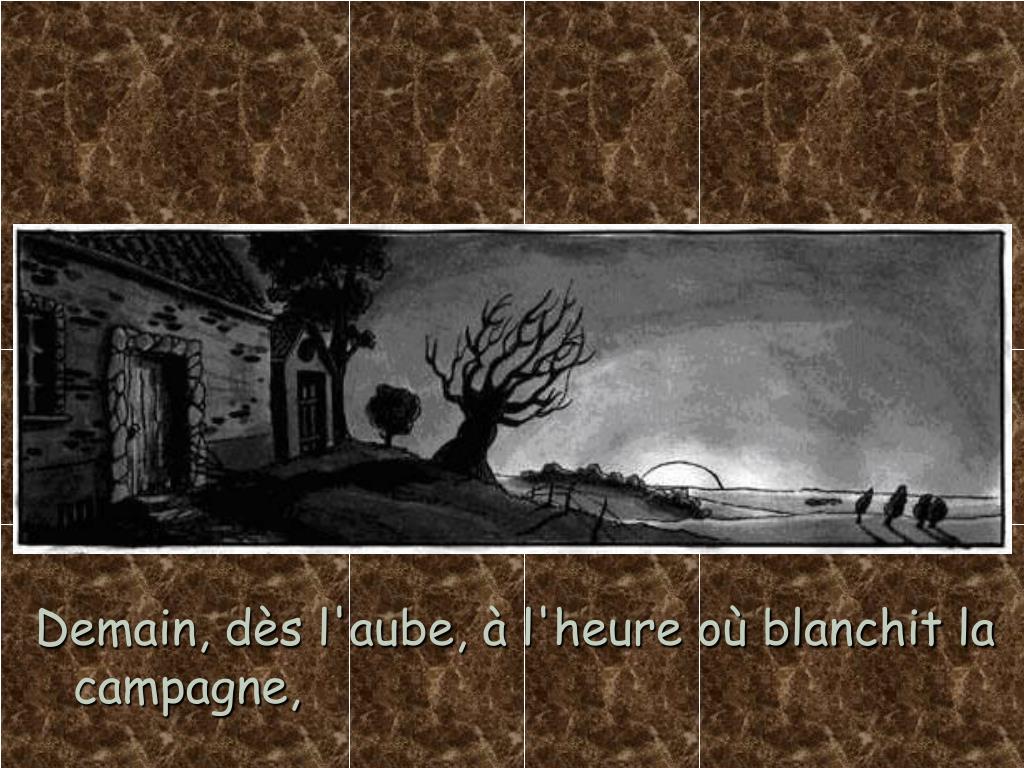
Ah, "Demain, dès l'aube, à l'heure où blanchit la campagne..." Just hearing those words, don't you feel like you should be wearing a long cloak, dramatically reciting poetry into the pre-dawn mist? It's like the verbal equivalent of a sepia-toned photograph. But beneath the romantic veneer lies a poem that's both heartbreaking and surprisingly simple.
Victor Hugo: The OG Emo Poet (But, Like, Really Good)
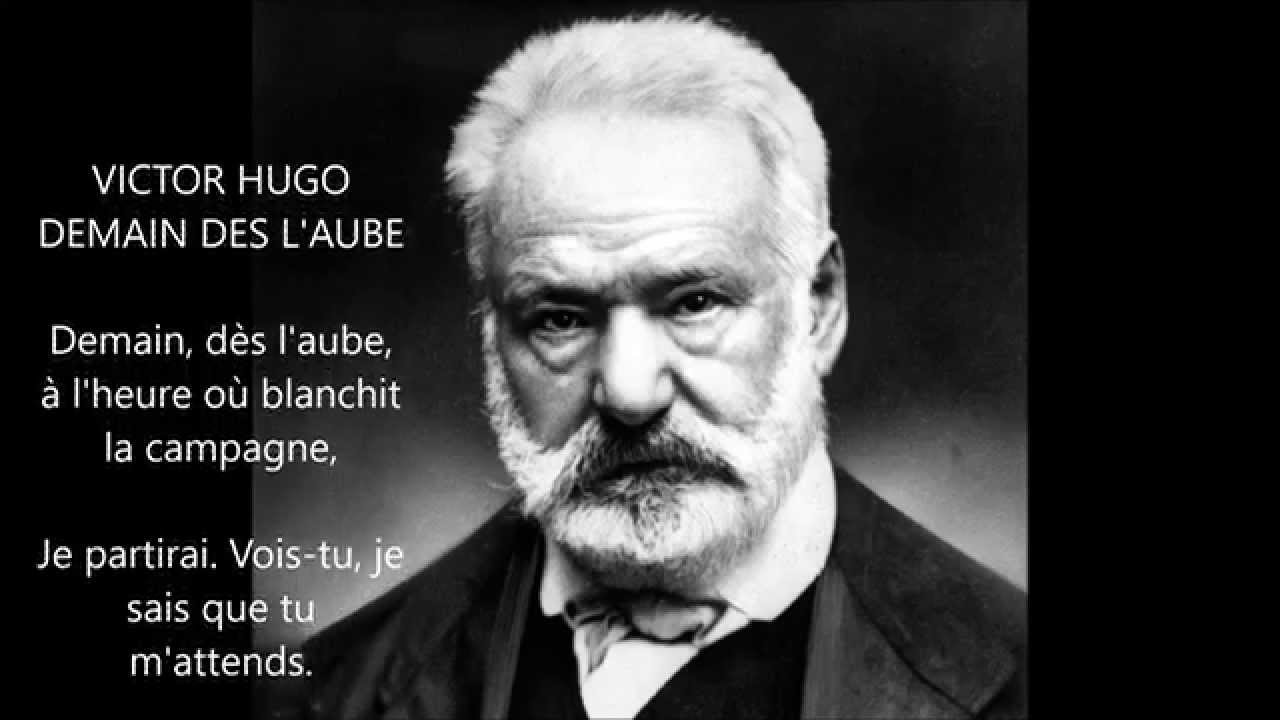
First, let's talk about the man himself: Victor Hugo. Now, Hugo was basically the 19th century's version of a rock star, only instead of throwing televisions out of hotel windows, he wrote Les Misérables. Think about it: he was a novelist, poet, playwright, politician, and all-around literary titan. He was so influential that even his beard had its own gravitational pull. He was a man of such epic proportions, it’s almost intimidating. But beneath that formidable exterior, he was, you know, just a guy who felt things. Deeply.
The Tragic Backstory (Grab Your Tissues… Or a Croissant)
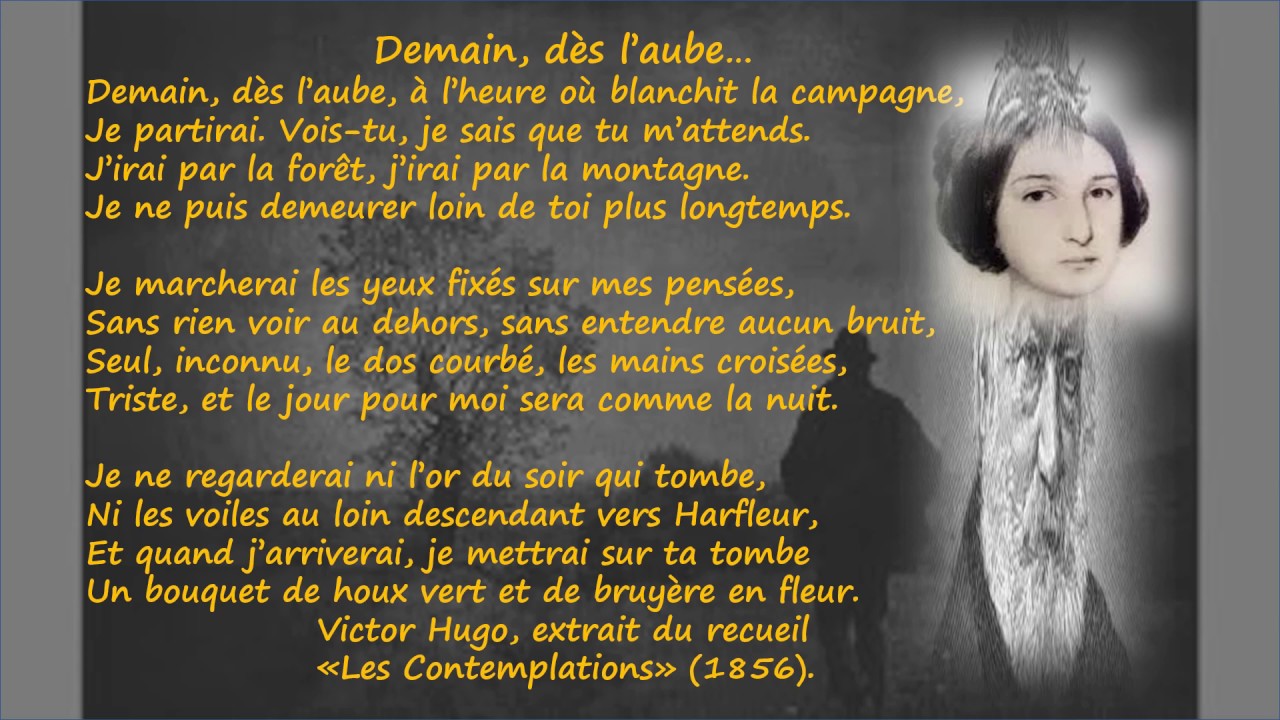
This particular poem, part of the collection "Les Contemplations," wasn't just some random burst of creative inspiration. Oh no. It's steeped in grief. Hugo wrote it after the tragic death of his daughter, Léopoldine, who drowned in the Seine in 1843, only a few months after her marriage. I know, right? Brutal. So, when you read about him setting out at dawn, you're not just reading about a pleasant morning stroll; you're reading about a man grappling with unimaginable loss.
Decoding the Poem: It's Not as Complicated as You Think (Probably)
Okay, let's break down the poem itself. Don’t worry, we're not going to get all stuffy and academic. Think of this as a friendly chat over coffee (or maybe a glass of wine, depending on the time you're reading this).
The poem is a straightforward narrative of a journey to visit Léopoldine's grave in Villequier. But it's the details that give it its power. Let's highlight some key aspects:

- The Time: "Demain, dès l'aube..." (Tomorrow, at dawn). The dawn is significant. It symbolizes a new beginning, but also the start of a long, arduous day. It is that liminal space where darkness and light meet, mirroring Hugo's own state of mind between despair and a faint hope of finding solace. Starting at dawn also suggests a determined, almost compulsive need to complete the journey.
- The Journey: He travels on foot, which emphasizes the effort and commitment he's making. It’s not a leisurely carriage ride; it's a deliberate act of physical endurance that mirrors the emotional endurance required to confront his grief. The simplicity of the journey, too, underscores the rawness of his pain. No fanfare, no distractions, just the road and his thoughts.
- The Season: The poem doesn't explicitly state the season, but the line "à l'heure où blanchit la campagne" (at the hour when the countryside whitens) suggests either a frosty autumn morning or a spring dawn when the dew is heavy on the fields. This ambiguity adds to the poem's timeless quality. The "whitening" could also symbolize a cleansing, a purging of sorrow, or perhaps the pale cast of death itself.
- The Emotion: "Je marcherai les yeux fixés sur mes pensées" (I will walk with my eyes fixed on my thoughts). This is a powerful line. He's completely consumed by his grief. He's not noticing the scenery, he's not interacting with anyone; he's lost in his own internal world. The fixed gaze speaks to a rigid determination, a refusal to be distracted from his purpose. He will face his pain head-on.
- The Acceptance: "Je ne regarderai ni l'or du soir qui tombe, / Ni les voiles au loin descendant vers Harfleur" (I will not look at the gold of the evening falling, / Nor the sails in the distance descending towards Harfleur). He deliberately shuts out the beauty of the world around him. He's refusing to be comforted by anything that isn't directly related to his daughter. This is not about denying beauty, but about acknowledging that, in this moment, such beauty cannot penetrate his sorrow. Harfleur, a nearby port town, adds a touch of local color, but also serves as a reminder of the world continuing on, oblivious to his personal tragedy.
- The Offering: "Et quand j'arriverai, je mettrai sur ta tombe / Un bouquet de houx vert et de bruyère en fleur" (And when I arrive, I will place on your grave / A bouquet of green holly and flowering heather). This is the culmination of the journey. He's bringing a simple offering of holly and heather. Holly, with its evergreen leaves, symbolizes enduring memory and eternal life. Heather, often associated with Scotland (though found in France, too!), symbolizes admiration and good luck. The act of placing the bouquet is a gesture of love, remembrance, and a quiet hope for peace.
Why This Poem Still Resonates (Even If You've Never Lost a Daughter in a River)
So, why does this poem, written in the 19th century about a very specific personal tragedy, still move people today? Several reasons:
- Universal Themes: Grief, loss, love, remembrance. These are all emotions that every human being experiences at some point in their lives. The poem taps into these fundamental aspects of the human condition.
- Simple Language: Despite being written by a literary giant, the language is relatively straightforward. There's no overly flowery prose or obscure metaphors. The simplicity allows the emotion to shine through. Hugo doesn't need to be overly complicated, he just needs to be honest.
- Raw Emotion: The poem is incredibly honest and vulnerable. Hugo doesn't shy away from expressing his pain and sorrow. This vulnerability is what makes the poem so relatable. We see a glimpse of his raw, unadulterated grief, and it resonates because we recognize similar feelings within ourselves.
- The Power of Imagery: The poem is filled with vivid imagery that evokes a strong sense of place and atmosphere. The "whitening countryside," the "gold of the evening," the "sails descending towards Harfleur" – these images create a powerful emotional landscape.
- Hope Amidst Despair: While the poem is undeniably sad, there's also a glimmer of hope in the act of remembrance and the offering of the bouquet. It suggests that even in the face of profound loss, love and memory can endure.
The Music (Because Everything's Better With Music)
Now, here's a fun fact: "Demain, dès l'aube..." has been set to music countless times. Seriously, do a quick search on YouTube and you'll find everything from classical settings to folk versions to even some experimental electronic interpretations (though I'm not sure Hugo would approve of the last one). The poem's inherent musicality – its rhythm and rhyme – makes it particularly well-suited for musical adaptation.

Notable Musical Adaptations (For Your Listening Pleasure)
- Georges Brassens: Perhaps the most famous musical setting is by the legendary French singer-songwriter Georges Brassens. His version is simple, poignant, and perfectly captures the poem's mood. Brassens, with his characteristic guitar and gravelly voice, strips away any potential sentimentality and delivers the poem with raw emotion.
- Other Composers: Many other composers have also set the poem to music, including classical composers and contemporary artists. Each adaptation brings its own unique interpretation to the poem, highlighting different aspects of its emotional landscape.
Common Misinterpretations (Let's Clear Things Up)
Of course, with any famous poem, there are bound to be some misinterpretations. Let's address a few of the common ones:
- Thinking it's only about death: While death is certainly a central theme, the poem is also about love, memory, and the enduring power of the human spirit. It's not just a lament; it's a testament to the enduring bond between a father and his daughter.
- Over-romanticizing the grief: It's easy to get caught up in the romantic imagery and forget the raw, gut-wrenching pain that Hugo was experiencing. Remember that this poem is not a celebration of sadness; it's an honest expression of it.
- Assuming it's autobiographical in every detail: While the poem is clearly inspired by Hugo's personal tragedy, it's important to remember that it's still a work of art. He may have taken liberties with certain details for artistic effect. We can assume it's autobiographical mostly.
The Enduring Appeal (Why We Still Care About Victor's Feelings)
Even though "Demain, dès l'aube..." was written over 150 years ago, it continues to resonate with readers today. Why? Because it speaks to something fundamental about the human experience. It reminds us that grief is a universal emotion, that love can endure even in the face of death, and that even in the darkest of times, there is always a glimmer of hope.
Key Takeaways (In Case You Were Napping)
- It's a deeply personal poem: Written by Victor Hugo after the death of his daughter, Léopoldine.
- It's about grief, love, and remembrance: Universal themes that resonate with everyone.
- The language is simple yet powerful: Easy to understand, but emotionally evocative.
- It's been set to music countless times: A testament to its enduring appeal.
- It's a reminder that even in darkness, there is hope: A message that we all need to hear from time to time.
So, What Can We Learn From "Demain, dès l'aube..."? (Besides How to Properly Grieve in 19th Century France)
Beyond the obvious themes of grief and loss, "Demain, dès l'aube..." offers some valuable lessons about life, art, and the human condition:

- The Importance of Remembrance: The act of visiting Léopoldine's grave and placing the bouquet is a powerful reminder of the importance of remembering those we have lost. Keeping their memory alive helps us to cope with our grief and to honor their lives.
- The Power of Simple Gestures: The bouquet of holly and heather is a simple, yet deeply meaningful gesture. It reminds us that even small acts of kindness and remembrance can have a profound impact.
- The Acceptance of Pain: Hugo doesn't try to sugarcoat his grief or to pretend that everything is okay. He acknowledges his pain and allows himself to feel it fully. This acceptance is a crucial step in the healing process.
- The Endurance of Love: Even in the face of death, Hugo's love for his daughter remains strong. This love transcends the boundaries of mortality and serves as a source of comfort and strength.
- The Beauty of Simplicity: The poem's simple language and straightforward narrative are a testament to the power of simplicity in art. Sometimes, the most profound emotions can be expressed in the most unassuming ways.
Final Thoughts (And a Little Bit of Humorous Speculation)
So, the next time you're feeling a little down, or you just want to appreciate some truly beautiful poetry, give "Demain, dès l'aube..." a read. Just maybe keep a box of tissues handy. And perhaps a croissant. Because, let's be honest, everything is better with a croissant.
Imagine Victor Hugo, though. He gets up at dawn, trudges all the way to Villequier (which, let's face it, is probably further than your average Starbucks run), lays down his meticulously chosen bouquet, and then… what? Does he grab a coffee and a pain au chocolat? Does he sit and contemplate the meaning of life while swatting away pesky mosquitoes? We'll never know. But I like to think he allowed himself a little treat. He deserved it.
And speaking of deserving it, you deserve a pat on the back for making it through this entire analysis! You're practically a literary scholar now. Go forth and impress your friends with your newfound knowledge of Victor Hugo and the complexities of 19th-century grief. Just don't be too dramatic about it. Unless, of course, you're wearing a long cloak. In that case, all bets are off.
Bonus: Fun Fact You Can Use to Impress People at Parties
Did you know that Léopoldine's husband, Charles Vacquerie, also drowned trying to save her? Talk about a tragic Romeo and Juliet situation! Use that one sparingly, though. You don't want to be that person who brings everyone down at a party. Unless it's a poetry-themed party, then go wild.
Conclusion: The Take-Away (Pun Intended)
So, there you have it. "Demain, dès l'aube, à l'heure où blanchit la campagne..." A poem about grief, love, and a very long walk. It’s proof that even the most heart-wrenching experiences can be transformed into something beautiful and enduring. And remember, if you ever find yourself feeling overwhelmed by sadness, just imagine Victor Hugo trudging through the countryside, bouquet in hand. At least you're not him... probably. Now, go forth and have a magnifique day. Or, at the very least, a reasonably okay one. Just try not to drown in any rivers, okay?








![[Lecture poésie] Demain, dès l'aube... Victor Hugo, Les Contemplations](https://i.ytimg.com/vi/Jwhu2ObFoAo/maxresdefault.jpg)


