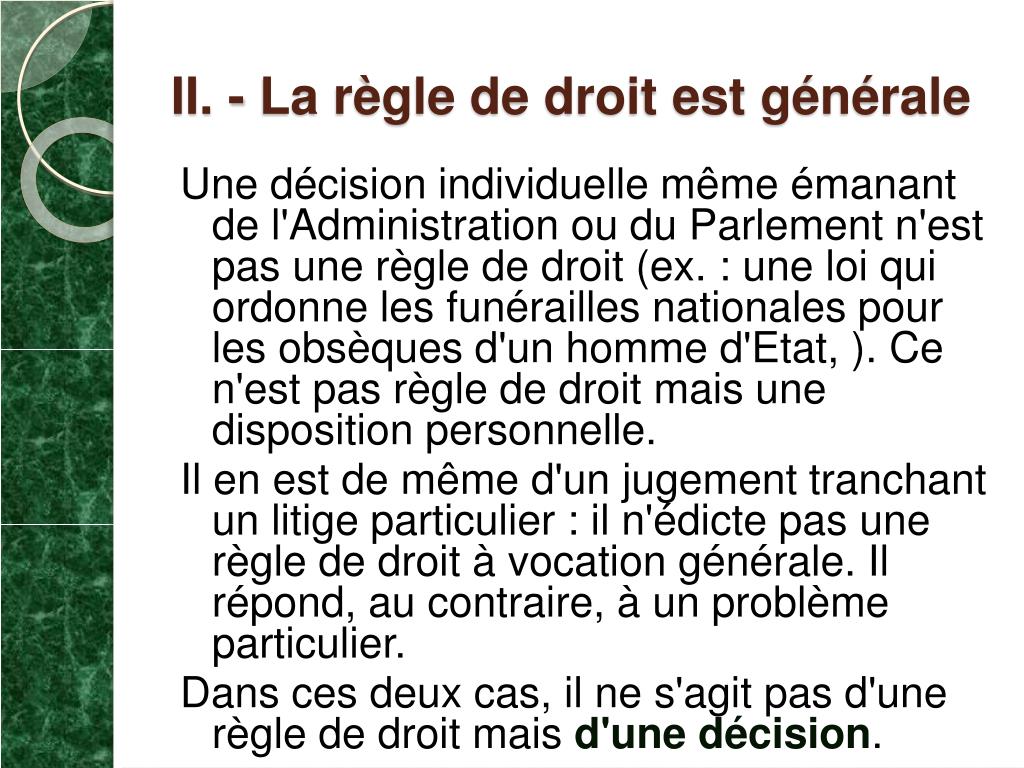
Alright, mes amis! Buckle up, because we're about to dive headfirst into the wonderfully wacky world of… (drumroll please)… la Règle de Droit! Now, before your eyes glaze over and you start picturing dusty law books and bewigged judges, let me assure you, this is going to be way more fun than that. Think of it as a legal rollercoaster – exciting, a little scary at times, but ultimately, you'll probably throw your hands up and scream with delight (or maybe just relief that it's over). But trust me, even if you're not a lawyer, understanding this concept is like having a secret decoder ring for how society works. Plus, you can impress your friends at dinner parties. Who doesn't want that?
Qu'est-ce que c'est, exactement? (What is it, exactly?)
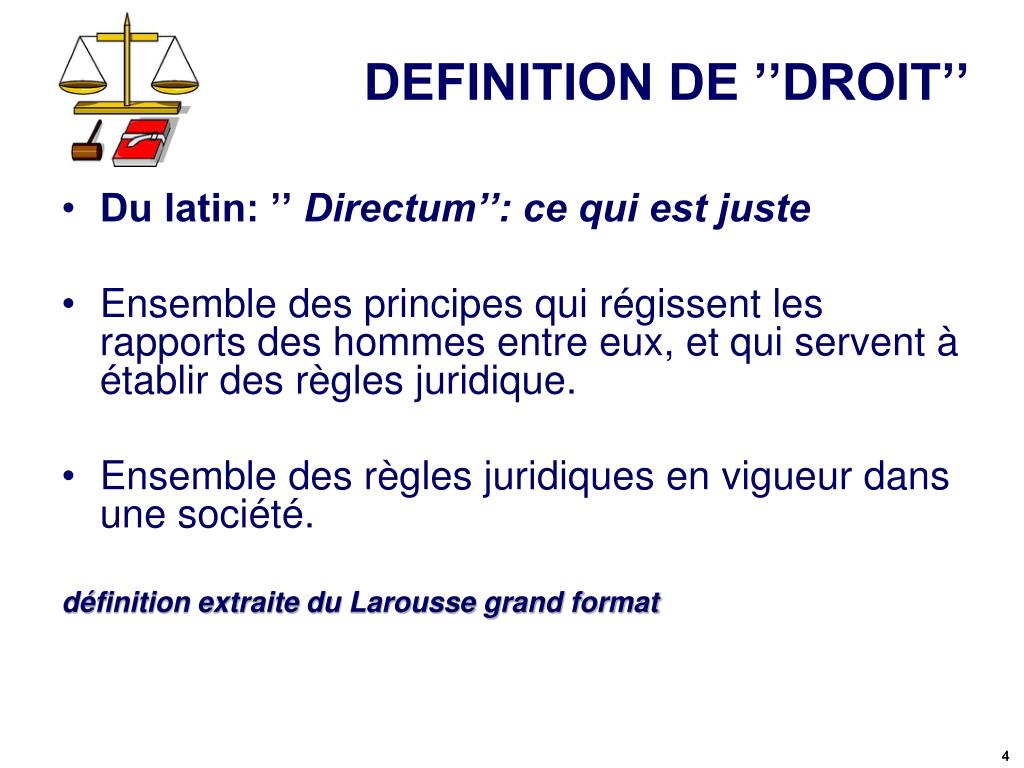
So, what is this mysterious "Règle de Droit" thing? Well, the literal translation is "Rule of Law," which, let's be honest, sounds a bit… obvious. It's like saying water is wet. Thanks, Captain Obvious! But the beauty of the Règle de Droit lies in its implications. It's not just about having rules; it's about how those rules are made, who they apply to, and how they're enforced. Think of it as the operating system for a just society – the software that keeps everything running smoothly (or at least trying to run smoothly. We all know glitches happen!).
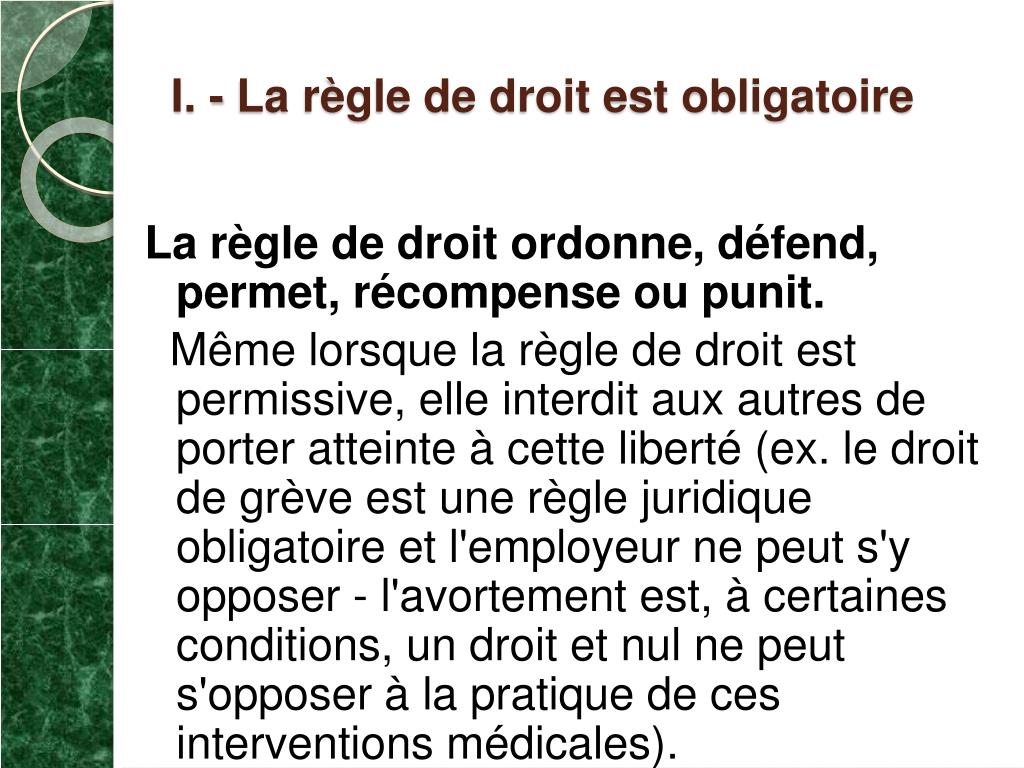
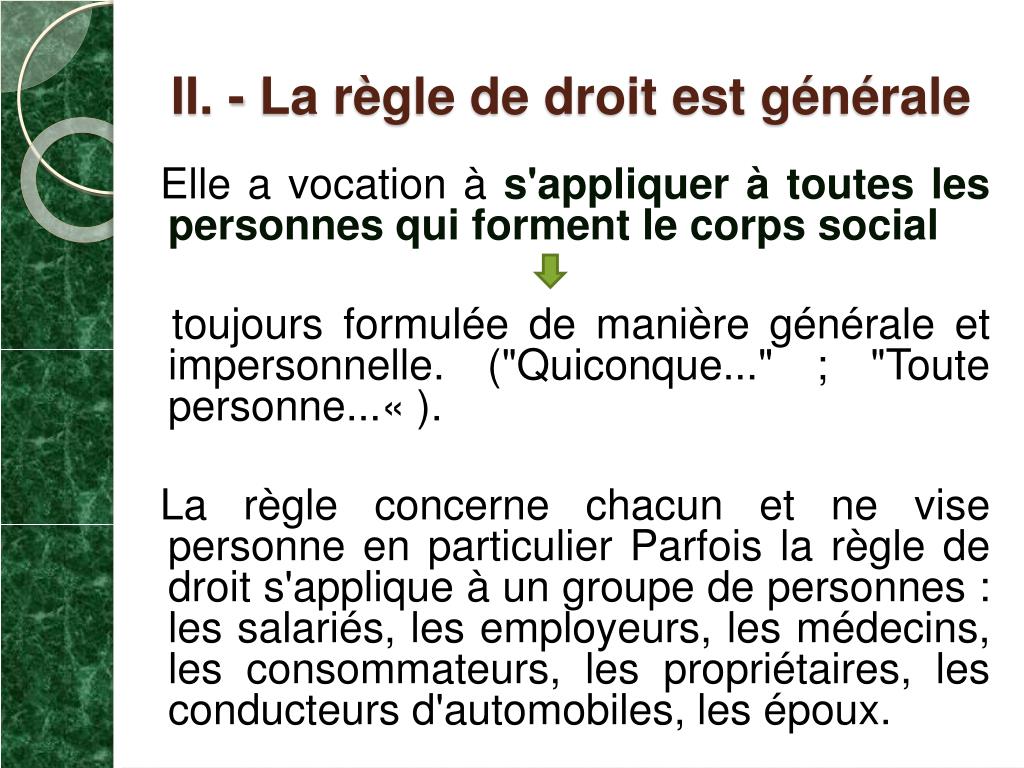
In a nutshell, the Règle de Droit means that everyone is subject to the law, from the President to the pizza delivery guy (though, arguably, getting your pizza on time should be a constitutional right... just kidding... mostly). No one is above the law, and everyone is entitled to equal protection under the law. Sounds simple, right? Yeah, well, try explaining it to a toddler who wants your ice cream. The theory is beautiful; the practice? Well, that's where things get interesting.
Breaking it Down: Key Ingredients of the Règle de Droit
Let's dissect this legal beast into its constituent parts. Think of it like a delicious (but slightly intimidating) French pastry. We need to understand the layers!
- Supremacy of Law: This is the big kahuna. It means that the law is the supreme authority in the land. Not the whim of a powerful ruler, not the loudest voice in the crowd, but the law. It’s the legal equivalent of "the customer is always right," except in this case, "the law is always right" (even when it feels like it's profoundly wrong... but that's a discussion for another day).
- Equality Before the Law: This is the cornerstone of a fair legal system. Everyone, regardless of their background, wealth, or social status, should be treated equally under the law. In theory, anyway. We all know reality can be a bit… messier. But the ideal is equality. Think of it as a level playing field, where everyone gets a fair shot (even if some people have slightly better cleats... metaphorically speaking, of course).
- Accountability to the Law: This means that those who make and enforce the laws are also accountable to them. Politicians can't just do whatever they want (shocking, I know!). Police officers can't abuse their power. Everyone is held to the same standard. It's like saying, "Hey, you made the rules, you gotta play by them too!" It's legal karma, baby!
- Fairness in the Application of the Law: The laws need to be applied fairly and consistently. No arbitrary decisions, no biased judgments. Justice should be blind (and hopefully wearing a fashionable blindfold). Imagine a referee who changes the rules of the game halfway through because he doesn't like your team. That's the opposite of fairness!
- Separation of Powers: This is where things get a little more complicated, but bear with me. The power of the government should be divided between different branches (usually the legislative, executive, and judicial branches). This prevents any one person or group from becoming too powerful. It's like having checks and balances on your bank account – making sure no one can drain it dry without your permission (or at least without you noticing… eventually).
- Participation in Decision-Making: Citizens should have a voice in the laws that govern them. This can be through voting, lobbying, or other forms of political participation. It's like having a say in what kind of pizza you order for the party – you don't want to be stuck with anchovies if you hate them!
- Legal Certainty: The laws should be clear, accessible, and predictable. People should know what the rules are and what the consequences are for breaking them. Imagine trying to play a board game where the rules change every turn and no one knows what's going on. Frustrating, right? Legal certainty ensures that people can plan their lives and make informed decisions without constantly worrying about being blindsided by some obscure legal technicality.
- Procedural Fairness: This refers to the fairness of the legal processes themselves. Everyone is entitled to a fair hearing, the right to legal representation, and the right to appeal a decision. It's like making sure everyone gets a fair chance to present their side of the story, even if their story involves accidentally setting the kitchen on fire while trying to make toast.
Pourquoi c'est important? (Why is it important?)
Okay, so now we know what the Règle de Droit is. But why should we care? Why is it such a big deal? Well, imagine a world without it. Chaos, anarchy, legal wild west territory! Without the Règle de Droit, there's no protection against tyranny, no guarantee of basic rights, and no way to resolve disputes peacefully. It's the difference between a civilized society and, well, a really bad reality TV show.
The Règle de Droit fosters:
- Stability: Knowing that the law will be applied fairly and consistently creates a stable environment for businesses and individuals to thrive. No one wants to invest in a country where the rules can change on a whim.
- Economic Growth: A strong legal system attracts foreign investment and promotes economic growth. Investors are more likely to put their money in a country where they know their contracts will be enforced and their property rights will be protected.
- Protection of Rights: The Règle de Droit safeguards fundamental rights and freedoms, such as freedom of speech, freedom of religion, and the right to a fair trial. These rights are essential for a just and democratic society.
- Accountability of Government: The Règle de Droit holds government officials accountable for their actions. This prevents abuse of power and corruption.
- Peaceful Dispute Resolution: The legal system provides a peaceful and orderly way to resolve disputes. Instead of resorting to violence or self-help, people can turn to the courts to settle their differences.
Les défis et les limites (Challenges and Limitations)
Now, let's not get too carried away with ourselves. The Règle de Droit is not a perfect system. It faces many challenges and limitations. It's like that fancy espresso machine you bought – amazing when it works, but prone to breakdowns and requiring constant maintenance.
Some of the challenges include:
- Access to Justice: Legal systems can be expensive and complicated, making it difficult for ordinary people to access justice. This is especially true for marginalized communities. Imagine trying to navigate the legal system without a lawyer or even a basic understanding of the law. It's like trying to assemble IKEA furniture without the instructions – frustrating and likely to end in disaster.
- Corruption: Corruption can undermine the Règle de Droit by allowing powerful individuals and groups to evade accountability. Bribery, cronyism, and other forms of corruption can erode public trust in the legal system.
- Discrimination: Even in countries with strong legal systems, discrimination can still occur. Laws can be applied in a discriminatory manner, or certain groups may be denied equal protection under the law. Think of it as a subtle but persistent bias in the system, like a slightly warped record that always skips in the same spot.
- Political Interference: Political interference in the judiciary can undermine its independence and impartiality. Judges should be free to make decisions based on the law, without fear of political reprisal.
- Enforcement Challenges: Even if the laws are good, they can be difficult to enforce. This is especially true in countries with weak institutions or high levels of crime. It's like having a great set of rules for a game, but no one to enforce them – chaos ensues!
It's also important to remember that the Règle de Droit is not a static concept. It evolves over time to reflect changing social values and norms. What was considered just and fair a hundred years ago may not be considered just and fair today. Think of it as constantly updating your software to keep up with the latest threats and vulnerabilities. The legal system needs to be constantly adapting to the challenges of the modern world.
Règle de Droit en France (Rule of Law in France)
Ah, la France! The land of wine, cheese, and... the Règle de Droit! France has a long and proud tradition of upholding the Règle de Droit, dating back to the French Revolution. The Declaration of the Rights of Man and of the Citizen, adopted in 1789, enshrined many of the principles of the Règle de Droit, such as equality before the law and the protection of individual rights.
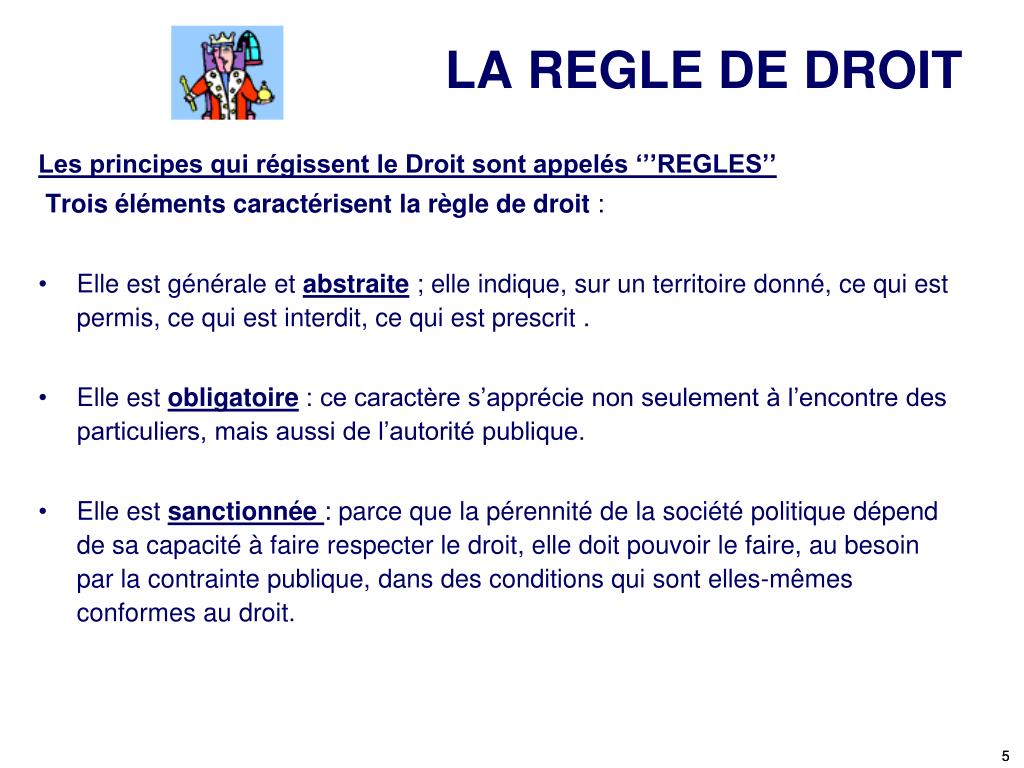
The French legal system is based on the civil law tradition, which means that it relies heavily on codified laws. The Civil Code, drafted under Napoleon, is a comprehensive body of law that governs many aspects of life in France. The French legal system also has a strong emphasis on judicial review, which means that the courts have the power to review the constitutionality of laws.
However, like any country, France faces challenges in upholding the Règle de Droit. Concerns have been raised about issues such as discrimination, police brutality, and access to justice for marginalized communities. The French government is constantly working to address these challenges and ensure that the Règle de Droit is applied fairly and consistently to all.
Quelques exemples concrets (Some Concrete Examples)
Let's bring this all down to earth with some real-world examples of how the Règle de Droit operates in France:

- The Constitutional Council (Conseil Constitutionnel): This body ensures that laws passed by the Parliament are in conformity with the Constitution. It's the legal watchdog, making sure everyone plays by the constitutional rules. Imagine it as the ultimate referee, making sure no one gets away with cheating.
- Administrative Courts (Tribunaux Administratifs): These courts deal with disputes between individuals and the government. If you feel like the government has treated you unfairly, you can take them to court. It's like saying, "Hey, government, you can't just do whatever you want! I have rights!"
- The presumption of innocence: This fundamental principle states that everyone is presumed innocent until proven guilty. The burden of proof is on the prosecution to prove beyond a reasonable doubt that the defendant committed the crime. It's like saying, "You gotta prove it to me!" before someone can be convicted.
- Access to legal aid: France provides legal aid to people who cannot afford to hire a lawyer. This ensures that everyone has access to legal representation, regardless of their financial situation. It's like having a legal safety net, catching you when you fall into legal trouble.
Conclusion: Le Mot de la Fin (The Final Word)
So, there you have it! The Règle de Droit, demystified (hopefully!). It's not just a dry legal concept; it's the foundation of a just and equitable society. It's about fairness, accountability, and ensuring that everyone is treated equally under the law. It's the legal glue that holds society together... or at least tries to. And while it's not perfect, it's a heck of a lot better than the alternative – legal chaos!
Now, go forth and impress your friends with your newfound knowledge of the Règle de Droit. And remember, even if you're not a lawyer, you have a role to play in upholding the Règle de Droit. By demanding accountability from our leaders, participating in the political process, and treating each other with respect, we can all contribute to a more just and equitable society.
And finally, remember: the Règle de Droit is like a good joke... it only works if everyone understands it and plays along! Now, if you'll excuse me, I'm off to argue with my cat about the proper application of the "no climbing on the curtains" rule. Wish me luck!