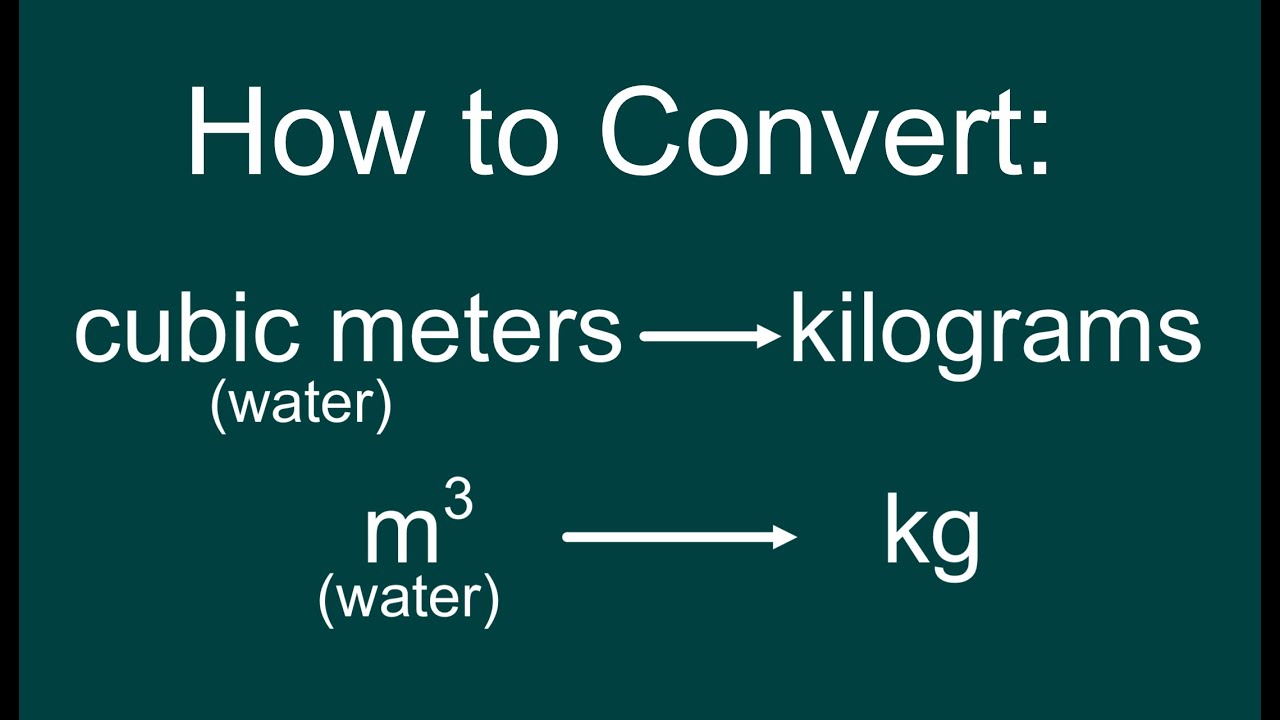
Bonjour, mes amis! Let's chat about something that might seem a little… dense, at first. But trust me, it's easier than ordering a perfect croissant in Paris. We’re talking about converting cubic meters to kilograms. Sound intimidating? Pas du tout!
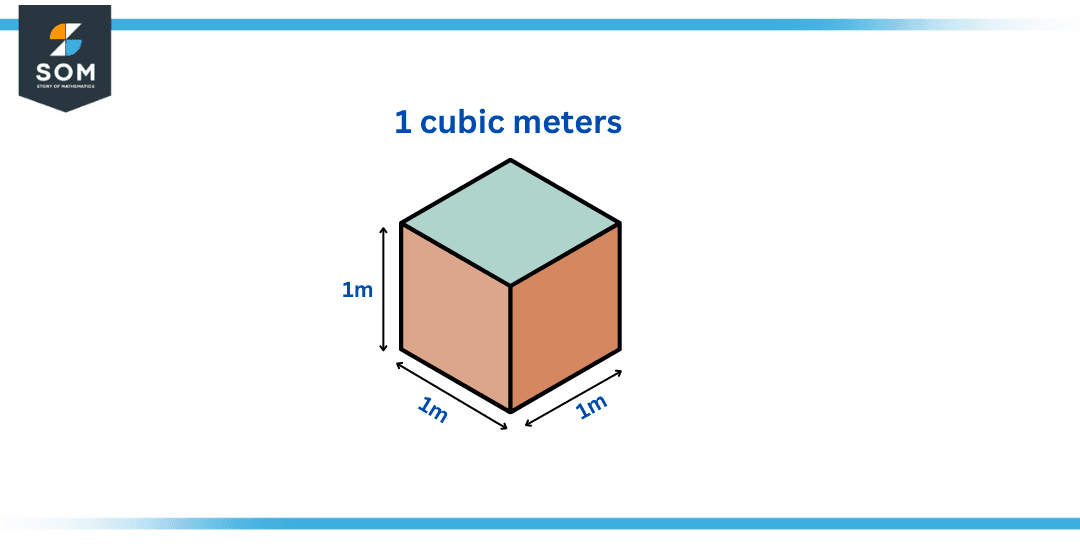
Think of it this way: you have a box, right? A box that's one meter long, one meter wide, and one meter high. That's a cubic meter. Now, imagine filling that box with something. Feathers? Lead? The weight of what fills it, that's where kilograms come in.
The Missing Piece: Density
So, what’s the magic trick? It all boils down to something called density. Remember that from science class? Density is basically how much “stuff” is packed into a certain space. Think of it like this: a kilo of feathers takes up way more space than a kilo of lead, right? That's because lead is much, much denser than feathers.
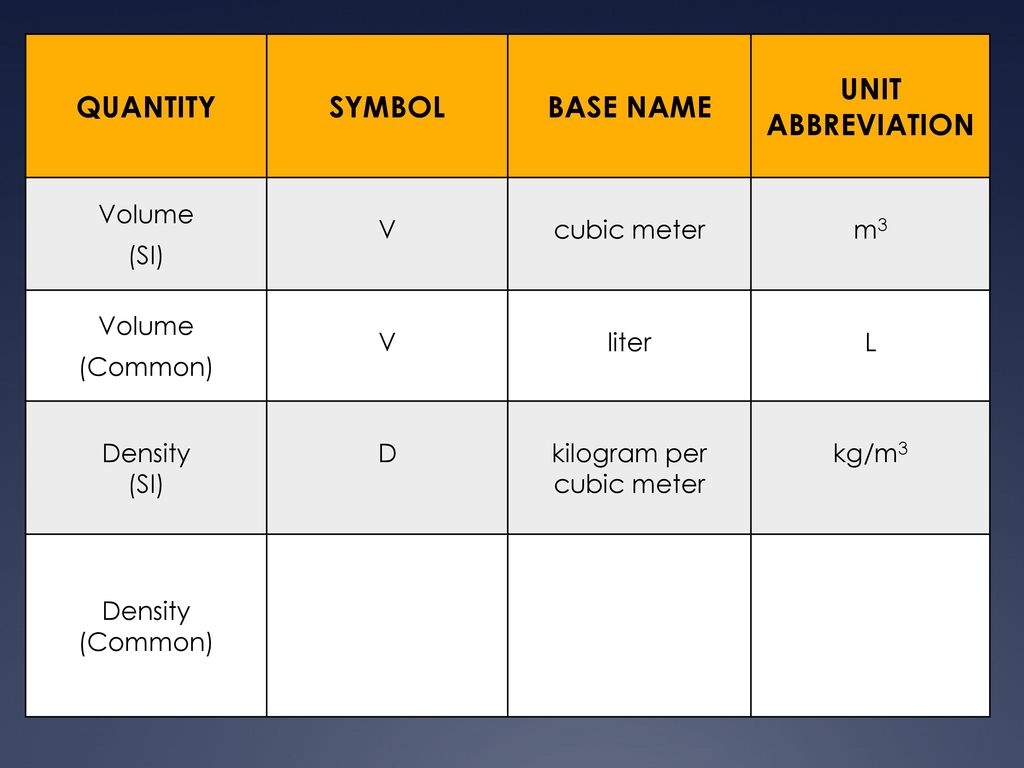
Density is usually measured in kilograms per cubic meter (kg/m³). It tells us the mass (kilograms) of a substance that fits into a cubic meter. So, how do we actually use this information?
It’s a simple formula, really:
Mass (kg) = Volume (m³) × Density (kg/m³)
See? Not so scary after all! Want an example?
Water, Our Trusty Friend
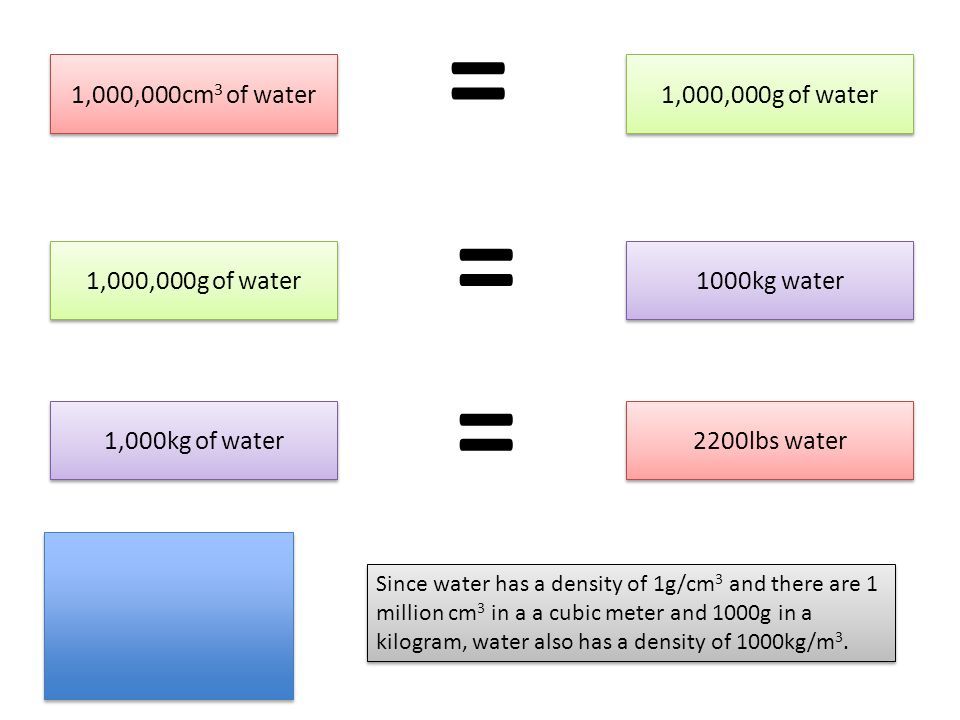
Let's use water. Water is relatively easy, because its density is around 1000 kg/m³. (It varies a little bit with temperature, but let's keep it simple for now, d'accord?).

So, if you have 1 cubic meter of water, the mass is:
1 m³ × 1000 kg/m³ = 1000 kg
Voilà! One cubic meter of water weighs approximately 1000 kilograms. That's why we often say 1 cubic meter is equal to 1 tonne (metric ton). Are you starting to see how useful this can be?
Different Substances, Different Densities
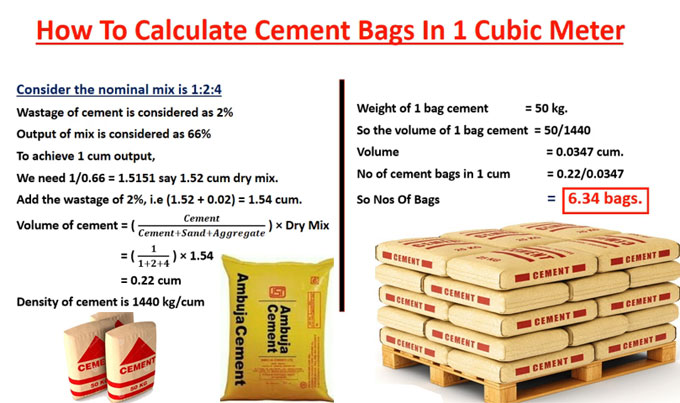
Now, what if you have something other than water? That's where things get a little more interesting. You need to know the density of the substance you're working with. Luckily, there are tables and charts readily available online that list the densities of all sorts of materials.
For example, let's say you have a cubic meter of oak wood. The density of oak can vary, but let's say it's around 700 kg/m³. Then:

1 m³ × 700 kg/m³ = 700 kg
So, a cubic meter of oak wood weighs approximately 700 kilograms. Quite a difference from water, wouldn't you agree?
What about something really light? Let's consider polystyrene (styrofoam). Its density is much lower, maybe around 30 kg/m³.
1 m³ × 30 kg/m³ = 30 kg
A cubic meter of polystyrene is only 30 kilograms! This really shows how density makes all the difference. Think about how easily styrofoam floats - it's because it's so much less dense than water.
Why Is This Important?
You might be thinking, "Okay, this is interesting, but why would I ever need to know this?" Well, think about shipping and logistics. Knowing the weight of materials is crucial for calculating transportation costs, ensuring that vehicles aren't overloaded, and planning storage space. It's also important in construction, engineering, and many other fields.
Imagine you're building a swimming pool. You need to calculate how much water it will hold. By knowing the volume of the pool (in cubic meters) and the density of water, you can easily determine the total weight of the water, which is essential for structural calculations. Pretty clever, right?
Or perhaps you are moving and want to estimate the weight of your furniture. Knowing the approximate volume of a bookcase (you can estimate it as a rectangular prism, after all!) and a rough estimate of the wood's density, you can get a reasonable idea of how heavy it is. Saves you from breaking your back – or at least preparing adequately!
And hey, it’s always good to have a little bit of extra knowledge rattling around in your brain. You never know when it might come in handy at a party! "Did you know a cubic meter of gold weighs almost 20 tonnes?" Guaranteed conversation starter!
A Few Things to Keep in Mind
Now, before you go off and start converting everything in sight, there are a few things you should remember:
*Density Varies: The density of a substance can vary depending on factors like temperature, pressure, and even purity. Always try to find the most accurate density value for your specific situation.
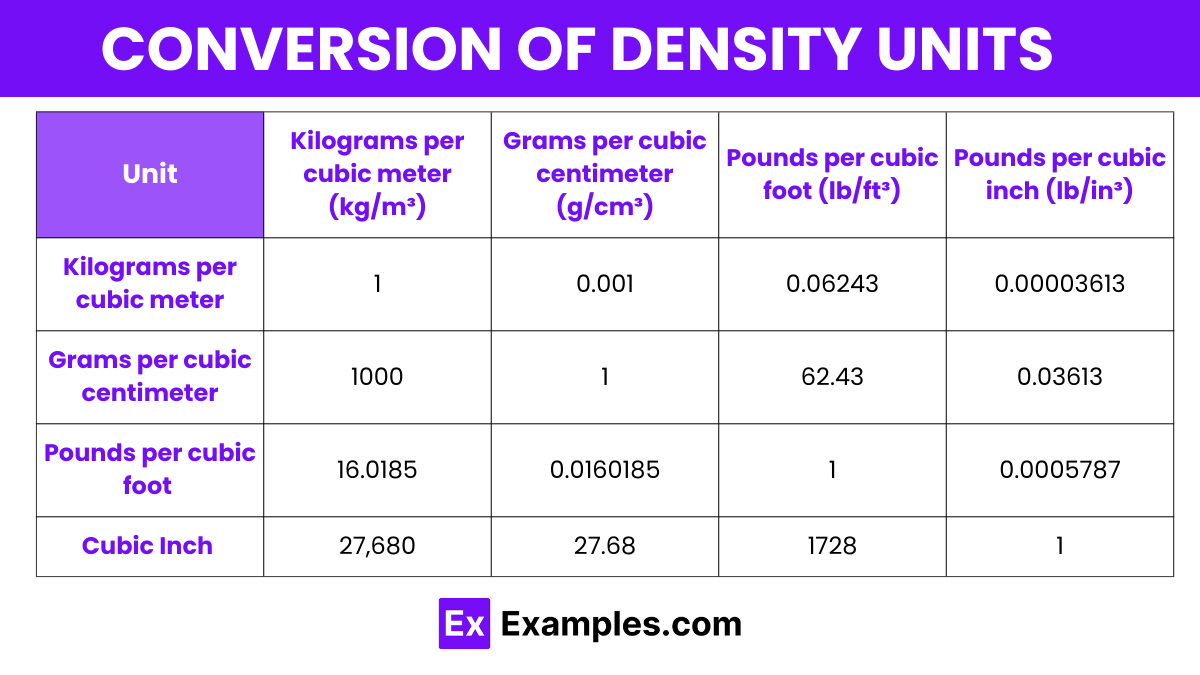
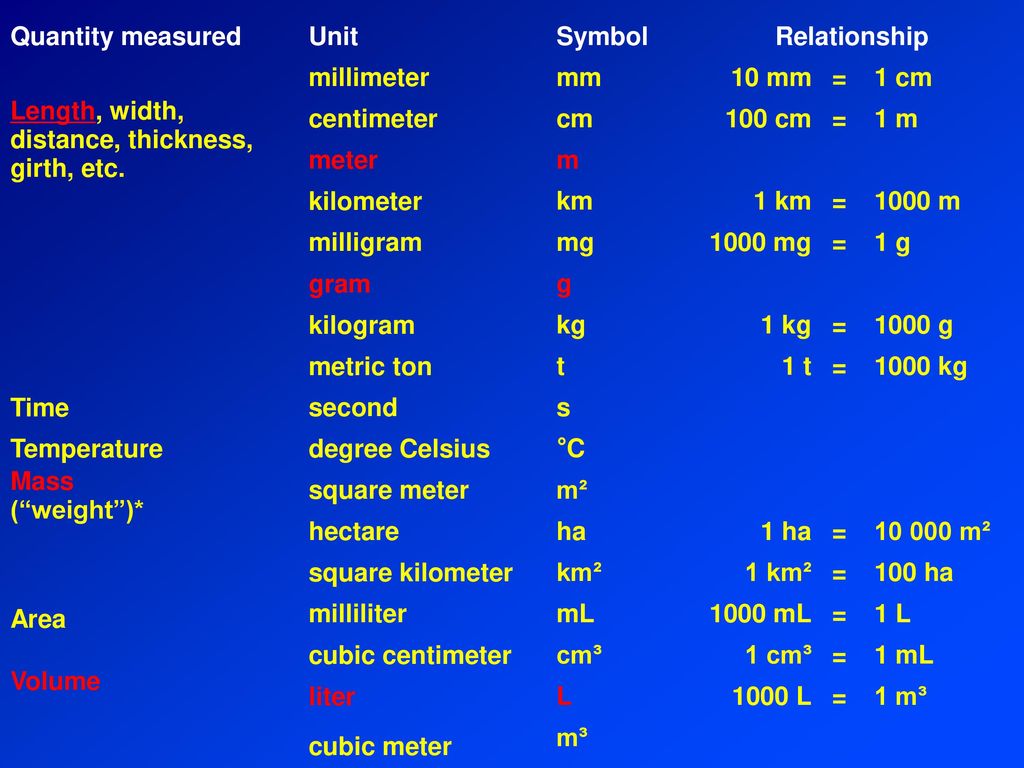
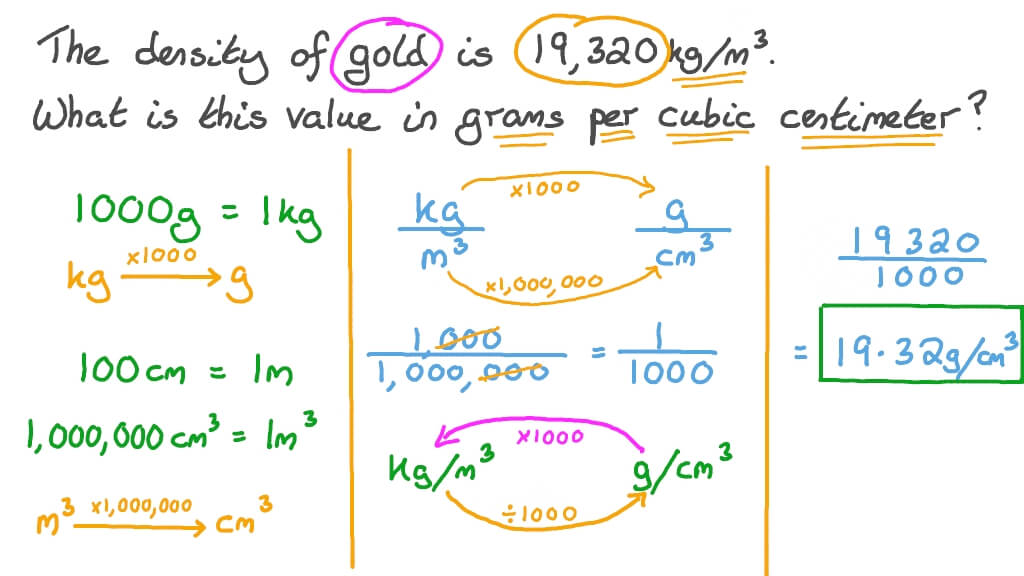
Units are Important: Make sure you're using consistent units. If your volume is in cubic centimeters, you'll need to convert it to cubic meters before using the formula. Likewise, be mindful if the density is given in grams per cubic centimeter (g/cm³) - you'll need to convert that to kilograms per cubic meter (kg/m³).
*Approximations are Okay: In many cases, an approximate density value is good enough. Don't get bogged down in trying to find the exact density unless it's critical for your application.
Speaking of units… converting between different units can sometimes be a pain. But fear not! There are plenty of online unit converters that can do the work for you. Just type in what you have and what you want, and voilà! Instant conversion.
In Conclusion… It's All About Understanding
So, there you have it! Converting cubic meters to kilograms is all about understanding the concept of density and using the right formula. It might seem a little complicated at first, but with a little practice, you'll be a pro in no time.
Remember, learning is a journey, not a destination. Don't be afraid to ask questions, make mistakes, and keep exploring. And who knows? Maybe one day you'll be using this knowledge to build something amazing, design a groundbreaking invention, or simply impress your friends with your newfound scientific prowess.
Keep learning, keep exploring, and remember that even the most complex concepts can be broken down into simple, manageable steps. À bientôt!





.jpg)