Salut l'ami(e) ! Ever felt like you're swimming in a sea of data in Excel, desperately searching for a life raft? Don't worry, we've all been there! Today, we're going to tackle a super useful, dare I say, magical skill: compter le nombre de lignes dans Excel. And trust me, knowing this will make your Excel adventures WAY more fun. (Yes, I said fun. Stick with me!)
Why bother, you ask? Well, imagine you're organizing a list of customers, tracking sales figures, or even just making a giant to-do list (we've all been there!). Knowing how many lines you have in your spreadsheet gives you a quick overview, helps you spot potential errors, and generally makes you feel like a data wizard. Think of it as knowing the size of your playing field – you can plan your strategy much better!
The "Manual" Method (A Little Old School, But Still Works!)
Okay, let's start with the basics. Sometimes, the simplest solutions are the best. The scroll-down-and-count method. Yes, really! Just go to the last row with data. Excel conveniently displays the row number on the left-hand side. Voila! You've got your total row count.
But, I hear you cry, "What if my spreadsheet is MASSIVE?!" Yeah, scrolling through thousands of rows isn't exactly my idea of a good time either. Don’t worry, my friend, there are more elegant ways, which is why the method is in quotation marks!
Using the Keyboard (For the Super Speedy!)
Time for some keyboard shortcuts that will make you look like a pro! This is where things start getting interesting, believe it or not. Are you ready to unleash your inner Excel ninja?
Ctrl + End: The "End of the Road" Shortcut
This is a classic! Press Ctrl + End on your keyboard. Boom! Excel will jump you directly to the last cell containing data in your sheet. Check the row number on the left. That's your last row! Fast, effective, and perfect for quick checks.
Just a little caveat though: sometimes, Ctrl + End can be a bit... mischievous. If you've accidentally left formatting or a stray character way down in your sheet, it might jump you to a row beyond your actual data. So, double-check to make sure it's actually the end of your intended data!
Excel Functions: Let the Formula Do the Work!
Alright, now we're getting into the good stuff! Let's unleash the power of Excel's built-in functions. This is where you truly become the master of your spreadsheet. Prepare to be amazed!
The COUNTA Function: Counting Non-Empty Cells
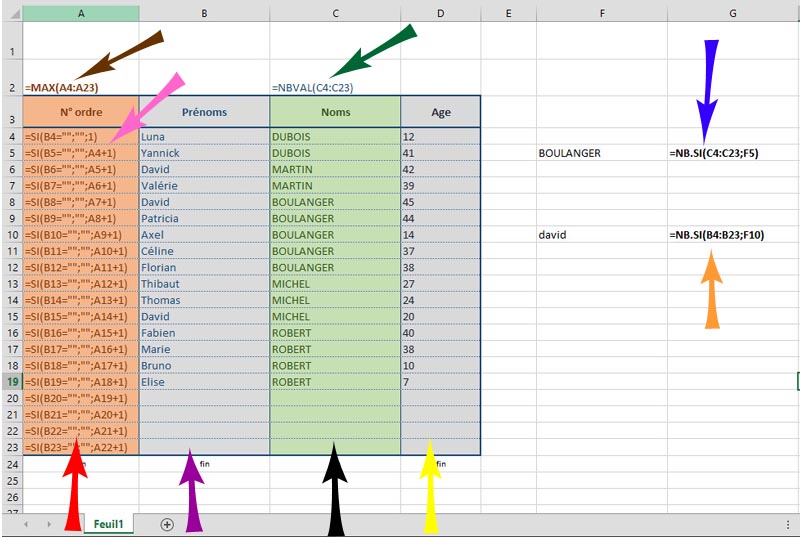
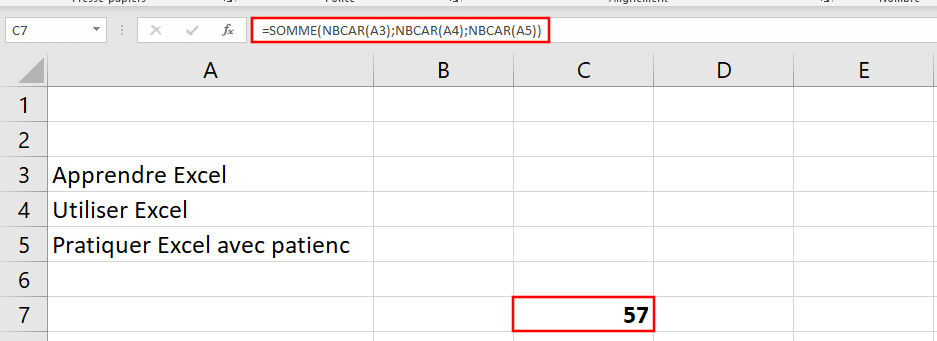
The COUNTA function is your friend for counting any cell that contains data. That's text, numbers, dates – anything! Here's how to use it:
- Choose an empty cell where you want the row count to appear.
- Type the formula:
=COUNTA(A:A). (ReplaceA:Awith the column containing your data, from the beginning to the end of the range. If your data starts at row 2, for example, useA2:A - Press Enter. Ta-da! The cell will now display the number of rows with data in that column.
Remember! COUNTA counts all non-empty cells. If you have headers in your column, subtract 1 from the result to get the number of data rows. So, you would write =COUNTA(A:A)-1. Simple, right?
The COUNT Function: Counting Numbers Only
If you only want to count rows containing numbers (think sales figures, product IDs, etc.), the COUNT function is your go-to. It works just like COUNTA, but it only counts cells containing numerical values.
- Select an empty cell.
- Enter the formula:
=COUNT(B:B)(Again, replaceB:Bwith the correct column). - Hit Enter. Excel will tell you how many numerical entries it finds.
Important: Empty cells, text, or dates will be ignored by COUNT. It's very specific about its number-crunching duties!
The ROWS Function: Simple and Direct
If you already know the range of cells containing your data (for example, A1 to C100), the ROWS function is the quickest way to find the number of rows. In this example it will tell you that you have 100 rows to work with. Let's see the formula.
- Select an empty cell.
- Enter the formula:
=ROWS(A1:C100). - Press enter, and Excel shows you how many rows you have, which in this example is 100.
Combining Functions: Unleash Your Inner Excel Guru!
Want to get really fancy? You can combine functions to create even more powerful formulas! For example, maybe you want to count the number of rows based on a specific condition (e.g., only count rows where the "Status" column says "Complete"). This is where COUNTIF (or COUNTIFS for multiple criteria) comes in handy.
While the details of COUNTIF are a bit beyond the scope of this introduction, just know that it's possible to create incredibly sophisticated calculations in Excel. The possibilities are practically endless!
Using Tables: Organized Data at Your Fingertips
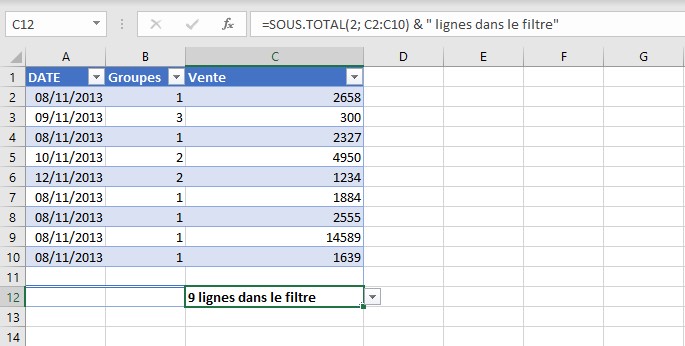
Excel tables are amazing for organizing and managing data. And guess what? They also make it super easy to find the row count! When you format your data as a table (Insert > Table), Excel automatically adds a "Total Row" option.
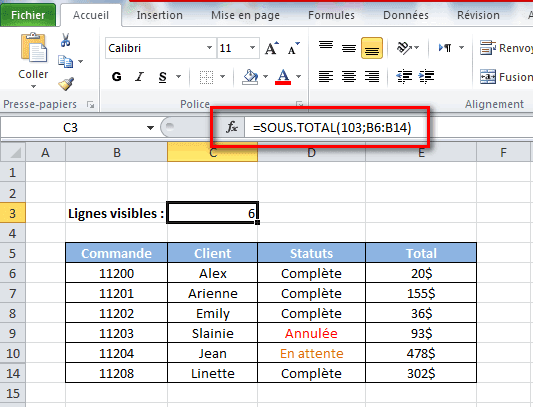
Just right-click anywhere in the table, select Table > Totals Row. A new row will appear at the bottom of your table, and you can choose various calculations (including "Count") for each column. It's incredibly convenient!
Tables also have another advantage: they automatically adjust the formula when you add or delete rows. No need to manually update your row count every time! Excel takes care of it for you.
Visual Basic for Applications (VBA): For the Adventurous Souls
Okay, we're entering advanced territory now! VBA is Excel's programming language, and it allows you to automate tasks and create custom functions. While it's more complex than the methods we've covered so far, VBA gives you ultimate control over your spreadsheets.
Using VBA, you can write a simple script to display the row count in a message box or write it to a specific cell. However, I will not be providing the code here since this article is supposed to be lighthearted and inspiring. Just know that it's an option for those who want to delve deeper into the world of Excel automation!
Troubleshooting: When Things Go Wrong
Sometimes, even the best Excel users run into problems. Here are a few common issues and how to fix them:

COUNTAis giving the wrong result: Double-check that your column doesn't contain hidden characters or spaces. Sometimes, seemingly empty cells can still contain data thatCOUNTAwill pick up.Ctrl + Endis jumping to the wrong row: As mentioned earlier, stray formatting or characters can throw offCtrl + End. Try clearing formatting from the entire sheet (Home > Clear > Clear All) and see if that fixes the problem.- My table's "Total Row" isn't working: Make sure that the table is properly formatted and that the "Total Row" option is enabled. Also, check that you've selected the correct calculation (i.e., "Count") for the column you want to analyze.
Don't be afraid to experiment and troubleshoot! Excel is a powerful tool, and the more you play around with it, the more comfortable you'll become.
Why This Matters: Beyond the Numbers
Knowing how to count rows in Excel isn't just about crunching numbers. It's about gaining control over your data, making informed decisions, and boosting your productivity. It’s about being able to say, “I know the data. I understand it. I can work with it!” And that feeling, my friend, is truly empowering.
Think of all the time you'll save by quickly assessing the size of your datasets. Think of the confidence you'll gain by mastering these essential Excel skills. Think of the admiring glances you'll receive from your colleagues! (Okay, maybe not that last one, but you will be more efficient.)
So, go forth and conquer your spreadsheets! Embrace the power of counting rows, and unlock a whole new level of Excel proficiency. The world of data analysis awaits – and you, my friend, are ready to take it on!
This is just the beginning of your Excel journey! There's a whole universe of formulas, functions, and features waiting to be explored. Don't be afraid to experiment, ask questions, and keep learning. The more you invest in your Excel skills, the more valuable you'll become – both professionally and personally. Now go out there and get counting! À bientôt!