Okay, imagine this. The other day, I'm trying to bake a cake. My grandma's recipe, passed down through generations, is for a tiny little cake that feeds, like, two people. I'm having a party! Suddenly, I needed to figure out how to multiply all the ingredients correctly to make a monster cake. Turns out, I was basically using an agrandissement, and trying to figure out the coefficient d'agrandissement without even realizing it! Felt pretty math-whiz for a moment… until I almost set the oven on fire. But hey, the math was right!
So, what is a coefficient d'agrandissement, and why should you care? Well, it's basically a magic number that tells you how much bigger (or smaller!) something gets when you scale it up or down. Think of it like the zoom button on your phone, but in math form. And trust me, it's not just for making bigger cakes (though that's a pretty good reason, right?).
Le Coefficient d'Agrandissement: C'est Quoi, Au Juste?
The coefficient d'agrandissement (or scaling factor, in English) is a number that you multiply by the dimensions of an original object to get the dimensions of a scaled version. It's used in all sorts of things, from architecture and engineering to graphic design and, yes, even baking.
Basically, if you have a shape, a photo, a recipe... anything... and you want to make it bigger or smaller while keeping the same proportions, you need a coefficient d'agrandissement. Think of it as preserving the "essence" of the thing, just in a different size.
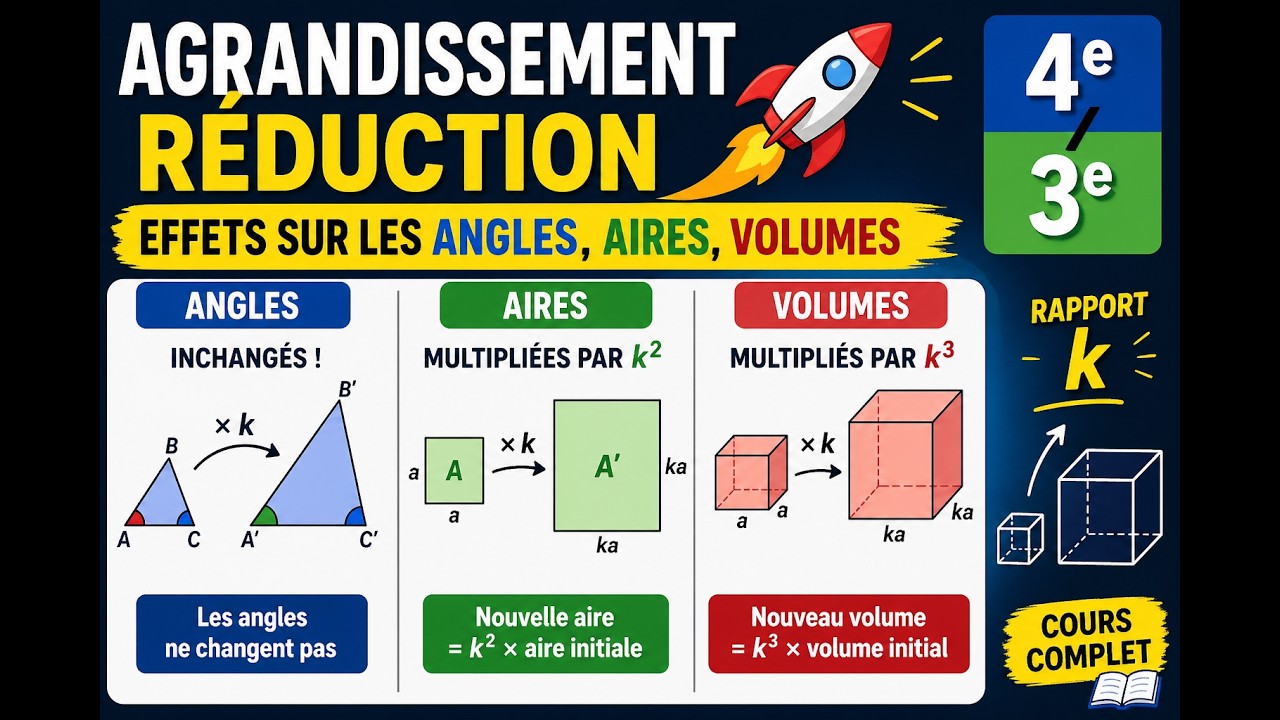
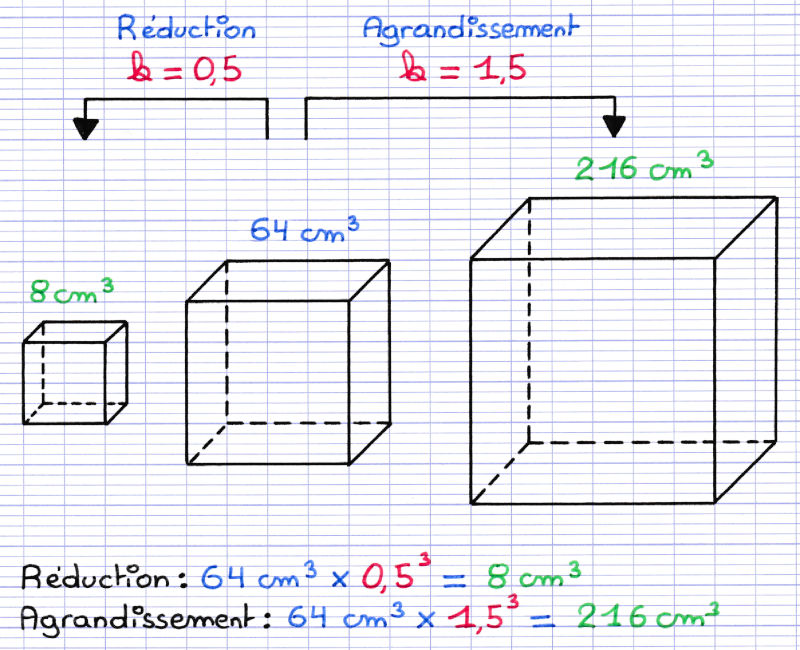
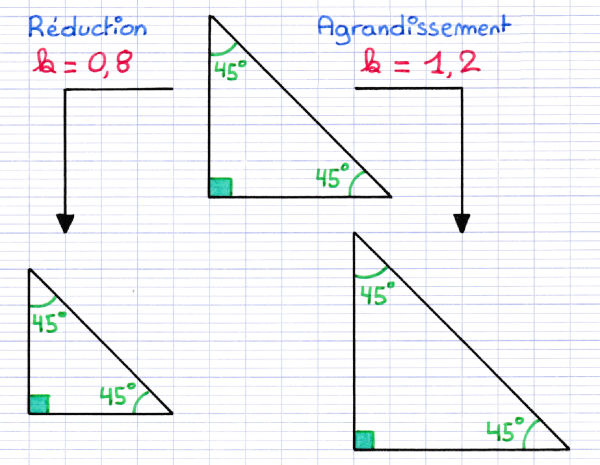
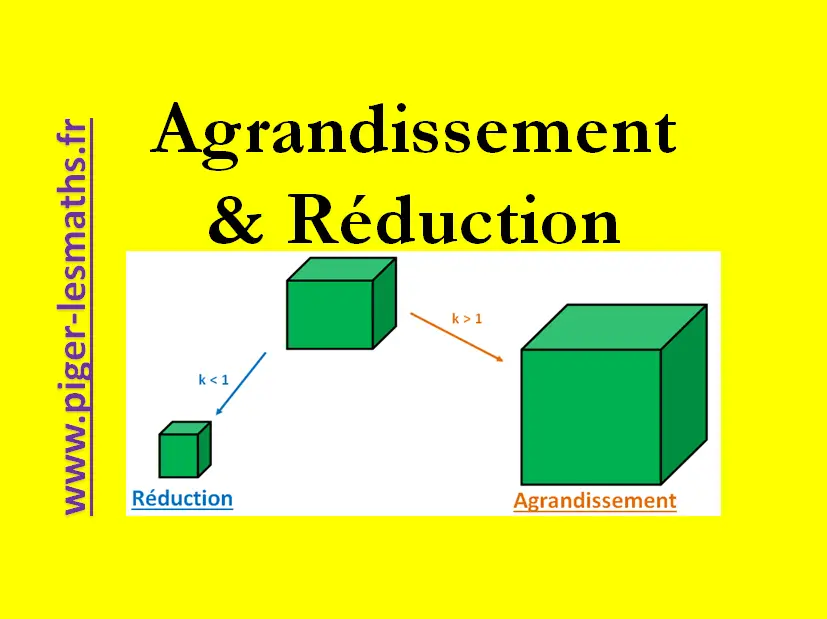
Important note: If the coefficient is greater than 1, you're making things bigger (an agrandissement). If it's less than 1 (but greater than 0, because negative numbers get weird), you're making things smaller (a réduction).
Comment Calculer ce Fameux Coefficient?
Alright, let's get down to brass tacks. How do you actually calculate this mysterious coefficient d'agrandissement? There are a few ways, depending on what information you have. But the core idea is always the same:
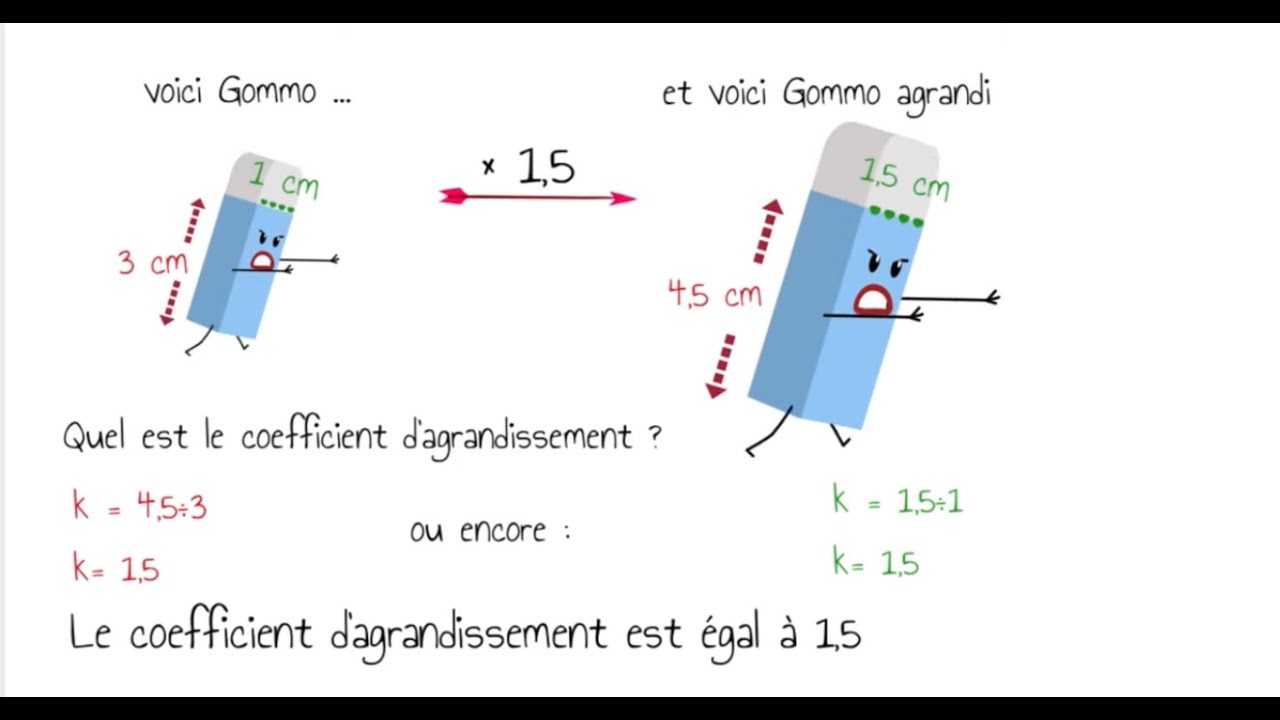
Coefficient d'agrandissement = (Dimension de l'objet agrandi) / (Dimension de l'objet original)

That's it! It’s really that simple. Just pick a corresponding dimension (length, width, height, radius… whatever makes sense for your situation) from both the original and the scaled object, and divide the new dimension by the original dimension.
Cas Pratique #1: Tu connais les dimensions
Let's say you have a photo that's originally 10 cm wide and 15 cm tall. You want to print it as a poster that's 50 cm wide. What's the coefficient d'agrandissement?
- Dimension de l'objet agrandi (largeur): 50 cm
- Dimension de l'objet original (largeur): 10 cm
- Coefficient d'agrandissement = 50 cm / 10 cm = 5
So, the coefficient d'agrandissement is 5. This means you're making the photo 5 times bigger. To check if you got it right, multiply the original height (15 cm) by the coefficient (5). You should get 75 cm. So the new poster will be 50 cm wide and 75 cm tall.
Easy peasy, right? (Don't worry, they don't all fit that neatly!)

Cas Pratique #2: Tu connais une dimension et le coefficient
Okay, let's flip the script. Let's say you have a miniature car that's 8 cm long. You want to make a bigger version using a coefficient d'agrandissement of 2.5. How long will the bigger car be?
This one's even easier! You just multiply the original dimension by the coefficient:
- Dimension de l'objet original (longueur): 8 cm
- Coefficient d'agrandissement: 2.5
- Dimension de l'objet agrandi (longueur) = 8 cm * 2.5 = 20 cm
The bigger car will be 20 cm long. BAM! You're practically an engineer now.
Cas Pratique #3: Les formes géométriques!
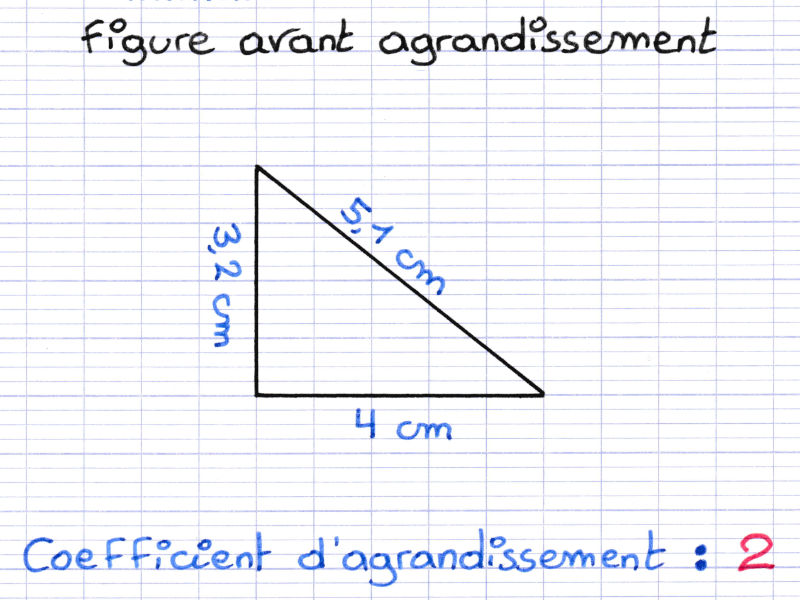
Coefficients d'agrandissement aren't just for photos and cars! They're super useful in geometry too. If you have a triangle with sides of length 3, 4, and 5, and you want to create a similar triangle (same shape, different size) with a coefficient of 2, you simply multiply each side by 2.

- Original triangle sides: 3, 4, 5
- Coefficient d'agrandissement: 2
- New triangle sides: 3 * 2 = 6, 4 * 2 = 8, 5 * 2 = 10
The new triangle will have sides of length 6, 8, and 10. Important: All the angles in the two triangles will be the same. That's what makes them "similar."
Quelques Pièges à Éviter
Calculating the coefficient d'agrandissement is usually pretty straightforward, but here are a few things to watch out for:
- Unités de mesure: Make sure you're using the same units for both the original and scaled objects. Don't try to divide meters by centimeters without converting first! That's just asking for trouble.
- Choix de la dimension: When calculating the coefficient, make sure you're comparing corresponding dimensions. Don't divide the height of the original by the width of the scaled object! It has to be height to height, width to width, etc.
- Confusion agrandissement/réduction: Remember, a coefficient greater than 1 means you're making things bigger. A coefficient less than 1 means you're making things smaller. Don't get them mixed up!
- Arrondir trop vite: If you're dealing with decimals, try to avoid rounding too early in the calculation. This can throw off your final result.
Pourquoi c'est utile, en fait?
Okay, so you know how to calculate a coefficient d'agrandissement. But why bother? Well, here are a few real-world applications:
- Architecture: Architects use scaling factors to create blueprints that accurately represent buildings.
- Engineering: Engineers use them to design bridges, machines, and all sorts of other things.
- Graphic Design: Graphic designers use them to resize images and logos without distorting them. Ever tried to stretch an image and it looked all wonky? Yeah, someone didn't use a consistent coefficient.
- Model Making: Model makers use them to create miniature versions of real-world objects. Think model trains, dollhouses, etc.
- Mapmaking: Mapmakers use scales to represent distances on the Earth's surface.
- Cooking/Baking: (Yes, we're back to the cake!) Chefs and bakers use them to adjust recipes to serve different numbers of people. Seriously, this article was totally cake-inspired, you caught me.
Basically, anytime you need to resize something while preserving its proportions, the coefficient d'agrandissement is your friend. It's a fundamental concept that shows up in all sorts of unexpected places. Who knew math could be so… useful?
En Résumé...
The coefficient d'agrandissement is a powerful tool for scaling objects up or down while maintaining their proportions. It's calculated by dividing the dimension of the scaled object by the corresponding dimension of the original object.
Coefficient d'agrandissement = (Dimension de l'objet agrandi) / (Dimension de l'objet original)
Remember to use the same units, compare corresponding dimensions, and keep track of whether you're making things bigger or smaller.
And now, if you'll excuse me, I have a cake to bake. This time, I'm pretty sure I've got the scaling right. Wish me luck (and maybe keep a fire extinguisher handy, just in case).