Okay, imagine this: you're chilling at home, maybe scrolling through TikTok (we've all been there, right?), and your grandma calls. She proceeds to spend the next hour detailing every minor ache and sniffle as if she's facing imminent doom. Sound familiar? Well, that's basically Argan, the protagonist of Molière's Le Malade Imaginaire (The Imaginary Invalid). And the play starts with a bang – right into his hypochondria.
We're diving headfirst into Act 1, Scene 1. It's the opening scene, so it sets the stage for everything. Buckle up!
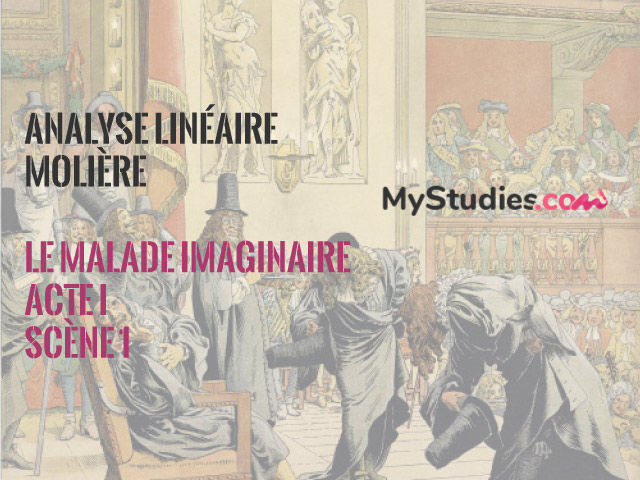
Analyse Linéaire: Le Malade Imaginaire, Acte 1, Scène 1
Context, baby!
Le Malade Imaginaire is Molière's last play. Ironically, he was actually ill while performing the titular role, and, well... he died shortly after. Talk about method acting gone wrong! The play is a comedy, but it's also a satire. Molière's poking fun at doctors, medicine, and, of course, hypochondria. Remember that: it's all about the satire.
And Act 1, Scene 1? It throws us right into the deep end of Argan's obsession. He's not dramatically dying on stage (yet!), but he's obsessively counting his medical bills. A very...Argan-like introduction.
The Text Itself: Let's Get Down to Business
So, what exactly is happening in this scene? Let's break it down:
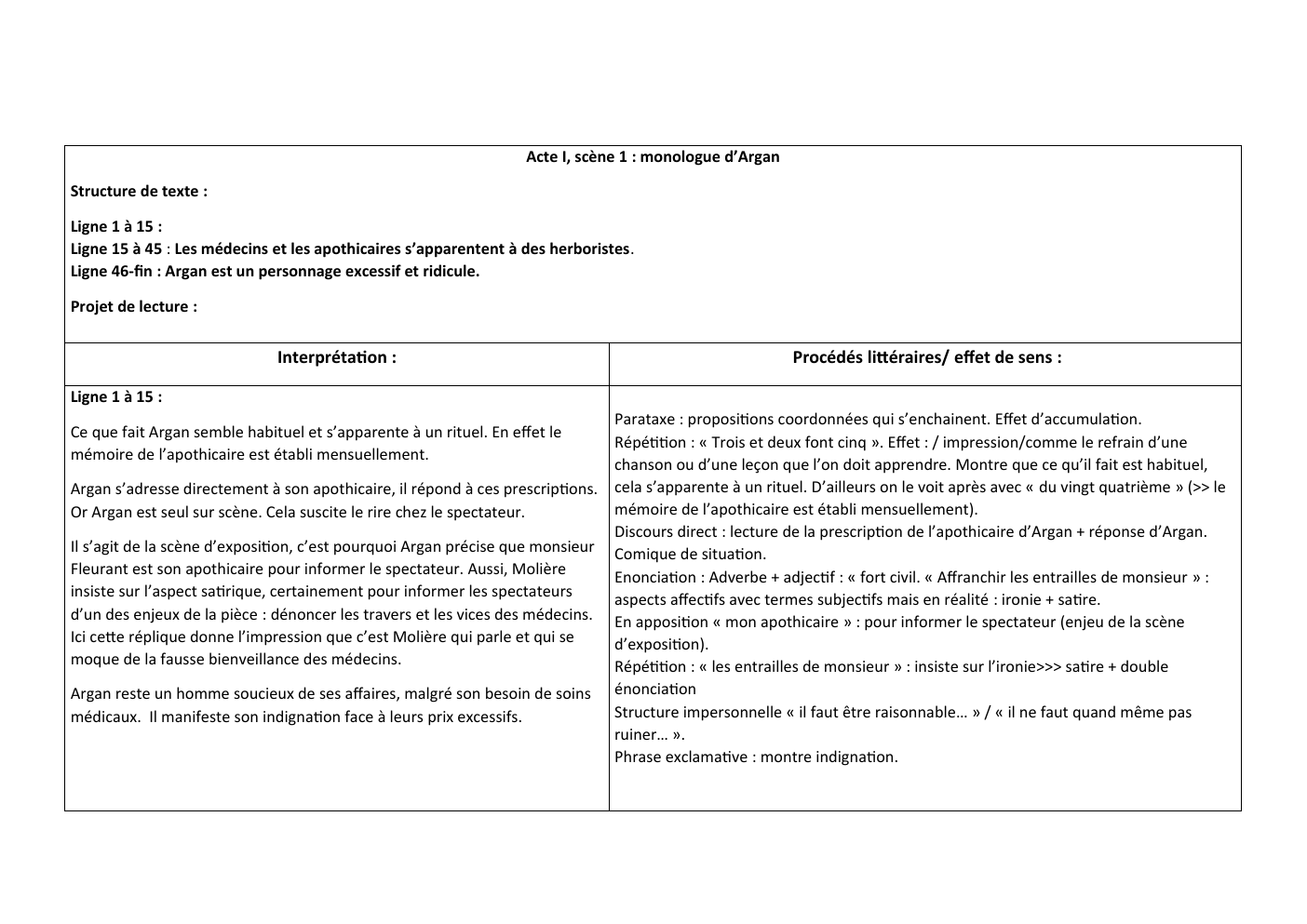
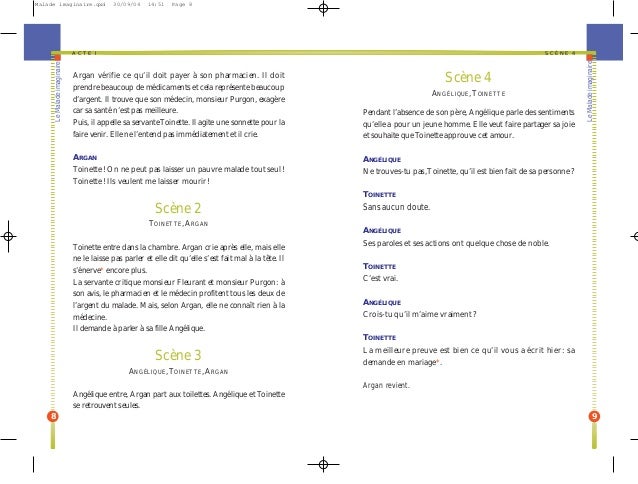
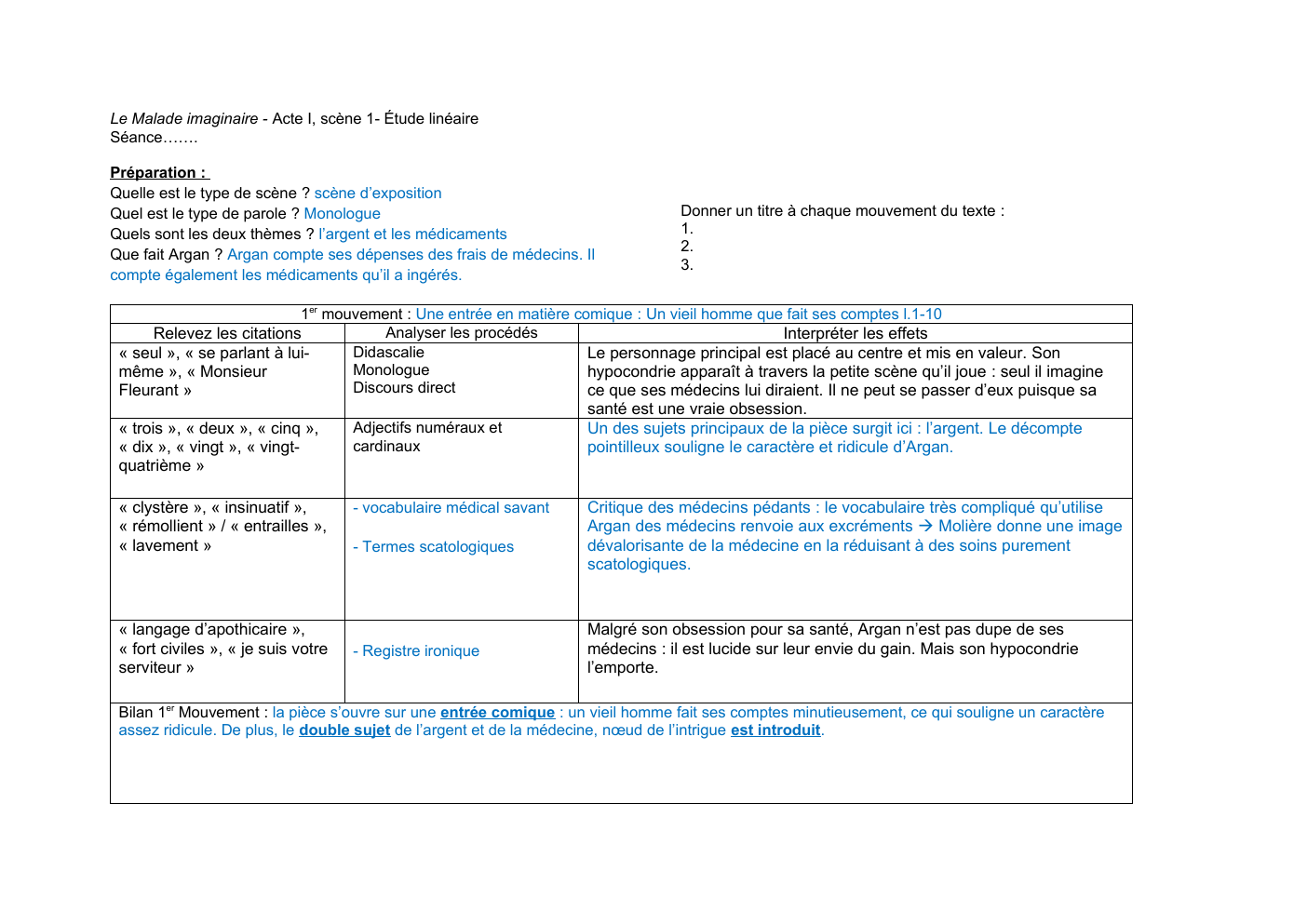
- Argan is reviewing his bills: He's meticulously going through the invoices from his apothecary, Monsieur Fleurant, and his doctor, Monsieur Purgon. He's checking the amounts, the remedies, the dates… everything.
- He's complaining about the costs: Surprise, surprise! Argan thinks everything is too expensive. He's haggling with himself, basically.
- He's obsessed with his enemas: Yep, you read that right. Enemas are a recurring theme in this play (Molière loved his potty humor!). Argan is particularly focused on the number and types of enemas he's been prescribed. (I told you to buckle up!).
Analyse Linéaire: The Nitty-Gritty
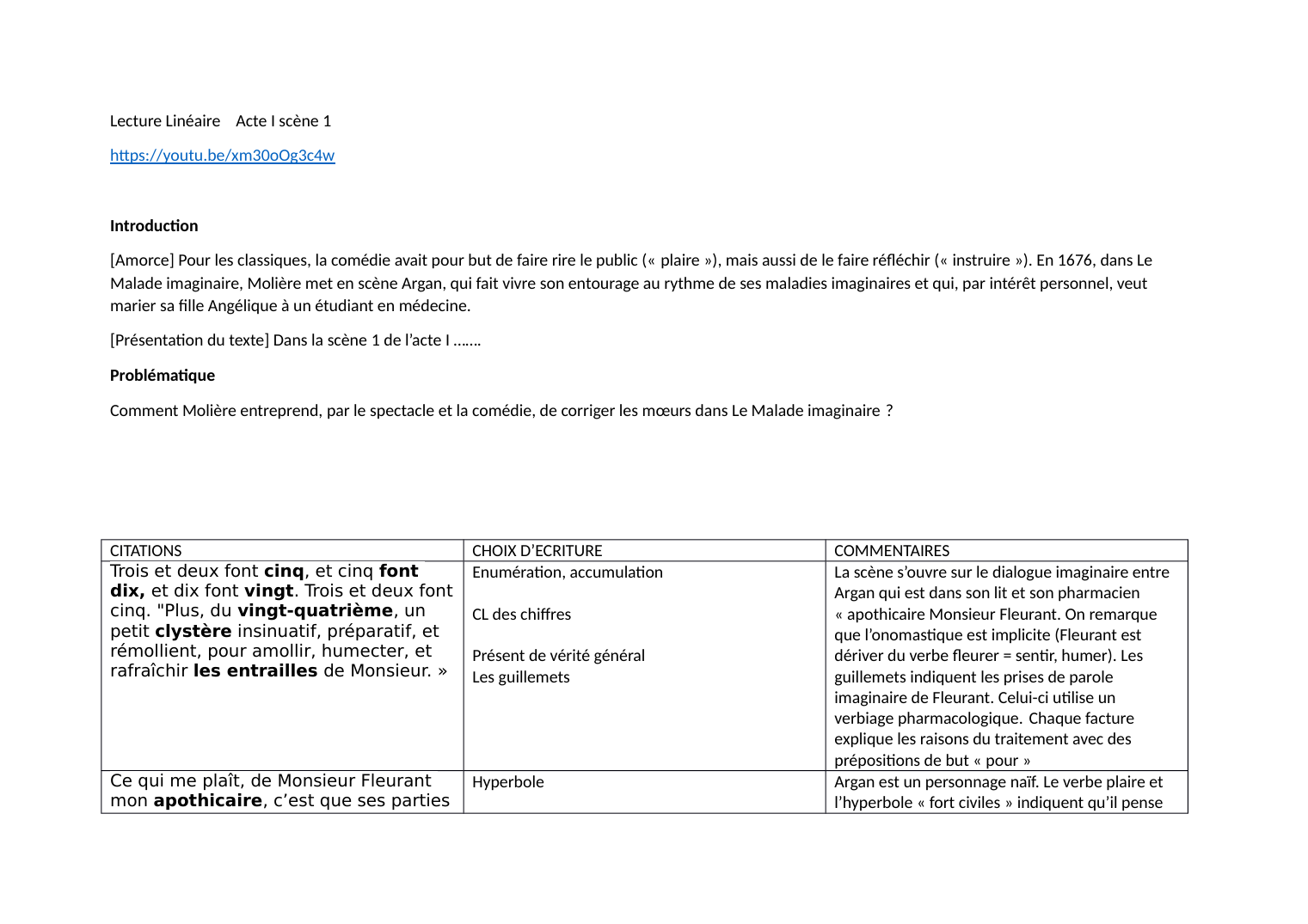
Now, let's dig deeper. This isn't just about a guy looking at bills. Molière is a master of characterization, and this scene is all about establishing Argan's... eccentricities. Let's break it down line by line (figuratively speaking, we're not going to do every single line, I promise!).
The opening lines:
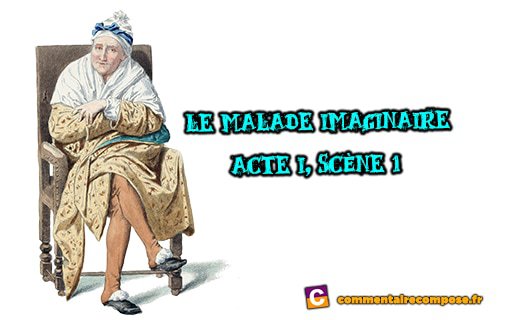
Argan begins with a detailed account of his expenses. This immediately highlights his focus on money. He's not just worried about his health; he's worried about the financial burden of his supposed illnesses. Think about it: is he really sick, or is he just enjoying the attention (and perhaps the control) that comes with being a patient?
The language he uses:
Pay attention to the specific words Argan uses. He speaks in very precise terms about his medical treatments. This shows not only his hypochondria but also a certain pedantry. He wants to sound knowledgeable, even though he clearly isn't. He's trying to impress himself, and maybe the audience too. It's a performance!
The repetition:
Argan repeats himself… a lot. He keeps going back to the same expenses, the same treatments. This reinforces his obsessive nature. He's stuck in a loop, constantly rehashing his medical woes. It's like he needs to be sick, or at least to believe he's sick, to have something to focus on. (Anyone else know someone like that? Don't name names!).
The humor (or lack thereof, for Argan):
The scene is funny, but Argan isn't laughing. He's completely serious about his imaginary ailments. This creates a comedic dissonance. We, the audience, can see the absurdity of his situation, but he can't. This is a key element of Molière's satire: the characters are often blind to their own ridiculousness.
The foreshadowing:
This scene is also important because it foreshadows the rest of the play. Argan's obsession with doctors and medicine will drive the plot forward. His desire to marry his daughter to a doctor (so he can have free medical care, naturally) will create conflict. And his general hypochondria will be exploited by those around him. (Spoiler alert: he's not the brightest bulb!).
Key Themes: What's Molière Really Saying?
Okay, so we've dissected the scene. But what does it all mean? What are the big themes at play here?
- Satire of Medicine: Molière is clearly poking fun at the medical practices of his time. The endless enemas, the expensive remedies, the seemingly useless treatments – it's all exaggerated for comedic effect, but it also reflects a certain skepticism about the medical establishment.
- Hypochondria and Obsession: Argan's hypochondria is the driving force of the play. It's not just a character trait; it's a commentary on the human tendency to obsess over things, especially things that give us attention or control.
- The Power of Illusion: Argan is living in a world of his own making. He believes he's sick, even though there's no real evidence to support it. This highlights the power of illusion and self-deception.
- The Importance of Reason: Molière, like many writers of his time, valued reason and logic. Argan's irrational beliefs and behaviors are presented as something to be mocked and challenged. (Think Enlightenment values!).
Why This Scene Matters
So, why is Act 1, Scene 1 so important? Because it does so much in such a short space.
- Introduces the protagonist: We meet Argan and immediately understand his defining characteristic: his hypochondria.
- Sets the tone: The scene establishes the comedic and satirical tone of the play.
- Introduces key themes: We get a glimpse of the major themes that will be explored throughout the play.
- Foreshadows future events: The scene hints at the conflicts and complications that will arise later in the play.
Basically, it's a masterclass in exposition. Molière efficiently and effectively introduces us to his world and his characters.
Final Thoughts: So What?
Okay, we've gone deep into Argan's bills and enemas. So what? Why should we care about a 17th-century play about a hypochondriac? Because, believe it or not, the themes are still relevant today. We still have our own versions of Monsieur Purgon and Monsieur Fleurant (think: snake oil salesmen and miracle cures). We still have people who obsess over their health (or lack thereof). And we still have the power of illusion to shape our perceptions of reality.
Molière's genius lies in his ability to hold a mirror up to human nature and show us our own foibles and follies. And Act 1, Scene 1 of Le Malade Imaginaire is the perfect introduction to that reflection.
So, the next time your grandma calls with another detailed account of her minor ailments, remember Argan. And maybe, just maybe, offer her a dose of good old-fashioned Molièrean laughter.
Et voilà! You are now a semi-expert on Act 1, Scene 1 of Le Malade Imaginaire. Go forth and impress your friends with your newfound knowledge!